The 2025 Federal Election Podcast

Every Tuesday during the campaign, we will release a short podcast episode discussing the election campaign, chatting about the issues at stake in the election, and doing all that we can to educate, equip, and encourage Reformed Christians in Canada to cast an informed ballot.

Episode 1: What’s at stake?

Episode 2: Is the Liberal honeymoon waning?

Episode 3 – Why this election matters for the preborn.

Episode 4 – Poilievre and Carney talking gender, abortion, and euthanasia. Any of it promising?

Episode 5 – Into the final stretch

Episode 6 – The results are in, but the full picture is still coming into focus.

As the federal parties head into an election campaign, join us in asking them questions on various issues of concern to Reformed Christians in Canada. Some key issues, relevant history, and example questions are listed below.

Euthanasia
(Medical Assistance in Dying/MAiD)

More than 60,000 Canadians have died by euthanasia since it was legalized in 2016. Expansion of euthanasia to those with mental illness as their sole underlying medical condition is currently scheduled for March 2027.


Recommendation
While we would like to see euthanasia prohibited entirely, focus on asking each party to repeal the mental illness expansion and the expansion of euthanasia to people who are not dying.

CNK Logo

Pornography

Pornography is widely accessible online, even to children. It has serious impacts on individuals and society, including addiction, exploitation, and harm to healthy relationships.


Recommendation
Ask candidates if they will protect children through age-verification laws and hold pornography companies accountable for breaking the lawing.

Abortion

Canada has had no law restricting abortion for 37 years. Since abortion was legalized in Canada, more than 4 million pre-born children have lost their lives to abortion. It is our responsibility to continue calling for justice for pre-born children who cannot speak for themselves.


Recommendation
The goal of ARPA’s We Need a Law campaign is to establish a law restricting abortion and recognizing the humanity of pre-born children.

We Need a Law Logo

Free Speech / Hate Speech

In 2013, Canada repealed the hate speech provision of the Canadian Human Rights Act. This provision had often been used to bring complaints against Christians for bringing the truth of God’s Word to bear on political issues. In the last session of Parliament, the government tried not only to bring back this provision but greatly expand penalties for hate crimes in the Online Harms Act.


Recommendation
Request of candidates that their party not re-introduce a hate speech provision into the Canadian Human Rights Act.

Sex / Gender

Recommendation
Canada’s conversion therapy ban must be repealed.

CNK Logo

Prostitution

Prostitution exploits vulnerable people. It is a grave injustice and an immoral trade. Parliamentarians have been given the responsibility to protect the vulnerable in our society and our current prostitution laws – which focus on prosecuting the purchasers of sex – is a good starting point in this regard.


Recommendation
Ask candidates if they will protect our current this legislation, strengthen it, and stand firm in the event of future opposition.

party platforms


Read more about the party platforms by clicking on the party logos.

How Can You Get Involved?


Pick one of the questions that resonates with you and reach out to your local candidate. Here’s how you can make your voice heard:

Download the full political party election guide and issues guide with questions below.

Political party election guide

Issues guide with questions


A GUIDE TO HOSTING ALL-CANDIDATES MEETINGS

All-Candidates Meetings are opportunities for local candidates and local voters to directly interact. Rather than simply hearing party leaders make promises, voters at all-candidates meetings can get to know the personal values and positions of their local candidates. Organizing all-candidates meetings are excellent opportunities for churches and Christians to focus discussion on key issues that matter to them, such as free speech, family law and conscience rights. We hope that this guide will help churches, ARPA chapters, and other Christian organizations host an all-candidates meeting of their own and positively shape the public discourse around election time.

Election Day Is FEBRUARY 27, 2025

As Ontarians prepare to head to the polls, it’s clear that the major parties have been silent on several critical issues that matter to you and your community. Your voice can make a difference. Join us in holding candidates accountable by asking them to respond to the following key questions:

Key Questions for CandidateS

LKB Logo
  1. Why would we rush children who identify as transgender into a medical transition rather than waiting to see if their gender dysphoria will resolve naturally?
  2. Will Ontario follow the lead of Alberta and many international jurisdictions and prohibit puberty blockers, cross-sex hormones, and sex-change surgeries for minors?

CNK Logo
  1. How will you and your party protect vulnerable Ontarians from euthanasia and provide better supports?
  2. How would your government implement better oversight of euthanasia to ensure that doctors are not euthanizing patients who need better supports rather than death?

How Can You Get Involved?


Pick one of the questions that resonates with you and reach out to your local candidate. Here’s how you can make your voice heard:

Download the questions below.

OntarioElection-Handout2025-1Download

The 2025 Ontario Election Podcast

Every Tuesday during the campaign, we will release a short podcast episode discussing the election campaign, chatting about the issues at stake in the election, and doing all that we can to educate, equip, and encourage Reformed Christians in Ontario to cast an informed ballot.


A GUIDE TO HOSTING ALL-CANDIDATES MEETINGS

All-Candidates Meetings are opportunities for local candidates and local voters to directly interact. Rather than simply hearing party leaders make promises, voters at all-candidates meetings can get to know the personal values and positions of their local candidates. Organizing all-candidates meetings are excellent opportunities for churches and Christians to focus discussion on key issues that matter to them, such as free speech, family law and conscience rights. We hope that this guide will help churches, ARPA chapters, and other Christian organizations host an all-candidates meeting of their own and positively shape the public discourse around election time.

Host-an-all-candidates-meetingDownload

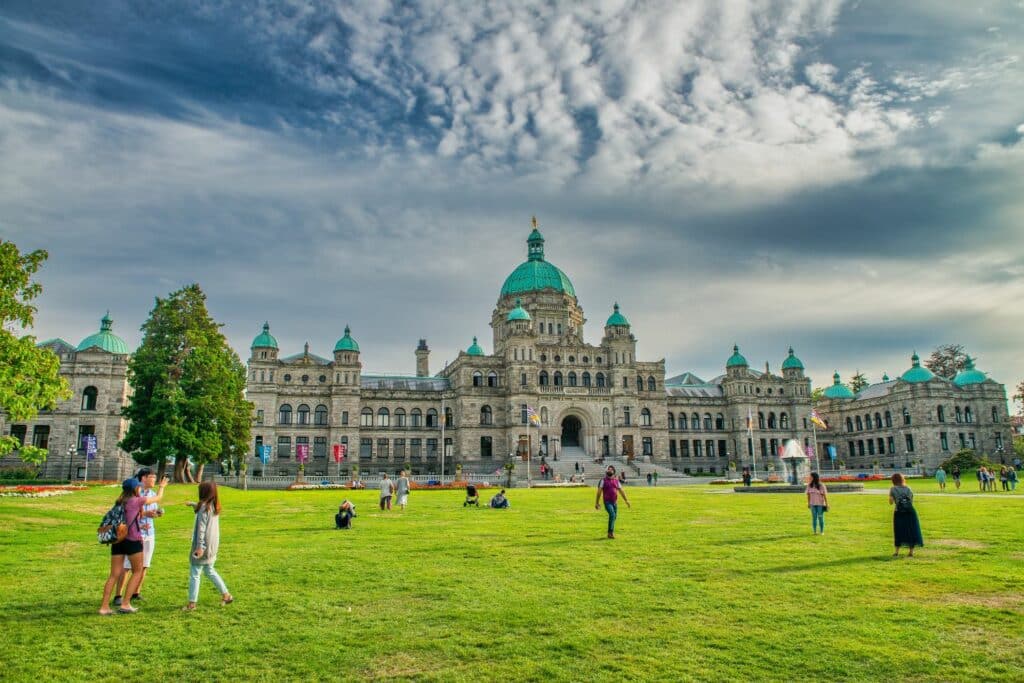
Photo by chris robert on Unsplash

Election Day Is October 19, 2024⁩

The writ has dropped. That means the 2024 British Columbia election is underway!

This is shaping up to be quite the election. After Premier David Eby took over the reins from former Premier John Horgan almost two years ago, it seemed like the New Democratic Party would easily cruise to re-election. But, in the last year or so, the BC Conservative Party, which hadn’t elected an MLA in 50 years, has come back to life. In an unprecedented move, BC United (formerly the BC Liberals) have announced that they will not be running any candidates this election, clearing the way for a clear one vs one battle between the BC Conservative and the BC NDP.

Every Friday during the campaign, Mike and Levi will release a short podcast episode discussing the election campaign, chatting about the issues at stake in the election, and doing all that they can to educate, equip, and encourage Reformed Christians in BC to cast an informed ballot.

2024 BC Election Conversation – Ep. 1
2024 BC Election Conversation – Ep. 2
2024 BC Election Conversation – Ep. 3
2024 BC Election Conversation – Ep. 4
2024 BC Election Conversation – Ep. 5

The 2024 Election Guide

Below you can find your 2024 Election Guide, a comparison of where each of the six major parties generally stands on seven current political issues of note. This guide is designed not only to help you cast an informed vote but also to help you engage with local candidates on these issues of focus.

BCElectionGuideDownload

A GUIDE TO HOSTING ALL-CANDIDATES MEETINGS

All-Candidates Meetings are opportunities for local candidates and local voters to directly interact. Rather than simply hearing party leaders make promises, voters at all-candidates meetings can get to know the personal values and positions of their local candidates. Organizing all-candidates meetings are excellent opportunities for churches and Christians to focus discussion on key issues that matter to them, such as free speech, family law and conscience rights. We hope that this guide will help churches, ARPA chapters, and other Christian organizations host an all-candidates meeting of their own and positively shape the public discourse around election time.

Host-an-all-candidates-meetingDownload

This week, BC United Leader Kevin Falcon suddenly announced that the BC United party would be suspending their campaign, clearing the way for the increasingly popular BC Conservative party to have a legitimate shot at winning the next election.

The number one goal of the suspension of the BC United campaign, echoed over and over by Kevin Falcon and BC Conservative leader John Rustad in a joint press conference held on Wednesday afternoon, is to put together a team that can beat the NDP in the coming election. Even with the BC United polling at around 10%, that still could pull enough support away from the BC Conservatives to hand the NDP another term in government. The vote on the right would be split. This decision aims to eliminate that vote split and allow the parties on the right to present a united front against the incumbent government in the coming provincial election on October 19.

A History of Liberal Collapse

The BC United’s collapse, and even the renaming of the BC Liberals to BC United last year, is part of a broader trend in western Canada.

As recently as 2008, the Liberals in Alberta were the official opposition, though they haven’t formed government since 1917. Liberals there have failed to elect a single MLA in the last two elections.

In Saskatchewan, the Liberals haven’t been the official opposition since 1995 and were last in government in 1967. They too failed to elect any candidates in the last five elections and changed their name to the Saskatchewan Progress Party in 2023.

In Manitoba, the Liberal party was last in power in 1953 and last in the official opposition in 1988. The party has staved off entire extinction, electing 1-3 MLAs in the last 9 elections.

The BC Liberals were the last stronghold of a liberal named party in western Canada. They won four elections in the twenty-first century (2001, 2005, 2009, and 2013), including the largest ever win in BC’s history (77 of 79 seats) before losing the 2017 election by a single seat. As late as May 2023, a month after they changed their name from the BC Liberals to BC United, the party appeared to be in a solid position. It seemed to be only a matter of time before British Columbians would tire of the NDP and turn to the BC Liberals when they were ready for a change in government.

Obviously, that dream has been dashed in one of the most dramatic collapses of a political party in recent Canadian history. Just 15 short months ago, the BC United party was a government in waiting. Now they’ve announced they won’t be running any candidates in an election that is only seven weeks away.

So, what happens now?

The BC Conservatives had nominated over 80 candidates and the BC United over 50 candidates. Election BC requires all candidates to be nominated by September 28th, one week after the campaign officially starts. The party leaders announced that they will be working to field the best possible slate of candidates from between their two pools of candidates. The majority of the candidates that will be ultimately running under the BC Conservative banner in the election will likely be the Conservative candidates nominated already, but some more experienced or competent BC United candidates might be added as well.

What remains to be seen is if key BC United candidates, volunteers, and employees try to keep the party going in some fashion. Will some candidates, disgruntled by the discontinuation of the BC United campaign, run as independents? Will remaining BC United voters vote for the Conservatives or refrain from voting at all? Will BC United supporters move to the NDP with their time, money, and expertise? It is unprecedented in modern Canadian political history for a major party to suspend their campaign this close to an election, so there are a wide variety of unknowns that will need to be solved in the next few weeks.

But, as we’ve outlined in past articles, the demise of political parties and elections provide new opportunities to raise issues with new candidates. Issues that were once off the table are now back on the table. Incumbents who have held their seats for decades may not be running again. This is a time of political renewal in the process. Every citizen should seize this opportunity. Don’t just vote on election day. Get to know your local candidates. Volunteer for a campaign. Donate to a political party.

These opportunities only come around every four years. And the death of one party and resurrection of another only comes around once in a generation.

Four Reasons for the Collapse of BC United and the Rise of the BC Conservatives

But how did all this happen? And why did it happen so suddenly?

It seems there are four fundamental reasons for the BC United party’s collapse and the commensurate rise of the BC Conservatives.

Reason #1: The popularity of the federal conservatives in BC

The federal Conservatives elected Pierre Poilievre as their new leader in 2022 after ousting Erin O’Toole earlier that year. Ever since, the federal Conservative party has increased its popularity in British Columbia dramatically. In particular, it has been making political hay around opposing the legalization of hard drugs and promising to bring back housing affordability, two problems which plague BC more than other Canadian provinces.

Not to insult the intelligence of the average Canadian, but most Canadians don’t well understand the difference between the federal government and the provincial government. Nor do they understand that the federal Conservative and provincial Conservative parties are completely distinct entities. Couple that general lack of clarity with a hyper focus on federal politics at the expense of provincial politics, a general despising of Justin Trudeau and the Liberal brand, and high profile of Pierre Poilievre, and I suspect that many British Columbians now simply hear the word conservative and say, “that’s who I want.”

It doesn’t matter that there are differences between the federal and provincial parties. It doesn’t matter about the quality of the local candidates or unorthodox policy positions held by some within the BC Conservatives. They simply have the right name and the right time.

But that wasn’t enough to propel the BC Conservatives to where they are today. A second ingredient was needed.

Reason #2: A real leader for the BC Conservatives emerges

The BC Conservatives, despite being British Columbia’s first ever political party, hadn’t elected an MLA in almost 50 years. In that span, they only won more than 5% of the popular vote once. They churned through leaders every election cycle. In the 1986 and the 2017 elections, they didn’t even have a leader.

The BC Conservatives were dead in the water.

But that all changed recently. On August 18, 2022, MLA John Rustad was kicked out of the BC Liberal caucus for two reasons. First, he was removed after sharing posts on social media that doubted the extent to which carbon dioxide emissions were contributing to climate change. Second, he was charged with not returning leader Kevin Falcon’s phone calls. In a team sport like party politics, breaking ranks with the party on a major policy file is a heresy. Defying the leader is treason.

In order for political parties to function effectively, they need coordinated messaging. They need a leader who is willing to make tough decisions. They need discipline. But there is a balance. If party discipline is too lax, the party can get in trouble from wayward comments from candidates that can cost the entire party credibility, money, and votes. If the party discipline is too tight, then the party represents a dictatorship more than a vehicle for democratic engagement.

The BC Liberals tipped too far into the tight party discipline quagmire. In the middle of the 2020 provincial election, Chilliwack MLA Laurie Throness was forced to resign from the party over various public policy disagreements. In 2022, Aaron Gunn was prevented from running for the leadership of the party. Overly tight party discipline led Rustad to cross the internal line and also get booted from caucus.

Just over a year after Rustad was ejected, Abbotsford MLA Bruce Banman voluntarily left BC United. One of the main reasons for his decision was so that he could finally speak freely, after being forced to hold his tongue on many issues, particularly the province’s handling of COVID-19. Together, Rustad and Banman gave life to the BC Conservative party and secured the party official party status for the first time in recent memory. And – with no offence intended against any of the previous BC Conservative party leaders – the party finally had a leader with the experience, profile, and energy to make it a viable party.

Reason #3: The failed rebranding from BC Liberals to BC United

The general animosity to anything labelled liberal (thanks to Prime Minister Trudeau) and constant confusion from voters about how the BC Liberal party wasn’t anything like the federal Liberals, prompted the decision of the BC Liberals to change their name. After all, the federal Liberals were always a party on the left of the political spectrum. The BC Liberals were on the right, the party of free enterprise. And so, Kevin Falcon, in his race to replace Andrew Wilkinson as party leader, promised to change the name of the party if elected.

Within a year, Falcon followed through with his promise. With the preferred new name of the party – the British Columbia party –unavailable, he opted for BC United. This name was an unfortunate choice for a few reasons. First, it sounds more like a soccer club than a political party. Second, some drew negative connotations from the word united, tying to Alberta’s United Conservative party. And third, although the name was chosen to portray unity, the party was anything from united, as the booted Throness, the rejected Gunn, the ousted Rustad, and floor-crossing Banman could attest.

For all these reasons (as well as plain old human nature that is used to familiarity and resistant to change), the rebranding of the BC Liberals to BC United did not go well. The public, not following politics closely between elections, didn’t realize that the party had changed its name. It plunged in the polls following the name change, and the Conservatives rose in the polls. Only five months after the name change, BC United and the BC Conservatives were tied in the polls. For a few months, the parties appeared deadlocked in the public polling. In February, Conservatives opened a lead over the BC United that has only continued to grow. Polls in the last month have pegged the BC Conservatives between 35-39% and BC United between 9-12% of the popular vote. (The NDP were between 36-43% and the Greens 8-11%.)

Reason #4: The lack of political representation on the right side of the political spectrum on several political issues

And finally, there are policy issues at stake. In the deal-making process last week, Kevin Falcon admitted that he probably agreed with John Rustad and the Conservatives on 75% of the issues.

But some of the issues in that 25% matter. Especially to reformed Christians.

Take SOGI. SOGI, which stands for sexual orientation and gender identity, is the vernacular name for a suite of policies, inclusive environments, and educational resources designed to promote acceptance of homosexual and transgender identities in schools. One such policy was requiring all schools (public as well as independent) to expressly prohibit bullying based on sexual orientation or gender identity. With other prohibited grounds for discrimination – such as appearance, grades, or character – not mentioned, this has the effect of elevating a student’s gender identity or sexual orientation to an exulted status of identity.

Inclusive environments translated into gender neutral washrooms, change facilities, and showers and teachers referring to students – no matter their age or maturity – by their chosen pronouns.

The BC Liberals were the party that enshrined gender identity and sexual orientation into BC’s Human Rights Code and required schools to adopt those anti-bullying policies. While leader Kevin Falcon stated that he is in favour of parental involvement, age-propriety, and transparency in education, he refused to be specific what that might mean for SOGI.

The BC Conservatives, on the other hand, and some specific candidates in particular, have been vocal opponents of SOGI and have promised to scrap it entirely. This is a position that no other major party has ventured to propose, despite growing concerns over SOGI throughout British Columbia.

Or take independent schools. The BC Liberals have generally been supportive of the status quo for independent schools, namely that most independent schools receive 50% of the funding that their public counterparts receive. But the BC Conservatives, in their policy handbooks, support changing the funding model for all schools. Their goal is that funding will follow the student, regardless of which school a parent chooses – public school, independent, or home school.

Unfortunately, one issue that both BC United and the BC Conservatives agree on is abortion. Both leaders had publicly stated that they have no intention of restricting abortion whatsoever. After the BC March for Life on the steps of the BC legislature, BC Green leader Sonia Furstenau insisted that each party clarify its stance on abortion. Falcon declared that “women have the right of choose” and “that has been the position of the party for a long time.” Rustad insisted that abortion “is not a provincial issue and that no politician at the provincial level can change that [1988 Morgentaler] decision.”

The next provincial election in British Columbia is exactly six months away and so it is time to get to work!

But why? Why prepare for an election six months away from now?

There are two connected reasons:

With an election in view, there are great opportunities for people who are willing to put in a little time and effort to make a big political difference.

BC’s Political Shift

For those who don’t follow BC politics much, there have been two main parties vying for government over BC’s history, sometimes with smaller or more fringe parties trying to get a few seats as well. But approximately once in a generation, the political landscape shifts. A political party (or multiple parties) collapses, leading to a new political situation and new opportunities for change.

The first generational shift happened in the 1940s. Up to that point in BC history, the Conservatives and Liberals took turns governing British Columbia (something that we’re used to seeing in the federal government, though the parties are not actually connected). But as the socialist NDP grew in power throughout the 1930s and 1940s, both the Conservatives and Liberals were so concerned about the NDP winning government that they formed a coalition government from 1945-1952 to keep the NDP out. When that coalition fractured, a new party initially combining some strange collectivist economic theories with more traditional conservative politics – the Social Credit Party – appeared and governed BC for the majority of four decades. The Liberals and Conservatives eventually became extinct, making the NDP the sole opposition to the SoCreds, as they were called.

The second generational shift happened in the 1990s, when the Social Credit Party collapsed. A combination of spending nearly 40 years in government and the rise of the Reform party and movement on the federal level shocked the provincial political scene. The SoCreds collapsed in the 1990s, with the party’s former supporters migrating to the resuscitated Liberal party. While center-right voters figured out how to reorganize themselves under the Liberal party banner, the NDP governed BC for 8 years before the center-right Liberal party took back government in 2001.

We are in the midst of a third generational shift. After badly losing the 2021 election, the Liberals, who were traditionally made up of a mix of federal Liberal and Conservative voters, picked a new leader and changed their name to BC United. Unfortunately for them, there is little unity in that party. Chilliwack Liberal MLA Laurie Throness was kicked out of the party in 2020 for his socially conservative views. Nechako Lakes Liberal MLA John Rustad was also kicked out of the party for a combination of his views on climate change and his lack of cooperation within the party in 2022. In 2023, Abbotsford BC United (formerly BC Liberal) MLA Bruce Banman also left the party.

Rustad and Banman joined the defunct BC Conservatives, giving the party its largest number of seats in the legislature in 48 years. With the BC Conservatives back in the legislature with two MLAs and official party status (which gives them extra resources and allows them to ask a question like this one every question period), the party’s popularity has grown. This dovetails with a surge in the popularity in BC of the federal Conservatives under Pierre Poilievre. Most of their support has come at the expense of BC United, as shown in a recent by-election on Vancouver Island where the BC Conservatives displaced BC United for second place in the riding.

According to 338Canada (a poll aggregator and seat projector), the BC NDP are comfortably ahead in the polls with 42%. The BC Conservatives are in second with 25% of the vote, and BC United in third with 19%. (The BC Greens have 11%). With center-right voters split between the BC Conservatives and BC United, this would likely give the NDP a massive majority if an election were held today. (The current seat projection by 338Canada suggests that the NDP would win 67 seats, the BC Conservatives 20 seats, BC United 4 seats, and the BC Greens 2 seats with this level of support.)

This leaves BC at a crossroads. Will center-right votes continue to be split between the BC Conservatives and BC United and give the BC NDP a massive majority? Forget about policies for a second. One party winning 72% of the seats and having the next two largest parties fighting among themselves for second place isn’t good for parliamentary democracy. Opposition parties are supposed to be robust and hold the governing party to account. If they fail on this account, we temporarily become a one-party state.

Or will center-right voters coalescence around either the BC Conservatives or BC United? The BC Conservatives have the momentum right now, but BC United has incumbent MLAs, organizational structure, a track record, and money at its back. BC is also the only province to have a provincial Christian Heritage Party, giving you an opportunity to vote for a distinctly Christian candidate.

This is where you come in. You could simply sit on the fence for the next five months and decide which party you like best or has the best chance of winning then. But the more effective strategy is to decide which party to throw your support behind. All the parties need volunteers, donations, and even candidates to run for election. And they each need people to inform their friends and family members about the new political situation and help them to decide who to vote for.

Get Involved Now!

While the election is still six months away, there are many opportunities to get politically involved now. While voting every four years is the most common way to participate in a democracy, there are a lot more (and a lot more impactful!) ways to make your voice heard if you are willing to make the effort. Here’s what you can do: