See, I have set you this day over nations and over kingdoms,
to pluck up and to break down,
to destroy and to overthrow,
to build and to plant.” (Jer. 1:10)

My previous article, “Creation and Politics,” focused on God’s sovereignty as the creator and sustainer of all things. In His sovereignty, God gives authority to man. Therefore, while God’s authority is “original, eternal, unlimited,” man’s authority is always “derivative, temporary, and limited.” [1] By God’s design, His character is reflected in human relationships and authoritative offices – including civil authority, which He created (Col. 1:16, Acts 17:26).[2] God’s character is also reflected in His word, by which He made, sustains, and governs creation and directs history (Job 12, Ps. 19, 33; Heb. 1; 2 Pet. 3). Another article on creation and politics might have delved more into topics such as creation stewardship (Gen. 1:28, Ps. 24:1) or sexuality and marriage (Gen. 2:24, Matt. 19:5), among others. But the main point of my last article was that God’s word sets norms for all of life.[3] God’s creation is good and His word is perfect (Ps. 19).

What, then, is wrong with the world? The Bible tells us: man rejected God’s word. To explore the significance of the Fall for political life, let us return to the biblical story.

Rebellion, curse, and continuity

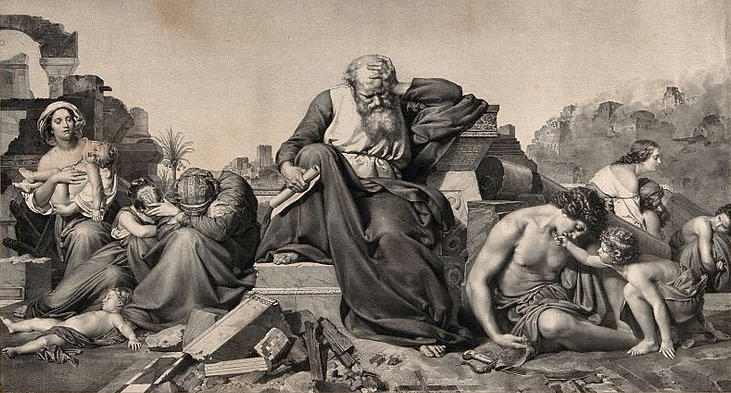
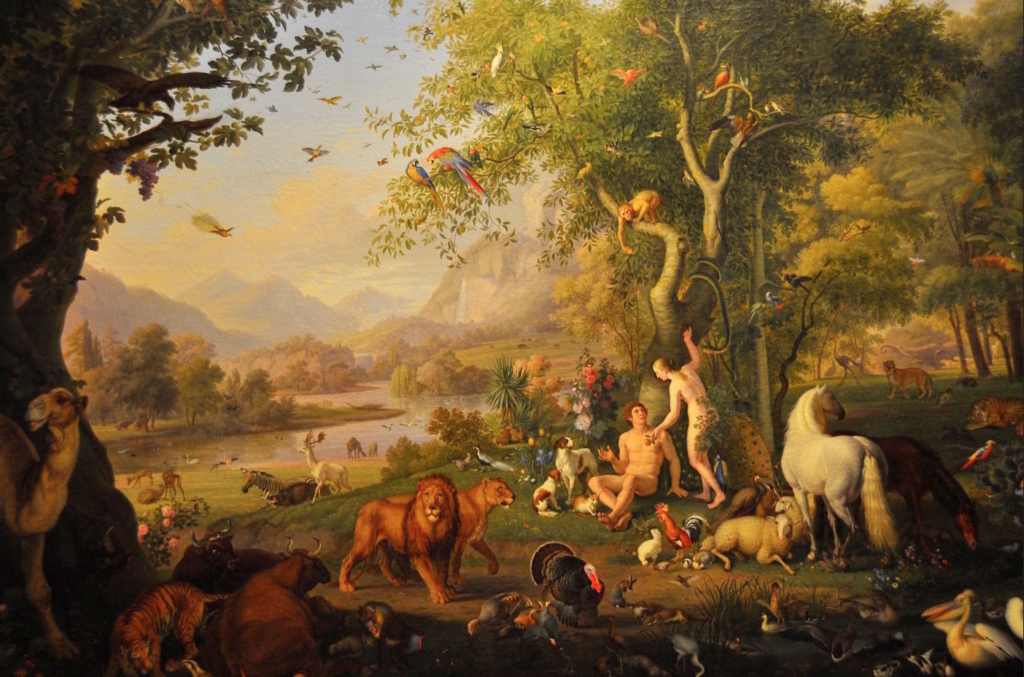
Tragically, Adam and Eve, God’s image bearers and vice-regents over His good creation, bought into the lie that they could determine good and evil on their own. They thought they could rule themselves and creation without answering to God or following His word. They thought they could be autonomous – a law unto themselves.[4] In the Fall, God allowed His good purposes in creation to be frustrated, but not defeated or undone. God subjected His creation to a curse on account of man’s sin (Gen. 3:14-19; Rom. 8:19-23). Yet even in pronouncing the curse, God offered hope. Eve would bear children. Her offspring would crush the serpent’s head (through Jesus Christ, as we later learn). God would defeat this rebellion in His kingdom and undo its damage to His creation, but not immediately.[5] Human life would continue, but the nature of fallen man would soon be manifest.

They thought they could rule themselves and creation without answering to God or following His word.

Next thing we know, Cain murders Abel. God did not immediately punish Cain. He even prevented others from doing so. (Some commentators think this is because God had not yet formally instituted human authority to punish such wrongdoing, though the Bible gives no direct explanation.[6]) We also read about several basic cultural developments in Genesis 4. Cain tilled the soil and Abel raised livestock. Cain later built a city. His descendants made tents, musical instruments, and metal tools. God built the potential for such developments into creation. The question is, would mankind use this potential for good, for God’s glory? Sadly, Cain’s line descended into further violence, polygamy, and wicked boasting (Gen. 4).

But God granted Adam and Eve another son. Genesis 5 gives a hopeful “account of Adam’s family line” through Seth: “When God created mankind, he made them in the likeness of God. He created them male and female and blessed them. […] Adam had a son in his own likeness, in his own image, and named him Seth.” So, it seems, fallen man’s place as image bearers in creation endured![7] After hopeful notes of faithfulness in Seth’s line (Gen. 5:22,29; 6:9), though, we learn that the earth was “corrupt in God’s sight and filled with violence” and man’s thoughts were “only evil continually.” God decides to destroy all flesh, saving only Seth’s descendant Noah – “a righteous man” who “walked with God” – and his family (6:9-18).

A “reckoning” for man’s blood

Despite man’s astounding lawlessness and God’s just punishment for it, God preserved mankind and the other creatures He had made. Immediately after the flood, when Noah offered sacrifices to God, God promised “never again [to] curse the ground because of humans, even though every inclination of his heart is evil.” God’s plan was (and is) ultimately not to curse, but to bless and renew. Thus, God renewed the “cultural mandate,” (Gen. 9:1), blessed Noah and his family, and promised that there would be no such flood again (9:9-17). Calvin sees God’s redemptive purpose at work in Genesis 8-9. God “not only renews the world by the same word by which he before created it,” Calvin writes, “but He directs his word to men,” so that through Noah’s family, “He shall raise up mankind from death to life.”[8]

God would henceforth hold sinful mankind responsible to protect people and punish those who shed human blood.

Noah was, in a sense, a new Adam. God blessed Noah as He had blessed Adam and gave Noah the same mandate (9:1), but added something new here. Noah’s situation was not the same as Adam’s original situation. In light of the Fall (and man’s subsequent violence) God tells Noah that He would demand a “reckoning” for man’s blood from his fellow man (9:5). What does this mean? “Whoever sheds the blood of man, by man shall his blood be shed, for God made man in His own image.” God would henceforth hold sinful mankind responsible to protect people and punish those who shed human blood.

Bavinck notes the connection between punishment, authority, and justice: “All punishment presupposes that the person who pronounces and imposes punishment is clothed with authority over those who have violated the law.” This authority, he goes on to say, “cannot have its origin in humanity itself, for what human being can claim any such right vis-à-vis others who are of the same nature?” It must, says Bavinck, be rooted in justice, and justice itself depends on God. “The fact that God punishes evil is the basis of all human punitive justice,” he writes. Therefore, “The moment God’s justice is denied, and there is no longer any belief in a moral world order elevated far above human beings, the right and essential character of punishment immediately collapses as wellthere exists no final principle on which punishment can be based other than the justice of God.” Without justice, then, there is no punishment – only acts of raw power.[9]

Cain, having murdered Abel, asked God, “Am I my brother’s keeper?” Genesis 9:5 says: Yes! In a fallen world, our duties toward each other entail not only, say, joyfully sharing belongings. We must also try to prevent and punish violent attacks against our fellow man. Given how brutish and violent mankind had become, it’s worth pausing to consider why God demands this. God’s reason is stated simply: “for God made man in His own image.” God demands this for His own sake. John Calvin comments on this post-fall, post-flood imago dei reference by saying that “the Celestial Creator Himself, however corrupted man may be, still keeps in view the end of His original creation.”

The origin of human government?

Genesis 9:5-6 is often referred to as the origin or foundation of government. We readily connect Genesis 9 with Paul’s statement that a ruler “does not bear the sword in vain” and is “an avenger who carries out God’s wrath on the wrongdoer” (Rom. 13). Genesis 9, together with Romans 13 and 1 Peter 2, teaches us that, in a fallen world, a primary duty of human rulers is to punish “those who do wrong” (Rom. 13). This “wrong” is not limited to murder, though we might ask how far, or to what kind of wrongdoing, the magistrate’s mandate to punish extends.[10] Paul also refers to rulers as God’s servants for our good. Cornelis Van Dam, in his book God and Government, emphasizes that God is the origin of government, His justice is the norm for government, and that Genesis 9 contains “an early hint of government.” God’s word to Noah in Genesis 9 begins to teach fallen man what God’s justice requires in a broken world. Thankfully, His word will have much more to teach us on that score.[11]

Genesis 9 is a key passage, but we need a fuller biblical picture for grasping the nature and responsibility of civil government in God’s world. Should a ruler enact laws or appoint judges to resolve property or business disputes? Should a government take action to rescue starving or homeless people after a natural disaster? Should civil government mandate or coordinate conservation, sanitation, or public infrastructure projects? Even returning to the basic issue of punishing murderers, Genesis 9 does not offer detailed instructions for how this is to be done, or by whom. We learn more about the avenger of blood, witnesses, judges, and so on later in the Bible (e.g. Num. 35). Even then, we should be careful not to take such passages as directly prescriptive for today, though we may decipher from them certain timeless principles of justice.[12] We might say that Genesis 9 is foundational, but we still have more to learn about what justice requires beyond the base rule of condemning murder.

God’s word to Noah in Genesis 9 begins to teach fallen man what God’s justice requires in a broken world.

Returning to the story in Genesis, the first reference to a “kingdom” is found in chapter 10, in connection with a mighty warrior who built cities: “Cush was the father of Nimrod, who became a mighty warrior … The first centers of his kingdom were Babylon, Uruk, Akkad, and Kalneh, in Shinar. From that land he went to Assyria, where he built Nineveh, Rehoboth Ir, Calah and Resen… a great city.” (A city might be a kingdom itself or a kingdom center.) In the next recorded event, people gathered to “build ourselves a city” and “make a name for ourselves,” but God scattered them. Here again, as at the Fall, man tried to establish his own kingdom apart from God, to live autonomously. The city of Babel, or Babylon, comes to represent the kingdom of darkness (Rev. 18). God continually tears down rebellious kingdoms (Jer. 1:10, Dan. 2:21, Luke 1:52) in order to build a righteous, renewed kingdom (Jer. 31:27-34).

It’s not that cities, kingdoms, or rulers are bad per se. It depends on where they stand in relation to God and his law. Abraham obeyed God’s calling, Hebrews says, because he was “looking forward to the city with foundations, whose architect and builder is God.” God’s plan is to bless all nations of the earth through Abraham, to make Himself and His Kingdom known to the world through them. His redemption plan continues. Ultimately, the city Abraham looked forward to is the new Jerusalem. It is a “heavenly city” in the sense that there we will do God’s will as perfectly as the angels in heaven. But the heavenly city will come to earth. We will live there not as disembodied souls, but as resurrected, whole persons. And it will have, as its Lord of lords, the only perfect human ruler, who is also God, namely Jesus.

But we’re only at Genesis 12! There is more to learn from the story between here and Revelation 21. In future articles, we will look more closely at God’s calling for Abraham, Israel, and the Church.

Lessons for today

In view of the big story of Scripture – that God renews this fallen world into the Kingdom of God – some Christians believe the civil government functions as a kind of stage manager for the drama of redemption. That is, civil government plays no part in God’s redemptive work and falls outside of God’s redemptive kingdom, but maintains a basic level of order in this broken world, the stage for the work of the Holy Spirit and the Church. Others would say that, because God is renewing the creation that belongs to Him, civil government can and ought to play a role in God’s renewing work. That is not to say, of course, that civil government pays for our sin or makes us right with God. Rather, the idea is that, in light of Christ’s victory, God’s Spirit can transform and use civil government, as He transforms and uses individuals, families, and other social institutions, to reform and renew society to better reflect what kind of King He is and what His final Kingdom will be.

Whichever of these two views you favour, the Bible is clear that, in light of the fall, God ordained to use human rulers to restrain and punish human evil. Sin is so deep and its effects so far-reaching, that human government’s mission is profoundly shaped by it. A society ignores God’s word and God’s justice when it neglects to protect the innocent or punish murderers. Crime is not an evolutionary glitch, nor solely a product of social conditioning. People are morally responsible beings. The end for which crime is punished is justice, first of all, rather than rehabilitation or deterrence or social improvement.[13]

Rulers may be selected by various means in various societies, but their authority to punish wrongdoing comes from God, not from themselves or “the people”. A government that fails to deal with violent crime at all utterly fails as government and rulers who perpetrate violence lawlessly and unjustly no longer act as rulers. They not only act beyond their God-given authority in so doing, but in direct violation of His law. Nobody is above God’s law.

The Fall is no excuse for anyone, including rulers, to treat anyone else as less than human, no matter how twisted or broken a person may seem. The Bible teaches that we remain image bearers after the Fall. God Himself is assaulted when we assault another. Calvin, ever practical, comments, “Were this doctrine deeply fixed in our minds, we should be much more reluctant to inflict injuries.”

What would change in our country if the imago dei doctrine were either more deeply embedded in our culture and laws, or more ignored?

This is part 3 in a series on “Politics in Light of Redemptive History” (also the title of part 1). Part 2 was on “Creation and Politics”. Stay tuned to ARPA’s website or sign up for our emails for more parts to the series (D.V.).

NOTES:

[1] Bavinck, Reformed Dogmatics, Vol. 2, 615.

[2] As Bavinck writes, “All relations that exist among creatures between superiors and inferiors are analogies of that one original relation in which God stands to the works of his hands. What a father is for his family, what an educator is for the young, what a commander is for the army, what a king is for his people—all that and much more God is in a totally original way for His creatures.” Ibid.

[3] See especially Al Wolters, Creation Regained.

[4] Bartholomew and Goheen, The Drama of Scripture, 43.

[5] Bartholomew and Goheen’s excellent book (ibid) broadly outlines the Bible story in terms of God establishing His kingdom, rebellion in the kingdom, and redemption of the kingdom.

[6] Calvin, for one, seems to think God preserved Cain for the sake of his children (already born or yet to be born). Calvin does not mention the absence of civil government at this point in his Genesis commentary.

[7] Calvin comments (re. “in his own image”) in Gen. 5:3 that this “refers in part to the first origin of our nature,” namely the imago dei, and “at the same time its corruption and pollution is to be noticed, which… flowed down to all his posterity.”

[8] Calvin, Genesis (translated by John King).

[9] All quotes in this paragraph are from Bavinck, Reformed Dogmatics, Vol. 3, section 336. Bavinck goes on to discuss how the decline of the worship of God and the deification of man, society, and the state in the 18th and 19th centuries led to “the falsification of all moral and judicial concepts” and “the banishment of the concepts of good and evil, responsibility and accountability, guilt and punishment.”

[10] Oliver O’Donovan thinks the positive role for government in Romans 13 (“you will receive his approval, for he is God’s servant for your good”) and 1 Peter 2 (“praise those who do good”) has to do with judging cases and declaring a party innocent or guilty/liable – see Desire of the Nations. Cornelis Van Dam believes the phrase “servant for your good” applies more broadly, to encompass various efforts that civil leaders might undertake for the common good, or to protect and sustain the weak, poor, and vulnerable – see God and Government, ch. 2.

[11] See God and Government: Biblical Principles for Today: An Introduction and Resource (2011), in particular chapter 2 of his book, “The Origin and Task of Civil Government,” 27-46. The law of Israel, certainly, teaches that doing justice entails a lot more than punishing murderers, though certainly not less.

[12] For example, Bavinck explains that the “avenger of blood” was a common feature of the ancient world of Israel’s day, which Mosaic law takes for granted and incorporates into a more robust system of justice (Num. 35). See Reformed Dogmatics, Vol. 3, ch. 4

[13] See Bavinck, Reformed Dogmatics, Vol. 3, 166 – “If the state has no other right to act against criminals than thereby to protect itself and to improve them, on what grounds then will it be denied the right to deal with all kinds of sick people on its own authority and by its own methods…” C.S. Lewis develops this point in his essay “The Humanitarian Theory of Punishment”.

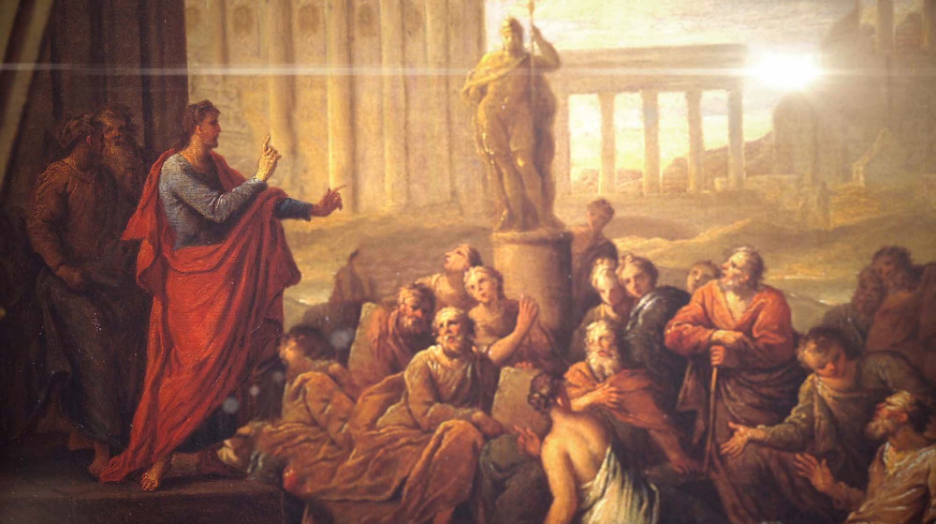
“The God who made the world and everything in it is Lord of heaven and earth… He himself gives everyone life and breath and everything else. From one man He made all the nations, that they should inhabit the whole earth.” – Paul in Athens (Acts 17).

(Note: this article is part 2 of a series that began with “Christian Political Engagement in Light of Redemptive History“.)

“In the beginning, God created the heavens and the earth.” God was before all things and before time. God is eternal and self-subsistent. God spoke the world into existence, ordered it, and called it “good” and, after creating mankind in His image, called it “very good.” The creation story takes only two brief Bible chapters. Yet, as Bavinck wrote, it is the “initial act and foundation of all divine revelation” and “of eminent practical value, serving to bring out the greatness, omnipotence, majesty, goodness, wisdom, and love of God.”[1] The biblical teaching of creation finds its centre in Christ the Lord, by whom and for whom all things were created. All authority in heaven and earth has been given to Him, the Son of God and Son of Man.

Image bearers: Equality and authority under God

God created us to be His image bearers in His good creation. Ancient pagan kings often claimed to be gods or sons of gods, and installed their own images in the halls of officials, in temples, on coins and so on. Yet Genesis is remarkable in its teaching that all human beings are image bearers of God and that all human beings are given dominion. This does not preclude differentiated gifts and talents or authority-bearing offices (parent, teacher, etc.), but it does mean that all people are fundamentally equal before God. As Solomon reminds us, “The rich and poor have this in common: The Lord made them both” (Prov. 22:2).

We were created to be God’s vice-regents in His good kingdom. The “image of God” in man is tied to his authority in creation (Gen. 1:26-27, “so that he may rule…”). All possess the basic office of image-bearer and steward of creation. Crucially, as the term image bearer implies and the rest of Scripture teaches, human authority is always authority under God. But authority carries with it the freedom, the responsibility, to make choices. He did not give Adam and Eve detailed instructions for how to spend each minute of every day. Rather, they were to “work and keep” the creation and not eat of a particular tree. Of course, the freedom to develop the potential latent in God’s good creation – to raise children, invent technology, make art, compose songs, write poems, build cities, study nature, and so on – was and is governed by God-given norms of beauty, goodness, stewardship, justice, love, and faith.

God’s sovereignty and providence

Genesis 2 declares that God completed the heavens and the earth and then He rested. Yet, in another sense, God’s work as Creator continues. God created and “upholds all things by the word of His power” (Heb. 1). God rules His creation and providentially directs its history. God says through Isaiah, “This people I have formed for Myself, they shall declare My praise” (Is. 43). Paul preaches that “from one man, God made all the nations” (Acts 17). Paul writes in Colossians 1: “For by him all things were created, in heaven and on earth, visible and invisible, whether thrones or dominions or rulers or authorities—all things were created through him and for him.” The Psalms describe God as commanding the weather, small creatures, kings, and all things. Peter writes that “scoffers … deny that by the word of God” He made the earth, judged it with a flood, and now preserves it “by the same word” for judgement and the destruction of the ungodly (2 Pet. 3).

“God’s commanding omnipotence, by which he makes all things to be what they are, is the same in the beginning of creation and in every moment of the history of creation,” Al Wolters explains. “God’s daily work of preserving and governing the world cannot be separated from his act of calling the world into existence.”[2] Thus, theologians find it hard “to make a decisive distinction between ‘creation’ and ‘providence.’” As God’s Word declares, “Worthy are you, our Lord and God, to receive glory and honor and power, for you created all things, and by your will they were created and exist” (Rev. 4:11). This is true also of civil authorities.

All authority is instituted by God

Paul and Peter refer to civil authority as “instituted” (ESV) or “appointed” (NKJV) by God, with Greek words meaning “commanded” (Rom. 13) and “created” (1 Pet. 2).[3] Some Reformed (specifically, neo-Calvinist) scholars argue that God not only establishes rulers throughout history, but that civil authority in some form is part of God’s original, good creation design. As David Koyzis explains, “Office and authority are the most basic elements of what it means to be human,” and, “there is a certain public coordinative function that requires public authority. I think that recognizing the positive features of civil government gives us insight into its creational basis.”[4] Were it not for the Fall, of course, civil authority would not need the “sword power” to punish evildoers. Nor, I suppose, would parents need to spank their children, or teachers need to suspend students, and so on. But there is little reason to think that an unfallen world would have no teachers, coaches, conductors, workplace leaders, or civic leaders, in some form.[5]

Whether you agree with the argument about civil authority’s roots in God’s original creation or not, the Bible is clear that God, who created the world by His word and will, also appoints or “creates” rulers (Col. 1). Civil government is not a “necessary evil” but a gift from God in a fallen world, established for His purposes. The Creator and Lord of heaven and earth “rules the kingdom of men and gives it to whom he will” (Dan. 4:17). He directs the heart of the king as He wishes (Prov. 21:1). God declares to Israel and other nations what He has done, is doing, and will do, which the Bible presents as consistent with His authority as Creator: “Thus declares the Lord, who stretched out the heaves and founded the earth and formed the spirit of man within him…” (Zech. 12:1). Paul teaches, “The God who made the world and everything in it is Lord of heaven and earth…” This same God “gives everyone life and breath and everything else [and] from one man He made all the nations…” (Acts 17). His creating, sustaining, and ruling are intricately connected. In short, He is sovereign.

God’s sovereignty over all nations and rulers is cause for trembling (Ps. 2) and rejoicing: “Let the nations be glad and sing for joy, for you judge the peoples with equity and guide the nations upon earth” (Ps. 67:4).

A high view of civil government

In light of the Scriptural truth that God establishes civil authority, Calvin wrote:Wherefore no man can doubt that civil authority is in the sight of God not only sacred and lawful, but the most sacred and the most honourable of all stations in mortal life.” For civil magistrates to acknowledge this truth would be of great consequence, Calvin thought:

This consideration ought to be constantly present to the minds of magistrates since it is fitted to furnish a strong stimulus to the discharge of duty… What zeal for integrity, prudence, meekness, continence, and innocence ought to sway those who know they have been appointed ministers of divine justice! How will they dare to admit iniquity to their tribunal, when they are told that it is the throne of the living God? How will they venture to pronounce an unjust sentence with that mouth which they understand to be ordained as an organ of divine truth? With what conscience will they subscribe impious decrees with that hand they know has been appointed to write the acts of God? In a word, if they remember that they are God’s viceregents, it behooves them to watch with all care, diligence, and industry, that they exhibit a kind of image of the divine providence, guardianship, goodness, benevolence, and justice. (Institutes, Book IV, ch. 20-6)

A high view of civil government indeed! But don’t we need to account for the fact that all people, including civil magistrates, are sinful? Certainly. In future articles I will talk more about the calling of civil government in a fallen world and the abuses of civil office. For this article it will suffice to remember that, in the Fall, Adam and Eve bought into the lie that they could determine good and evil apart from God and be as gods themselves. In their disobedience, they denied their status as creatures and God’s authority as Creator. God, who made Adam and Eve and freely gave them everything, had every right to withhold from them one thing. He had every right to set before them their task and calling in creation.

Lessons for today

“Fools” and “scoffers” deny God as Creator (Ps. 14, 2 Pet. 3). Ditch the doctrine of creation and we can easily forget our finitude, our dependence, and our accountability. We cease to see ourselves as creatures of a good Creator. We may in turn see ourselves as victims of fate or material forces. Or we may see ourselves as gods, ignoring our limitations and sinfulness and trying to construct utopias based on human ideologies, which are, at root, idolatrous. Deny the sovereignty of God and we worship other sources and forms of sovereignty.

“[W]ithin every political society there occurs, implicitly, an act of worship of divine rule,” O’Donovan writes. “[This] explains, as very few attempts at theorizing the foundations of politics ever do explain, the persistent cultural connection between politics and religion.” But idolatrous worship “sanctions an idolatrous politics.” For example, modern political thought asserts that “we set up political authority, as a device to secure our own essentially private, local and unpolitical purposes.” This humanistic doctrine, says O’Donovan, “has left the Western democracies in a state of pervasive moral debilitation, which from time to time inevitably throws up idolatrous and authoritarian reactions.”[6]

To remember the story of creation is to remember that God is in control of all things and sovereign over all human governments. We have authority in this world, yes, but always authority under God. God appoints human rulers, to whom we must submit, yet we are all fundamentally equal, dependent, responsible, and accountable before God. We are given freedom and creative abilities, but we are not autonomous. We cannot define good and evil for ourselves. As the world was created by the word of God, so truth, beauty, goodness, and justice are determined by God’s word, not ours. And as we will see in future articles, despite human rebellion, God’s law and purposes for His creation endure.


[1] Reformed Dogmatics, Vol. 2, at [250].

[2] Creation Regained, 13.

[3] Ibid, 20.

[4] See also Professor Koyzis’ book, We Answer to Another: Authority, Office, and the Image of God.

[5] Ibid. Civil office bearers might coordinate the stewardly use of natural resources, the development of public infrastructure, and so onSee also Wolters, note 1, and Jonathan Chaplin, Herman Dooyeweerd: Christian Philosopher of State and Civil Society, ch. 8. Conversely, Bavinck says “it was sin that made the institution of church and state necessary for the preservation of the human race,” in Reformed Dogmatics, Vol. 3, p. 391.

[6] The Desire of the Nations: Rediscovering the Roots of Political Theology, 49.

A pastor once asked me, “Is political engagement part of our calling as Christians? After all, Jesus and the disciples didn’t seek political power or reform.” The answer, in short, is yes (though it matters greatly how we engage politically). Christ is Lord over all, including civil government, and if we pray for His will to be done on His earth, we cannot neglect so significant a part of life on earth.

In a secular climate, Christians are prone to restrict the Bible’s relevance to personal salvation, piety, and church life. N.T. Wright counters: “The whole point of Christianity is that it offers a story which is the story of the whole world. It is public truth.” That so many Christians think and act otherwise shows secularism’s dominance in our day.

The whole point of Christianity is that it offers a story which is the story of the whole world. It is public truth.

Everyone believes and lives out a story and a worldview. Many Christians buy the lie that there are religious and irreligious people – and that politics is properly irreligious. But human beings are religious beings. People live out beliefs about themselves and the world. Worldviews not only shape individual lives, but also whole societies. For example, David Koyzis explains how modern political ideologies – liberalism, socialism, and others – are rooted in worldviews grounded in the notion of human autonomy. These ideologies identify the source of evil not within human hearts in rebellion against God, but within something structural in society, like inequity of wealth or power. Modern ideologies look to the state for “progress.” The narratives they tell about our origins, problems, and progress echo the biblical story but leave God out.

The Word as public and political truth

God’s Word is addressed to all people, and to rulers in particular.

“Redemptive history” is world history.

We often describe the Bible as the history of redemption. And so it is. Yet this description can mislead if we miss its cosmic scope. The Bible is not simply a history of God saving His elect. “Redemptive history” is world history. The Bible tells the story of God, the great King, establishing His kingdom – the goal of world history. As Herman Bavinck summarizes: “God the Father has reconciled his created but fallen world through the death of His Son and renews it into the Kingdom of God by His Spirit.”[1] Jesus Christ is not only the One who bore God’s just wrath for the sins of His elect, He is also the one through whom and for whom all things were created (Col. 1). He is the One making all things new (Rev. 21). The completion of His work – of salvation and judgement – will culminate in His rule over a renewed creation.[2]

Christians’ comprehensive calling

If this is the truth about the world and our place in it, how can it not be relevant to law and politics? Even if many politicians today refuse to accept the truth of God’s Word, its impact is not negated. The historical impact of Christianity – protecting women, children, and slaves from violence and sexual abuse, outlawing cruel punishments, banning brutal and crude forms of entertainment, promoting freedom of worship, limiting rulers’ powers, implementing checks and balances  – is well documented by historians. These benefits remain with us, embedded in our laws and traditions. And still today, even as a small minority, we can be – we are called to be – a leaven, a salt, a light, even in politics.

Political engagement is part of our comprehensive witness to the comprehensive truth of God’s Word.

Political engagement is part of our comprehensive witness to the comprehensive truth of God’s Word. Understood this way, the supposed conflict between evangelism and political engagement disappears. The latter is not only opportunity for the former, but a part of it. As theologian Oliver O’Donovan argues, “Theology must be political if it is to be evangelical. Rule out the political questions and you cut short the proclamation of God’s saving power.”[3]

Some might object that Christians can do little good politically unless a “critical mass” of rulers or citizens become Christians. This is misguided. God can use engaged Christian citizens to help non-Christian citizens and rulers to see and oppose injustice. Even those who do not personally know or believe the Bible may yet perceive and apply partial truths. Take the Civil Rights Movement of the 1960s, for example. Many non-Christians were capable of perceiving the evils of racist laws, even if they lacked the motivation for opposing it that Christians had (and many more should have had!). Unbelievers may perceive that racism is wrong – though they may suppress that truth to varying degrees – because racism really is wrong and because all people really are equal before God. But people can perceive this truth more clearly, and suppress it less easily, where the surrounding culture has been leavened by the gospel.

Applying Scripture to politics

Redeemed by Christ and renewed by the Holy Spirit, Christians are called to participate in the work of renewing creation by living out and bearing witness to God’s creational norms in every part of life, including politics. Applying the Bible to contemporary politics is no easy task. It is not simply a matter of applying texts that speak about law, justice, or rulers, important though such texts are. We will see that texts about law and government need to be understood in light of their context within the overall biblical story. The Bible may not prescribe a specific set of civil laws for modern societies or even a specific form of government, but it does provide a framework for understanding civil government’s authority, task, and limits, and the norms of justice that should guide it.

Christians are called to participate in the work of renewing creation by living out and bearing witness to God’s creational norms in every part of life, including politics.

A good starting place is to grasp the basic parts and fundamental unity of the biblical story. This story provides the foundation for a Christian worldview. A worldview is “the basic beliefs, embedded in a shared grand story, that are rooted in a faith commitment and give shape and direction to the whole of our individual and corporate lives.”[4] Where do we come from? Where are we going? Do we have a purpose? How should we live? Try to answer the last two questions without the first two and you’ll see how our beliefs about meaning and morality are inseparable from the “big story” we believe.

Story -> Worldview -> Application

In a series of articles to follow, I hope to explore some basic political implications of key parts of the “big story” of the Bible, including:

  1. God’s good creation and man as image-bearer. 
  2. Man’s rebellion.
  3. The continuity of creation and God’s redemption plan.
  4. A people called to be a blessing.
  5. God’s gracious giving of the law.
  6. The need for a king and righteous rule.
  7. The need for renewed hearts.
  8. Incarnation and the kingdom at hand.
  9. Christ’s kingdom ambassadors.
  10. The final judgment and kingdom completion.

Each article will focus on certain parts, without ignoring the others, since we cannot understand any part in isolation.

A Christian worldview “sets out the main elements or beliefs that constitute the biblical story and shows how they fit together in a coherent framework.”[5] For example, from the biblical story of creation (the focus of my next article), we learn of our status as dependent creatures and subjects of the sovereign, self-existent, Creator God. This basic truth has major implications for all of life, including politics, which we may begin to grasp instantly but could explore for a lifetime. But we cannot stop there. There is more to the story.


[1] Quoted in A. Wolters, Creation Regained.

[2] See Theodore Plantinga, Reading the Bible as History.

[3] Oliver O’Donovan, The Desire of the Nations: Rediscovering the Roots of Political Theology.

[4] Goheen and Bartholomew, Living at the Crossroads: An Introduction to Christian Worldview, 23.

[5] Ibid, 27.


John Sikkema is the legal counsel for ARPA Canada

In We Answer to Another: Authority, Office, and the Image of God, David Koyzis explains that authority is intrinsic to humanity and everything we do, because “authority is resident in an office given us in creation,” and when we encounter authority, “we encounter nothing less than the image of God, which always points beyond itself.”

Part 1 of ARPA’s interview with Professor Koyzis covered some of his book’s key ideas. Part 2, below, focuses on the nature and limits of political authority and tensions between political and church authority during COVID.

PART 2

JS: We discussed how various offices – parent and child, magistrate and citizen, church elder and member, and so on – are rooted in God’s creation design and the foundational human office of image bearer. So, what is distinctive about political authority?

DK: Two things. One is its coercive “sword power”. If I break the law, I might be arrested and jailed. In some countries, you may face the death penalty. Second, and more important, is the state’s defining purpose of public justice. This means the state must use the powers at its disposal to seek the public welfare and to justly integrate the various communities under its jurisdiction.

JS: Some point to the state’s unique “sword power” to say that perhaps the state should only be responsible for policing, national defense, and the courts, since those seem to be the areas where the use of coercive power is appropriate.

DK: I would say yes and no to that. It is because of the state’s legitimate authority and task that we must pay taxes and obey laws and so forth. If we break the law, then the state’s authority is backed by force. But governments have a variety of powers at their disposal. For example, when I was in graduate school in the US, there was a big campaign to ‘just say no’ to drugs. Apart from the fact that these drugs were illegal, the government judged it necessary to try to teach people that bad thing happens if you use drugs. So, although the state’s “sword power” might be what comes to mind first, it usually operates in the background. In fact, if a government relies on physical coercion too easily and often, it may signal that people’s respect for the government’s authority has eroded. The sword power is needed due to the fall. But governments do many things that are beneficial to the common good, to public welfare. There is a certain public coordinative function that requires public authority. I think that recognizing the positive features of civil government gives us an insight into its creational basis.

JS: A contagious and fairly dangerous virus, such as coronavirus, would seem to call for some kind of coordinated public response. In Canada, we have seen, at various stages, civil governments (at the provincial and municipal level) discourage or even prohibit gathering for corporate worship, singing, or celebrating communion. Is this an overreach?

DK: I think right now we’re in a time of emergency. Those of us who were not alive during the Great Depression or the world wars might not be used to the reality that during times of emergency governments take on emergency powers. It is by the nature of government that they do this. During non-emergency times, it would be an obvious over-reach of power. But during public emergencies, governments take on various responsibilities that they would not otherwise. So, I think we should be as patient and cooperative as possible.

JS: Church leaders might say, “Sorry, government, but corporate worship and sacraments are the church’s jurisdiction.” How should this question of jurisdiction be worked out?

DK: I think trying to say that the state has no jurisdiction in this area, with respect to church services, is not particularly helpful at this stage. If, once the emergency is over, governments are still claiming this kind of authority, that is something to be worried about. But I don’t think we have gotten to that point yet.

JS: Is it up to civil governments alone to determine when the crisis has ended?

DK: People are going to disagree about that. I think there’s a diversity of responses in the United States, but less so here in Canada. I would say for an emergency such as this, it is largely up to public officials to determine when the emergency has passed. That does not mean we have to necessarily agree in every respect. But at the same time, I think for the duration of the emergency we need to be as cooperative as we can. Think of people during World War II turning off all lights to hide cities from bombers, for example. This is something that everybody had to cooperate with. We can talk about sphere sovereignty or subsidiarity, but during times of emergency, banding together in such ways may be in order.

JS: OK. So, we should not be too quick to say that the state has no authority here. Just because you’re sitting in a church pew doesn’t mean you’re only under church authority. Let me try another argument to support a church’s freedom (i.e. authority) in this situation. What if, rather than saying “the state has no authority over church services”, church leaders determined that, in order to obey the calling and task of the instituted church, they simply could not continue to forego corporate worship and sacraments, despite the virus. Maybe they’re willing to do things differently, as safely as possible. But ultimately, they’ve worked out in their own consciences, as office bearers, that they must resume communion and corporate worship in some form, out of obedience to God. Would that be a better argument?

DK: I think so, yes. Our church has come up with a way of doing communion at home, with the minister conducting the liturgy via video. I think some traditions might be more uncomfortable with that. I think in some churches, like Catholic and maybe some Anglican churches, they’re treating this as a Eucharistic fast if you will. That might be one way to approach it. If it were up to me, we would celebrate it every week and I think that would be ideal. But today, while we’re in some degree of forced isolation, I think we have to do the best we can with what we have. I think God has blessed us with the technological means to meet remotely. It’s not perfect, but I think it’s a way of coping. If this had happened back in 1985 or 1990, we wouldn’t be in the same position.

JS: I grant that the state has a legitimate concern here. But I’m wondering whether the state can order churches in this way. During the Spanish flu pandemic, for example, public officials in Washington D.C. requested that churches not hold services. And for several weeks, churches there decided not to hold services. Back in March of this year, my church called off a worship service before the government mandated it. But if a church says, “Look, the government says we may not have communion, so we won’t have communion” – doesn’t that imply a kind of “sphere hierarchy”? Isn’t it the responsibility of church office bearers to decide whether or how to worship and administer sacraments?

DK: Ordinarily that’s the case. But once again, during times of emergency, the state takes on powers that it would not during ordinary times. In peacetime, if the state were to take on these kinds of powers then we would rightly protest. For now, I think we need to be as cooperative as we can, yet remain vigilant. If the state tries to maintain these powers after the emergency, the time may come for us to take a more active role in protesting.

JS: So, ordinarily the state must not interfere here. Is it because the state has a good faith reason to shut down or limit church gatherings and sacraments that it now has this authority? Does it depend on the government’s motive? Does a public health emergency, as the state defines it, somehow shift the jurisdictional boundaries between church and state?

DK: I would not go so far as to say that a national or public health emergency shifts jurisdictional boundaries. The boundaries are still there and must be respected. The church in no way derives its authority from the state. However, the state, as a community of citizens led by a government, properly cares for the public welfare in ways that other communities are not easily able to do. The institutional church, for example, is not equipped to handle public health crises affecting huge numbers of people, nor do we expect it to. An emergency necessitates someone assuming a temporary coordinating function in ways that might otherwise seem intrusive. In wartime young men are conscripted into the military, food is rationed, curfews are imposed, bank accounts are frozen—all of these impinge on marriages, families, churches, businesses, and many other communities, at least temporarily.

The intensity of such state-coordinated solidarity would be inappropriate during most circumstances. And there are risks that the state will abuse its authority even during emergencies, as when Canadian and American governments interned their own citizens of Japanese descent during the Second World War. We need to be vigilant to be sure that, once the emergency has ended, the state will not inappropriately try to hold on to emergency powers. This is why democratic and constitutional checks are important.

JS: So, short of civil disobedience by the institutional church and its members, Christians can engage in this and other issues in their office as citizens. How might the idea of office explored in your book help Christians to wisely and faithfully carry out their calling as citizens?

DK: Well I think we need to recognize that we have this weighty office of citizen, which comes with certain responsibilities. We tend to think that being a citizen means that we have a right to this and a right to that. We’re more likely to focus on our rights. But along with the status of citizen comes certain obligations as well. We have the right to vote. You might also call it a duty, though the choices available may not seem particularly palatable to us. But nevertheless, we are obligated to participate as well as we can.

What does Christian citizenship mean at this particular moment in history? Or for a particular election campaign? Whoever we vote for, we will get the bad along with the good. That means different Christians are going to come to different voting decisions. But what faithful engagement and participation means in a given context is not only for individual citizens to try to figure out on their own. I think we have an obligation to talk and work together, to try to come to some kind of understanding as to what our faith demands of us as citizens.

JS: Right. It’s interesting how even asking about what we as Christian citizens should do quickly leads to a discussion about collective deliberation, action, and differentiated offices. We all have an individual voice and vote, yet taking effective action calls for leadership. So this idea of office quickly becomes more complex.

DK: Yes, that’s right. That’s true.

JS: Thanks for speaking with me. I really enjoyed your book.

DK: Thank you!

ARPA’s John Sikkema interviews David Koyzis

In We Answer to Another: Authority, Office, and the Image of God, David Koyzis addresses modern skepticism of authority by arguing that authority is intrinsic to humanity and part of everything we do, both communally and individually. Why is that? Because “authority is resident in an office given us in creation.” When we encounter authority, “we encounter nothing less than the image of God, which always points beyond itself.”

Professor Koyzis was kind enough to talk about his book with me. Part 1 of our interview, below, covers some of the book’s key ideas. Part 2, to be released next week,  focuses in on the nature and limits of political authority and discusses the apparent tensions between civil and ecclesiastical authority during COVID.

PART 1:

JS: We know you as a political science scholar and professor, but this book, We Answer to Another, aims to do a lot more than give us an idea of the role and limits of the civil government. You write about office and authority in a much broader and more holistic sense. How did this project come about?

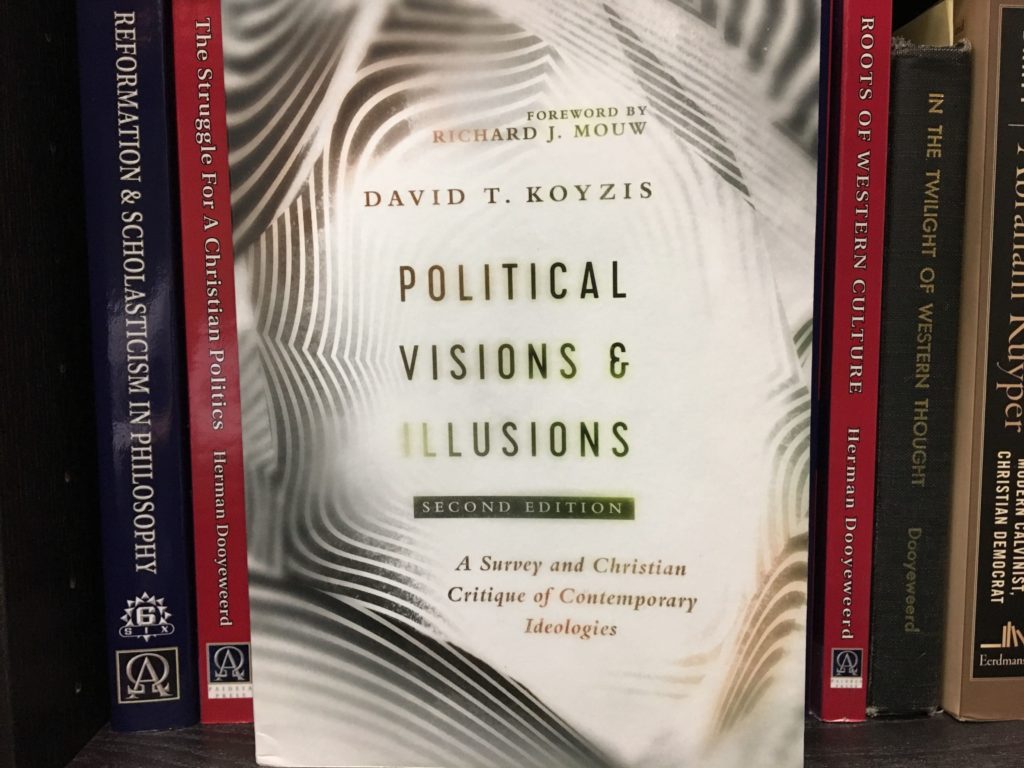
DK: As I was writing my first book, Political Visions and Illusions, I realized that it raised certain questions about the nature of authority and what humans do with authority once they have it. I began to think about how I could explore the idea of authority in a book that would be more broadly applicable. In many respects, I view We Answer to Another as more foundational and broader than Political Visions and Illusions. We Answer to Another is a more philosophical type of a book and has implications for politics, ethics, sociology, anthropology, and more.

JS: Your starting point is the image of God in Genesis 1. Some have explained this concept as meaning that we possess reason, or dignity, or what have you. But you connect the image of God to the idea of office and authority, which you also connect to the cultural mandate (Genesis 1:28) and to how we relate to creation and to each other – how we function in families, political communities,  churches, schools, workplaces, etc. Can you explain the connections here?

DK: Office and authority are the most basic elements of what it means to be human. Past theologians and scholastic tradition tried to focus on some element of the human person that somehow constitutes an image of God. More recent theologians have largely abandoned that effort, I think quite rightly so, because the image of God is something that defines us comprehensively and from the very onset. Everything that we have, every element, all of our activities are encompassed by this notion of the image of God. The image of God implies a wide grant of authority. God has given us the office of stewards of creation, with the authority to care for and develop creation.

JS: We think of God giving us authority over things below us in the creation order – as Genesis 1 says, “Let us make man in our image… so that he may rule over the fish…birds…and wild animals.” But what about human authority with respect to other humans? Is that a consequence of the fall or is that authority also somehow part of God’s original, good creation?

DK: I believe it’s part of God’s original design and good creation. We all have a certain claim over one another. I’m a father to my daughter and in that sense I belong to her and she has certain claims on me, a certain authority, even. Though I have authority as a father, I cannot simply do whatever I want. I have to take into account my responsibility to my daughter, to my wife, to my aging parents, to a variety of other people that I am accountable to. I think that would be the case irrespective of the fall into sin.

JS: Even if humanity had not fallen, parents would exercise authority in raising their children. We might see parental authority in particular as natural, or recognize its necessity “intuitively”, as you say in your book. But how do we get from there to such a wide range of offices and types of authority in human society?

DK: Well that’s something that has unfolded historically. The State as we know it, is only a little over 500 years old in the sense of a political community of citizens led by governments. Over time, humans also undertake a growing variety of activities, which leads us to establish various institutions, such as governments, churches, guilds, hospitals, schools, businesses, and so on. That’s an historical answer. But there’s also an answer in terms of the way that we are created, with various capacities. We’re created to be able to educate our young, to create art work, to sing, to make music, to till the soil, and much more. Such tasks are carried out through various offices we occupy.

JS: Sometimes such tasks – music, education, scientific inquiry, building things – require not just individual abilities, but also special executive offices?

DK: Yes. I play the guitar. At one time I used to play the banjo when I was a lot younger. That’s an ability, but I’m not authorized to play the banjo whenever I want. In the middle of church, I’m not going to stand up and start playing the banjo. I have the ability or the power to do so, but I don’t have the authority to do so at that particular moment, though I do have personal authority to decide to play my banjo on my own time.

JS: Right. So even if you’re really talented on the banjo, the music director at church, who holds an office with a certain authority, might not ask you to play. Someone might feel that their talent alone gives them that right, but it doesn’t. In the book, you discuss the relationship between human capacities or powers and authority. They’re related, but not the same. Can you explain that?

DK: Right. They’re not the same. Traditionally we can say that authority is the right to use power, the right to use the capacities that we have at our disposal. But power itself does not necessarily make for authority. But on the other hand, this is one of the remarkable things about authority is that authority itself carries with it a certain power. As soon as you drive into an intersection and see a police officer directing traffic, immediately you intuit that there’s legitimate authority. In other words, that police officer already has a certain unstated power over you. You don’t stop and think about what you’re going to do. You simply defer to the authority of the police officer. The office and corresponding authority that he or she has exerts a certain power over you.

JS: You also note that in our current cultural context there is quite a high level of cynicism or suspicion towards authority. How do you think the idea of office might help us to respond to those who are cynical about anyone in the position of authority, who might see authority or office as the mere “trappings of power”?

DK: This idea of office helps us understand that authority is all around us. We’re embedded in patterns of authority. We ourselves possess authority. Historically speaking, if you look back at French Revolution, or the Russian, Chinese, or other revolutions –where people are actively opposed to authority, they generally are quite willing to fall back on power. I think it was Mao Zedong who said that power flows from the barrel of a gun. People who deny authority are very likely to use coercive means to try to bring their ideas to fruition. Sometimes at the expense of millions of lives.

JS: So, when we perceive an abuse of office or a self-serving use of authority, we can stand up against it or criticize based on the largely intuited idea of office, which carries with it certain norms and limits for authority. But without that, what are we left with?

DK: Yes. If we have a high view of office, then rather than simply railing or rebelling against it, we recognize that we can call the office holder to use their authority in a non-abusive way. It’s not helpful simply to be cynical about authority per se. Rather, we should recognize authority’s legitimacy and on that basis, call the office bearer to exercise their authority in a way that fits the office, its norms and limits. Deny the legitimacy of authority, and you are simply left with a competition for power. But that view does not line up with our daily experience and intuitive recognition of authority.

To be continued… Look for Part 2 next week!


Happy Canada Day!

ARPA’s Director of Law and Public Policy André Schutten talks about the gift that God has given us through this country of Canada, but also shares some of the challenges that our nation is facing, both today and in the near future.

I’m always moved when I read the introduction to the Belgic Confession in the Book of Praise. It explains that a copy of the Belgic Confession was sent to the persecuting King Philip II, with a letter from a group of petitioners who “declared that they were ready to obey the government in all lawful things, but that they would ‘offer their backs to stripes, their tongues to knives, their mouths to gags, and their whole bodies to fire,’ rather than deny the truth expressed in the Confession.” This was no hyperbole. The persecution these petitioners faced included some of the most unimaginable cruelty and brutality known to man. Guido de Brès, the confession’s author, himself was martyred.

Today, the civil government in Ontario prohibits or severely curtails the church’s ministry of mercy, prohibits churches from celebrating the sacraments and prohibits corporate worshipping. This has been the case for three months, on dubious grounds, with no end in sight. In other provinces, multiple restrictions continue to limit corporate worship while many other spheres in society have reopened, or never been expected to close. I wonder, ought the church to muster more of a response than just a few demurring letters?

If Christian leaders are not motivated to urge the civil government to at least speak to the ongoing restrictions on churches, then perhaps our deafening silence gives credence to the belief that we aren’t so essential after all.

If Christian leaders (and all Christian citizens, as I addressed in my previous blog) are not motivated to urge the civil government to at least speak to the ongoing restrictions on churches, then perhaps our deafening silence gives credence to the belief that we aren’t so essential after all.  Have we lost our sense of what freedom is and what it is for? Have we forgotten that freedom, properly understood, was developed by a Christian worldview and enshrined in law by Christians over the course of the last 2,000 years?

Thankfully, some churches have already written letters, like  this one, to the civil government, urging a lifting of restrictions on corporate worship. Have the other 18,000 protestant churches in Canada?  I believe that it’s time for the instituted church to remember the authority God gave her, and to speak fearlessly and authoritatively to the civil government, urging a return to the full functioning of the church.

Romans 13 does not put the state above the church

Some church leaders have been quick to point out that Romans 13 requires submission to the civil government. That is an important point that we should never forget. However, the church should be careful not to cede its own God-given authority to the state. With church worship and a pandemic, there is an overlap of authority between the two spheres, but Romans 13 does not suggest a handover of church authority to the state in times of a pandemic (or any other time). The church and the state (and the family) stand side-by-side under the Sovereign Christ, each institution given their own authority from God and owing responsibility directly to God.

The church and the state stand side-by-side under the Sovereign Christ, each institution given their own authority from God and owing responsibility directly to God.

Note that I am not saying the civil government has no role here at all. Certainly, public health in times of a pandemic falls within the role of the civil government. But when that jurisdiction bumps up against church worship, there is an overlap. It is similar with fire codes limiting church building capacity and building codes that also apply to church buildings. These are properly within the sphere of the civil government and for the common good. But the church leadership does not cede their authority on calling people to worship in a particular building, nor do they blindly follow the civil government. If the local inspector insisted that a church was only allowed 50 people inside for fire safety reasons but was allowing 400 people into the same-sized bingo hall down the street, the church leadership would be right to challenge the civil government on this.

God has given the church the keys of the kingdom, the ministry of mercy, and the ministry of the sacraments. Too few churches are firmly reminding the civil government that the government is dictating to (rather than consulting with) a partner sphere. Compare the approach of our day with that of the civil government during the far deadlier Spanish Flu of 1918, which killed 50 million people. Note carefully the language used on Friday, October 4th, 1918, to close churches in Washington, D.C.:

Whereas the surgeon general of the United States public health service and the health officer of the District of Columbia have advised the Commissioners of the District of Columbia that indoor public assemblages constitute a public menace at this time; therefore, be it ordered by the Commissioners of the District of Columbia that the clergy be requested to omit all church services until further action by the Commissioners.

The churches responded by calling an emergency meeting of the Protestant ministers the very next day. There, they “voted unanimously to accede to the request of the District Commissioners that churches be closed in the city.” The pastors released the following statement:

Resolved, in view of the prevailing condition of our city (the widespread prevalence of influenza, that has called forth the request from the District of Columbia Commissioners for the temporary closing of all churches) we, the Pastors’ Federation, in special assembly, do place ourselves on record as cheerfully complying with the request of the Commissioners, which, we understand applies to all churches alike.

Reminding the state of its limited role is in no way subversive. Insisting on dialogue between sovereign spheres is not subversive either. It seems to me the more biblical witness.

Test and discern

In an April 23rd Q&A about submitting to government during a pandemic, Reformed theologian John MacArthur stated, “The Apostle Paul tells Timothy that we are to be good citizens. We are to live a quiet and peaceable life. We aren’t rebels; we don’t start protests; we don’t defy the government. We conform. We’re submissive to the government as basically ordained by God.”

And in an April 19th Q&A, when asked about churches that defy government orders and continue to meet, pastor MacArthur said:

In Romans chapter 13, Paul says, “You submit yourself to the government, the powers that be.” But Peter adds to that, “You submit yourself to the governor and the king,” whoever that personal authority is. I’ve heard people say, “Well, this isn’t constitutional.” That’s irrelevant. That is completely irrelevant. When you’re told by an authority to do something and it’s for the greater good of the society physically, that’s what you do because that’s what Christians would do. We are not rebels and we’re not defiant, and we don’t flaunt our freedom at the expense of someone else’s health.

While I agree with MacArthur on the general point of submission, I don’t think the situation with COVID-19 is as simple and straightforward as he makes it out to be. We have to think through situations very carefully. MacArthur’s second quote proves this. He states that “When you’re told by an authority to do something and it’s for the greater good of the society physically, that’s what you do…”. But an analysis is needed there, right? To suggest that it is “completely irrelevant” that a government order is unconstitutional is a surprising thing to say and misunderstands what “constitutional” means. To say that a government is acting unconstitutionally means it is acting illegally. They are acting outside the law. A Christian development in law, going back over 350 years already, is lex rex—“the law is king.” And, the king is not above the law. This idea is born out of Presbyterian and Reformed thought. Most Western governments, particularly in the English tradition, have adopted the principle that the rule of law, rather than the arbitrary diktats of government officials, should govern a nation. So, for a pastor to say that the constitution is “completely irrelevant” would be to turn a blind eye to lawlessness.

We need to know that what the government is demanding is actually for the greater good. For example, when China represses the Church, they don’t say they are doing it to repress the gospel. There are state churches all over that country. They prohibit larger gatherings and independent churches as a “national security measure”. National security is, like public health, properly within the sphere of the civil government. But just because the civil government says that something is a national security or public health concern does not make it so. Romans 13 does not require blind obedience. So in this situation, we actually don’t “conform” as MacArthur suggests. In the chapter immediately before Romans 13, Paul writes, “Do not be conformed to this world, but be transformed by the renewal of your mind, that by testing you may discern what is the will of God, what is good and acceptable and perfect.” We are called to have transformed minds. We have to test and discern and determine what is good and acceptable.

Pastoral urgency required

Speaking personally, a couple of Sundays ago was supposed to be a Lord’s Supper Sunday in my local church (we typically celebrate the sacrament once every two months). The last Lord’s Supper celebration was the Sunday before the lock-down began in mid-March. My wife and I were in the emergency room that Sunday due to complications from the birth of our son and missed Lord’s Supper. So, assuming the lockdown on churches in Ontario ends sometime in June (and there is no guarantee of that) it will be a full 6 months (possibly more) before my wife and I get the blessing and comfort of that indispensable sacrament again. The elders of the church should be grappling with their flock’s deprivation of the sacraments with a deep sense of urgency. Only the church leadership has this responsibility: I have no authority to celebrate a sacrament on my own in my home. And the civil government has no authority or responsibility to see that the sacraments are celebrated either – the sacraments were given to the church. Only the church leadership can be an advocate here.

Romans 13 does not annul the authority of the church.

To use a pastoral simile, it is like a few shepherds who own a lush meadow with a crystal-clear brook. The civil government tells the shepherds, “You may not pasture your sheep in that field because there are some poisonous weeds in the far corner of the meadow. We know you have concerns that your sheep need to be fed and watered, but what matters to us is that the sheep are not poisoned.” Should those shepherds simply shrug and submit?  Or does that sound like the response of a hired hand (John 10:11-13)? Should we not expect those shepherds to urgently advocate for their hungry and thirsty sheep? To advocate this way is not insubordination; it is asserting the authority God gave to the elders. Romans 13 does not annul the authority of the church.

Is this even about religious freedom?

In one email exchange I had with a pastor, he wrote, “This isn’t about religious freedom, it’s about some Christians disagreeing with the government’s approach to COVID-19.” This argument has less and less credibility the longer time goes on. I would grant this argument in late March 2020. Most public gatherings were treated the same. But as the data continues to roll in, and as restrictions begin to lift on industry and retail and outdoor social gatherings, the ongoing restrictions on churches begin to look more and more like churches being sidelined.

For example, when the Alberta government allows restaurants to open to 50% capacity, with no prohibitions on sharing meals, no limits on proximity of seating around a table, no restrictions on singing, laughter, boisterous talk or “speaking moistly,” no instructions to not shake hands or hug, but only allows churches to open with 30% capacity or 50 people, whichever is less no matter the size of the church building, with an explicit prohibition on sharing meals, on singing, and even on how communion is done, then this most definitely is about religious freedom. Since the freedom to worship and assemble is protected by the constitution, but eating at a restaurant is not, we should have expected those numbers to have been inverted, if not the same. The law requires maximum accommodation for church ministry.

Corporate worship is different in kind than a hockey game, a movie theatre, or a factory floor. ARPA Canada made this point to the House of Commons when defending section 176 of the Criminal Code, which criminalizes the disruption of church worship services. The federal government was proposing to remove this section as “redundant,” but we successfully argued that the section must stay because there is something particularly wrong with disrupting a worship service that is different in kind from disrupting a political rally or a university lecture.

Christians are not being singled out over against Jews, Muslims or Sikhs. But religious gatherings are being singled out over against industry and retail and government and outdoor gatherings and even from violent protests. This is absolutely a religious freedom issue, and requires an appropriate response from the church.

But what about the church’s witness?

In the past, the church witnessed to the world in the face of pandemics and disasters by rushing toward the pain and the mess and the disease to help, even though there were serious risks involved. Today, we are prohibited and shamed for doing so.

But Christ gave us freedom, including freedom from fear. So, when we ask about the church’s witness, are we more worried about going along to get along? What is our witness to our culture that is enslaved to fear? What is the witness of the church to a culture that is consumed with self-preservation? What is the church’s witness to justice and fairness? What about our witness of running toward the sick, rather than away? Where is the church’s voice on the spiking suicide rates, the relapsed addicts, the increasing domestic abuse, reported quadrupling of anxiety and other mental health concerns, the loss of meaningful work for millions, the massive increases in poverty for some and the incredible increases in riches for a select few, and so on? Is the church being a witness here too, or only on a single metric: quietly keeping COVID infections down? These are matters of public justice. And the church must be the voice of conscience in this nation.

So what should the church as institute do?

The firm and steady voice of your church has the potential to ensure that the church can do its task and ministry as church and remain faithful to the Ruler Supreme. 

First, pray. Pray for personal repentance and pray for our civil leaders and country. In so doing, encourage your congregation not to put their trust in men, machines, or medicine, but in God alone. Recognize that he remains sovereign, and that he turns adversity to our good. In particular, watch out for any idolizing of the civil government. The Heidelberg Catechism explains that idolatry is “having or inventing something in which to put our trust instead of, or in addition to, the only true God” (Q&A 95). If we are looking to the civil government to save us, we have an idol problem.

Second, grow in joy! Ask the Spirit to grow this fruit in you and your congregation so that in these times we can find reasons to be thankful. There are plenty of old and new reasons for gratitude!

Third, communicate, officially as a church, with the civil government and communicate the urgency of your requests well. (If you are not in church leadership, ask your elders to consider doing this.) This week is key for Ontario churches! On June 9th, the executive order banning corporate worship services expires. It will most likely be reinstated, possibly with some modification, this week. So communicate this week. While the tone must remain respectful, do not shy away from being insistent and urgent. Insist on answers and timelines and do it often, following the example of the persistent widow (Luke 18). Communicate your concerns about everything from limits on corporate worship to limits on the various ministries of mercy, including the incalculable harm of the lockdown on mental and emotional health. Demanding answers in a constitutional democracy is not insubordination. It is how our country is ruled and run.

Fourth, think local. Since local police and municipalities enforce these orders and have quite a bit of discretion on how to do so, perhaps they are willing to accommodate your church. Are you a rural church with a large property? Perhaps an outdoor service with ample room between folks would be acceptable this summer. This is how many of the great revivals spread: in the fields! Think creatively and ask for special accommodation and, if granted permission, get it in writing.

Fifth, urge your congregation to also be in regular contact with their political representatives, communicating with a sense of urgency that restrictions on worship must be lifted, that reasonable accommodations must be made. Sending a letter this week and make a phone call within a week if you have not heard back. ARPA Canada has this EasyMail to help you do this.

Sixth, consider your legal options. A legal action has been started against the Ontario government. Further legal action may be started against other provincial governments soon. Again, in a constitutional democracy, this in no way violates the principles of Romans 13, since legal action is simply appealing to a different branch of the civil government to confirm whether or not state action is legal (i.e. constitutional). Churches can initiate their own court action, or they can join together with a coalition of churches. ARPA Canada is considering an intervention in a current case on this question. We may want to work together with churches on this. We’d be pleased to know whether your church is interested.

Seventh, remember: relationship first, policy second. Perhaps it would be helpful to think about communicating with an elected official in the same way you would with a member of your ward who is beginning to stray from the Word of God. Know their name. Love them. Encourage them. Pray for them. Visit with them. Exhort them. But remain firm with them.

Together, the firm and steady voice of your church has the potential to ensure that the church can do its task and ministry as church and remain faithful to the Ruler Supreme. For that kind of witness to happen, the church must speak and act.

Could you be punished for refusing to support your daughter’s ‘gender transition’?”
Earlier this year, a BC Court released its decision in a crucial court case that ARPA Canada intervened in last year called A.B v. C.D.. Many people heard about this case, but few understand what the ruling means for families and for our fundamental freedoms. Be informed, be encouraged.

God has blessed Canada. Canada, along with Western countries, is consistently one of the most prosperous, freest, happiest, and most developed countries in the world.

Why?

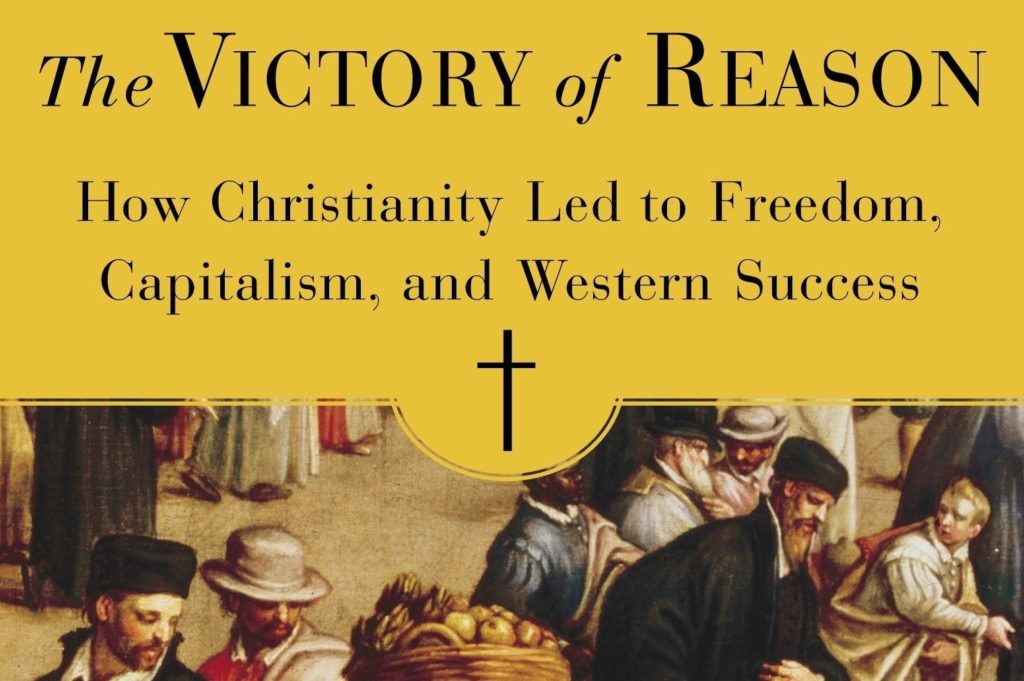
In his book, The Victory of Reason: How Christianity Led to Freedom, Capitalism, and Western Success, Rodney Stark, a professor of religious studies, argues that there are three specific reasons why Christianity – as opposed to other world religions – led to freedom, prosperity, and success in the West.


Reason #1: Christianity alone embraced reason as a method of understanding.

Human reason requires a very important premise: that both God and His creation are reasonable. Because God is unchanging, orderly, and reasonable, humans can increasingly know God. This is why Christianity developed an elaborate theology, a “formal reasoning about God” (p. 5).

This is why only the Christian world developed science. This conscious, all-powerful God created the universe to reflect His nature. Since God is immutable and orderly, His creation is also governed by immutable and orderly laws. This insight into the laws of nature forms the basic premise for science. For example, if gravity operated under arbitrary principles – if every time you dropped a rock, the rock fell at different speeds – it would be impossible to gain much understanding into how gravity operates. But gravity is not arbitrary, because nature was designed to be orderly by an orderly God.

Stark provides historical examples of Christians who acted upon this belief: “Newton, Kepler, and Galileo regarded the creation itself as a book that was to be read and comprehended… Rene Descartes justified his search for natural laws on the grounds that such laws must exist because God is perfect and therefore ‘acts in a manner as constant and immutable as possible’” (p. 16). All of these scientists made enormous contributions to understanding the natural world. Even in the Dark Ages, Stark chronicles how important innovation and technological advancement grew out of a Christian philosophy.

Other religions could not develop a complex theology or a scientific process because none of them shared this reasonable God. The Greek and Roman religions regarded their gods as whimsical and passionate. Also, although the famous Greek philosophers often made use of reason, they believed that ideals and motives drove nature, rather than natural laws. Islam too believes that Allah interacted with the natural world according to his whims, not according to laws of nature. The Eastern religions – Confucianism, Hinduism, and Taoism – all thought of God as an impersonal life force. None of these religions thought that their god was the creator of the laws of nature and thus nature – as well as god – were not able to be known. Thus, these religions never encouraged the intellectual curiosity necessary to do science. In Stark’s perspective, Christianity led to science because Christianity was a religion of reason.

Faith is far more fundamental to the Christian life than reason is.

But Stark forgets that faith is far more fundamental to the Christian life than reason is. Christians are men and women of faith, living by “the assurance of things hoped for, the conviction of things not seen” (Hebrews 11:1). Faith is not only a “knowledge” but also a “conviction” and an “assurance” created in us, not through reason, but by the Holy Spirit (Heidelberg Catechism, Q&A 21). According the Apostles Creed, “I believe,” not “I think” or “I reason.” We live by faith; reason is a wonderful gift from God by which we can strengthen our faith, know God more fully, and understand creation. Which leads to Stark’s second point…


Reason #2: Christianity alone had a faith in progress.

According to Stark, Christians believe that they can understand God and His creation better by studying God’s special revelation and His general revelation. This hunger to know God and His creation better have driven theology and science. This allowed Christianity to be forward-looking and progressive.

The Jewish and Islamic faiths, the only other monotheistic religions that had a chance of developing a deep theology based on reason, were backward-looking. These faiths traditionally have interpreted their scriptures as “law to be understood and applied” and as guides only for right living. Christianity, on the other hand, used Scripture as “the basis for inquiry about questions of ultimate meaning” and as a basis not only for right living but also for right thinking (p. 8). This is why the Christian world developed, while other religious communities stagnated.

However, Stark also misunderstands and mischaracterizes the Christian belief in progress. Stark claims that a fundamental characteristic of Christianity is that “Christian doctrines could always be modified in the name of progress and demonstrated by reason” (p. x). He claims that “devout Christians found it necessary to reformulate fundamental doctrines to make their faith compatible with their economic progress” (p. 55) and that “Christian theology has never crystallized. If God intends that Scripture will be more adequately grasped as humans gain greater knowledge and experience, this warrants continuing reappraisal of doctrines and interpretations” (p. 63).

God’s Word and His principles for righteous living and understanding are unchanging.

While such an evaluation might be true of liberal Christianity, it has thankfully not been the hallmark of Reformed Christianity. We hold that God’s Word and His principles for righteous living and understanding are unchanging. We always understand Scripture as authoritative and use the glasses of Scripture to interpret the rest of the world. The basic tenets of Reformed Christian theology largely have crystallized, although our theology is often applied to new issues or specific doctrines are emphasized to counteract the dominant milieu of modern culture. In the past centuries, Reformed theology has matured but liberal theology has evolved into something else entirely.


Reason #3: Christianity “discovered” individualism.

Stark realizes that “the notion that individualism was discovered seems absurd to the modern mind” (p. 23), but claims that individual freedom as a concept does not exist in most cultures, or even as a word in most non-European languages, including Hebrew, the language of the Old Testament (p. 24). This emphasis on individual freedom spawned developments in morality, human rights, and liberty.

This emphasis on individual freedom stems both from a Christian understanding that sin is personal and from the Christian doctrine of free will. (Stark ignores the fact that humanity has a fallen will but uses the term free will to denote that individuals can choose one thing over another. This stands in contrast to belief in fate or karma, subscribed to by most polytheistic and pantheistic religions.) Despite his emphasis on humanity’s free will and ability to make rational choices, Stark affirms the Christian belief in the sovereignty and providence of God, saying “the doctrines that humans are free to make moral choices and that God is omnipotent are entirely compatible” (p. 25).

Christianity was the first religion and culture to embrace the universal moral equality of all humanity

Unfortunately, Stark did not expand much on the Christian theological basis for individual freedom, although he spends the majority of his book explaining how this Christian penchant for freedom influenced Western development. He does mention that Christianity was the first religion and culture to embrace the universal moral equality of all humanity based on Jesus’ and Paul’s devotion to all classes of people: Samaritans, publicans, adulterers, beggars, Jews and Gentiles, free men and slave, males and females. Since all people bear the image of God and are morally equal in the sight of God, Christianity slowly began to develop a concept of individual human rights. Although these rights were not codified into law until much later, one early expression of this was the abolition of slavery in Europe during the Dark and Middle Ages.

Stark also credits Christianity for the first protection of private property. Although “the Bible takes private property rights for granted,” laws against theft and covetousness imply the right to private property (p. 78). This commitment to private property was the essential prerequisite for the development of capitalism and economic progress.

Stark credits these three factors – the embrace of reason, a faith in progress, and the discovery of individualism – as the foundational reasons why Christianity has led to the blessings of Western civilization. The majority of The Victory of Reason is devoted to tracing how these religious principles led to the rise of capitalism and freedom in the Italian city-states, Flanders and the Netherlands, England, and North America. Stark also recounts how a rejection of these factors led to stagnation in Spain, France, and Latin America, though they too were Christian.


Other interesting tidbits

Interspersed throughout Stark’s historical narrative are a few other thoughts that I found noteworthy.

Firstly, most of us are familiar with Lord Acton’s phrase, “absolute power corrupts absolutely.” Stark makes another provocative and pithy statement: “despotic states produce universal avarice” (p. 71). In other words, dictatorships that ignore the right of private property lead to the hoarding of wealth instead of the productive investment of wealth. For example, if the government can take away your house, your factory, or your money at will, there is little incentive for people to build nice homes, to own a factory, or invest money; under these conditions, people will squirrel away their money so that it cannot be seized by the government. This is why democratic, capitalist, and liberal nations are generally prosperous while undemocratic nations without the rule of law or functioning markets are generally poor.

Secondly, Stark also argues that that capitalism and freedom did not grow out of a Protestant philosophy and work ethic. He argues that both first arose in monasteries and matured in various Italian city-states. These developments arose before the Reformation, not after it. Thus, according to Stark, Catholicism was initially responsible for freedom and capitalism. However, Catholics quickly relinquished this torch. In response to the Reformation, the Catholic church experienced a counter-Reformation that eschewed freedom and capitalism. This allowed Protestants to be the sole carriers of the torch of freedom and capitalism in the Western world.

Stark does credit Protestant Christianity for universal literacy and the development of human capital. The “one doctrine most widely shared among the various dissenting Protestant movements was that everyone must consult scripture for themselves” (p. 226). This belief required that the average citizen to be able to read, prompting predominantly Protestant countries like Canada and the United States to develop much higher rates of literacy and human capital than most Catholic European or Latin American states.

Thirdly, Stark introduces a concept that will likely be new to most Christians: religious economy, an application of economic principles to the realm of religion. He describes how “religion languishes in a monopolized religious economy” but “thrives in a free market” (p. 199).

Why? Competition. Countries that historically enforced a state religion – Spain, France, and Latin American countries – ended up being culturally Christian rather than born-again Christian. When different religious traditions have to actively compete for adherents, the result is that each religion or denomination must have a vibrant theology and mission. Stark concludes that religious freedom is important because it allows this competition between faiths and denominations, which strengthens the churches that most faithfully follow God’s Word.


Can capitalism, individual freedom, and science grow in non-Christian nations?

Stark ends The Victory of Reason by questioning whether capitalism, individual freedom, and science can flourish in nations that do not know God. In Western nations, “a strong case can be made that, although Christianity was necessary for the rise of science, by now science [and capitalism and freedom] has become so well institutionalized that it no longer a requires a Christian warrant” (p. 234). In other words, is Christianity the training wheels for capitalism, individual freedom, and science that can be removed once they are up and running? Or does Christianity power Western civilization, just as a person riding a bike powers the bike by pedalling? Is Western civilization gliding along on the momentum provided by Christianity, doomed to falter when Christianity is no longer powering them forward?

Scripture provides us with the answer. In Deuteronomy 7 and 8, God speaks to Israel before they enter the land of Canaan. God promises to bless His people if they remember Him, but He also warns His people of the consequence if mankind forgets God after they have become successful and comfortable. These consequences are disastrous.

We are currently seeing Deuteronomy 8 playing out in the Western world. Much of this world – including much of the Christian church – revels in the prosperity and freedom that Christianity nurtured that they forget the foundation of these blessings: God.

But what about the non-Christian world? Can nations without a Christian heritage or a significant Christian population develop the capitalism, individual freedoms, and scientific method that allowed the Western world to prosper?

All of these blessings (capitalism, individual freedoms, and scientific method) are secondary to the blessing of knowing God.

Before answering that question, let me be clear that all of these blessings are secondary to the blessing of knowing God. Christianity should never be embraced by an individual or a nation as simply a means of prosperity in this world. This is the message of the prosperity gospel and the worldview of Simon the sorcerer (Acts 8). This cheapens – or flat-out ignores – the heart of the gospel: grace.

Nevertheless, I do believe that nations that embrace Christianity will trend towards capitalism, individual freedom, and scientific understanding. Due to different interpretations of Scripture and different cultures, we should not expect these nations to exactly replicate these systems as Western nations have. But I concur with Stark that faithful Christianity naturally does lead in the direction of capitalism, individual freedom, and scientific understanding. If we “seek first the kingdom of God and his righteousness, all these things will be added to you” (Matthew 6:33).


Conclusion

Although his book contains some flawed understandings about the essence of Christianity and engages in some revisionist history, Stark convincingly outlines how Christian theology contributed to freedom, capitalism, and success in Western civilization. Christians can reference The Victory of Reason to illustrate that the Christian faith, far from being irrelevant to society, results in many blessings to it. But these blessings also can be curses that seduce us away from the Giver of all these things. Let all people keep their eyes firmly fixed on Christ rather than upon earthly things like reason, freedom, capitalism, and Western success.

The Canadian Charter of Rights and Freedoms acknowledges the “supremacy of God”. Many see this as an inappropriate mixing of law and religion. Is it?

What if the Charter stated instead that the individual is supreme? Or the people? Or the nation? Or the working class? Each of these would be a statement of the law’s foundational commitment, a statement of belief. We shouldn’t think that politics becomes nonreligious simply by leaving out references to God. In his new book, Christian political philosopher David Koyzis helps us understand why.

In the new edition of his book, Political Visions and Illusions: A Survey and Christian Critique of Contemporary Political Ideologies, 2nd ed. (2019), Koyzis examines the political ideologies that shape our world, their partial grasp of truth, the redemptive narratives they tell, and their underlying religious – that is, idolatrous – commitments. These ideologies are all rooted in a religious worldview that shuts out God and claims human autonomy. Koyzis’ account of Christian politics is rooted in God’s Word and His enduring yet unfolding creation. It’s a superbly written and readable introduction to political theory for Christians.

This article is quite a bit longer than our average ARPA blog, but for good reason (I think). It’s worth sharing the wisdom of a leading Christian philosopher who taught political theory for 30 years. My hope is that this article will either (a) motivate you to read the book and help you to understand it when you do, or (b) at least give you the benefit of knowing its main ideas, which are so helpful for understanding contemporary politics Christianly. I’ve taken Koyzis’ 285 pages and given you only 10 pages here (until you get the book). Not bad, right?

What is an ideology?

Koyzis’ thesis is that political ideologies are manifestations of idolatry. “[E]very ideology is based on taking something out of creation’s totality, raising it above that creation, and making the latter revolve around and serve it,” Koyzis explains. Each ideology assumes that it “has the capacity to save us from some real or perceived evil in this world.”

The ideologies that Koyzis examines flow out of the gnostic heresy that “locates the source of evil not in our rebellion against God and his world but in something structural in his creation.” Thus these ideologies see salvation as deliverance from some facet of God’s creation. Also, these ideologies deny that sovereignty belongs to God, or that God has any real relevance for politics. Rather, they believe in human autonomy, which can take various forms depending on whether the emphasis is on the autonomous individual or autonomous group.

That’s pretty abstract, so let’s look at Koyzis’ examples. He examines liberalism, conservativism, nationalism, democratism, and socialism as competing secularist political philosophies.

Liberalism: the god of self

Liberalism believes in the sovereignty of the individual. In liberal theorists’ “state of nature” myths, individual freedom characterized our original, pristine state, but people chose to grant some authority to a minimalist state to protect themselves and their property. Evil is found where an individual’s freedom is constrained without his consent. Salvation is being freed from such external restraints on freedom of choice.

Early liberalism was wary of state power as a potential threat to individual liberty and focused on protecting individual political liberties by restraining state power. Later liberalism came to see private concentrations of wealth and power as another major threat to individual liberty and came to see the state as a potential liberator, freeing people from the restraints imposed by poverty, for example. Yet to do so, a government must  expand its powers, thus becoming a greater threat to individual liberty. This is one of the tensions inherent in liberalism.

Koyzis explains that while some liberals see freedom as more of a once-for-all goal accomplished by enacting and enforcing a bill of rights, others frame the liberal story as an “endless struggle to acquire more and more freedoms from all sorts of limits, whether political, social, economic, or natural.” You might think of publicly funded “sex-change” treatment as an example of “freeing” people from natural and social limits, for example. Later liberalism won’t settle for a basic, static set of political liberties, but will continually fight “oppression” of all kinds for the sake of greater individual autonomy.

Now, Christians can celebrate the legal protection of certain individual liberties without being ideological liberals – that is, without falling into the idolatry of individual autonomy. Koyzis points out the “truth in liberalism”, namely that certain decisions ought to be left to individual consciences and not dictated by the state, or church, or others. It’s unlikely liberal ideas would have taken root in a culture not shaped by Christianity, which provides a transcendent basis for individual dignity, rights, and duties.

But liberalism is grounded in a belief in individual autonomy. It therefore has no standard for right and wrong, progress or regress, besides an ill-defined individual freedom. Freedom for what? You decide – and then, you might demand not only toleration but also support for your choices. Such demands place pressures on others. Thus liberalism’s internal tensions are manifest.

Conservativism: idolizing human traditions

Conservatism is harder to pin down as an ideology. What is labeled “conservative” varies greatly by place and time. We might think of conservatism as simply a tendency within other ideologies, to avoid rapid, disruptive, top-down change. Conservatives tend to have a “heightened awareness of the fragility of human beings to fall into evil and chaotic behaviour.”

Conservatives also tend to have greater respect for traditions, even if a tradition cannot be defended by appeals to principles like liberty or equality. Traditions arise organically and serve some needed social function. Conservatives tend to favour the traditional – tried and enduring, if imperfect – over the theoretical.

While Koyzis sees wisdom in some of conservatism’s traits, including its recognition of mankind’s flaws and limits, he believes it ultimately fails as a political philosophy. It is insufficient. “The wisdom of past generations is intermingled with a large measure of folly,” Koyzis notes. Traditions may in fact be, in large part, unwise or unjust. How will we discern what to keep and what to change? Conservatives’ resistance to change, Koyzis adds, may fail to appreciate that change is not necessarily bad. In fact, God designed His creation to be developed by us. History begins in a garden and ends in the new Jerusalem.

To develop a Christian understanding of politics, Koyzis concludes, we must look beyond our traditions. We cannot simply look back, as conservative redemptive narratives often do, to supposedly idyllic times before urbanization or technological revolution or other major, disruptive changes. Rather, we must evaluate both tradition and change according to God’s creational norms.

Conservatism in North America today may appear to better align with a Christian understanding of politics since it at least pays lip service to limited government and the importance of strong families and other non-state institutions. But, Koyzis says, “there is nothing intrinsically Christian about it.” It has no coherent view of the proper place of politics in God’s creation. There are good things to conserve, but Christians must not settle for conservatism.

Nationalism: the nation is a jealous god

Nationalism’s “edge” over liberalism is that it takes community seriously, recognizing that people seek identity in community. Nationalism takes people’s desire for a sense of community and belonging and makes the state its focal point. Like conservatism, nationalism differs greatly from one place to the next. Nazi Germany’s nationalism was ethnic, glorifying the German volk and seeking to unify Germanic peoples under one state, while denigrating other ethnic groups. American nationalism is connected with “American values” like liberty and equality, and the American nation is defined by citizenship rather than ethnicity. Quebec nationalism emphasizes a shared language. And so on.

Nationalist redemptive narratives vary, but generally share the following outline. The nation (however defined) has long existed – perhaps supernaturally established – and has been given a special historical mission. But at some point the nation strays from its journey to greatness, falling under the control of outsiders. Salvation comes when outside control is cast off.

While there are good reasons for a “nation” – defined by common language, culture, and traditions – to be self-governing, nationalism errs by denying or ignoring the problem of evil within the nation and its people. Newly formed nations often discover that leaders who share their ethnicity, language, culture, and beliefs can be shockingly corrupt and brutal, even as cults form around them, glorifying them for their role in delivering the nation from oppression.

Oaths of loyalty, national holidays, statues, memorials, parades, museums and more may manifest nationalism, supplying its cultic spaces and liturgies. But the key thing about nationalism is that it demands a loyalty that ultimately supersedes and crowds out other loyalties, such as to church or family. The nation is sovereign, therefore everything must be subordinate to it. Where church creeds clash with national values, for example, the former must yield. Whereas Christian political theory accords the state a limited purpose and powers, “nationalism sees the state as the instrument of the nation’s aspirations and the expression of its will.” But the state itself also becomes an instrument for solidifying the national identity, especially “through the use of communications media and through its educational monopoly.”

Certainly, a sense of solidarity based on shared traditions and culture is not wrong. It is good and right to commit to and love one’s political community – what we might call patriotic loyalty. This, Koyzis says, is the “grain of truth” in nationalism. But such loyalty and affection must have limits. It must not swallow other legitimate loyalties. Nationalism fails by not respecting other communities with different structures and overlapping claims on people’s loyalties. It is idolatrous in that it vests the nation with spiritual ultimacy and sees it as the source of meaning and identity.

Democratism: the people’s will is sovereign

As a political structure, democracy allows citizens to participate in governance, mainly by voting for who will govern. Koyzis sees democracy-as-structure as a genuine advance. The body politic is by its nature not a private concern – it is a community of citizens and their government called by God to do public justice. So, it seems appropriate that citizens should exercise responsibility within and over that community. Another advantage of democracy is that making rulers answer to the people they rule can act as a check their power. Still, as Koyzis points out, many have feared democracy as a recipe for mob rule. Political philosophers from Aristotle to Alexander Hamilton have favoured a mixed constitution for this reason.

Democracy as ideology, or “democratism”, professes “vox populi, vox Dei” (the voice of the people is the voice of God). Like nationalism, it proclaims the sovereignty of the people. But whereas nationalists focus more on likeness between rulers and ruled (language, culture, ethnicity), ideological democrats focus more on shared will. Thus, evil is associated less with being ruled by people unlike you than with “being ruled by someone else, period.”

Democratism says government is based wholly on the “general will” of the sovereign people. Individuals, supposedly by choice, “give up their entire selves” to the body politic. The general will thus has no limits imposed on it, including individual rights – whatever rights you enjoy or lack are simply a product of the social contract or general will. It’s not that democratist theorists, Rousseau chief among them, wished to establish totalitarian governments. Rather, Koyzis says, they are “almost naively trusting” of the people and did not see the need to limit the legislative power of those claiming to speak in their behalf. Thus democratism, though it has theoretical roots in liberalism, is in tension with it.

Ideological democrats tend to see “more democracy” as a panacea, wishing to extend the democratic principle not only throughout the entire political system (think of Americans electing judges and prosecutors, for example) but also into other spheres – business, education, churches, etc. – making democracy a “way of life” and not merely a form of government. Christians should understand why that is misguided. Even the most congregational of churches, for example, should know that “ultimate authority for faith and practice does not issue from the will of parishioners … but from the word of God.”

Koyzis believes there are more or less Christian ways of doing democratic government. Koyzis favours representative democracy over direct democracy, for example. He also endorses Kuyper’s concept of the elected representative as a “bearer of principle” – someone who is open about and willing to defend and act in accordance with his political principles that motivate him – rather than a mere delegate who does his constituents’ bidding.

Finally, while democratic participation greatly enhances the making of just laws, Christians need to understand that popular approval is not, per se, the source of civil authority or law. Democracy does not equal justice. Justice is a creational, God-given norm, which Koyzis examines more closely in his final chapters.

Socialism: salvation via common ownership

In socialism’s redemptive narrative, people long ago shared the goods of the earth communally. But as communities settled down in one place, land came to be divided into privately owned parcels. Once this happens, and people can accumulate property, original equality breaks down into competition, monopolization, and exclusion. So, socialists wish to return to a society in which everyone equally possesses the earth’s goods. Their means of achieving this is through communal ownership of property. Political socialists try to achieve this by gaining control of government and using the state’s power to compel citizens to pool their resources. Socialists believe this is for the good of the whole community.

Since society has been so shaped by the capitalist spirit, socialists tend to believe that basic structures of society, including marriage, family, and church, must be overturned. For example, family loyalties make people want to take care of family first, neglecting the community, and to accumulate wealth to pass on to their children. Religion, in Marx’s view, was simply the “opiate of the people” designed to keep them from realizing the injustice and oppression of economic disparity. Both family loyalties and religion get in the way of a socialist future.

What if socialism is not working out well and most people wish to retreat from it? Socialists may be unwilling to tolerate retreat. Once the revolution has begun, even if the transition is painful, it must be completed. Herein lies socialism’s anti-democratic tendency. Socialists must retain power to achieve their goal, to complete their redemptive narrative, even by illiberal and undemocratic means. Thus socialism, despite its roots in democratism, is discordant with it – just as democratism is discordant with liberalism. Yet, Koyzis emphasizes, these ideologies are siblings, offspring of a shared faith in human sovereignty.

Despite the collapse of many socialist states, socialism as a worldview has enduring power. Radical feminism, for example, takes up the paradigm of oppressor and oppressed, and laments the (sexual) division of labour. Late liberalism reflects the influence of socialist thought. Social or cultural Marxism divides humanity into oppressors and oppressed in various ways. Tragically, these ideologies’ solution is to extinguish genuine diversity by suppressing ordinary human communities – like churches, religious charities, or independent schools – or pressuring them to comply with their worldview. They cover up this totalitarian tendency by pushing “a managed and false diversity based on race, gender, ethnicity, and sexual orientation.”

Nonetheless, even socialism has an element of truth. There is good to be found in seeking a fairer economic arrangement, Koyzis says, and you don’t have to be a socialist to recognize the problem of highly concentrated ownership of property. Further, people need “a certain minimum claim to the fruits of God’s creation” if they are to fulfill their calling as spouses, parents, workers, church members, and so on. Where they cannot obtain that, Koyzis says it is right to speak of injustice. Also, we ought to recognize that there are appropriate forms of collective ownership. Think of your church or school – who owns it? Various societal institutions should exercise ownership (or stewardship) “in a way appropriate to its specific institutional task.” The state, too, should exercise care for things held in common by the body politic. Koyzis also believes the state has a legitimate, but limited, redistributive role. Socialism errs, however, by trying to dissolve ownership into a single, central, collective form.

Misguided “Christian” approaches to politics and political ideologies

Koyzis notes three kinds of mistaken approaches Christians often take toward politics. First, “many Christians fail to acknowledge that their faith has anything to say to these ideologies.” For them, politics is secular and Christianity “does not address politics as politics and has few implications for public policy,” though it may be relevant in that it makes people more virtuous. We might call this the dualist or secularist view. Second is the “antithetical approach” or separatist view. It emphasizes the separation of the church from the world and disparages politics as worldly. It teaches that Christians should not try to be the state’s ethicists, but should focus on building up the church, which will endure forever.

Koyzis rejects both approaches. The former fails to grasp the all-encompassing claims of Christ. The latter neglects the state as a political community called by God to do public justice. While the institutional church has the divinely appointed tasks of gathering believers for worship and sacraments, preaching the gospel, and maintaining discipline, the church as organism is the body of Christ manifested in every field of human endeavour. Koyzis says the second approach (and the first, I would add) risks conceding much of reality to the kingdom of darkness.

The third mistaken approach is to fuse Christianity with belief in one or more ideology. Koyzis points to the “Christian national” movement of Afrikaner Christians in South Africa and to the rise of self-described “Christian socialists” in many places, among other examples. Christians wed themselves to one political ideology or another, Koyzis contends, when they fail to perceive them as intrinsically religious (and idolatrous) and instead see them as mere alternative means to attain goals like greater wealth or greater protection of rights.

Making an idol of one aspect of God’s creation, like individuality, community, nation, tradition, or economics, brings negative consequences. In North America, for example, we see the idolatry of individual autonomy destroy marriages, families, and communities. As Christians, we need to appreciate the importance and proper place of all these aspects, without idolizing any. But how do we do that?

From Christian worldview to Christian politics

Our political philosophy must be founded upon a Christian worldview. God is sovereign. He created all things good. He made us in His image and gave us the “cultural mandate” – to cultivate or develop the world He gave. Politics, like agriculture, architecture, industry, art, and so on, is part of creation. Even without the fall, human beings would need to develop rules for common action and systems for serving the common good. Romans 13 says God appoints rulers to punish evil – which is needed because of the fall – but also as servants for good. Of course, we are fallen, meaning our art, agriculture, music, scientific pursuits, and our politics are fallen too. But just as creation and fall are cosmic in scope, so is redemption. “The creation itself will be set free from its bondage to decay,” Paul writes.

Understanding God’s creation as a “normative order”, Koyzis says, is foundational for understanding how we are to live in God’s world, including with respect to politics. Here, Koyzis notes the objection of the Anabaptist theologian John Howard Yoder that, because of sin, we cannot know what God’s creation order is. Koyzis cites in reply Al Wolters’ statement that the “fundamental knowability of the creation order is the basis of all human understanding, both in science and everyday life.” Not only can we discern truths of mathematics or biology through God’s general revelation, but also truths of logic, justice, and ethics.

Some have responded to two kingdoms theology – which makes the Bible the book of the church and “natural law” the common moral language of believers and nonbelievers alike – by denying that we can reach any meaningful agreement on justice or ethics with those who reject the Bible. Koyzis is critical of two kingdoms theology too, but avoids this track. Indeed, if there really were no point of contact with unbelievers, it might seem to render futile the work of ARPA and other organizations to promote conformity to God’s norms, unless and until many more politicians accept Scripture as authoritative (and politically relevant).

Still, we must be cautious, Koyzis says, because “sin may prevent us from seeing these norms.” “This is where Scripture, coupled with a generous measure of spiritual discernment, plays a crucial role.” Because of sin, you and I need a divinely inspired “lamp to my feet and a light to my path.” Calvin said the Bible gives us spectacles to see the world more clearly. The Belgic Confession speaks of the creation order and the Bible as “two books” that reinforce and are continuous with each other. God’s Word enables us to perceive the partial truths embedded in ideologies, but also to identify what they neglect, warn of their dangers, and point to a better way for politics. That better way is what Koyzis calls pluralism.

Creational diversity and Christian pluralism

By “pluralism” Koyzis does not mean moral relativism. Far from it. Rather, he means that Christians should affirm “social pluriformity” or “structural diversity”. That is, we reject attempts to locate an earthly sovereign with final authority in all walks of life. God alone remains sovereign over all individuals, communities, and nations. “God is one, but his works are manifold.” We, God’s special creations, are culture-forming beings. We marry, raise children, work, play, study, visit museums, watch performances, participate in worship services, join clubs, support charities, vote in elections, and so on. We readily distinguish between marriages and country clubs, families and phone companies, fathers and CEOs. It should be obvious that these differences are important, but the ideologies obscure them as they idolize some form of human sovereignty and seek to shape society after it.

Koyzis gives a few historical highlights in the development of Christian political thought, but gives special attention to Abraham Kuyper and Herman Dooyeweerd. Two key ideas of Kuyper (though not entirely original to him) are the antithesis and common grace. The antithesis refers to the fundamental and unresolvable opposition between the Christian worldview and other worldviews. Common grace means God “preserves his creation against the full consequences of sin even amid human unbelief.” The fact that God’s creation order remains means that when people stray, they bring suffering upon themselves, which can serve as a limit to how far they stray. Unbelievers are capable of perceiving injustice and reacting. Kuyper could appreciate the good even in the humanistic revolutions he fundamentally opposed.

A third key idea of Kuyper’s was the doctrine of sphere sovereignty (Koyzis notes that this idea too is not entirely original to Kuyper or even to Calvinism). This doctrine teaches that (1) ultimate sovereignty is God’s alone, (2) all earthly sovereignties are subject to God, and (3) there is no penultimate locus of sovereignty in this world from which others derive. The latter point means that the state is not above the church, or vice versa. Society is non-hierarchical. The state does not bestow authority on the family, business, school, or political party to exist and fulfil its function. None of them bestow such authority on the others. Rather, God bestows it according to His creational design.

Government’s God-appointed task

“God has ordained an institution with a unique task: to do justice to the diversity of individuals and communities in his world,” Koyzis writes. This has been called government’s “jural task”. But what is justice? For many people, justice is some kind of distant goal. The “just society” is akin to utopia. It might be a society in which all wealth is equally shared, or one where everyone is free to “be who they are” sexually without stigma or consequence (my examples, not Koyzis’). But Koyzis notes that the classic definition of justice is “to render to each person her due,” which requires taking action. The Hebrew word mishpat, often translated “justice”, “consists not so much of an accomplished state of affairs as of an act of judgment.”

Justice is “giving something its right, its created place in God’s world,” as Paul Marshall put it. “In a healthy society,” Koyzis explains, “the various spheres of human activity develop in balanced, proportionate fashion.” Nationalism, socialism, and democratism drive the state to do too much. Liberalism may make the state do too little, particularly in terms of restraining evil. Ironically, this can lead to demands for government to do more to support people who are no longer integrated in healthy families and communities. Each ideology tends to monopolize education as well, to indoctrinate the next generation in its beliefs.

No state is ever entirely without justice, Koyzis says, though states may carry out justice in a distorted fashion. Certainly, questions of justice are not absent from families, schools, etc., but justice is the defining aspect of the state and its jural task captures all individuals, churches, schools, and businesses within its jurisdiction. That does not mean that the state tells families how to behave as families or churches as churches. But the state would rightly protect parents against having their children taken away by a church, or protect a church against being defrauded by a minister, or ensure that a family or household pays their taxes. The state should protect the differentiated responsibilities of the various spheres, including individuals.

But how are we to prevent this refereeing role from degenerating into totalitarianism? Or, as the ancient question goes, “Who will guard the guardians?” A Reformed approach, Koyzis says, posits both internal and external checks. Internal checks are those built into government itself, such as separation of powers, democratic checks, divided jurisdictions, federalism, and so on. External limits are even more various. Individuals, families, churches, and businesses are also called upon to act justly, and by doing so they can help to keep government power limited. Christians also have a prophetic role, to call on government to do justice in its sphere. Christians might even start a political party, “or they might establish a nonpartisan political action organization more modestly aiming to influence office holders.” And that, of course, is why ARPA exists.

Get the book!

Koyzis leaves myriad details to be worked out, of course. The book is not a collection of Christian policy proposals, but a starting point for thinking Christianly about politics. I hope I’ve given you a good sense of its main ideas. Still, it’s worth picking up for yourself. If you’ve got questions based on this summary, there’s a good chance the book will answer them.

The book is available for order from Christian publisher InterVarsity Press and from Amazon.