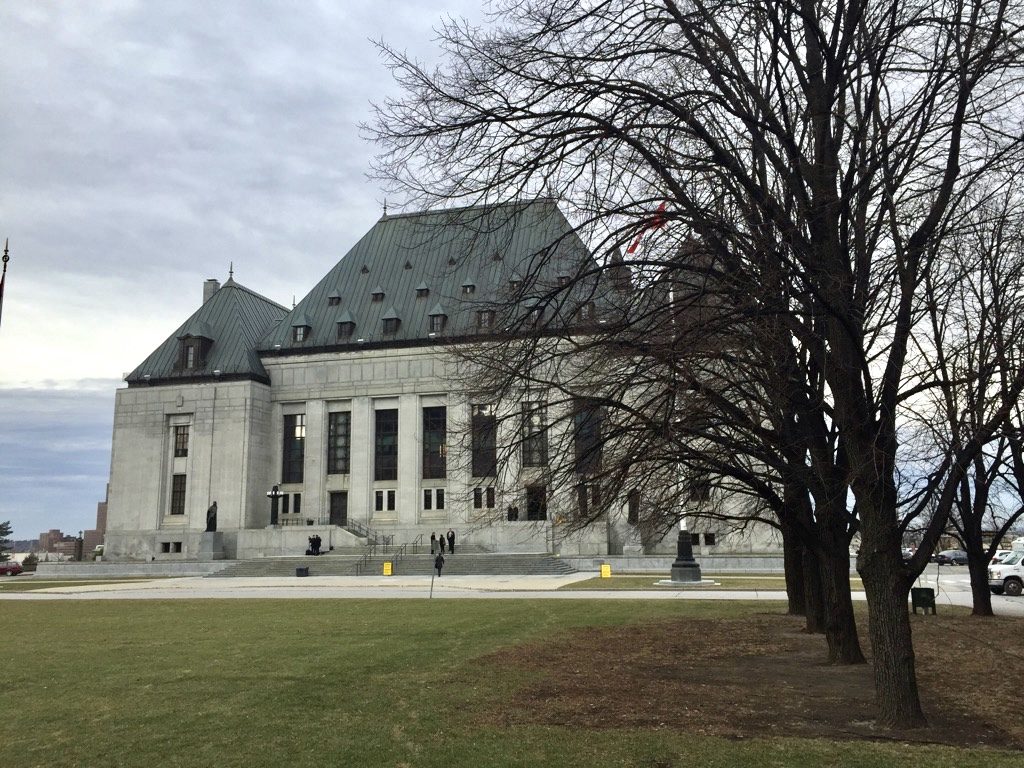
In 2018, we told you about a Supreme Court case called Wall v Highwood Congregation of Jehovah’s Witnesses. In that case, Mr. Wall took a Jehovah’s Witnesses Congregation to court for “disfellowshipping” him. Mr. Wall succeeded in the lower courts, but lost his case at the Supreme Court of Canada (SCC). The SCC decided unanimously that civil judges have no business reviewing a religious body’s decision to expel a member where no legal right is at stake.
That case raised the fundamental issue of churches’ freedom to govern themselves, particularly in matters of church membership, free from state interference. Thankfully, the SCC decision in Wall respected this freedom.
Sadly, last month Ontario’s highest court found a way to get around the precedent set in Wall. This is cause for concern and it confuses the law in this area. In Aga et al v Ethiopian Orthodox Tewahedo Church (2020), the Ontario Court of Appeal ruled that the plaintiffs, former church members, had a legal basis for taking the church to court.
The basis? When the plaintiffs became members, the Court reasoned, the Tewahedo Church’s Constitution (akin to a Church Order in many Reformed Churches) became a civilly enforceable contract between them and the Church. Not only that, but even the “guidelines” governing a special church committee that had been set up to investigate a heretical movement in the church form part of this “contract”. The plaintiffs had been members of this committee and were not pleased that the committee’s recommendations were not followed by church leadership.
Why does this matter for churches?
You can see where that takes us. Imagine a church member is displeased with the decision of your church’s pastor, or council, or even one of its committees. Should he be able to take the church to court over it? Do judges have the authority to decide whether the pastor / council / committee made the right decision or followed the right process? Of course, your church should carefully follow clear rules as it makes important decisions, but just because your church governs itself lawfully does not mean that its law and procedures are enforced or supervised by the civil courts. Civil courts enforce civil or “common” law. “Ecclesiastical courts” (e.g. synod) enforce ecclesiastical law.
The church must defer to civil government in matters of state jurisdiction but cannot defer in matters of church jurisdiction, particularly the preaching of the gospel and exercise of church discipline. What if a court declares a church discipline decision to be void? Whom does the congregation obey, their elders or the civil judge? Should the elders welcome this unrepentant brother to the communion table? As John Calvin explains, the power to bind and loose, or to forgive or not forgive sins, does not lie within mere men. Rather, Christ speaks through His office-bearers, whom He chooses as His instruments. Who then is a civil judge to declare a member’s excommunication – or restoration to fellowship! – to be void?
How the Ontario Court in Aga gets around Wall
Mr. Wall’s lawyer tried unsuccessfully to argue at the Supreme Court that church membership constitutes a civil contract. “Unlike many other organizations, such as professional associations,” the Supreme Court explained, “the Congregation does not have a written constitution, by-laws or rules that would entitle members to have those agreements enforced in accordance with their terms.” In other words, nothing between Wall and the Congregation resembled a civil contract.
Of course, the Congregation had written rules. As Mr. Wall’s counsel noted in his SCC factum, the Congregation, a registered charity, followed “a detailed organizational handbook… The handbook outlines the procedure for handling breaches of the Congregation’s rules. The handbook is given to all prospective members and periodically reviewed in the Congregation’s meetings. In addition, the Congregation follows guidelines published in The Watchtower magazine.” But, to the Supreme Court, the Congregation’s rules were not, on their own, the kind of rules “that would entitle members to have [them] enforced” in civil (rather than ecclesiastical) court.
In Aga, however, the contract argument succeeded. The Court of Appeal gets around Wall by noting that the Tewahedo Church does have a written “constitution and bylaws”. In fact, the Church uses those terms for its governing documents (unlike “handbook” in Wall). But the Court of Appeal failed to appreciate that the difference is semantic, not substantive. Whatever you call a church’s governing documents (church order, constitution, handbook, etc.), the key question is whether the document is intended (both by the church and its members) to be enforceable in civil court. In Wall, the Supreme Court concluded: “No basis has been shown that Mr. Wall and the Congregation intended to create legal relations.” The Court also commented that “members of a congregation may not think of themselves as entering into a legally enforceable contract by merely adhering to a religious organization.”
So how does the Ontario Court of Appeal get around that?
Oddly, the Court finds that the former members’ commitment to support the Church through monthly tithes made this a contractual relationship. To use the legal term, their tithes constituted “consideration”. Contract Law 101: Contract = offer + acceptance + consideration. That is, if someone offers you something (e.g. a car, or a job) in exchange for something of value (called consideration – e.g. money or goods or labour) and you accept the offer, you have a contract.
Why Aga is confused and confusing
In order to have a binding contract, however, you need intent to create legal relations, to be mutually bound. Not every exchange of promises creates an enforceable contract. In Aga, the Court of Appeal never mentions this mutual intent rule. But if the Court is right that the plaintiffs, by committing to support the church financially when they became members, now have civilly enforceable rights against the Church, it must also mean that the Church has civilly enforceable rights against them – meaning the Church could take them to court for failing to tithe. The Court never seems to contemplate this.
The Court notes that when the plaintiffs became Church members, they filled out a membership application form and filled in the amount they committed to contribute to the Church. (This might help churches who do nothing so formal to avoid Aga as a precedent, but one could argue that even a nonwritten or informal commitment to tithe also constitutes consideration). That may seem oddly formal to us, but the question remains: is this reasonably understood as a legal commitment, or a religious commitment? Are the parties answerable to God or (also) to civil judges?
The Court of Appeal’s decision in Aga exposes churches and other religious bodies to a higher risk of getting caught up in litigation with disgruntled (former) members over internal church matters. In the wake of Wall, which helped clear up some confusion in this area, the Aga decision is unfortunate.
Aga sows confusion about whether a church is at risk of having civil judges purport to exercise authority over matters God has entrusted to ecclesiastical authorities. If a church teaches an obligation to tithe to new or existing members, is it entering into a civil contract with them? How formal or explicit would the commitment to support the church financially have to be? And if a church has a detailed constitution or church order (rather than a less formal “handbook”, for example) will a court be more likely to claim jurisdiction to interpret and enforce it?
A court should not decide whether it has jurisdiction to hear a case based on something so vague as a church’s degree of formality or flavour of legality in its religious governing documents. Rather, as ARPA argued in Wall, the question of whether a civil court should resolve ecclesiastical disputes raises the most fundamental principles of law: the rule of law, freedom of religion, and the limits of civil jurisdiction.
I hope that the Tewahedo Church will appeal and the Supreme Court will reinforce its Wall decision, respecting the court’s limited jurisdiction in religious matters. Should the opportunity arise, ARPA Canada will also consider intervening and contributing a Reformed perspective to the SCC.
Disclaimer: This blog is not legal advice. For legal questions about the implications of this ruling for your church, speak to a lawyer directly.
Can the decision of a church or religious body to expel a member be appealed to a civil court?
Last week, the Supreme Court of Canada decided unanimously that the answer to that question is no. The lower court judge, Justice Wilson, and a majority at the Alberta Court of Appeal, had answered this question in the affirmative.
The SCC overturned the decisions of the lower courts for three reasons.
First, the Court ruled that judges can only review decisions made by state actors – those that have been granted powers by the legislature. Churches are not state actors. Their procedures and decisions are not supervised by civil judges, unlike public bodies, such as human rights tribunals, which courts do supervise and overrule if they decide a matter unfairly. Churches and other religious organizations (and other private associations) are independent of the state.
Second, the court stated that individuals do not have a “free-standing right to procedural fairness”. That is, you can’t take your church to court, or anyone for that matter, simply because you were treated unfairly. You must come to court with a recognized kind of legal claim, such as someone owing you money under a contract. But Mr. Wall had no legal claim. The fact that Congregation members no longer wanted to do business with him could not form the basis for a legal claim. He had no legal right to their business as customers.So, the Court is telling Canadian judges not to take on cases only because they think something unfair happened.
Third, the Court ruled that even if judges could claim a kind of supervisory authority over the Congregation – which they cannot – it would still be inappropriate for a court to decide the issues in this case, because they are spiritual and ecclesiastical in nature. The the judiciary should not make decisions about theology or the interpretation of the Bible. So the Court said, “The courts lack the legitimacy and institutional capacity to determine whether the steps outlined in [The Gospel According to] Matthew have been followed.” The Court acknowledged, as ARPA and others argued, the procedurefor church discipline is itself religious.
The Supreme Court did not rely on freedom of association or freedom of religion in the Charter of Rights and Freedoms to decide this case. ARPA argued that the Charter of Rights and Freedomsneed not apply to this case. Rather, ARPA argued, principles long preceding the Charterwhich limit the judiciary’s authority should suffice to resolve this case. Thankfully, those principles prevailed.
In our view, the court got it right. The case will stand as an important precedent protecting church independence and limiting judicial authority. And it is a good example of judicial humility.
On November 2, ARPA Canada’s lawyer John Sikkema argued in the Supreme Court of Canada in order to defend the independence of the church from State interference. In particular, he pointed out that church discipline is an authority given only to the church.
For more information on the Wall case, please visit https://staging.arpacanada.ca/wall-case.

ARPA had been accepted as an intervener in the case, and filed written arguments earlier this fall.
The issue was highlighted during the annual ARPA fall tour, and on the feature this week, we’ll hear an edited version of a presentation from John Sikkema on the background to the case. Much of the information in that presentation is very similar to the arguments he made before the Supreme Court.
—-
JS: We’re all aware that if a person is disciplined – excommunicated – it’s very serious. As the Heidelberg Catechism says, “They (the excluded, the excommunicated person) are excluded by the elders from the Christian congregation, and by God Himself from the Kingdom of Christ.”
Now, Jehovah’s Witness congregations – although not recognizing the divinity of Christ – purport to practice a form of excommunication that’s called “disfellowshipping”. Jehovah’s Witnesses also practice something associated with that that’s referred to as “shunning”, in kind of a fairly extreme form. And Jehovah’s Witnesses are not to speak to, or associate with disfellowshipped members. In this case, in April 2014, a man by the name of Randy Wall was disfellowshipped from the Highwood Congregation in Calgary for being in their view “insufficiently repentant” for instances of drunkenness and verbal abuse of his wife. And Mr. Wall was a Real Estate agent.
So what happens is, Mr. Wall is not sufficiently repentant; he goes through a church process and then a higher church process of several congregations, and then once he’s excommunicated – once he’s disfellowshipped – the Jehovah’s Witnesses who are his clients say “We don’t want you to be our Real Estate agent anymore. In fact, we’re not supposed to use you as a Real Estate agent anymore as per the teaching of our church.”
So Mr. Wall loses a lot of business. And perhaps because of that – certainly he used that as one of the reasons – he takes his congregation to court. He wants a judge to decide that the elders’ decision to disfellowship him was made unfairly; was made in error.
Now before the court could look at that, the congregation raised a preliminary question that the court had to answer. And that question is this: “Does a secular court even have jurisdiction or authority to decide this case?” And the lower court judge held that he did have jurisdiction to review the elders’ decision to disfellowship Mr. Wall. The congregation appealed to the Alberta Court of Appeal – the highest court in Alberta – and that court had a panel of three judges. And two of the three judges there agreed with the lower court judge. The remaining judge of the three disagreed, and with that split court, the congregation appeals to the Supreme Court of Canada.
So this case, then, is about the state’s authority to over-ride a church’s decision on internal matters. And not just any internal matter. There’s something quite core. One of the keys of the Kingdom. Church discipline.
Depending on what happens at the Supreme Court, the matter will either stop there; if the court says “Look, outside of some kind of legal interest, just an issue of church membership, spiritual authority; we don’t have authority to decide this”, then the case will end there and that will be in many ways a very good precedent. Or, the Supreme Court will say “Yup, this is something courts get to decide,” and then they tell the lower court judge (to) go back and look at all the evidence and decide what actually happened here. So this is just kind of a beginning question that made its way all the way up to the Supreme Court.
You can probably see by now that this case has implications for others besides Jehovah’s Witnesses. Reformed churches, as I mentioned, recognize and teach explicitly in our Catechisms that Christ gives the authority to exercise church disciplines to the church and not to civil magistrates. It’s the Belgic Confession that says “we are to obey the state in everything that is in accordance with God’s Word.” So it sets kind of a limit there on our obedience.
And we have a few key Biblical texts that go to how church discipline is to be done. That’s another thing that the other side isn’t arguing is that “maybe we don’t need to tell the church what to believe, but certainly we’re experts on what’s fair.” And we all know churches can treat people unfairly, and people have lots of stories of being treated unfairly by the church, and I would agree that churches should have fair processes in place to do something as serious as church discipline, but what they’ve been saying is “Let’s let the court deal with fairness.” They’re not going to tell your church “what to believe”, they’re just gonna see “is your church treating people fairly.” But how we do church discipline, of course, involves interpreting Scripture, which we believe the Spirit equips the church to do.
So we’re going to look at a couple of Bible passages briefly here. One is this, where Christ gives the keys of the Kingdom to Peter. “I tell you that you are Peter, and on this rock I will build my church, and the gates of Hades will not overcome it. I will give you the keys of the kingdom of heaven; whatever you bind on earth will be bound in heaven, and whatever you loose on earth will be loosed in heaven.” Another passage going to how this is to be done is found in Matthew 18, “If your brother sins, go and point out their fault, just between the two of you. If he listens to you, you have won them over. But if he will not listen, take one or two others along, so that ‘every matter may be established by the testimony of two or three witnesses. If he still refuses to listen, tell it to the church; and if he refuses to listen even to the church, treat him as you would a pagan or a tax collector. Truly I tell you, whatever you bind on earth will be bound in heaven, and whatever you loose on earth will be loosed in heaven.”
Now it’s a very serious thing; I think it’s worth reflecting on as Christians and as church members, as to how we do this, and that we do it carefully. But where this perhaps isn’t done carefully or even where it is, the question is “Who gets to decide who is charged by God to make sure that it’s done properly?” And we are arguing in our intervention that that is the church’s job. And in this case we have the potential that a civil judge – who knows if he’s a Christian, atheist, or Buddhist, in any case, whatever his belief, it’s not his role – can decide whether the Biblical texts we looked at have been appropriately interpreted and applied.
So if you just imagine that someone in your church is unrepentant for some sin, and is being disciplined, and takes your church to court for that, and the court demands that your consistory explain whether they properly interpreted what Jesus said in Matthew 16 and 18, and whether the sin in question is actually so bad, and whether repentance might look different from what the consistory thinks — and what happens if the court overturns the church’s decision? Who are we then to obey? What’s the church to do?
And at this stage, obviously, what we’re doing is trying to make the (Supreme) Court understand and respect that there is something called ecclesiastical jurisdiction; there is a sphere of authority in the church that we do have some history of recognizing and respecting, and we’re bringing that to the Court’s attention, and reminding it of that.
We know that if the Supreme Court gets the answer wrong, we’re gonna have further struggles on this down the road.
Colin Postma of the Association for Reformed Political Action (ARPA) Canada provides updates on what’s happening this week.
For more information on ARPA Canada, visit: https://staging.arpacanada.ca/.

Sikkema filed a 12-page factum; a summary of the legal arguments that ARPA is presenting in opposition to the idea that judges have any right to rule on cases of church discipline. “You can’t reduce a church, in its essence, to just a contract. Churches claim authority over people not based on a kind of voluntary agreement, but based on the authority that Christ gives to the Church, which is a spiritual authority. Churches have a claim to authority just like the State does. The Church respects the State’s sphere of authority, just as the State – including judges – should respect the Church’s sphere or authority.”
The case will be heard at the end of November. ARPA will have 5 minutes to present oral arguments.

ARPA will be submitting written documents by October 5th and the actual court date for oral arguments will be November 2nd.
Secondly, just last week, ARPA’s team wrapped up its written arguments in the Trinity Western Law School case. André Schutten points out ARPA’s unique position, “ARPA is the only intervenor that’s arguing exclusively Section 15, which is the guarantee in the Charter that every individual in Canada has the right to equal treatment in law.” When a government body such as a Law Society gets in the way of Christians to be licensed as a lawyer, that would be “an infringement of the equality right” that’s guaranteed in Section 15, according to Schutten.
That case is due in court over two days on November 30th and December 1st.
ARPA Canada will intervene in Judicial Committee of the Highwood Congregation of Jehovah’s Witnesses et al v Randy Wall at the Supreme Court of Canada on November 2.
UPDATE (Oct 4/17): see our written submissions to the Supreme Court here and our oral arguments here .
Background of the Case
Randy Wall was expelled – or disfellowshipped – from the Highwood Congregation of Jehovah’s Witnesses in 2014. The expulsion originated out of two instances of drunkenness and verbal abuse of his wife after which he failed to demonstrate repentance.
As a result, Wall experienced a loss of earnings in his profession as a real estate agent. Many of his customers were Jehovah Witnesses who now refuse to do business with him because of his expulsion. He appealed the expulsion first through the congregation’s appeal processes. When that failed, he turned to the courts.
The Court’s Response
The courts decided to deal first with the dilemma of jurisdiction: could they judicially review a decision made by a religious community? The Alberta courts decided the answer is yes.
Read a full analysis here of the court’s reasoning by ARPA Canada’s Legal Counsel, John Sikkema. In summary, their decision was based on the fact that Wall was economically impacted and Wall’s claim that his expulsion was procedurally unfair.
This even though the congregation is a private religious organization which Wall voluntarily associated with. There is no legal right or interest implicated in this case and there is no contract or by-law breached. The dissenting justice points out that without any of these, the court lacks the jurisdiction to judicially review this matter.
On November 2nd, the Supreme Court of Canada will hear this case. ARPA Canada will intervene as the issue of whether church discipline or membership decisions are subject to judicial scrutiny will have a profound impact on Reformed churches.
ARPA’s Arguments
Jesus gave the keys of the kingdom to Peter in Matthew 16, which the Heidelberg Catechism explains as referring to the preaching of the word and to church discipline. The Belgic Confession points out that church discipline is one of the marks of the true Church. Church discipline squarely falls under the Church’s jurisdiction and not under the state’s control. This decision to judicially review a church discipline case is the court attempting to use the key of church discipline.
ARPA argues that the fundamental principles of government as recorded in the preamble to the Charter – namely, the supremacy of God and the rule of law – reminds the state that it is not the highest authority and must check itself and decline to claim jurisdiction over matters rightly governed by the Church.
The state has nothing to fear from the proper exercise of church discipline. As John Calvin wrote nearly 500 years ago, “[C]hurch discipline requires neither violence nor physical force, but is contented with the might of the word of God.” Conversely, were the church to use the exercise of church discipline as an excuse to commit violence or confiscate property, the state would have grounds to intervene. In Wall’s case, there is no justification for court interference.
Warning: Undefined array key "img_size" in /home/arpa/arpacanada.ca_2026/wp-content/themes/arpa-child/admin/functions/VC_translate.php on line 144


ARPA is looking at filing for intervenor status in this case and lawyer John Sikkema is busy this week studying what it would take to file that application.
LN: So give me some background on this case. I mean, there’s really a battle going on here between the authority of the State and ecclesiastical authority of a church. But let’s start at the beginning. How did this all get going?
JS: Sure. So a man named Mr. Wall is disciplined by his Jehovah’s Witness congregation for being unrepentantly drunk – or in their view not sufficiently repentant for a couple of instances of drunkenness. So as a result, the church “dis-fellowships” him – that’s the term that the Jehovah’s Witnesses use for essentially excommunicating. And Mr. Wall is a real estate agent. So Mr. Wall has something like half his business from fellow Jehovah’s Witnesses, but they refuse do to business with him now because he is being dis-fellowshipped and “shunned” according to their practice. So he loses some of his business and, since he’s got a financial interest here, he takes the Jehovah’s Witness congregation to court and challenges their decision to dis-fellowship him.
LN: So I guess initially I would ask “What’s the fundamental difference here between the ‘dis-fellowshipping’ and the ‘shunning’ that the JW’s practice, and what’s sort of been historically considered ‘church discipline’ in the more mainstream Protestant and Reformed way of thinking?”
JS: Yeah, I think that difference does play into how the case plays out. I mean people can look at something like church discipline and see it as something controlling or even creepy, and I think some of those misconceptions about church discipline do come from people doing it wrong as, you know, Christians often do things wrong and not in accordance with how the Bible teaches. And here I think the Jehovah’s Witness practice of “shunning” – that you don’t do business with the person, you don’t eat with them, you don’t do other things and that could even be between members of the same family; there’s a certain amount of social shunning that occurs when a person is dis-fellowshipped – that that seems to be a confusion of the purpose of discipline. So if you look at “what’s the end and the means of discipline”, I think in our teaching the point isn’t to shun the individual.
You know, it’s Matthew who records for us “treat the person like an unbeliever or a tax collector.” This is Matthew, the former tax collector. And so what does that mean, to treat the unrepentant sinner who’s being disciplined as a “tax collector?” Does it not mean to lovingly pursue that person with the aim of restoring them, and to show them love? That may mean that they’re not allowed to do certain things in the church, but (should) the way that you relate to them (actually be) “I’m not allowed to talk to you help you, or do business with you, or any of those things anymore. That’s my way of loving you as an unbeliever.” I don’t think that fits. So that I think would be the difference.
And I think factually, that plays into how sympathetic the court is to Mr. Wall. They are sympathetic towards him and they see him as losing business – and he has a financial interest – and based on that sympathy sometimes you can get around what the law actually says, when you’re motivated in that way.
LN: So what’s really at stake here? I mean as Reformed thinkers, we talk a lot about “sphere sovereignty” and that’s kind of ethereal to a lot of folks, but there’s the authority of the sphere of the Church, there’s the authority of the sphere of the State. In this case, there appears to be – according to the lower court rulings – some overlap, and the question becomes who has precedence.
JS: Yeah, I think, if I could try to put it in one sentence, it’s “Can a matter of church discipline be appealed from the Church to the State?” So there may be legitimate areas of – you could say – overlap or interaction between the spheres; between Church and State. But here, it’s kind of like the State becomes a Synod or a higher level of appeal of a church discipline decision. So that’s what’s going on here. Mr. Wall is asking the court to say “Can you decide that the congregation improperly dis-fellowshipped me?” That raises questions of church practice, it raises questions of church doctrine, it raises questions of judging him to be sufficiently repentant or not. Things that the courts aren’t equipped to do.
So this case actually didn’t get into that yet. It didn’t get into “was he properly dis-fellowshipped? Was the procedure fair? Have his civil rights – his property rights, his contract rights, anything like that – been violated?” They just started with the question “Do we even have jurisdiction here? Do we – the judges – have authority even to look into this case, or should we reject it out of hand?” And so this is kind of the preliminary question before getting into the rest of the facts of the case. And both the lower court and the Court of Appeal (have decided) “Yes, we have authority to review the decision of the Jehovah Witnesses congregation.” And that’s the problem; they’re claiming the authority to do that.
LN: And that’s what’s going to the Supreme Court. The Supreme Court has agreed to hear that. Now moving forward, ARPA’s considering applying for intervenor status on that, and considering putting together some kind of a coalition of churches in the same way that we did a coalition of independent schools and Christian schools in the Loyola case, correct? What might that look like and how long’s it going to take before we determine whether or not we’re going to do that?
JS: Well, it will need to be determined soon, because the Court has given leave to appeal on this case and arguments are starting to be filed now. So we’ll need to move fairly quickly on that. But one of the reasons we want to get involved is to bring the Reformed perspective on church discipline to the public and to the courts; and to remind the court of the historical developments in the relationship between church and state, and of the importance of church independence and the limit of state authority over the church, historically. That’s something that’s just fundamental to the development of democracy and the rule of law. And we do also want to maybe highlight some differences between Reformed practice and Jehovah’s Witness practice.
We can definitely count on the Jehovah Witness congregation and their lawyers to argue that freedom of association and freedom of religion gives them the authority to make these kinds of decisions. So we would want to reinforce that, but obviously not just repeat what the Jehovah Witnesses’ lawyers are going to be saying about their Constitutional freedom to do that. We’d want to put things in a broader legal/historical context, with a Reformed perspective to really impress on the Court how important this is.