Sex-based violence against women and girls – violence perpetrated against females solely because they are females – is a sad reality of our fallen world. To combat this injustice, the United Nations established a Special Rapporteur on violence against women and girls in 1994. The mandate of the current Special Rapporteur, Reem Alsalem, is not only to identify common forms of violence against women and girls but also to investigate their causes and consequences. 

Late this spring, Alsalem released a report titled Sex-based violence against women and girls: new frontiers and emerging issues. The report is global in scope. It points out cases of gender-based violence in countries like Afghanistan, India, Myanmar, and Sudan that are egregious to Western sensibilities. But Alsalem doesn’t give Western countries a free pass. Sex-based violence happens here too. The most frequently mentioned Western countries in the report are Canada, the United Kingdom, and Israel.  

Alsalem touches on many forms of sex-based violence in her report. We will touch on only four: gender ideology, medical transitioning for minors, sex-selective abortion, and pornography. 

Gender ideology 

Alsalem devotes more space to discussing the abandonment of biological sex in favour of gender ideology than any other issue. Canada is one of the worst culprits. In the space of five short years, the federal government and almost every single province and territory incorporated gender ideology into their human rights statutes. Prior to 2012, these statutes forbade discrimination based on sex. But between 2012-2017, they added gender identity and gender expression as prohibited grounds for discrimination. This has allowed men to compete in women’s sports, men to enter women’s private spaces, teaching gender ideology to school children, and a surge in medical transitioning for minors. 

Replacing biological sex with the concept of gender identity has many consequences, but five of particular note. 

First, this shift undermines sexual equality and sex-based legal rights. “Women are therefore being denied their rightful recognition as a distinct category in law and society,” the report reads.  

Second, it expands the opportunity for sex-based violence. The erasure of sex-specific language makes sex-based violence against females harder to combat and even identify. For “what is not defined cannot be protected,” the report states.  

Third, fewer services are available to women. “Approaches that deny the sex-specific grounds for discrimination and violence against women and girls undermine the ability to provide effective and relevant services for women, particularly survivors of violence, and women and girls with specific needs,” Alsalem finds. “Besides the known risks to fairness, safety and privacy, such a shift may cause women to self-exclude from services and spaces given uncertainty about finding female-only support or having their specific needs met.” 

Fourth, gender ideology reinforces gender stereotypes. Gender ideology is “heavily based on stereotypes, often framing sexist norms about how women should dress and behave as a form of ‘gender expression’, which reinforces those stereotypes rather than combating them.” Ironically, while a goal of the gender revolution was to loosen gender stereotypes, it has ended up cementing them. 

Fifth, the worldview shift of gender and sexuality has eroded the freedom of belief and speech. One example of this in Canada includes our federal conversion therapy ban. This ban criminalizes the application of one view of sex and gender in professional services. A BC nurse being professionally disciplined for her views on the topic is another example. 

In response to all of these consequences, Alsalem said this in a recent speech before the UN: “Let me be frank. I never imagined the day would come where my mandate would deem it necessary to prepare a report affirming that the words women and girls refer to distinct biological and legal categories.” 

And thus, the report starts with a simple definition – or rather insisting – of terms: 

“Sex” is understood as a biological category and as a distinction between women and men, as well as between boys and girls. References to “sex” refer to the biological distinction between males and females, characterized by divergent evolved reproductive pathways through which, all else being equal, males develop bodies oriented around the production of small gametes and females develop bodies oriented around the production of large gametes. As evolutionary biologist Richard Dawkins notes: “Sex is a true binary.” 

The term “gender”, on the other hand, has been defined by the Committee on the Elimination of Discrimination against Women as the social meanings given to biological sex differences. It is supplementary to and built upon biological differences between women and men… In the last few decades, the term “gender” has wrongly been taken to be synonymous with the term “sex”, including in some international declarations and instruments. 

The report ends with a simple recommendation: governments must “ensure that the terms ‘women’ and ‘girls’ are only used to describe biological females and that such a meaning is recognized in law… Legislation and policies that expand the definition of sex to include ‘certified’ or ‘legal’ sex or conflate sex with gender identity or substitute one term for the other should be rescinded.” 

Medical Transitioning for Minors 

Perhaps the greatest effect of replacing sex-based identity with gender-based identity is the exponential growth of medical transitioning for minors in Canada and other Western countries. Alsalem condemns medically transitioning minors in the strongest terms:  

“The long-lasting and harmful consequences of social and medical transitioning of children, including girls, are being increasingly documented. They include: persistence or intensification of psychological distress; persistence of body dissatisfaction; infertility, early onset of the menopause and an increase in the risk of osteoporosis; sexual dysfunction; and loss of the ability to breastfeed in cases of breast mastectomy (to mention a few). That has rightly led several countries, such as Brazil, the Kingdom of the Netherlands and the United Kingdom to change course and restrict children’s access to puberty blockers, cross-sex hormones and surgery on sexual and reproductive organs. Allowing children access to such procedures not only violates their right to safety, security and freedom from violence, but also disregards their human right to the highest standards of health and goes against their best interests. Children are also not able to provide informed consent for such procedures. In situations in which such procedures have been found to have caused grave and lifelong harm, consent would be meaningless for both adults and children.” 

Alsalem recommends that governments: 

“Uphold the rights of children, including girls, to be free from all forms of physical and mental violence and to the highest attainable standard of physical and mental health, including through the prohibition of legal and social transitioning of children who claim to experience gender dysphoria, as well as their subjugation to experimental, irreversible medical interventions related to gender reassignment, while ensuring comprehensive, evidence-based assessments for them to address underlying neurodevelopmental, psychological or other conditions before any intervention. Moreover, States must establish legal and policy frameworks providing effective remedies, accountability mechanisms and robust support services for all harmed by such interventions, including those seeking to detransition.” 

Alsalem touches on several key issues around medical transitioning for minors: it is harmful, irreversible, has long-term effects, lacks meaningful informed consent, and is experimental. And notice the language that she uses. She doesn’t present this as a question of choice for children or even mature minors. Instead, she refers to children’s “subjugation” to these procedures. Who Alsalem has in mind as the subjugating party – medical professionals, governments, activists, or parents – isn’t clear. But what she does make clear is that this isn’t an issue of freedom, choice, or consent. This is an issue of harm, violence, and subjugation.  

Because of this harm, many people will choose to detransition. Rather than pretending that the desistence rate is low or ignoring detransitioners altogether, Alsalem insists that governments need to support detransitioners. Detransitioners will need health care, certainly. But they also deserve justice against those responsible for harming them and restitution for the bodily harm that they have suffered. Hence, the Rapporteur recommends that governments “establish legal and policy frameworks providing effective remedies, accountability mechanisms and robust support services for all harmed by such [medical transitioning] interventions, including those seeking to detransition.” 

The report also hints that government should do the opposite of medical transitioning. Governments must provide the “highest attainable standard of physical and mental health” and ensure “comprehensive, evidence-based assessments for [gender dysphoric children] to address underlying neurodevelopmental, psychological or other conditions.” In other words, governments should provide other interventions such as counselling to children with gender dysphoria.  

And finally, governments shouldn’t just stop at banning medical transitioning for minors. She recommends that government prohibit “legal and social transitioning” as well. This would include policies that prohibit adolescents from changing their sex designation on government-issued ID or to adopt a new name or pronouns at school. Instead, Alsalem recommends that governments begin education campaigns to reverse the growing acceptance of gender ideology. 

Pornography 

The report also decries the evil of pornography. Pornography tends to “objectify females, sexualize and commodify the female body and eroticize violence,” the report states.  These themes are central in ARPA’s policy report on pornography. Pornography doesn’t portray women and girls as human beings made in the image of God and worthy of dignity and respect. Instead, pornography portrays women as mere tools for sexual pleasure, tools that can be bought, sold, and abused. With this worldview behind pornography, it is no wonder that pornography is filled with violence, coercion, and trafficking. 

Alsalem’s UN report investigates new frontiers and emerging issues of sex-based violence, so it is unsurprising that she considers how technology is transforming the pornography industry. “Technology-facilitated violence against females is an increasing concern that often remains unrecognized and unreported,” she writes. “In a 2021 study on online violence against women in 45 countries worldwide, it was found that 85 per cent of the women surveyed had encountered online violence, including harassment, the sharing of intimate and sexual content through social media, sextortion, cyberbullying and the exploitation of females in pornography.” Deepfake pornography is another technology-related problem. 

In response to the digitization of pornography, the Special Rapporteur recommends that “States enact and enforce comprehensive legislation criminalizing all forms of digitally facilitated sexual violence.” But she doesn’t stop there. “To be effective, efforts to combat violence against females generated through artificial intelligence must take place within broader efforts to combat the system of pornography and prostitution, to prevent and raise awareness of all forms of sexual exploitation of females and to criminalize pimping and the purchase of sexual acts.” These suggestions again mirror the recommendations we make in our policy reports on pornography and prostitution

Sex-Selective Abortion 

Alsalem also criticizes what few United Nations reports have dared to mention before: sex-selective abortion. While United Nations agencies aren’t known for pro-life views (and we have no idea where Alsalem stands on the issue of abortion generally), Alsalem decries sex-selective abortion as a form of violence against women.  

“Prenatal sex-selective practices, including sex-selective abortion are a major form of sex-based violence. Sex-selective practices encompass ‘all practices that involve the direct or indirect elimination of girl children because they are female.’ Sex-selective practices are rooted in a culture of son preference and daughter aversion, linked to persistent socioeconomic conditions that lead to men and boys being perceived as economically and socially more valuable than females. As a result, ‘sex-selective practices represent one of the most direct and blatant forms of sex-based violence and discrimination, beginning at the earliest stages of life.’ According to United Nations estimates, as of 2020, 142.6 million females were ‘missing’ globally, in particular in Asia, as a direct result of sex-selective practices.” 

First, 142.6 million people is a staggering figure. While sex-selective abortion might not be responsible for all of those “missing” women – post-birth abandonment and murder of girls are assuredly responsible too – it likely accounts for most of them. Each life lost, whether to an abortion or any other form of violence, is a tragedy. 

Second, Alsalem recognizes that human life begins in the womb. Although not recognizing a pre-born girl as a person with all the attendant rights, she does recognize that sex-selective abortion is a form of violence and discrimination at the earliest stage of life. Life indeed does begin in the womb. A pre-born child isn’t simply part of a mother’s body. Rather, that child is in her earliest stage of life and deserves protection against violence and discrimination. 

Third, the Special Rapporteur claims that sex-selective abortion represents “one of the most direct and blatant forms of sex-based violence.” And her report mentions a lot of other physical forms of sex-based violence – “femi-genocide,” femicide, intimate partner violence, sexual violence, sexual exploitation, rape, prostitution, pornography, abuse, and harassment just to name the most egregious ones. As diabolical as these other forms of sex-based violence are, most women in these circumstances have the opportunity to fight back or escape the violence in some way. Although they might not have a high chance of winning a physical fight or a legal battle, they at least have a fighting chance. Pre-born girls, though, have no chance. They are completely defenseless. They have nowhere to escape to. The one place that should be the safest and most nurturing in the world – her mother’s womb – could be the equivalent to a cell on death row. Sex-selective abortion is indeed a tragedy. 

That’s why the report calls on governments to “enact and rigorously enforce laws prohibiting prenatal sex determination for non-medical purposes, sex-selective abortions and female infanticide. States should regulate the use of ultrasound and other diagnostic technologies through the mandatory reporting of all prenatal scans and their medical justifications. That ensures accountability, deters illegal practices and directly curbs the mechanisms enabling sex selection.” The Canadian federal government could implement this recommendation by banning sex-selective abortion in the Criminal Code. This is what Bill C-233 proposed in 2021. Alternatively, provincial ministries of health could require medical professionals not to disclose the sex of the child until late in pregnancy. 

Conclusion 

Sex-based violence happens in Canada. The gender revolution’s penchant for basing identity upon gender identity rather than biological sex is making sex-based violence both more likely to occur and more difficult to measure. Medical transitioning for minors, pornography, and sex-selective abortion are prominent and egregious forms of sex-based violence in Canada. We should implement the United Nations Special Rapporteur’s recommendations to stop these injustices.  

We’ve Updated our Policy Report: https://staging.arpacanada.ca/publications

ARPA Canada just released an updated version of one of our original Respectfully Submitted policy reports – Pre-born Human Rights. While the content was still accurate, the old report failed to capture the work and nuance of We Need a Law, ARPA’s pro-life campaign. The new report details the three key initiatives we focus on through We Need a Law and lays out a path forward for members of Parliament in a country where there is little appetite for a full ban on abortion.

Background

From 1892-1969, all abortions were illegal in Canada. In 1969, Parliament amended the Criminal Code to permit abortions for health reasons if a panel of three physicians agreed it was justified. In 1988, the restrictions on abortion in the Criminal Code were struck down. It is important to note that neither the court nor the Charter prohibited a different abortion law, and the Supreme Court did not find a constitutional right to abortion. They rightly left the making of a new law up to Parliament.

In 1990, a bill which would have implemented a less restrictive abortion law was introduced into Parliament. That law, however, was defeated on a tied vote in the Senate, and the issue of abortion has never been meaningfully revisited by Parliament.

We need a law

Recognizing that most Canadians are not currently receptive to a full ban on abortion, our recommendations in this report focus on specific policies that most Canadians would support. Political leaders too often get caught in divisive abortion politics where everyone loses. We need to take steps to have these conversations in a way that finds common ground, while never wavering on our commitment to defending the full humanity of the pre-born child.

If political leaders bring forward specific, narrow policies, they can also narrow their talking points and focus on meaningful discussion. Our three federal issues of focus are:

• A sex-selective abortion law, which would ban abortion for the reason of sex selection and so honour our commitment to equality of the sexes.
• A pre-born victims of crime law, which calls on our justice system to recognize pre-born children as victims when they are killed with their mothers as a result of violent crime.
• An international standards law, which would bring Canada in line with other democratic countries by banning abortion after the first trimester and introducing a waiting period and counseling requirement for women seeking an abortion.

Canada has gone without an abortion law for more than three decades. Abortion in some cases was legal two decades before that. Millions of Canadian babies have lost their lives to abortion, and Canadian society has accepted the killing of pre-born children as a necessity of equality. The abortion debate will never be closed, but it is up to us to continue speaking up for those who cannot speak for themselves. We need to continue promoting legislation that recognizes and protects human life in the womb.

We encourage you to read the full policy report on pre-born human rights.

Over the summer, ARPA Canada will be re-posting an old blog or article each Thursday. We hope that you enjoy these blasts from the past as we re-live some of the major content, issues, and campaigns of ARPA’s past 15 years. 

The following article, written by Mark Penninga, was originally published in the Reformed Perspective Magazine and reposted on ARPA’s website in 2014. Given that three leaders and one interim leader of the Conservative Party have come and gone since then, with a new leader set to be announced in just a few weeks, the thought that we’d share this article noting the successes and failures of the last time there was Conservative government in Ottawa. What might we expect from a future Conservative government?

In a June 2011 article for Reformed Perspective I detailed 10 realistic goals that could be accomplished for our nation under this Conservative government if our leaders have the courage to lead and if citizens give them the encouragement and accountability to do so. Now that we are about halfway through this government’s mandate, how are we faring on these issues?

1. Give Aboriginals the responsibility and hope that belongs to all Canadians
Grade: B+

Not long after ARPA published a policy report on this issue in 2012, we were very encouraged to see the federal government announce a number of bills and policies to increase accountability, equality, and opportunity for Canada’s Aboriginal peoples. In June 2013, the First Nations Financial Transparency Act became law. Aboriginal MP Rob Clarke has also introduced a private member’s bill C-428 entitled the Indian Act Amendment and Replacement Act. And the government has also taken steps towards allowing private property ownership on reserves and increasing parental responsibility in education.

As encouraging as these changes are, they are small steps in light of the enormity of the problem. And given that the issue crosses into provincial responsibility, much more can also be done in having the provinces and federal government work towards a common vision.

2. Reform the Canadian Human Rights Commission
Grade: C-

In light of all the opposition from all sides of the political spectrum to problematic sections of the Canadian Human Rights Act, it is striking that it took a private member’s bill (Brian Storseth’s C-304) to finally abolish Section 13 in the summer of 2013.

This was a huge victory, but the current government can’t take much credit for it, apart from not actively opposing it. Much more can be done to reform or even abolish the Canadian Human Rights Commission.

(more…)

Waiting. We don’t like waiting. Waiting for an appointment. Waiting in line. Waiting for the bus on a cold winter day. Keeping somebody else waiting. We just don’t like waiting. Those fighting for the cause of pre-born human rights can relate to this. They have waited and waited and waited for this issue to be debated at Parliament. Well, the wait is over. This issue of abortion is set to be tabled at the House of Commons. And this time, it’s about defending girls. Now that’s worth waiting for.

What an incredible amount of time and devotion went into this campaign by school clubs, chapters, and individuals!

Girls are aborted at a higher rate than boys simply because they are girls – and most Canadians are unaware that abortion is used by some for sex selection. In a country that claims to value equality, this is unacceptable. Standing up for the equal rights of women includes standing up for their right to be born.

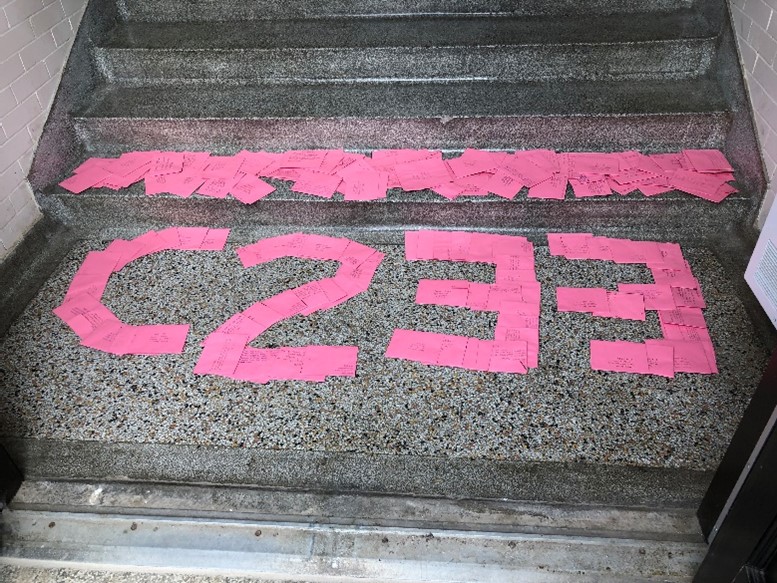
So, our supporters all across the country took action and participated in the pink envelope campaign. And what an incredible amount of time and devotion went into this campaign by school clubs, chapters, and individuals! They sent messages to each of the 338 Members of Parliament about the issue of sex-selective abortion. They bought or made THOUSANDS of pink envelopes and wrote a brief message on the back of each. Be inspired and encouraged to know that our leaders will not be able to say they didn’t know about this discriminatory practice.

Bill C-233 is scheduled to be debated on Wednesday, April 14. This will be the first time in approximately 15 years that Parliament will debate a bill that would restrict abortion. It should come up for a vote a few weeks later. Now is the time to make sure that MPs know that Canadians want to ban sex-selective abortion.

So, send a message to Members of Parliament about the issue of sex-selective abortion through the Pink Envelope Campaign! All you need to do is buy or make pink envelopes (you’ll need 338 to reach every MP, but set an attainable goal for yourself), and write a brief note on the back of each envelope. Here are a few examples:

  • This envelope is empty to represent a girl whose life was taken because Canada allows sex-selective abortion. Please support Bill C-233 to end this discriminatory practice in Canada.
  • This envelope represents one baby girl whose life was taken because of sex-selective abortion. Sex-selective abortion is wrong and it occurs in Canada because we have no law against it. Please support Bill C-233.
  • This envelope is empty and represents the life of a pre-born baby girl who lost her life because Canada allows sex-selective abortion. Please support Bill C-233 to end this inequality in our country.

Mail every envelope you complete to a different MP. You can find the full list of MP names here. All the envelopes can be addressed with the MP’s name to the House of Commons address in Ottawa. For example:

MP NAME
House of Commons
Ottawa, Ontario
K1A 0A6

Postage is FREE to the House of Commons!

This is a great initiative for families, youth groups, Bible study groups, etc. to take on! These bright, impactful envelopes will alert MPs to the issue of sex-selective abortion and encourage them to do something about it by supporting Bill C-233.

At the courts in BC, defending girls by sending pink envelopes, continued investigation into allegations against Pornhub, and prayer requests.

Pink envelopes on Parliament Hill, opposition to C-7, friends helping friends, and tonight’s webinar

On this week’s episode of Quick Updates:

We Need a Law hosted a pink flag display in downtown Ottawa last week to bring attention to MP Cathay Wagantall’s Bill C-233. Cathay and Tabitha join us from there.
Ed and Mike are on the road in Alberta, meeting with MLAs, school clubs, and chapters across the province.

Legal Counsel John Sikkema is starting a new series of articles on our website, exploring the political implications of the biblical story.

Pink flags and defending girls, Alberta provincial school club convention, and can you imagine the impact of 1,000 face to face meetings where people opposed to the expansion of euthanasia are able to communicate their concerns in a respectful and truthful manner?

Handing out flyers in Lethbridge, Alberta, defending girls through federal legislation, and summer legal research.