Parents can advocate for change in their local school by electing and speaking with local school board trustees, who represent the families that the school board serves. But what if some trustees can censure or suspend others who disagree with progressive orthodoxy?

Trustee Censured in Durham

That’s what happened with Linda Stone, a school board trustee in Durham, Ontario. In 2022, Stone disagreed with the school board’s new policies on systemic racism and on concealing a child’s gender identity from parents. So her fellow trustees censured her and denounced her comments.

At the time, Stone was also criticized for various social media posts questioning the ‘accepted’ approach to transgenderism. In a statement, the Durham District School Board noted that Stone’s comments were “contrary to the commitment, values and actions of the [Board].”  In response, Stone stepped down from the Board, but was re-elected in October 2022.

Fast forward to 2024, when Stone was investigated by the school board’s Integrity Commissioner for multiple social media posts including posts that questioned puberty blockers for minors, highlighted people who had “detransitioned,” and criticized Indigenous land acknowledgements. Ultimately, the Commissioner found that Stone had breached the board’s Code of Conduct, mainly focused on posts related to gender and sexuality.

In particular, Stone had contravened two policies in the Code of Conduct:

6.3 Trustees shall discharge their duties, as set out in the Education Act, loyally, faithfully, impartially and in a manner that will inspire public confidence in the abilities and integrity of the Board.

6.8 Trustees shall serve and be seen to serve in a constructive, respectful, conscientious and diligent manner.

Additionally, the Commissioner noted the duty of trustees under the provincial Education Act to “promote a positive school climate that is inclusive and accepting of all pupils, including pupils of any race, ancestry, place of origin, colour, ethnic origin, citizenship, creed, sex, sexual orientation, gender identity, gender expression, age, marital status, family status or disability.”

In response to the Commissioner’s recommendations, school board trustees voted to ban Stone from meetings until mid-2025. Stone chose to resign from the Board.

Role of Trustees

The problem here isn’t that the school board has a Code of Conduct for staff and trustees. There should be accountability if a trustee acts inappropriately, such as by refusing to follow meeting protocol or etiquette, misusing confidential information, or mistreating staff or constituents.  The problem here is with censoring opinions on contentious issues that merit discussion.

After all, Stone is an elected representative of a governance body. After the first fiasco in 2022 where she was denounced by the board, she was re-elected. Evidently, Durham voters wanted her to represent them. School board trustees work to apply provincial directives and policy to local schools, interacting with the Ministry of Education and with local parents and families. They also set vision and goals for individual schools and are held accountable as the governing body of local schools to both the government and the constituents in their community.

This means that parents can talk to their trustees about specific school-related problems such as how their child is treated, or what their child is learning. If a parent is perturbed by gender ideology in their child’s school, a conversation with the school board trustee is a good place to start. You can read more here about why Christians should be involved with their public school board even if they choose to educate their children privately or at home.

Provincial Action

This is not the first time a school board trustee has been censured for opinions that go against the prevailing worldview in the public school system. And typically, in situations like this, the province doesn’t say or do anything about it.

The province sets policies for education and leaves them to local school boards to administer. Generally, this is a helpful approach as it allows for local solutions to local problems. But when trustees are inappropriately censured, the province should not simply leave it alone.

Ultimately, elected representatives are held accountable by voters. If voters do not agree with a trustee’s opinions on political or social issues, they can vote for someone else. Following the first time trustee Stone was censured, she was re-elected because enough voters approved of her work. Rather than censuring trustee Stone, the board ought to leave it to voters to decide whether they want her to continue to represent them.

But it’s not just a question of what the board should do. The provincial government ought to denounce the board’s actions and introduce a policy that prevents school boards from suspending a trustee for expressing political views. This would prevent local voters from being disenfranchised when trustees who represent their views get suspended.

It’s not uncommon for the province to respond to local school board problems. For example, when one school board recommended that schools avoid talking about the Queen following her death, Minister Lecce ordered all school boards to commemorate the Queen’s death. Or when one school board chose to end early on the day of the solar eclipse, Minister Lecce expressed concern but did not force them to change their plans.

The provincial government ought to address the situation in Durham region directly. School boards should not be censoring opinions or censuring elected representatives for stating those opinions, and the Minister of Education should make that clear. The current approach to gender identity in the public school system is problematic, and school board trustees must be able to represent their constituents in expressing their opposition. Send an EasyMail to your MPP to ask the government to adopt a policy that prohibits school boards from censuring an elected trustee for their views on political or social issues.


This year, New Brunswick Premier Blaine Higgs took a stand. In changing a school policy to require schools to talk to a student’s parents before recognizing a student’s claim of a new gender identity, he was the first Canadian premier in years to stand against modern gender identity theory and in favour of parental rights. He has staked the leadership of his party and the province on this issue. So far, he remains standing. But will he remain standing after the next provincial election?

Higgs’ Stand

In May 2023, Higgs’ government changed Policy 713, which laid out the province’s policy on sexual orientation and gender identity matters in public schools. It made three substantial changes:

  1. Students under the age of 16 had to get their parents’ permission to change their name on official school documentation. Students who were unwilling to talk to their parents about a change in their gender identity would be referred to a professional (e.g. a social worker) to help them speak to their parents about their transition.
  2. Wording that allowed students to participate in extracurricular activities “consistent with their gender identity” was dropped, presumably to give schools greater leeway to limit participation in extracurricular activities based on biological sex.
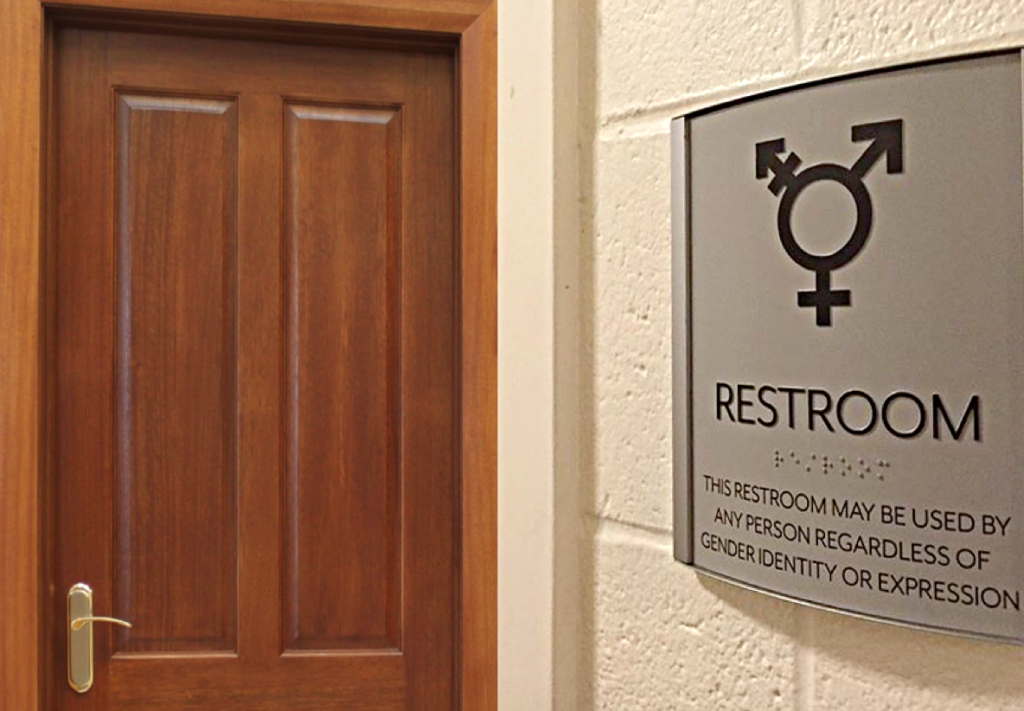
  3. It mandated that every school must have a private universal changing area and washroom and refrain from making all public washrooms gender neutral.

The first change in particular – requiring students under the age of 16 to get parental consent for a name change in school – is a big win for the principle that parents have the responsibility to raise and educate their children. Before this change, students could – and did – socially transition at school (e.g. change their name, use new pronouns, or dress as the opposite sex) but keep this transition hidden from their parents at home. Premier Higgs had specifically mentioned the skyrocketing rates of rapid onset gender dysphoria as a justification for the policy. (Rapid onset gender dysphoria refers to when someone, typically a teenage girl, suddenly identifies as transgender after never giving any prior indication that they were struggling with gender confusion.)

Recent survey data suggests that Higgs’ changes are in line with popular opinion. Forty-three percent of Canadians believe that parents should be informed and give their consent for a school to recognize their child’s new name, pronouns, or gender identity. A further 35% agree that parents should at least be notified of these changes. A mere 14% of Canadians think that children should be able to identify however they want without their parents knowing or consenting.

And yet, there is a debate on whether taking a stand in favour of parental rights and against modern gender identity theory is a winning strategy politically. Saskatchewan Premier Scott Moe obviously thinks it is. This past fall, his government followed New Brunswick’s lead and went a step further by passing a parental bill of rights in education, with Premier Moe stating, “I believe the leading experts in children’s upbringing are their parents.”

Other commentators suggest that this isn’t a politically winsome issue, citing Manitoba’s recent election results. In that race, former Premier Heather Stefanson campaigned in Manitoba’s October election on a promise to review and update the province’s policies around parental involvement in their children’s education, but lost her re-election bid.

And some other governments are sitting squarely on the fence on this issue. Ontario Minister of Education Stephen Lecce restated that the government of Ontario recognized that parents should be involved in the education of their children. Since then, the Ontario government has been silent on the issue. The Alberta United Conservative Party voted in favour of adopting Higgs’ school policy at their last convention. However, Premier Danielle Smith would not commit to implementing the policy.

Higgs’ Opposition

Premier Higgs has staked the leadership of his party on this issue. In the summer of 2023, he held a comfortable majority government, holding 29 of the 49 seats in the New Brunswick legislature. The change to Policy 713, however, angered many of his fellow Progressive Conservative MLAs and fractured his caucus, leading to “endless meetings” on the topic. Things came to a head when six of his cabinet ministers and two more backbench MLAs failed to show up for their House duty to protest their leader’s handling of the issue, giving the Progressive Conservatives only 20 votes in the legislature and the opposition party 20 votes as well (the Speaker of the House normally does not vote). Two of his cabinet ministers resigned their posts but remained within the caucus. If disgruntled MLAs were to vote with the opposition parties on a confidence vote, the Higgs government could collapse.

Furthermore, a majority of the Progressive Conservative riding association presidents attempted to trigger a leadership race to replace Higgs as leader of their party. That effort failed, albeit narrowly. At the same time, the New Brunswick Children and Youth Advocate released a report reviewing the changes to Policy 713, and strongly opined against the policy changes.

Higgs’ Future

Faced with this precarious situation, Higgs threatened to call a snap election prior to the next scheduled election in October 2024 as a way to force his caucus to fall in line. Such a snap election could be viewed as a referendum on his changes to Policy 713 with the possibility that some of his dissident MLAs would be replaced by MLAs who support his position on parental rights. Higgs even went so far as to hire a campaign manager and to deck out a new campaign bus with his likeness and campaign slogan emblazoned on the side.

A fall snap election didn’t materialize, however, as the Progressive Conservative MLAs who criticized Higgs’ change to the Policy 713 supported his government on other pieces of legislation throughout the fall legislative sitting. Higgs didn’t introduce many new pieces of legislation this fall and finished passing the other bills left over from the spring session, suggesting that Higgs is preparing to call a snap election in the spring. Currently, his Progressive Conservative Party is trailing in the polls but narrowly ahead in the seat projections, suggesting that the next election will be close. In a unique move, Higgs is soliciting campaign donations from not just New Brunswickers but Canadians across the country to support his re-election bid.

Higgs’ stand for parental rights and against modern gender theory drew Faytene Grasseschi, one of the leaders of the Christian political advocacy organization 4MyCanada to seek the Progressive Conservative nomination in one riding in the next New Brunswick election.

Regardless of when the next election is, it very well might be a referendum on parental rights and modern gender theory.

Canada’s Future

As such, the result of the next New Brunswick election could be a bellwether for if and how other provincial parties will wade into this issue. Saskatchewan’s Premier Moe is already championing this issue but Manitoba’s former Premier Stefanson lost an election running in favour of parental rights (albeit as a very small part of her campaign). Alberta and Ontario are sitting on the fence.

Who will break the deadlock? As of right now, it seems like the balance will tilt in favour of whichever side wins the next New Brunswick election. If the Progressive Conservatives under Higgs win on a platform that prominently champions parental rights and pushes back against modern gender theory, it could benefit parental rights in other provinces. If, however, they lose an election that is seen as a referendum on modern gender theory, then we may go back into an era where provincial governments of all stripes are unwilling to touch the issue.

For the past seven years, no political party in BC was willing speak against sexual orientation and gender identity (SOGI) or the propriety of certain sexual education material in public schools. In 2016, the BC United government (formerly the BC Liberals) introduced SOGI 123 into the education system. This was heartily supported by the NDP, the official opposition at the time.

Public school boards began adopting SOGI policies and embedding the concepts of sexual orientation and gender identity into classroom teaching. SOGI supporters and media reports claim that SOGI 123 isn’t a curriculum. They are right. There is no designated course or segment of a course where sexual orientation and gender identity makes a stand-alone appearance. It’s far worse. The topics are woven throughout every subject and every grade.

Earlier this week, however, a BC MLA finally voiced substantive criticism to SOGI in public in the legislature. John Rustad, the new leader of the BC Conservatives, used his very first question of the new legislature to call on the government to remove SOGI 123 from schools.

Here is a video and a transcript of his exchange with Premier David Eby and Rachna Singh, Minister of Education and Child Care.

J. Rustad: Thousands of British Columbians, many of them from minority communities, have been protesting against SOGI 123, which was originally introduced by the B.C. United Liberals. Parents are concerned about the sexualization of their children in this NDP government’s education system. Will the minister admit that SOGI 123 has been divisive, an assault on parents’ rights and a distraction on student education?

Hon. D. Eby: I welcome the member to the House as the leader of his new party, but I have got to say, this is not an auspicious start.

You know, when you talk about the issues of the day for British Columbians — cost of living, housing, we heard from the BCUP, health care, addiction, mental health — to come into this place, to use the authority of his office, his new party, to find a small group of kids in our province, to leverage all of that, to make them feel less safe at school, less safe in our community, to feed the fires of division in our province and bring culture war to British Columbia. It is not welcome.

When he sat on this side of the House, he supported those same policies. It is outrageous that he would stand here and do this. He sees political advantage in picking on kids and families and teachers and schools who are just trying to do their best for kids who are at risk of suicide. Shame on him. Choose another question.

*** Premier Eby’s response garnered a standing ovation from the entire BC NDP caucus, the entire BC Green caucus, and almost all of the BC United caucus***

J. Rustad: It is very clear that we’re talking about a uni-party in this House, and that’s fine in terms of it. But to the Premier, what I find most offensive is that the division is being created by what this government is implementing. There are thousands of people taking to the streets, there are thousands of people protesting at school board offices. There are kids that are being part of this because they are disturbed at what’s happening in their schools.

This isn’t about attacking a particular group of people. This is about having a policy that is inclusive, that is anti-bullying, that is supportive, so everybody feels safe. But right now we have kids that are running home from school and going to the bathroom because they don’t feel safe in school, and that is this government’s fault in terms of it.

In my riding, just recently with the protests that happened last week, two young Indigenous girls were suspended from school for participating in a protest. Now, whether or not that action was appropriate, I can’t tell you. The mother of those two Indigenous girls is outraged at the fact that those kids are now being excluded from education. This is not what we want to be able to see.

We need to be able to see an education system, quite frankly that is accepting of everybody. So, the question, once again, to the minister or to the Premier, if he cares to take it — will the minister, actually, look at this, look at the divisions that this is creating, look at the divisions that SOGI 123 is creating, and replace it with a less divisive approach to anti-bullying in our schools?

Hon. R. Singh: I’m so saddened that the member opposite is talking about this. Here we are trying to create inclusive safe spaces for our children, where every child belongs, and the member is the one who’s trying to create these divisions.

We are committed to provide those safe and welcoming spaces. We want to make sure that every child feels included, and they feel they can be themselves in the schools, and that’s what we are committed to.

BC’s Premier and Minister of Education wish MLAs would stay silent on this issue. It is clear they are resistant to re-examining SOGI.

But New Brunswick and Saskatchewan have already taken steps to ensure that parents are notified if or when their children change their gender identity in schools. Ontario has also signaled interest in taking action on this front. The grassroots members of the federal Conservative party also voted in favour of policies that would ban medical transitioning for minors and preserve women’s-only spaces. This conversation is picking up steam across the country.

We’re thankful that it is being raised in BC too.

But that’s not the end of the story.

The next day, as his first question, BC Conservative’s second MLA, Bruce Banman, highlighted some of the disturbing materials in public school libraries. (We have edited out the most explicit language, but the full wording was recorded in the legislative Hansard.) Here’s that exchange:

B. Banman: I stand here today as a distraught father and grandfather. I stand here with parents in Abbotsford who are deeply concerned about sexually graphic and explicit content available in certain fictional books within our public school libraries to children as young as 11 years of age.

I would ask that the House brace themselves for the following words from one such book, called Eleanor & Park: “I know you’re a slut. You smell like ***. Nothing but a ***** in heat.”

Mr. Speaker: Member. Please do not use that kind of language.

B. Banman: I apologize, Mr. Speaker, and I actually would retract those words.

This language is deeply disturbing. As a grandfather, it shakes me to the core when I imagine that children could be exposed to this deeply disturbing, degrading language in British Columbia public school libraries.

Will this NDP Premier please answer to concerned parents, grandparents and families in Abbotsford and throughout this province: why is the sexually explicit book, Eleanor & Park, and others like it, available in British Columbia public schools for children as young as 11 years of age?

Hon. R. Singh: I just want to say, not just as a Minister of Education but also as a parent, that our schools are places we want to make…. They are spaces which are safe, inclusive and welcoming for all students. The teachers are using resources that are age appropriate, audience appropriate to give those values, give those teachings that are so important to create those welcoming environments.

I just want to reiterate that the resources that teachers are imparting, that teachers are teaching, are age appropriate, and they are audience appropriate.

B. Banman: I’m asking as a parent, as a grandparent, to the Premier and to the minister: if the words I just read were inappropriate and unacceptable and clearly disturbing to this House, how is it that those same words are appropriate to be read by a sixth grader as young as 11 years old in our public system? How are those words safe and inclusive?

Hon. R. Singh: I cannot comment on the particular books that the member is mentioning.

But I can talk as a parent whose children are going to the public school system, who have gone through the public school system and I have never encountered anything inappropriate being taught to my children.

I take such pride in our public education system. I am so proud of the teachers who are working every day. I, in fact, raise my hands to all the work that is happening in our schools.

Our schools are very diverse places. As leaders, as school leaders, it is our responsibility that we respect that diversity, and we are making our schools as safe as possible.

Either the provincial ministry of education and local school boards are unaware of what types of books are in their libraries or they approve of such sexually explicit books being presented to grade schoolers. Regardless of their intent, the books are there.

Take a moment to send a note to your MLA, asking for them to engage in these much-needed conversations about what is appropriate for children in schools rather than ignoring it and calling on their opposition members to “ask another question.”

You can read more about the exchange between Rustad and Eby in these Vancouver Sun columns by Vaughn Palmer and Katie DeRosa and the exchange between Banman and Singh in this Abbotsford News article.

by Mark Penninga

Many of us are ready to disengage for the summer, leaving behind the stress of our regular lives. But before doing so, please take a moment to reflect on yesterday’s Alberta court ruling against the application for an injunction on Bill 24.

This may sound like Greek, and largely irrelevant to you. But it isn’t.

For starters, have a look just at page 1 of the decision. Look at the names of the schools listed in the court challenge. Do any of them look familiar to you?

This may be the first time Reformed schools have ever taken the government to court in this country. And these schools have joined this legal challenge because they understand that their fundamental freedoms are at stake, including the freedom to live in accordance with their Christian faith.

The focus of the case is on Bill 24 (an Act to Support Gay-Straight Alliances), which applies to all schools in the province. School authorities were given the deadline of June 30 to make their “safe and caring” policies publicly available. Under the capable organization of the Justice Centre for Constitutional Freedoms (JCCF), these schools challenged the legislation in court. The coalition also applied for an injunction which would delay the effect of this law until the court makes a final decision which will not be before the June 30 deadline. The schools want this injunction fearing the consequences  for not complying with the law knowing education Minister David Eggen went on record saying “Schools that don’t follow the law will risk having their accreditation and funding stripped, period.”

Yesterday the court dismissed the injunction, and cited the recent TWU decision in doing so (more on that here). We are thankful that the JCCF will appeal this. And it is also important to realize that the final decision on the constitutionality of Bill 24 itself won’t be rendered until next year.

But this means that June 30 deadline is going to come and go. We don’t know what this will mean for these schools. But it is not going to be easy.

I commend the schools for their principled and faithful stance. At least twice the ARPA team has addressed the theme of civil disobedience when touring through Alberta to discuss the challenges we are facing in education. We explained that Scripture calls us to stand up against the State and even disobey the State should it require that we and our children follow its doctrines rather than God’s. But we also said that civil disobedience has to be civil. We may only disobey on the very specific point at which the State tells us we must do something that God forbids. And we must also exhaust the legal options that are open to us. That includes appealing this week’s ruling. You can learn more about this topic here. I believe these Alberta schools are doing an excellent job being faithful to their convictions and making use of every legal means possible to comply with the state’s requirements.

So where do we go from here?

I urge readers to pray! Pray for a softening of heart for Alberta’s government. That includes the Premier and Education Minister, but it also includes those MLAs who simply are not being as courageous and principled on social issues as they should.

Please pray for the schools and organizations impacted, that they may move forward with courage and wisdom, relying on the LORD. Please also pray for the JCCF, which is leading the coalition of schools, that they may do a good job in their defence and also act with wisdom and faithfulness.

Also, please encourage the schools, including the administrators and school boards, as they will be feeling stress and will have to be very careful in their communication with the Ministry of Education in the coming weeks and months. And please encourage the JCCF, as they have such a huge weight on their shoulders.

If you live outside of Alberta, realize how quickly Alberta went from being the province that had the most educational freedom in the country just four years ago, to the province most hostile against parental authority and Christian schools. In other words, please don’t assume that your province is somehow immune to similar challenges. On the contrary, when it comes to social policy it is evident that provinces have been keen to quickly copy and paste laws and policies from each other, especially if it appears they can get away with it while also making the opposition parties squirm.

We don’t know what lies in store for Alberta schools and parents. But we should not fear. God is watching over us, as He always has. He calls us to be faithful, alert, and awake. May these words from 1 Peter 5 be on our minds, also through the summer:

Humble yourselves, therefore, under the mighty hand of God so that at the proper time he may exalt you, casting all your anxieties on him, because he cares for you. Be sober-minded; be watchful. Your adversary the devil prowls around like a roaring lion, seeking someone to devour.  Resist him, firm in your faith, knowing that the same kinds of suffering are being experienced by your brotherhood throughout the world. And after you have suffered a little while, the God of all grace, who has called you to his eternal glory in Christ, will himself restore, confirm, strengthen, and establish you. To him be the dominion forever and ever. Amen.

Yes, let us enjoy the summer. But we should do so awake, and sober-minded.

[Learn more about a Christian case for eliminating lists of special identity groups in school policies, and find a sample bullying prevention policy in ARPA’s “Protect Them All” document available here.]

By Lighthouse News

kenneySome social conservatives in Alberta are expressing disappointment at what they perceive to be United Conservative Party (UCP) Leader Jason Kenney’s position on Gay Straight Alliances and the question of parental notification.

The party held its founding AGM and policy convention in Red Deer in early May, and ever since then, there has been considerable controversy over Kenney’s statements with regard to a particular policy resolution that was passed there.

Resolution 30, which passed with the support of 57 percent of the delegates, called on the government to reinstate parental consent for any subjects of a religious or sexual nature in Alberta schools.  The resolution was quickly painted as an effort to “out” gay students to their parents if those students joined so-called “Gay Straight Alliance Clubs.” Some delegates to the convention, including former interim PC Leader Ric McIver, warned delegates that this issue would resurrect the “lake of fire” controversy, a reference to a Wildrose party candidate who – in the last Provincial election – warned that homosexuals  faced eternity in the “lake of fire,” or hell, if they didn’t change their ways.

At the end of the convention, Jason Kenney seemed to disavow the resolution, saying the UCP opposes outing gay kids to their parents.  He told reporters that a UCP government (would) not be changing law or policy to require notification of parents when kids join GSAs,” adding that he’s the one who “holds the pen on the platform,” and that outing gay students would not be part of that platform.

Donna Trimble

Donna Trimble

But Donna Trimble of the group Parents for Choice in Education (PCE) says the media has deliberately distorted what Resolution 30 was really all about.  She says the intent of Resolution 30 was clearly to push the idea that “sexual content and religious content remain Section 50.1 of the School Act,” which used to expressly say that parents had a right to be notified when those issues were being discussed in the classroom.  “GSA’s were not (even) mentioned in the resolution,” she says.

She says the real problem is in the nature of the content that’s part of GSA’s.  “We’ve been reassured time and time again that GSA’s are only social peer support groups” that don’t involve promotion of any particular agenda.  If that’s the case, she says, “most parents across the province” wouldn’t have a problem with their children joining those clubs.  “But we are aware of the fact that (an online) resource provided for these children in these clubs was found to contain, in one or two clicks, links that led to incredibly egregious, sexually graphic material.”
Trimble concedes the resolution was “poorly worded,” but Kenney’s statements on this issue have been misrepresented.  “We all know that every party, as they approach an election, must sit down with a committee and write up a platform, and that platform needs to speak to the population at large.”  But she says it’s simply false to suggest that Kenney will not respect the resolution that was passed at the convention.   She says she attended Kenney’s closing press conference, and the UCP leader clearly said – multiple times – that if the UCP forms the government, they “would make sure that local schools regain the autonomy to engage parents whenever the health and safety of students were at risk in the classroom.”

Trimble says there were also a number of other very family-friendly resolutions passed at the convention, which have been completely ignored in the media coverage, including an affirmation that family is a fundamental building block of society, support for the rights of parents to direct the education and upbringing of their children, and a requirement that teachers communicate with parents when it comes to children’s well-being. Trimble’s organization has published a list of eight pro-family resolutions on their website.

Fundamentally, Trimble says, PCE is non-partisan, “but we don’t like dishonesty,” and the discussions around Resolution 30 have been “deeply mischaracterized.”

You can listen to the full Lighthouse News broadcast here.

By Lighthouse News

Tampier

Martin Tampier

A Quebec father has discovered that at least two of Canada’s big banks are funding the so-called “SOGI” movement, to the tune of hundreds of thousands of dollars.

The term “SOGI” stands for “Sexual Orientation and Gender Identity”, and describes a new trend in public school curriculum – particularly in BC – which promotes the notion of gender fluidity in the school curriculum. The issue has caused considerable controversy on the west coast, where parent groups are starting to mobilize for this fall’s public school board elections to nominate and elect school trustees who will promise to oppose the program.

But one man in Quebec has stumbled upon a different angle to this controversy. Martin Tampier has a five-year old son, and he says since his child is just about ready to enter the school system, he decided to do some research on the SOGI issue, because the curriculum is set to be introduced into the Quebec school system this September.

In an interview with Lighthouse News, he says he discovered that at least two of Canada’s big banks, RBC and the TD Bank, are contributing hundreds of thousands of dollars to SOGI-related activism in British Columbia. He says he went through some SOGI-related websites back in February, and “all of a sudden there was a page identifying sponsors, and it said ‘TD Bank and RBC’.”

He says that particular web page has since been taken down, but he’s also found other evidence, including an online copy of the minutes of a Parent Advisory Council meeting from Burnaby, BC, which showed RBC had donated $200-thousand dollars to the cause. The Burnaby PAC approved the notion of using $2,000 of that money on things like encouraging student participation in the local Pride parade.

Tampier says since he’s an RBC customer, he raised the issue with the bank; first with his local manager and then with the RBC Ombudsman. “I was quite upset to see that my bank would give money to a cause that has caused so much conflict between parents and schools in British Columbia and the protagonists of the SOGI material over parent’s rights and morality issues around sexuality and so on.” In the end, the Ombudsman closed his file without taking any action.

Tampier says this is part of a larger North American trend of large corporations getting on board with the so-called “diversity” movement. “It’s been a thing that I’ve seen happening over the last few years quite broadly; very much so in the United States, but also here in Canada. It’s really a clash between Christian freedom and religious freedom against LGBTQ rights. That’s really the topic that (comes) up all the time.” He says in the US, this has played out in a number of States which have tried to pass laws against things like trans-gender washrooms, and who have then been faced with a corporate backlash and threats of disinvestment. “It’s become very politicised, with companies now entering the stage and sometimes doing very undemocratic things, like Disney threatening to walk out of Georgia because they’ve passed laws to maintain religious freedom. The same thing happened with PayPal doing the same thing in North Carolina. It’s happening everywhere; it’s happening internationally, and it’s a very undemocratic and – I think – fearsome process where we see very large companies engaging in a very big scale in very divisive political issues in a way that is often not very democratic.”

Tampier has now started an online petition to try to pressure RBC into eliminating the funding.

You can listen to the full Lighthouse News broadcast here.

Screen Shot 2017-12-15 at 1.18.11 PM

By Tabitha Ewert, Articling Student

The schools back in my hometown of Langley, BC, have a re-designed “SOGI” curriculum. For those unfamiliar with the term, SOGI is an acronym for “sexual orientation and gender identity”. While only announced this year, this curriculum has been years in the making. It started out as an anti-bullying campaign, but it teaches an unhealthy view of sexuality and gender.

I want to explain and comment on the new curriculum, but before I do that I need to state four premises:

Four Premises

  1. Education is not neutral.

As the Ontario Court of Appeal recently said, “Public education has never been morally neutral. One of the purposes of public education has been to inculcate civic virtues in school children.” The question is not whether education is teaching morality, but what morals it is teaching.

  1. There are only two sexes and that means something for sexual conduct.

Sexual intimacy is for marriage between a man and a woman. God designed it this way and it is good. It was not long ago that this was not a revolutionary statement and yet today it needs to be stated.

  1. Canada’s public education rejects the biblical sexual ethic.

Canada’s public schools teach that our gender need not conform to our body and that our sexual conduct need not be judged by any standard beyond autonomy and consent.

  1. Bullying is bad. Period.

Bullying is bad, regardless of the identity of either the perpetuator or the victim, the motive, the context, or any other factor, because every single human is created in the image of God and is entitled to respect and neighborly love and care.

I include this premise because Langley’s SOGI curriculum is intertwined with an anti-bullying campaign. If you agree that bullying is bad, you might swallow the conclusion that the school board’s anti-bullying program is good.

But remember the first premise: education is not neutral.

Education regarding sexual orientation and gender identity is infused with value statements not just about what bullying is but also what sex and gender are. SOGI education is not done from a Christian understanding of sexuality, its God-given design, its corruption by sin, and its need for redemption. Rather, SOGI education is done from a humanist understanding of sexuality, as a subjective identity, determined individually, and to be celebrated unconditionally.

The SOGI curriculum may have anti-bullying aspects, but to stop there is to ignore the philosophy that it teaches.

I’ve stated these premises succinctly, but I recommend for further reading ARPA’s pamphlets No Neutral GroundandProtect them Alland policy report Gender Identity”.

Where did Langley’s SOGI curriculum come from?

In Langley, the SOGI curriculum has been a few years in the making. In 2014, the district released an anti-bullying policy that instructed schools to “support multi-cultural, anti-racist, anti-homophobic and human rights education infused into all curricula.” That policy didn’t explicitly mention gender identity and expression as it was not until 2016 that those terms were added to the BC Human Rights Code, with legislators hinting at the effect it would have on school curriculum.

Later that year, all boards of education, including independent school authorities, were required to reference sexual orientation and gender identity in their codes of conduct. In the spring of 2017, a letter sent to Langley parents announced a re-designed SOGI curriculum in order that “all students in all schools will experience the integration of inclusive education, including gender orientation and expression beginning in Kindergarten.”

What is the aim of SOGI curriculum?

According to the Ministry of Education, the three goals of SOGI Inclusive Education are “visibility, protection, and inclusion”. The “best practices” section emphasizes using “common language” which links to “Queer Terminology – from A to Q”, a resource from QMUNITY, a “LGBTQ/2S” activist group. They define homophobia as:

Fear or hatred of, aversion to, and discrimination against homosexuals or homosexual behaviour. […] Many forms of homophobia are related to how restrictive binary gender roles are (see ‘oppositional sexism’). An example of this might be a lesbian who is harassed with homophobic language for being perceived to be masculine. Many of the problems faced by lesbian, gay, bisexual and transgender people, including health and income disparities, stem from homophobia and heterosexism. (emphasis mine)

When the Langley school board says that all curricula will be infused with “anti-homophobic” messaging, what they mean is messaging that not only affirms homosexual desires and behaviour, but also counters “restrictive binary gender roles” (i.e. that men and women have different roles) and blames such roles for the health and income disparities that the LGBTQ community face.

This resource also defines a term you may be less familiar with: “heterosexism”. This is a term for attitudes or bias “in favor of opposite-sex sexuality and relationships”. For example, “a girl who is told that when she grows up she will have a husband and not presented with any other options to consider.”

These definitions are not about countering hate or fear of people who are attracted to the same sex.  This is about teaching children that a heterosexual marriage and a homosexual lifestyle are morally “equal” and those that say otherwise are the real problem.

This is education dedicated to pushing a philosophy antithetical to the way God designed gender and sex. This is not neutral education.

What is SOGI Curriculum?

There isn’t a separate class called “SOGI”. Instead, it is infused into every class. According to the Langley School Board, “Sexual orientation and gender identity are important topics that are interwoven through several curriculum areas, most notably, physical and health education, language arts, and social studies.” Sexuality as a concept is introduced in Grade 4, but the Board assures parents that this does not include discussion of various sexual acts which will not be discussed until secondary school.

Parents can have their children opt out of certain classes regarding reproduction and sexuality. But this does not include other classes that deal with these topics indirectly.

The Ministry outlines their vision for this curriculum, including lesson plans, on a website called “SOGI 123”. In K/1, teachers are encouraged to explain of all types of families – mom and dad, two moms, two dads, single parents, adoptive parents, blended families, etc. They are prompted to ask students if they think it’s ok to have two moms or two dads. Teachers are told to “be explicit in your teaching in that all families are equal and important. Gently debunk the myth that all families must have a Mom and a Dad who live together.” This isn’t about accepting that we live in a broken world and should show love to people regardless of their situation at home. This is about teaching that family is a social construct.

In grades 2/3, teachers are encouraged to read “Traditional Fairy Tales (Gendered)” and have students say ‘stop’ any time they identify an instance of sexism. Such “gendered” fairy tales include “the Ugly Duckling”, “Rapunzel”, and “Cinderella”. Teachers should ask, “Can a prince or princess be single, live with or be married to someone of the same gender and live happily ever after?” Because simply telling children stories about princesses marrying princes instills a bias towards heterosexuality.

In grades 8/9/10, students are taught terminology such as the difference between ‘transgender’ and ‘gender expansive’ and the difference between ‘heterosexism’ and ‘homophobia’. The lesson finishes “by encouraging students to identify forms of sexism, heterosexism, homophobia, transphobia, privilege and oppression in their everyday lives.”

The lesson plans are accompanied by a list of books that teachers are encouraged to use as resources.

One of these books, Worm Loves Worm, tackles the tough question: Who wears the dress and who wears the tux in a worm wedding? Spoiler alert – it doesn’t matter because “love”. The moral of this story, I suppose, is that humans should be hermaphrodites like worms. Not the animal I would think of teaching kids to emulate, but here we are.

What are we to make of these lesson plans? Education is not neutral. The curriculum is infused with the belief that gender is unconnected from biological sex, that marriage can be custom designed to fit the individual’s concept of “love”, and that anyone who says otherwise is oppressive.

Two Concluding Thoughts

First, this SOGI curriculum did not come out of the blue. There has been a steady progression in BC of promoting this philosophy in our education system.

When the Langley School district put out their anti-bullying policy back in 2014, many read “bullying gay kids is bad” and stopped. But it deserved more consideration than that. We should have asked what they meant by “homophobia” and what “human rights-infused” curriculum looks like.

Second, I’d like to give a note to parents. The Ontario Court of Appeal recently highlighted that “the right of parents to care for their children and make decisions for their well-being, including decisions about education, is primary, and the state’s authority is secondary to that parental right.”

I would add that it is the responsibility of the parents to care for and educate their children, as the Bible clearly teaches (see the entire book of Proverbs). Do not abdicate this responsibility to the state. Education is not neutral. Be aware of what your child is learning (including the underlying worldview) and ensure they receive good instruction.

And take comfort in His promise. “Know therefore that the Lord your God is God, the faithful God who keeps covenant and steadfast love with those who love him and keep his commandments, to a thousand generations.”

Schools, whether private or public, should adopt a zero-tolerance approach to bullying and harassment. Such policies are aimed at protecting each and every student in the school. Provincial education ministries often recommend – or in some cases require – long lists of identifying characteristics to be included in these policies such as race, citizenship, disability, creed, sex, and even the modern concepts of sexual orientation and gender identity.

protectthemallChristian schools, however, should not include these lists in their policies.

While we agree that schools need to protect all students (including those who struggle with their sexual identity) listing select characteristics is not the best way to do so. It detracts from the total ban of bullying that all Christians schools should have regardless of the reason including if bullying occurs for no discernable reason.

ARPA’s guide will explain the worldviews that underpin the use of these terms and how they are antithetical to the gospel and harmful to the very children schools are charged with protecting. Instead, Christian schools should adopt policies that are infused with scripture, maintain a zero-tolerance for harassment, and foster a Christian community that is loving and safe for all. Click here to read the report.

The Alberta government is poised to release a list of anti-bullying policies submitted by private and Christian schools last year in response to Bill 10. The umbrella group representing those schools is opposing that release. Ed Hoogerdyk is the principal of Tyndale Christian School in Calgary and he says the Freedom of Information request for the policies is premature, because more than a year after the policies were submitted to the Alberta Ministry of Education, there has been no response as to whether any of those policies need to be amended. “We were supposed to receive a response (to those policies) by June of 2017, and we actually have heard nothing”. The policies “should not be disclosed to anybody” because they haven’t yet been officially reviewed or vetted.

Hoogerdyk says the independent schools have nothing to be ashamed of in terms of the practicalities of how the policies are working. The annual “Education Results Reports” that are submitted to Alberta Education every year – surveys filled in by students and parents – show that many Christian schools have a rating of 95% to 100% of parents and students stating that their schools are “very safe, caring and inclusive.”

However, he says the release of the policies now might be subject to misinterpretation because of the potential for media and public scrutiny of the policies. “What you could have is an unfair label of a Christian School just based on one person or a group reading a few pages, and this could turn out to be a real serious issue.”

The Association of Independent Schools and Colleges in Alberta (AISCA) is still formulating a strategy as to how member schools can specifically oppose the release of their individual policies.

davideggenLast week Education Minister David Eggen once again came out swinging against Albertan parents and Christian schools, promising that the provincial government will be introducing new legislation that will force all Alberta schools that receive public money to have a code of conduct in place that singles out protection for students on the basis of gender identity, gender expression, and sexual orientation. The legislation will also require school policies to make it clear that students have a “right” to establish gay-straight alliance clubs and would also make it illegal for schools to inform parents, or anyone else, if their child is in one of these clubs.

There is little doubt that the Minister and his caucus are doing their best to use this politically toxic issue to make the opposition squirm. Thankfully, so far one leadership candidate of the United Conservative Party has shown the courage to defend parental authority publicly.

Minister Eggen also commented that 20 of the schools that submitted policies in response to his order last year have policies that are “outright hostile” to LGBTQ students. ARPA has worked with Reformed schools in Alberta to assist them with policies that remain faithful to Scripture and demonstrate love for all students. We are thankful to see that so far the Minister has not taken any action against these schools (to the best of our knowledge).

At first glance, some parents and schools may find the Minister’s latest edict quite manageable. After all, we don’t support bullying or discrimination against any students, including those who struggle with their sexual identity.

However, ARPA Canada believes that Christian schools must not go down this road.

With providential timing, we have very recently published a new booklet called “Protect Them All: A Christian Case for Eliminating Lists of Special Identity Groups in School Policies” that tackles this issue head-on and that also includes a sample policy that schools can use to show to the Ministry of Education, public, and parents alike that our policy against all bullying (without singling out some groups) is far superior than what is being espoused. We have sent 10 copies of this booklet to each of the Reformed schools across Canada.

If you are a part of a private school community, please take the time to read this booklet and consider why it is so important that we draw a line and govern our schools in a way that is faithful to Scripture and truly in the best interests of our children. Find a copy here. And feel free to share it with other schools that may be interested.

You are encouraged to become familiar with the language used in articulating a Christian response. By making them your own, it becomes easier to engage when the Lord presents opportunities.

Human dignity is not first found in autonomous choices or in various group identities. Christians know that human dignity is bestowed by God on all persons. We have dignity as humans because we are all His special creation, made in His image.

When Christians encounter another person, we first see, (or we ought to first see), not skin colour, not gender, not disability, not sexual orientation. Rather, we see someone made in the image of our Maker, we see the Imago Dei.

ARPA Canada will do our best, with the limited time and resources we have, to be of assistance to the Reformed education community in Alberta (and when possible, the broader private school community) as they seek to respond effectively to the upcoming legislation.

Please stay tuned for future calls to action. Most of all, please pray! Pray for a softening of hearts within the governing party, including Minister Eggen. Pray also for courage for MLAs to stand up and oppose these efforts to undermine parental responsibilities and relationships.

ARPA’s Legal Counsel John Sikkema and Executive Director Mark Penninga will be touring through Alberta in two weeks, the Lord willing, with five presentations. Please join us and invite others from your community to come as well.