For immediate release from the Association for Reformed Political Action (ARPA) Canada

February 8, 2022

BC Government Reaffirms Discriminatory Child Care Policy

Earlier today in the government’s annual Speech from the Throne, the Lieutenant Governor of British Columbia reiterated the government’s plan to create new licensed child care spaces and reduce the daily cost of licensed child care, with the goal of creating a universal system of $10-a-day child care by 2026. This goal was articulated in the Canada-Wide Early Learning and Child Care Agreement negotiated by the provincial and federal governments this past summer.

“This approach to family policy discriminates against families who choose not to use licensed child care,” says Levi Minderhoud, ARPA Canada’s British Columbia Manager. “The provincial government has its eyes narrowly focused on subsidizing and expanding licensed child care, yet child care comes in all shapes and sizes. Fundamentally, child care is the care of the child, regardless of who does it.”

Pre-pandemic, approximately 43% of children aged 0-5 in Canada were cared for by their own parents and 13% of young children were cared for by another relative. Only 41% of young children were cared for in licensed daycares, preschools, before or after school programs, and family child care homes, and the percentage of young children in licensed child care has decreased through the pandemic. Thus, the provincial government’s child care policy at best serves only 41% of children and gives no assistance to the majority of families.

“The government’s current approach to child care is less about reducing the cost or increasing the availability of child care for the good of families and more about incentivizing mothers to join the paid labour force,” says Anna Nienhuis, a policy analyst with ARPA Canada. “This approach implies that the work mothers do at home is less valuable than paid employment outside the home. It encourages mothers to view their children as an obstacle to paid employment, instead of as a blessing and responsibility in their own right.”

Although one of the government’s main objectives in subsidizing licensed child care is to make life more affordable for families, care policy should not be framed exclusively in financial terms. “The province’s current child care policy undermines the integrity of the family and the formation of the next generation,” says Minderhoud. “Universal daycare may benefit GDP figures in the short-term by attracting more mothers into the paid labour force, but it undermines the basic integrity of families. Strong, stable families provide the bedrock needed for a healthy, flourishing society in the long-term.”

“A child care policy that would financially benefit almost all families and strengthen the family unit would be increasing the BC Child Opportunity Benefit,” says Minderhoud. “This benefit is a cash transfer to families based on household income. Parents can use this money to pay for licensed daycare, pay a friend or relative to care for their young children, or enable a parent to spend more time caring for their young children themselves. The choice would be up to them. This policy is far more equitable because it helps all families directly rather than funding just some daycare spots.”

“To its credit, the provincial government enhanced child benefits by creating the new BC Child Opportunity Benefit in 2019,” confirms Nienhuis. “This policy supports choice in child care and minimizes government involvement in the decisions of families. We strongly encourage the provincial government to shift its child funding away from a universal $10-a-day, government-licensed system that benefits a minority of families and work instead to expand the existing child benefits that help all families.”

– 30 –


For further comment, Levi Minderhoud can be reached at 604-615-4453 or at [email protected].

The Association for Reformed Political Action (ARPA) Canada is a Christian political advocacy organization with a mission to equip, encourage, and engage Christians in the public square.

November 29, 2021

For immediate release

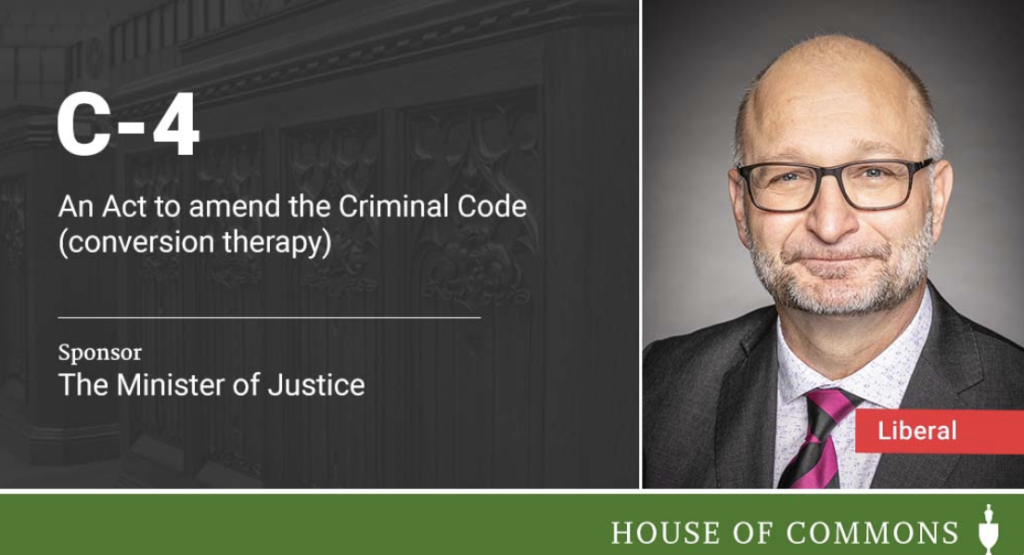
Ottawa, ON – Earlier today, Justice Minister David Lametti tabled Bill C-4, an act to criminally ban the practice of conversion therapy. The bill will criminalize counselling for LGBTQ+ Canadians who want to reduce unwanted “non-heterosexual behaviour.”

“This law will hurt LGBTQ+ Canadians as well as those questioning their gender identity,” said André Schutten, director of law and policy with ARPA Canada. “It will deny them the broad range of choices for counselling and spiritual support that are freely available to all other Canadians. In a word, this bill is discriminatory.”

During debate on this bill’s predecessor, many legal and religious organizations urged MPs to be mindful of the lack of consensus in Canada on how best to treat gender dysphoria, to not criminalize body affirming counseling, to clearly define the term “conversion therapy,” to listen to those who have de-transitioned or desisted from a transgender identity, and to encourage a full exploration of comorbid conditions underlying a patient’s gender dysphoria before initiating invasive medical treatments.

Bill C-4 goes even further than the Liberals’ previous attempts to pass a conversion therapy ban. The previous bill would have allowed a heterosexual teen to get help reducing their unwanted sexual impulses (a porn addiction, for example) but would have criminalized a gay or lesbian teen for pursuing similar help. Bill C-4 proposes that this now be extended beyond children and minors so that even adults in the LGBTQ+ community will not be allowed to pursue counselling they desire.  

Schutten expects Bill C-4 to receive vigorous debate as it makes its way through the House of Commons. “Bill C-4 defines conversion therapy so broadly that I expect members of the LGBTQ+ community, religious groups, medical professionals, and feminists will unite as unlikely cobelligerents in urging amendments to this bill.”

In the last Parliament, the Justice Minister refused to make common-sense amendments that would have clarified the law, made the bill constitutionally sound, and satisfied the concerns expressed by a diversity of groups, while still prohibiting conversion therapy. “Minister Lametti insisted on putting partisan politics ahead of good law by keeping the definition overly broad and vague,” said Schutten. “It is up to this Parliament to fix that and turn this poorly drafted bill into a strong piece of legislation that a wide spectrum of Canadians can support.”

ARPA Canada will be working with MPs, including the House of Commons Standing Committee on Justice and Human Rights, to urge amendments that will improve and clarify this bill.

– 30 –

ARPA (Association for Reformed Political Action) Canada has a mission to educate, equip, and encourage Reformed Christians to political action. We also take a biblical perspective directly to our elected leaders and the courts.

ARPA is non-partisan and does not promote or oppose any party.

André Schutten is available for further comment. He can be contacted at [email protected] or 1-866-691-2772

For immediate release from the Association for Reformed Political Action (ARPA) Canada

November 1, 2021


Flawed Conversion Practices Ban Introduced in British Columbia

Last Thursday, BC Green Party Leader Sonia Furstenau introduced Bill M-204, the Sexual Orientation and Gender Identity Protection Act.

This bill is akin to previous federal and provincial bills that propose to ban conversion therapy. It aims to ban all attempts to change a person’s sexual orientation, gender identity, or gender expression. Unlike previous proposals, it applies to both minors and adults.

ARPA Canada has grave concerns over the bill’s definition of conversion therapy and the rationale behind the bill.

“This bill not only bans coercive and demonstrably harmful practices that are already illegal, but it also bans non-coercive conversations that try to help people develop an integrated personal identity,” says Levi Minderhoud, ARPA’s BC Manager. “For example, if a person adheres to a religion that holds that same-sex activity is wrong and yet is attracted to members of the same sex, that person should certainly be allowed to seek the counsel of others to help them reconcile their religious identity with their sexual attractions. To forbid them from having that conversation not only infringes upon the freedom of expression but it also has negative consequences on the holistic health of that person.”

While Furstenau claims that “everyone should be allowed to be exactly who they are,” Minderhoud responds that, “in a free and democratic society, every person should be free to try to change the identity, behaviour, or belief of another person. Regardless of the subject of that conversation – whether someone’s sexual orientation, religion, partisan affiliation, or vaccination status, just to name a few – these important conversations must not be prohibited. This law forbidding attempts to convert someone’s sexual orientation, gender identity, or gender expression sets a dangerous precedent that the government can forbid other conversions that it finds distasteful.”

“Another flaw in this bill is that it suggests that change is always bad and that the loving thing to do is to always affirm the identities, behaviours, or beliefs of another person. But not everyone is satisfied with who they are or what habits they practice. It is deeply troubling that this legislative proposal bars people from seeking assistance to live as better versions of themselves.”

“At the end of the day,” says Minderhoud, “our dignity and worth should not stem from our sexual orientation, gender identity, or gender expression, or even the acceptance of our identities by others. Our identity comes from being made in the image of God. He created every person to be unique. It’s not that our sexual or gender identity is unique or self-defined – He created us in binary categories of male and female, man and woman – but each one of us is uniquely made in His image. When we recognize this and treat others accordingly, our society flourishes.”

– 30 –


For further comment, Levi Minderhoud can be reached at [email protected].

ARPA (Association for Reformed Political Action) Canada is a Christian political advocacy organization with a mission to equip, encourage, and engage Christians in the public square.

For immediate release – Ottawa, ON
June 22, 2021


Senate amendments needed to make conversion therapy law one that LBGTQ+, feminist, and religious groups can all support

A majority of MPs voted in favour of Bill C-6 today, pushing the bill to criminalize “conversion therapy” into the Senate. No organization in Canada opposes the principle of banning coercive or tortuous therapies. However, Bill C-6 defines conversion therapy so broadly that some members of the LGBTQ+ community, religious groups, medical professionals, and feminists have spoken out against the bill, urging amendments.

“We support a bill banning conversion therapy, but not this bill, because it bans more than conversion therapy,” said André Schutten, a constitutional lawyer and ARPA Canada’s Director of Law and Public Policy. “Experts in law and medicine, and advocates from a wide variety of groups across this diverse country are rightly concerned about the impact this bill will have on reducing the availability of psychological and spiritual help for those struggling with deep existential questions.”

ARPA Canada condemns coercive practices designed to alter a person’s sexuality through pain, pharmaceuticals, surgery, or shaming rituals. But C-6’s definition of conversion therapy goes well beyond these archaic practices, capturing counselling and psychological support for those who struggle with gender dysphoria, as well as spiritual counselling around questions of sexual ethics and identity.

“The Justice Minister refused to make common-sense amendments to the legislation that would have clarified the law, made the bill constitutionally sound, and satisfied the concerns expressed by feminist groups, LGBTQ+ advocates, and religious leaders while still prohibiting conversion therapy. Minister Lametti insisted on putting politics ahead of good law by keeping the definition overly broad and vague. Sadly, a majority of MPs went along with it today,” explained Schutten.

“We are now looking to the Chamber of Sober Second Thought to make simple amendments to the definition in the bill so that parents don’t risk five years in jail for asking a counsellor to help them work through gender dysphoria issues with their child.”

Many feminist organizations (including Alberta Radical Feminists, Alberta Women’s Advocacy Association, Canadian Women’s Sex-Based Rights, Pour les droits des femmes due Quebec, We the Females, and the Women’s Human Rights Campaign) urged the Standing Committee on Justice and Human Rights to adopt amendments to ensure supports remain in place for girls in an overly sexualized world. ARPA Canada and many other legal and religious organizations made substantially similar requests. They urged MPs to be mindful of the lack of consensus in Canada on how best to treat gender dysphoria, to not criminalize “non-affirmative” psychotherapy, to clearly define the term “conversion therapy,” to listen to those who have de-transitioned or desisted from a transgender identity, and to encourage a full exploration of comorbid conditions underlying a patient’s gender dysphoria before initiating invasive medical treatments.

“We have been so encouraged to see the number of faith leaders who have met with their MPs to explain why C-6 needs to be improved. And it has been particularly encouraging to see that this concern is held by a wide spectrum of Canadians, regardless of their faith or worldview,” added Schutten. “Sadly, this government, with the support of most other MPs, chose to ignore these concerns. It isn’t only parents and pastors who are going to be hurt by this. This bill will hurt LGBTQ+ Canadians the most. It will deny them the broad range of choices for counselling support that are freely available to other Canadians. It is now up to the Senate to turn this sloppy bill into a strong piece of legislation that protects vulnerable children and that a wide spectrum of Canadians can support.”

– 30 –
ARPA Canada’s brief to the Standing Committee on Justice and Human Rights is available here. A summary of recommendations from Canadian feminist groups is available from ARPA Canada upon request.
André Schutten is available for media interviews today and tomorrow. He can be contacted directly at 
[email protected] or 613-297-5172

For immediate release from the Association for Reformed Political Action (ARPA) Canada

March 11, 2021

OTTAWA, ON – The Liberals, with the help of the Bloc Québecois, have just voted to end debate on Bill C-7. This means that later this evening, Members of Parliament will be voting on Senate amendments to Bill C-7 which expands Medical Assistance in Dying. The New Democrats and the Conservatives have indicated they will be opposing the Senate amendments that were added to the bill within the past number of weeks.
 
“The Senate has radically expanded this already dangerous bill,” said André Schutten, Director of Law and Policy for ARPA Canada. “That the Liberals have moved to end debate when the bill has undergone such a drastic change is irresponsible and an affront to democracy.”
 
“When Bill C-7 passed at third reading it already discriminated against those with disabilities. Now, with the Senate amendments, it also devalues the lives of those with mental health concerns,” said Schutten. “It creates a two-tier system that would provide safeguards and protection for some Canadians considering suicide but would offer physician assisted suicide to other Canadians who are also considering ending their lives.”
 
Canadians with mental health concerns need the best level of help and suicide prevention.
 
“A request for suicide is a cry for help,” continues Schutten. “Government must do all it can to provide the best care, and equal care for all Canadians, regardless of any mental or physical disability they may have.”
 
If the Senate amendments pass, it will further show the government’s tone-deaf response to the suffering of people with mental and physical disabilities. The answer to suffering should start with better access to palliative care. 
 
“We are thankful that Canadians have engaged on Bill C-7 in unprecedented ways,” said Schutten. “In the past decade of government relations, I have never seen such a broad spectrum of Canadians united in opposition to a government bill. This is a matter of life and death and it is our hope and prayer that MPs will do the right thing this evening and vote against the Senate amendments.”
 
The Association for Reformed Political Action (ARPA) Canada has been involved in the national discussion on MAiD for years. ARPA Canada was an intervener at the Supreme Court of Canada in the Carter case, a participant in multiple government consultations for Bill C-14 in 2016 and C-7 in 2020, and a presenter to Parliamentary committees.

-30-

For further comment or interview, please contact Theresa Wynia
at (905) 325-5934 or [email protected]

For immediate release from the Association for Reformed Political Action (ARPA) Canada

February 2, 2021

OTTAWA, ON – Experts from the United Nations have released a press statement declaring, “Disability is not a reason to sanction medically assisted dying… Disability should never be a ground or justification to end someone’s life directly or indirectly.”

These experts express “alarm at a growing trend to enact legislation enabling access to medically assisted dying based largely on having a disability or disabling conditions, including in old age… [and] concern at the lack of involvement of people with disabilities, as well their representative organizations, in drafting such legislation.”

ARPA Canada shares these critical concerns.

“The current government of Canada seems intent on expanding access to assisted suicide, particularly for disabled Canadians,” says André Schutten, Director of Law and Policy for ARPA Canada. “One of the main purposes of the government of Canada and the laws of Canada is to fully and equally protect the lives of those who are vulnerable, including those who suffer from disabilities. Many persons with disabilities, the vast majority of disability rights advocates, and organizations across the political spectrum are adamantly opposed to the expansion of medical assistance in dying. Yet every reasonable amendment proposed to Bill C-7 to protect vulnerable Canadians has been shot down.”

Bill C-7: An Act to amend the Criminal Code (medical assistance in dying) seeks to expand the eligibility for MAiD to those whose death is not reasonably foreseeable, including those living with permanent disabilities. If passed, the bill would also permit advanced directives and relax a number of safeguards designed to protect vulnerable people from improperly receiving MAiD.

“Canada is one of the few countries in the world that has legalized assisted suicide,” Schutten continues. “The international community recognizes medical assistance in dying for what it is: a form of suicide resorted to because of poorly-managed suffering. Suicide is not the solution for suffering, regardless of whether this suffering is caused by a disability, a disease, or mental illness. We call upon the government to abandon its attempt to normalize assisted suicide for Canadians with disabilities and instead focus on relieving their suffering and assisting them to live well. Bill C-7 should be withdrawn by the government, or the Senate should vote it down. Euthanasia must not be expanded in Canada.”

The Association for Reformed Political Action (ARPA) Canada has been involved in the national discussion on MAiD for years. ARPA Canada was an intervener at the Supreme Court of Canada in the Carter case, a participant in multiple government consultations for Bill C-14 in 2016 and C-7 earlier this year, and a presenter to Parliamentary committees.
-30-

For further comment or interview, please contact Theresa Wynia
at (905) 325-5934 or [email protected]

For immediate release from the Association for Reformed Political Action (ARPA) Canada

October 8, 2020

OTTAWA, ON – Earlier today the BC NDP issued a press release with a false and misleading statement. We have respectfully asked them to change it, but they have not yet responded to our request.

ARPA Canada believes that all human beings are created in the image of God and it is our desire to advocate for equal respect for everyone.

It is disappointing that the actions of the BC NDP in sending out this misleading statement have caused division.

ARPA Canada is a non-partisan advocacy group and while our organization does not make any efforts to elect MLAs from any of the provincial political parties, we do meet with them regularly. In recent years, the ARPA group in the Bulkley Valley has had encouraging and respectful meetings with Honourable Doug Donaldson. They continue to have a relationship of mutual respect with this NDP cabinet minister and current candidate. As well, ARPA staff have attended consultation sessions with Premier John Horgan and Health Minister Adrian Dix during the COVID pandemic.

The ability for citizens to present their concerns and their political perspectives is central to the healthy functioning of democracy. Politicians of all parties should also be encouraged to listen to the concerns of their constituents rather than being condemned for doing so.

ARPA Canada’s mission is to educate, equip and encourage Reformed Christians to political action. The staff, volunteers, and supporters of ARPA Canada work to build relationships with governments of all levels and all parties, including in British Columbia.  We will continue to carry out this mission as we seek to bring the truth found in God’s Word to bear on public life in Canada.

– 30 –

For further comments or interviews, please email [email protected].

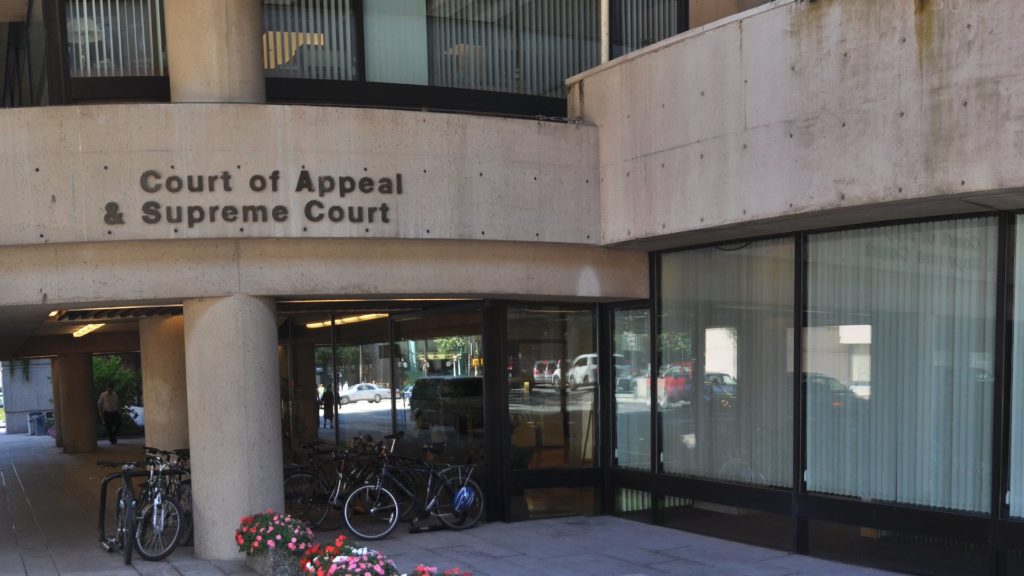
OTTAWA, ON – The British Columbia Court of Appeal released its judgment today in A.B. v. C.D., in which it overturned numerous orders made by the court below, concluding that the father (“C.D.”) had not committed “family violence” under the Family Law Act by opposing his biological daughter’s (“A.B.”) proposed gender transition by the administration of testosterone.

The Court of Appeal struck the lower court’s protection order, which threatened the father with immediate arrest if he tried to persuade AB to abandon testosterone treatment, if he addressed AB by her birth name, or if he referred to AB as a girl or with female pronouns to her or to anyone, publicly or privately.

The Court of Appeal’s reason for these reversals reflect ARPA Canada’s submissions outlining how Justice Bowden’s declaration regarding “family violence” and Justice Marzari’s protection order were simply not authorized by the Family Law Act.

Rather, the Court of Appeal stated, “CD is entitled to his views and he is entitled to communicate those views to AB. […] [Their] difference of opinion alone cannot justify a finding of family violence. As set out above, the evidence shows that AB is a mature minor with the capacity to make his own decision about the medical treatment recommended at this stage, and such capacity includes the ability to listen to opposing views.” (para 174)

The Court stated further that “caution should be exercised in identifying ‘psychological or emotional abuse’ as constituting ‘family violence’. This is especially important in cases […] which involve a complex family relationship stemming from a profound disagreement about important issues of parental roles and medical treatment. Moreover, a finding of family violence in such circumstances is inconsistent with the continuation of CD’s parenting responsibilities.” (para 175)

Geoffrey Trotter, who served as counsel to ARPA Canada in its intervention, commented on the decision: “The Court of Appeal has rejected the attempted criminalization of the father’s speech on anything related to AB’s gender identity and medical treatment, and has affirmed that disagreement is not violence. This judgment affirms the importance of enabling a father to remain involved in his child’s life even in the face of such disagreements, and that it is not the role of the criminal law to obliterate such disagreement in the name of peace.”

Although finding that CD’s conduct did not amount to “family violence”, the Court did find that CD’s “refusal to accept AB’s chosen gender and address him by the name he has chosen is disrespectful of AB’s decisions and hurtful to him.” (para 176) The father’s conduct, in the Court of Appeal’s judgement, damaged their relationship and exacerbated the tension between them.

On this basis, the Court of Appeal decided to continue some restrictions on CD’s freedom of expression by way of a conduct order.  Unlike protection orders, conduct orders are not criminally enforced. They are intended to reduce conflict between family members already involved in a family law dispute, in order to help legal disputes get resolved and prevent new legal disputes from arising.

The Court of Appeal’s conduct order directs CD to “acknowledge and refer to AB as male and employ male pronouns, both generally and with respect to any matters arising in these proceedings” (para 220) and to address AB by AB’s chosen name (which has since become AB’s legal name). It is narrower than the lower court’s protection order. It makes an express exception for CD’s private communications with “family, close friends and close advisors”. It also does not prohibit CD from discussing AB’s medical decisions with AB, as the protection order had done. The conduct order will expire in three months.

“The context and purpose of this conduct order is important. It cannot be interpreted as stating a general rule that a parent is guilty of legal misconduct by opposing his or her child’s desire to adopt a transgender identity or to obtain certain treatments for gender dysphoria,” said ARPA’s legal counsel, John Sikkema. “The conduct order was issued in the context of a lengthy and emotionally taxing disagreement between father and daughter, in which the father made what seemed to the Court in these circumstances to be poor judgment calls, including releasing his correspondence with one of AB’s doctors to a media outlet.”

Nevertheless, the Court seems to overlook, or at least does not discuss, how significant an infringement of freedom of thought, belief, and expression it remains to order a father to refer to AB as male and to use male pronouns when speaking to AB and to all but a few close family members and friends. The Court could have achieved its goal of promoting civility between the parties in a way that was less infringing of CD’s freedom of expression. Surely, if CD disagrees with AB that AB is a boy, AB will know this, and it achieves little or nothing good to force CD to use words he believes to be false. Rather, it is a profound violation of his freedom, damaging to his integrity, and arguably damaging to his relationship with AB as well, even if it is what AB wants to hear.

ARPA Canada will release additional and more detailed analysis in the coming days.

For immediate release from the Association for Reformed Political Action (ARPA) Canada

December 5, 2019

Will the throne speech address assisted suicide?

OTTAWA, ON – Advocates for persons with disabilities will be tuned in to the throne speech to see if or how the returning Liberal government will address the issue of assisted suicide.

“Will the government promote suicide prevention or suicide assistance?” asks André Schutten, Director of Law and Policy with the Association for Reformed Political Action (ARPA) Canada. “Will this government signal to people with severe disabilities or diseases that it wants to provide help in the way of palliative medicine and other supports to prevent suicides, whether medically assisted or not?”

“ARPA Canada affirms the equal dignity and worth of every human being,” says Schutten. “Sadly, in just the last few years, we’ve seen the rapid deterioration of this fundamental value: that you matter because you’re you; that despite disease and disability, you have value and deserve quality care and concern from your neighbours, your government, and your country.”

ARPA Canada has been an active voice on the issue of assisted suicide and euthanasia for over a decade and was one of the interveners in the Carter case at the Supreme Court of Canada. In the landmark decision, the Supreme Court struck down the absolute prohibition on assisted suicide. After 16 months of careful deliberation and broad consultation with many experts, spanning two Parliaments, the Liberal government passed Bill C-14, legalising assisted suicide in certain circumstances. The requirements included that a person requesting “assistance in dying” must have “a serious and incurable illness, disease or disability,” and be in “an advanced state of irreversible decline in capability” and “their natural death has become reasonably foreseeable.”

In September of this year, a mere three years after that law was passed, a Quebec lower court judge, in a case called Truchon, struck down the restriction that assisted suicide only be available in circumstances where death is “reasonably foreseeable”. The Attorney General of Canada did not appeal the decision.

“Instead of defending legislation enacted by Parliament, as it ought to have done, the Attorney General simply deferred to a lower-court judge’s opinion that the law is unconstitutional,” says John Sikkema, a constitutional lawyer with ARPA Canada.  “Now, it appears the government will use the Truchon ruling as a pretense for expanding assisted suicide.”

“It will be interesting to see how Members of Parliament respond to the Prime Minister’s and Attorney General’s stated intention to expand access to assisted dying,” Schutten comments. “Opposition to further loosening Canada’s assisted suicide law in response to Truchon may be motivated by the belief that ‘assisted death’ is unethical, by concern about devaluing the lives of sick and disabled people, and by a desire to defend Parliament’s role and responsibility against activist judges,” he added.

ARPA Canada has published several articles on the subject of assisted suicide, from op-eds to Supreme Court Law Review essays. ARPA Canada’s legal team also presented to multiple Parliamentary committees and panels during the drafting and consultation process for Bill C-14, the euthanasia law. You can find ARPA Canada’s policy report on assisted suicide and euthanasia online.

For in-person (Ottawa) or telephone interview requests, please contact André Schutten directly: 613-297-5172

– 30 –

For immediate release from the Association for Reformed Political Action (ARPA) Canada

March 15, 2019

Ontario curriculum update increases parental involvement and that’s a good thing

OTTAWA, ON – This morning, Ontario Minister of Education Lisa Thompson announced some much-needed improvements to the provincial curriculum. During the press conference, Minister Thompson addressed some of the concerns Ontario parents had with the previous Wynne-era curriculum, particularly about the sexual health curriculum.

André Schutten, Director of Law & Policy for the Association for Reformed Political Action (ARPA) Canada, applauded the re-engagement and involvement of parents in this curriculum.

“As a constitutional lawyer, I’ve been tracking a worrying trend of provincial governments running rough-shod over parental rights and responsibilities,” he said. “Education is a parental responsibility. And it was encouraging to hear the Minister recognize parents as the primary educators of the children and we were encouraged to hear the Minister discuss the importance of parents knowing who is teaching what to their children. The Minister’s assurance that the curriculum will be available for parents to see and opt to take their children out of any material they deem inappropriate is a welcome change.”

“While the curriculum will still cover subject matter that is extremely sensitive and private in nature, we are pleased to hear that the Minister has raised the age that kids will be exposed to certain concepts,” stated Schutten. “When the government opened consultations with Ontarians, we encouraged parents to communicate five key components that we wanted to see in the curriculum. We appreciate that school curriculum can always be improved, but we are thankful that Minister Thompson listened to parents across the province who were concerned about the age appropriateness of some of the sexual health material.”

ARPA Canada also noted the focus on safety specifically around social media and the internet and hopes that this translates into protecting high schools from the danger of human trafficking and from being exposed to pornographic material online.

“We need to focus on protecting our high school students. Our hope is that as the curriculum continues to develop, it will also address the reality of domestic human trafficking and the damaging effects of pornography on the developing brain,” said Schutten.

Schutten acknowledged that the curriculum is not going to be perfect. “There will still be parents upset about what is in the curriculum. But really, no curriculum will override the fact that parents need to take primary responsibility for their child’s education. My hope is that parents who were anticipating greater changes will remain involved with their children’s education and respectfully engage with teachers, administrators, and school boards to address any ongoing concerns.”

ARPA Canada is a national advocacy organization with a mission to educate, equip, and encourage Christians to political action. They have thirteen chapters across the country, with five in Ontario.


-30-

André Schutten is available for comment by telephone or in person (Ottawa), and can be contacted directly by phone or email: 613-297-5172 | [email protected]

Please click here if you wish to unsubscribe from ARPA Canada media releases.