Earlier this year the Federal Health Committee responded to Motion 47, the motion put forward by MP Arnold Viersen to study the public harms of pornography. Motion 47 was passed last year unanimously in the House of Commons. This motion had a lot of promise, and we were excited about what would result. As we reported earlier this year, the response from the Health Committee was absolutely inadequate, and betrayed a serious lack of concern on the part of the government about the issue of pornography and its impacts on Canadians – particularly children. It is frustrating that our secular culture’s only response to moral issues seems to be in language of sexual expression, and they seem unable to analyze this issue from the moral perspective of the real and actual harm to the men, women, or children involved.

The government seems to believe it has no responsibility to protect our children from the impact of accidentally viewing violent pornography at an early age. We go to extremes to protect our children from being unduly influenced by tobacco and alcohol products, but when it comes to the impact of viewing violent pornography, the government acts as if our children’s innocence is not of importance. Earlier this week there was an episode at the Ottawa Public Library that was reported on in the media of a man watching hard-core pornography on a library computer while children and other patrons were nearby, and the library disclosed that it was his right to do so. Read the full story here.

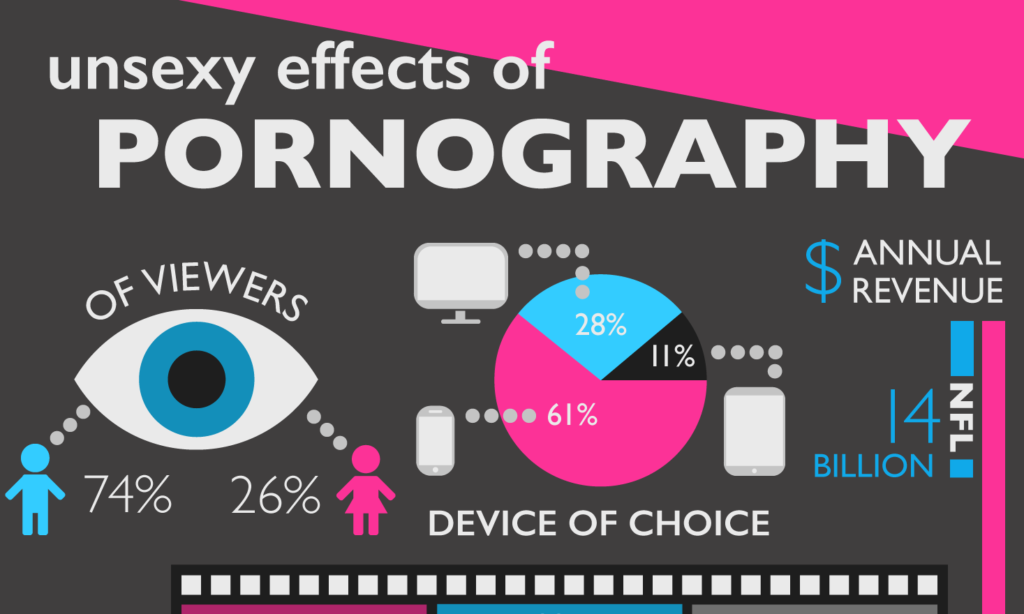
Hope for the Sold, the organization that put together the documentary Over 18, has created a great new infographic in response to the M-47 report. Click here for a full-sized version.

infographic

Set up a meeting with your MP, your local MLA or MPP, or even a municipal politician and use this infographic as a means to explain to them the dangers these materials pose. If an adult is not allowed to smoke in an enclosed space with a child, why isn’t the same applicable for pornography exposure, which is also extremely harmful?

Ask your representative to take this infographic to their caucus, and to challenge the government on this report. Go to Easy.ARPACanada.ca for our pre-drafted letter on responding to M-47. You can also call your MP to express you concerns. Let them know this issue is not one to be trifled with and that we need to get this done right the first time.

Thank you.

The Health Committee response to Motion 47 was released today. Motion 47 you may remember was passed last year unanimously in the House of Commons. Unfortunately, this report falls flat on its face.

The recommendations of this report portray a serious lack of analysis of the issues that Motion 47 sought to address. In fact, the only recommendations seem to be passing the job off on the provinces with yet more sexual education curriculum, as if that somehow solves all societies moral problems. It is frustrating that our secular culture’s only response to moral issues seems to be in the language of sexual expression, and they seem unable to analyze this issue from the moral perspective of the real and actual harm to the men, women, or children involved? There is no connection in the secular mind between sexual license and harm. Sexual license and expression cannot be impeded in any way, and if there is some perceived harm, let the teachers deal with it in their classrooms. It’s a bit too icky for the committee to seriously consider.

This report entirely ignores the contribution of violent pornography to violence against women. The majority of pornography includes violence against women, and promotes it, featuring women in a subservient position. The impact of constant exposure to violence in the psyche of the user, whether adult or child, must be considered in the way all women in society are being viewed.

Further, this report seems to think that the government has no responsibility to protect our children from the impact of accidentally viewing violent pornography at an early age. We go to extremes to protect our children from being unduly influenced by tobacco and alcohol products, but this report glosses over the impact of violent pornography and acts as if our children’s innocence is not of importance.

ARPA is non-partisan, but we are seriously disturbed by the flippancy with which this committee, and thus the government has handled this extremely important issue.

Contact your representative, and ask them to bring up this issue in the caucus, and to challenge the government on this report. Go to easy.staging.arpacanada.ca and select the pre-drafted letter there for you on Motion 47. Please do call as well, and let your MP know that this issue is not one to be trifled with, that this should be done right the first time.

Parliament’s Health Committee has tabled its report on the public health effects of graphic online pornography on children. The Committee spent several months this spring hearing testimony on the issue, after the House unanimously passed a motion calling for such a study. The motion was put forward by Alberta MP Arnold Viersen. But Viersen says the report is a huge disappointment, because it got sidetracked on the issue of gender identity. “Three out of the four recommendations talk about (the need to) have gender-based analysis. That the Public Health Agency of Canada apply gender-based analysis when developing proposals.” Viersen says the fourth recommendation did touch on the need to provide technological tools to protect children from exposure to online porn, but the report fell far short of what he was expecting.

He says the central request of his motion – a study on the public health impacts of porn – was never properly addressed. “There’s a three-fold target when you do a Public Health assessment; you have to define the problem, analyze risk areas and protective areas and then put forward initiatives and solutions.” He says the report didn’t meet any of those requirements.

Reaction to the report was swift. Josh Gilman from the anti-porn lobby group Strength to Fight says he was “entirely flummoxed” by the report. “This should have been such an easy win; anything about protecting children just makes so much sense.”

He says the report is a political surprise as well, because every single Liberal MP who spoke in the debate on Motion 47 was strongly in favour of protecting children, with some of them even saying that Viersen’s motion didn’t go far enough.

As to next steps, Gilman says the report provides a very clear platform going forward. He says at least the report didn’t contain some “half-way measures that would placate everybody.” Instead, he says, this report is so “useless” in terms of an action plan that it can serve as a rallying cry for people who believe that children need to be protected from graphic online porn. “This isn’t partisan,” Gilman says, “I haven’t met a parent in Canada who is not worried about their children seeing pornography. This is something that everybody agrees on.” He says if the government wants to have voters trust that they’re going to act in the best interests of children, “they’re going to have to change their stance on this.”

The Health Committee response to Motion 47 was released last Friday. Motion 47, you may remember, was passed last year unanimously in the House of Commons. Unfortunately, the recommendations of this report portray a serious lack of analysis of the issues that Motion 47 sought to address.

For more information about ARPA Canada, please visit https://staging.arpacanada.ca/.

There was an emotional debate in the Senate last week about language and choice of words. On the feature this week, we present an edited version of that debate, which started when Manitoba Senator Don Plett rose on a point of order.

—-

Senator Plett: Yesterday in this chamber, a senator in her maiden speech, her first speech in the Senate, accused me of bigotry… To attribute such a serious charge as bigotry to the phrase “these people” is preposterous, and I will read what I said so that we are all clear. This was in reference to Senator Wetston’s speech last week. I had a question, and the question was this:

“When you talk about gender parity, and there is a male who identifies as a female, or a male who identifies as no gender, or an ethnicity that identifies as no ethnicity, where do we put these people in the realm of gender parity?”

When proponents of the legislation I was asking about said, “These people have waited long enough,” or “These people deserve equal protection under the law,” I trust that the senator would not insinuate that those comments were of a bigoted nature.

Colleagues, this is not about me. This is about this chamber and the comments that were disparaging to this chamber….

Hansard is a public document in which our grandchildren – yours and mine – and future generations will have the opportunity to read about the important work we have done in this chamber.

It bothers me tremendously that my grandchildren and my great grandchildren will read that I was accused of bigotry on the chamber floor.

Your Honour, pursuant to Rule 6-13: All personal, sharp or taxing speeches are unparliamentary and are out of order.

Accusing someone of bigotry is a personal attack of the highest order, and, as such, Your Honour, it is my assertion that these comments in fact were out of order.

Senator McPhedran: Your Honour, thank you for this opportunity. I’m very sorry to hear that Senator Plett feels that I called him a bigot. I did not. My comment was addressed to a practice that can slip into many a debate, either here or elsewhere, of othering, and the damage that can happen when that becomes a practice. I’ve reviewed both the language that Senator Plett used last week that I referred to, and some of the other comments of some other senators who have expressed concerns about transgender rights, such as impact on their ability to use a bathroom, impact on their ability to express themselves.

And…I wanted to be very clear that it was as much tone as it was word. To my ears, I heard othering.

I then went on to indicate that it “can be” – I did not say that it “was” in this instance – an indicator of bigotry. And that, in a very general statement, was what I intended.

Then I went on to say that bigotry does not belong in an inclusive constitutional democracy.

Again, my intention was a general statement. What I was trying to do was to bring my own perspective as a human rights specialist, wanting to respect individual senators and the debate but also wanting to make a general observation about language that can slip into a damaging territory, perhaps not even with intent.

Senator Plett, what I would like to say to you, though, senator-to-senator, is that I do regret the experience that you’ve had from my words, and I hope that the clarification that I’m offering as to the general nature of my comment will be helpful in reducing the hurt that you’ve expressed.

Senator Daniel Lang: Colleagues, I’ve been listening to the debate. We had better cut to the chase here. I think Senator Pratte said it very well. It’s very easy to watch a senator being attacked personally and to sit here and rationalize why another senator would do this.

Quite frankly, what’s happened is totally unacceptable. I would ask, as a senator, to my new friend, Senator McPhedran, to stand up in her place and withdraw her remarks.

Senator McPhedran: Let me just say that the general point I was making about othering can stand without reference to any individual senator, that the language that is othering can be understood as an indicator of bigotry, and bigotry has no place in an inclusive democracy. I’m certainly prepared, given what I’ve heard from Senator Plett, to ask if any reference to Senator Plett could be removed — that would be the first two sentences — and leave a general statement about language that is othering.

I hope that that will be experienced as sufficient to make it clear that there is no evidence in the words that I spoke yesterday that I called Senator Plett a bigot. I did not.

– – – – – – – – – – – – – – – – – – – – – – – – – – – – – – – – – – – – – – – – – – – – – – – – – – – – – – – – – – – – – – – – – –

That debate happened last Wednesday. On Thursday, Senate speaker George Furey issued his ruling…

– – – – – – – – – – – – – – – – – – – – – – – – – – – – – – – – – – – – – – – – – – – – – – – – – – – – – – – – – – – – – – – – – –

The Hon. the Speaker George Furey: I know that we do give some leeway to new senators, particularly in their first speech. However, the remarks alluding to Senator Plett were outside the bounds of acceptable parliamentary debate. They were hurtful and inappropriate.

The language in Senator McPhedran’s speech of February 14 can, in the context it was used, be characterized as unparliamentary. The point of order is well founded. I strongly urge Senator McPhedran to avoid offensive personal language. Colleagues, let us continue to engage in respectful debate and avoid, at all times, personal attacks.

The transcript above is of the debate as we edited it for time on the program.  Many more things were said, and the full debate can be found online at the Senate Hansard website.

For the debate on Wednesday, click here.

For the full text of the Speaker’s ruling, click here.

In both instances, you’ll need to scroll down the page to “Orders of the Day.”

Motion 47, introduced by MP Arnold Viersen this past spring, asks the Health Committee to examine the public health effects of the ease of access and viewing of online violent and degrading sexually explicit material on children, women, and men and report its findings to the House no later than July 2017. The motion went for a final vote in the House of Commons on Thursday, December 8, and passed unanimously. This study will mark the first time in 30 years that Parliament has studied the issue of pornography in Canada.

A huge thank you to all who responded to our calls to action by sending EasyMails, signing petitions, calling MPs, engaging on social media, and spreading the word about this very important motion! We are so grateful that your voices were heard and that our parliamentary leaders have turned their minds to the evils of pornography.

For a transcript of the below video, please click here.


 “I am very excited to report that this past Thursday evening, Motion 47 passed in the House of Commons with a unanimous verbal vote. Motion 47 calls for investigation into the public health effects of online violent and degrading pornography on children, women and men.

As I mentioned on our Fall tour, pornography is a public health concern – this is not just about private individual choices. Many studies demonstrate that there are serious impacts on the health of those who watch pornography by actually rewiring and messing up their mental pathways and embedding abusive views of women in their psyche. Adolescents who viewed violent pornography are six times more likely to self-report engaging in sexually aggressive behaviour, and almost 90% of mainstream sexually explicit content features violence towards women, including hitting, rape and verbal abuse.

The progression of Motion 47 has been incredible to watch. When the motion was first introduced by Member of Parliament Arnold Viersen, it was met with ridicule and jokes. Even up to the moment of the second hour of debate in November, we had no idea what the government response was going to be. We were very excited to see the liberal government come out in support of this motion.

Your hand in this battle cannot be overemphasized. Whether it was the emails you sent to MPs, the phone calls, the encouragement for MPs to attend screenings of the “Over 18″ porn documentary, the screenings you posted or attended in your communities, or the hundreds of petitions with thousands of names that came in over the last few weeks. You were not afraid to voice your support for this motion, and it has paid off in a big way. It was thrilling to see Mr. Viersen present a huge stack of these petitions the day of the vote, evidencing your dedication and your support.

It’s not too often that we can celebrate a good motion being passed in Parliament, but we can thankful that God has brought it to pass. There is still much work to do, but together we are bringing an awareness to the harms of pornography in our society. We pray that this too can be used by God in our country.”

M-47, a House of Commons motion seeking to instruct the Standing Committee on Health to conduct a study on violent sexually explicit material, has passed unanimously. Colin Postma of the Association for Reformed Political Action (ARPA) Canada explains the motion and what happened.

On Monday, October 24, the folks at Hope for the Sold held a Parliamentary screening of Over 18 in Ottawa. There were almost 50 people in attendance, including MPs, Senators, and

staffers, representing a cross-section from all 5 parties. This is a very decent turnout for a Parliamentary event, considering the hectic schedules of MPs and Senators. Many of you encouraged your MP to attend – thank you! Read the update from Hope for the Sold here.

We have a few short weeks left to engage with MPs and ask them to support this important motion before it goes to a vote in early to mid December.

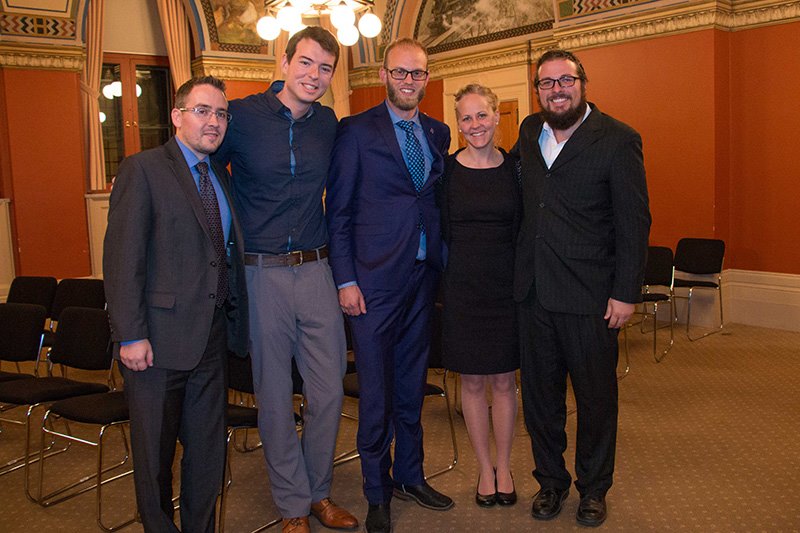
Pictured L-R: Joel Oosterman (MP Viersen's office), David Paisley (Over 18 Executive Producer), MP Arnold Viersen, Michelle & Jay Brock, founders of Hope for the Sold

Pictured L-R: Joel Oosterman (MP Viersen’s office), David Paisley (Over 18 Executive Producer), MP Arnold Viersen, Michelle & Jay Brock (founders of Hope for the Sold)

Please take action in one or more of the following ways:


Note: this motion will have its first hour of debate on November 14. At this point, the second hour of debate will be on December 7/8. The vote will most likely be December 14.

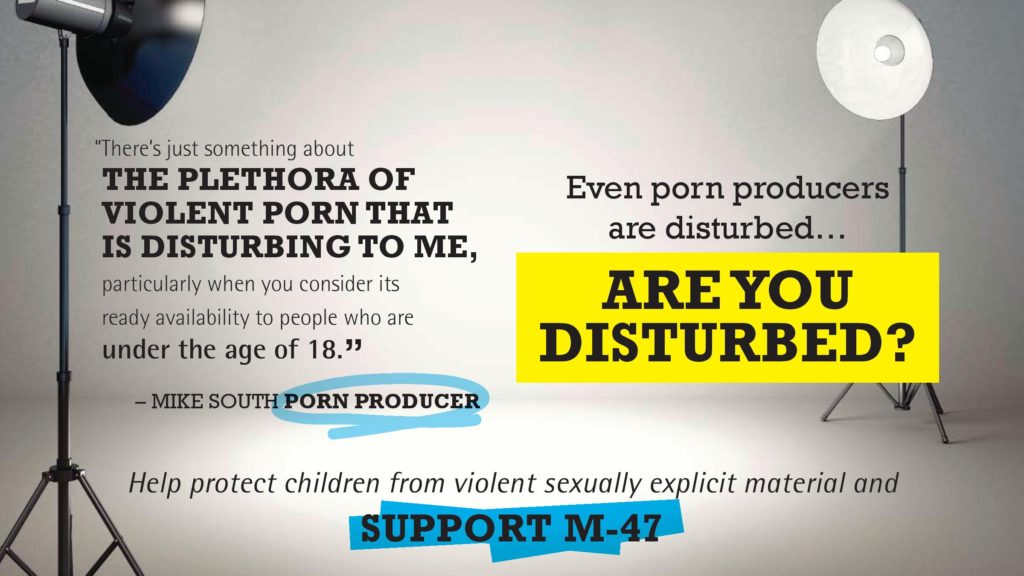
M-47 - Social MediaMP Arnold Viersen, from Neerlandia, Alberta, has introduced a motion in the House of Commons regarding online violent and degrading sexually explicit material. Motion M-47 reads as follows:

That the Standing Committee on Health be instructed to examine the public health effects of the ease of access and viewing of online violent and degrading sexually explicit material on children, women and men recognizing and respecting the provincial and territorial jurisdictions in this regard and following completion of its study, report back to the House no later than July 2017.

Violent and degrading sexually explicit material is easily accessible to anyone with access to the internet, without restriction. As the medical community has discovered, this is having a significant harmful impact on the mental, emotional and sexual health of children, women and men.

Incredibly, the last major study, completed in 1985 by the Special Committee on Pornography and Prostitution (the Fraser Committee), was completed before the invention of the World Wide Web.

Sexual violence and degradation are, sadly, all too common. Recent reports include the tragic cases of Rehtaeh Parsons and Amanda Todd, as well as the scandals involving the St. Mary’s University frosh week and the Dalhousie dentist students. These stories force an important question on our society and Parliamentarians: Where do the individuals in these reports get the notion that sexually violent and degrading attitudes and behaviours toward women and children are normal and acceptable? Where is this being learned?

It is time that Parliament makes this a priority! Engage with the action items below to promote this motion, and please pray that it is used to wake Parliament up to the evil that pornography is.

ACTION ITEMS:

  1. Easymail: Support M-47
  2. Share this briefing document (also below) with your MP, friends and family.
  3. Print and share this M-47 Petition
  4. Read ARPA’s Policy Report on Pornography‘s impact on society