September 10 is World Suicide Prevention Day, with the theme for 2025 to “Change the Narrative.” That theme is focused on the importance of helping people to discuss suicidality and thereby create a culture of support and compassion to prevent suicide and care for those in need. For years, Canada has promoted suicide prevention, and ought to continue to do so.
The International Association for Suicide Prevention, which organizes World Suicide Prevention Day, notes that “together, we can make a difference and work towards a future where suicide prevention is prioritized, and everyone feels supported to get the help that works for them.”
On September 10, Canadians affirm that message of hope, recognizing that suicide prevention must be a priority and that those with mental illness need support and care.
But this fall, Canadian Parliamentarians will again be considering assisting rather than preventing suicide: should Canada be expanding medical assistance in dying (MAiD) to those with mental illness as their only underlying condition?
In 2021, the Canadian Senate added a clause to new euthanasia legislation stating that those with mental illness would become eligible as of March 17, 2023. The federal government has twice delayed that expansion until March 17, 2027.
Notably, the federal government stated that Canada was not ‘ready’ to expand MAiD to those with mental illness. But the concerns raised about the expansion remain very real fears today. Canada is no more ready today than it was in 2023 or in 2024. In fact, Canada will never be ready for such an expansion.
Member of Parliament Tamara Jansen has introduced a bill to repeal the expansion of MAiD to those with mental illness, recognizing that delaying the expansion is not good enough. Bill C-218 would affirm suicide prevention and the need for better care for those who are struggling with poor mental health. This bill is an opportunity to ‘change the narrative’ on euthanasia, stopping the slippery slope that has resulted in continued expansion.
As MP Jansen stated when introducing the bill, “imagine that someone’s son or daughter has been battling depression for some time after losing their job or maybe due to a broken relationship. Imagine they feel a loss so deep they are convinced the world would be better off without them … Our society could end a person’s life for solely a mental health challenge.” Surely, that is not the kind of society we want.
MP Andrew Lawton endorsed Bill C-218, emphasizing the importance of hope in the midst of mental illness. Lawton notes that “If the law on the books were there 15 years ago, I’d probably be dead right now.” Offering MAiD for mental illness ignores the possibility that a person with mental illness may recover. Even without full recovery, many people with mental illness can live well with adequate care and support.
Canadians recognize the need to prevent suicide rather than endorsing it by offering euthanasia for those with mental illness. A 2023 poll found that a full 82% of Canadians said medical assistance in dying (MAiD) should not be expanded without first improving mental health care access. Fifty percent opposed such an expansion entirely, with only 28% supporting it. Many also noted that mental health care is not readily available, with 40% of Canadians who needed mental health treatment noting that they faced barriers to receiving that treatment.
People who want to end their own lives and those asking a physician to end their lives are both suicidal. Evidence from the few international jurisdictions that allow assisted suicide for mental illness shows that it overlaps with traditionally suicidal individuals. For example, in the Netherlands, at least 65% of those granted euthanasia for psychiatric conditions are women, a rate that mirrors the ratio of female-male suicide attempts. Sadly, euthanasia simply becomes a foolproof method of suicide.
Offering MAiD for mental illness flies in the face of suicide prevention efforts and ignores the possibility that recovery may be possible. Canada must promote suicide prevention for all Canadians, not least for those struggling with mental illness. Rather than approving, or even further delaying, euthanasia for mental illness, our government needs to stop the expansion entirely and promote life for those who are struggling.
Our Members of Parliament need to hear from us as they decide how they will vote on this important legislation. Bill C-218 will likely be debated in November, with a vote soon after. This year on World Suicide Prevention Day, Canadians should encourage Parliamentarians of all political stripes to not just talk about the importance of suicide prevention, but to vote for a bill that will protect those with mental illness and encourage life rather than death; hope rather than despair.
On December 11, Health Canada released its fifth annual report on Medical Assistance in Dying (MAiD). From legalization in 2016 until the end of 2023, at least 60,301 Canadians have been euthanized. The report concludes that “The Government of Canada will continue its work to help ensure that the framework for MAID in Canada is safe, reflects the needs of people in Canada, protects those who may be vulnerable, and supports autonomy and freedom of choice.” But ultimately, the government’s approach reveals an emphasis on autonomy over protecting anyone from euthanasia.
The Numbers
In total, 15,343 Canadians died at the hands of doctors or nurses in 2023. Canada permits both euthanasia (where a doctor or nurse practitioner ends a patient’s life) and assisted suicide (where a patient ends his own life using prescribed pills). But assisted suicide is almost non-existent in Canada, with fewer than 5 people using this option last year.
The number of euthanasia deaths in 2023 is a 15.8% increase over 2022. While lower than the 30% rate of increase in previous years, this still represents over 2,000 more euthanasia deaths than in 2022. Euthanasia deaths as a percentage of all deaths in Canada jumped from 4.1% in 2022 to 4.7% in 2023. This means that nearly 1 in every 20 deaths in Canada is state-sponsored. The only country with a higher rate of euthanasia deaths is the Netherlands, at 5.4%.
Nearly 85% of euthanasia deaths took place in British Columbia, Ontario, and Quebec, although these provinces represent roughly 70% of the country’s population. Of the 15,343 Canadians who were euthanized in 2023, 622 died on track 2 (where natural death is not ‘reasonably foreseeable’) compared to 463 in 2022, an increase of 34%.
Of nearly 20,000 verbal and written requests for euthanasia, only 915 patients were deemed ineligible and 496 withdrew their request. A person might also request euthanasia but then die naturally before they can be killed by their doctor. This happened in nearly 3,000 cases. The report states: “These findings bring into focus how even modest delays can interfere with a person’s ability to receive MAID.” That’s an odd way of saying that some patients (roughly 1/6) seeking MAID die before they can be euthanized, but it signals that the government sees MAID as a valuable service, rather than a tragedy to avoid.
Illness and Suffering
Reasons a person might request euthanasia include cancer, organ failure, or neurological, respiratory, or cardiovascular conditions. But there is also a category listed as ‘other.’ The most common conditions in the ‘other’ category include frailty and chronic pain. Frailty, according to the report, “may include loss of muscle mass and strength, cognitive impairment, fatigue or exhaustion, weakness, and reduced tolerance to medical interventions, leading to poor health outcomes.” This condition was reported for nearly 1,400 euthanasia deaths in 2023, significantly higher than those in 2022. While many patients have multiple conditions, frailty was the only condition for 92 patients.
The cases of frailty raise serious questions about how doctors might be assessing patients’ eligibility for euthanasia. If something like frailty can make a person eligible, doctors can be quite loose in their interpretations. Frailty may also be interpreted as a condition where death is ‘reasonably foreseeable.’
In addition to frailty, the ‘other’ category includes chronic pain. Nearly 1,000 patients listed chronic pain as a reason for requesting euthanasia. Yet the report notes challenges in assessing chronic pain. Namely, patients may experience fluctuations in severity of pain, they often have difficulty accessing treatment, and they often have a psychiatric condition such as major depressive disorder. This shows that people may be seeking euthanasia due to mental illness even if it is another condition that makes them eligible for euthanasia.
Health Canada also notes the nature of suffering that is listed by patients who are euthanized. Many patients list multiple sources of suffering. The most cited suffering is the loss of ability to engage in meaningful activities (over 95%), followed by loss of ability to perform activities of daily living (over 83%). Pro-euthanasia advocates often list stories of severe pain in requests for expansion, but fewer than 60% of patients cite inadequate pain control as a source of suffering. Loss of dignity has become the third most cited reason for suffering.
In 2022, 17.1% of patients listed isolation or loneliness as a source of their suffering. In 2023, that number for those nearing death jumped to 21.1%. But for those requesting euthanasia who were not nearing death, it skyrocketed to 47.1%. Another disturbing increase is in those who felt like they were a burden on family, friends or caregivers. In 2022, that number was 35.3%. In 2023, the number for those who were dying increased to 45.1%. For those who were not dying, it was even higher at 49.2%. Nearly half of all who died by euthanasia saw themselves as a burden.
These numbers indicate a difficult reality about why people are requesting death. Pain, disease, or disability may be a factor. But so are loneliness, dependence, and a faulty view of human dignity. And these social factors are increasingly contributing to euthanasia deaths in Canada as euthanasia becomes more normalized.
Suffering is real and can be caused by various factors. But the response should never be to offer to kill those who are suffering. These numbers speak to the ways we must improve care for suffering people. It also shows the need for suicide prevention, rather than suicide assistance, in all cases.
Euthanasia Providers
The report notes that 2,200 doctors and nurses euthanized at least one patient in 2023. However, just 89 medical practitioners were responsible for over 5,300 euthanasia deaths. That’s an average of 60 deaths each in one year. Health Canada argues that this is good because it lets providers keep pace with demand and suggests that “MAID is becoming an area of focused expertise for some.” But is it a comfort to know there are doctors who specialize in killing patients? Some doctors are known to interpret the law loosely and will approve patients who other doctors might refuse to euthanize. Recently, a woman who was declined euthanasia in Alberta found a doctor in B.C. who was willing to kill her. Thankfully, a court intervened and stopped that death from happening. The same doctor who approved the woman for euthanasia has admitted to killing over 400 patients.
But in how many cases do doctors interpret the law loosely and kill patients who are not eligible for euthanasia? We don’t know. The lack of oversight in nearly every province increases concerns about doctors who specialize in euthanasia. Health Canada emphasizes that euthanasia is a health care service. This mindset leads to a lack of caution, and a lack of adequate safeguards and oversight. But euthanasia isn’t health care. It is an exception to the criminal prohibition on homicide and is essentially the “service” to end health care services.
Conclusion
Health Canada’s report once again reveals, as expected, the rapid growth rate of euthanasia in Canada. The current federal government has shown no desire to slow this growth. Other party leaders in the House of Commons have also said little about the problems with euthanasia. Check out ARPA’s Care Not Kill website for action items where you can raise awareness and ask your Member of Parliament to commit to protecting Canadians from euthanasia.
Provincial governments also have a responsibility to reduce the rates of euthanasia in their jurisdiction. If you live in Alberta, participate in the government’s ongoing review of euthanasia. If you live in another province, ask your provincial government to take action on this issue as well. Together, we can continue to speak up for inherent human dignity and meaningful care for those who are suffering.
– A new private member’s Bill C-367 addressing hate speech;
– The Senate bill S-210 on pornography is up for a vote in the House of Commons; https://staging.arpacanada.ca/articles/pornography-as-a-public-health-threat-2/
– A request for prayer as the Joint Committee on Medical Assistance in Dying puts together its recommendations;
– A message from Andre Schutten as he moves on to a new chapter.
An update on the AMAD committee studying euthanasia for mental illness. Go to https://carenotkill.ca/ to send an email to the committee today!
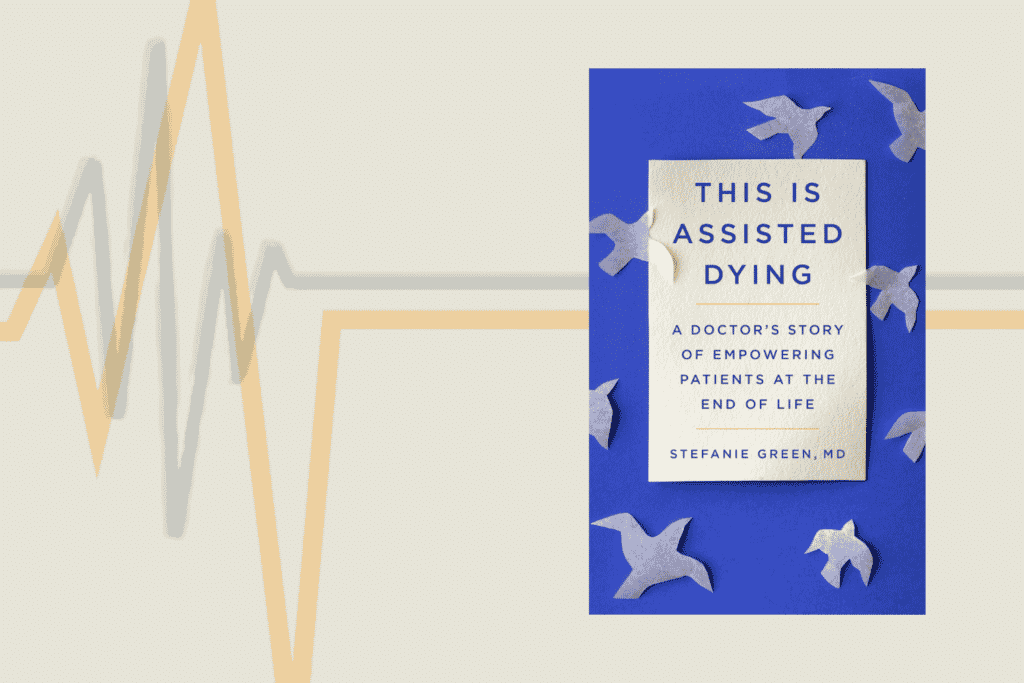
One of Indigo’s “most anticipated books of 2022” was This is Assisted Dying, a memoir by euthanasia provider Dr. Stephanie Green. This shows how entrenched the culture of death has become, that readers were eagerly anticipating this book. Having followed the progression of euthanasia in Canada very closely, we were curious to read this firsthand account of a doctor who has dedicated her career to promoting and providing euthanasia.
Dr. Green is a euthanasia provider in Victoria, BC. She previously practiced maternity and newborn care until euthanasia, which she refers to as MAiD (Medical Assistance in Dying), was legalized in Canada. At that time, she shifted her focus to providing euthanasia full time.
This is Assisted Dying is the story of Dr. Green’s first year providing euthanasia. She takes the reader on a journey to the most intimate situations her patients face and explores the vulnerability of patients at the end of life. She tells the stories of patients who are suffering terribly and want desperately for it to end and portrays herself as helping people by ending their suffering. Green is very focused on wording things in a certain way so that it doesn’t sound too much like she is killing a person. She calls the euthanasia procedure a “delivery,” viewing it as delivering a person to their death, just as she delivered newborn babies in her previous practice. She claims she is “empowering the person, not the disease.” (pg 52)
Green paints a seemingly beautiful picture of how patients can “choreograph their death,” reflective of a culture that is obsessed with control over every aspect of their life from conception to death. She asks the reader to imagine a scenario:
“What if you could decide, at the end of your life, exactly when and where your death would happen? What if instead of dying alone, in the middle of the night, in a hospital bed, you could be at home at a time of your choosing? You could decide who would be in the room with you, holding your hand, or embracing you as you left this Earth. And what if a doctor could help ensure that your death was comfortable, peaceful, and dignified? You might never look at death the same way again.” (pg 1)
A significant factor in all euthanasia discussions is this concept of dignity. Green’s research showed that the most common reason to request euthanasia was loss of autonomy and the loss of a sense of dignity. This stems from a viewpoint that does not include God, where people believe their dignity comes from how they perform and are perceived in this world. Where there is no concept of inherent dignity, there is also no sense of purpose in suffering.
One point that keeps coming up throughout the book is Dr. Green’s determination to operate within the law. She did not provide euthanasia before it was legal, and she is very determined to follow whatever regulations are currently in place. This begs the question, though – what happens when the law permits assisted death for more and more patients? Does the law determine what is right, or are there cases where her conscience would not allow her to provide euthanasia, such as a patient suffering from mental illness, or a minor?
In reading this book it seems possible that Dr. Green would indeed have a point where she would not support certain patients receiving euthanasia. However, additional research reveals her part in a recent submission to the Special Joint Committee on Medical Assistance in Dying in which they outline a protocol to euthanize even infants under the age of one. It seems that there is no end to the Canadian Association of MAiD Assessors and Providers’ (of which Dr. Green is a member) willingness to provide euthanasia. If a patient wants to be killed (or their parents want them euthanized, in the case of minors), any life is fair game when they view themselves through a lens of compassionate helping.
Dr. Green’s book is a good example of how well-intentioned people can go awry if they don’t have a strong foundation in God’s truth. This is Assisted Dying dresses euthanasia up in emotional language to deceive the reader into thinking that having doctors kill suffering patients is an act of compassion. Do not be fooled. Recognize instead how neglecting the biblical concepts of inherent dignity and sanctity of life has a devastating effect on the most vulnerable among us, and be renewed in your determination to stand against the expansion of euthanasia in Canada.