Status: Completed first reading in the House of Commons

Description: Would eliminated the expansion of eligibility for euthanasia to those with mental illnesses. Bill C-7, the last piece of euthanasia legislation, had a sunset clause that would allow those with mental illnesses to be eligible for euthanasia. While the government delayed the implementation of this clause by another three years in Bill C-62, this bill proposed to scrap that clause entirely.

Analysis: It is incomprehensible that our society provides suicide prevention to one class of citizens and assisted suicide to another class of citizens. The extension of assisted suicide to those with mental illness effectively means that assisted suicide is a perfectly legitimate solution to suicidal ideation. Instead of offering assisted suicide to those with mental illnesses, we need to provide better mental health care and support to those who are suffering.

Action Items: Visit CareNotKill.ca for more information on all of these action items:

For immediate release from the Association for Reformed Political Action (ARPA) Canada 

March 26, 2025 

OTTAWA, ON –  

The United Nations Committee on the Rights of Persons with Disabilities released its report on Canada on March 21. The Committee recommends that Canada repeal Track 2 Medical Assistance in Dying (MAiD) and refuse to expand MAiD any further. Track 2 MAiD is euthanasia for persons whose natural death is not reasonably foreseeable, who do not have a terminal condition. It was first permitted in 2021, when Parliament passed the Liberal government’s Bill C-7. 

“Over the past four years, the federal government has continued its reckless expansion of Medical Assistance in Dying” said Daniel Zekveld, policy analyst with ARPA Canada.  

In 2023, just two years after Bill C-7 passed, over 600 Canadians were euthanized under Track 2. Nearly 60% of them were women.  

On top of that, although the Trudeau government delayed the expansion of MAiD to those with mental illness as their sole underlying condition, that expansion is scheduled to take place in 2027. The UN Committee has called on the government of Canada to repeal this expansion as well before it goes into effect. 

“At the very least, Canada’s next Prime Minister will need to address the mental illness expansion. Rather than promoting state-sponsored suicide, a new government must reject and repeal any further expansion of euthanasia,” Zekveld said.  

But our next federal government should also go further than that, argues Zekveld. “Allowing MAiD for Canadians who are not dying devalues their lives and implies that they are dispensable. Offering euthanasia as a ‘solution’ for disability or chronic illness reduces incentives to improve treatments and supports.”  

ARPA Canada supports all the Committee’s recommendations on MAiD in its report and calls on federal party leaders to commit to implementing them.  

ARPA Canada actively opposed the Trudeau government’s rapid expansion of euthanasia into one of the most permissive euthanasia regimes in the world. Many others, including disability rights groups, have been calling on the government to reject euthanasia for people with disabilities whose death is not ‘reasonably foreseeable.’  

As election day approaches, will party leaders promise to protect Canadians who are not dying from MAiD?   

– 30 –  

The Association for Reformed Political Action (ARPA) Canada has a long history of involvement with euthanasia laws and policy in Canada. ARPA was granted intervenor standing at the Supreme Court of Canada in the Carter case in 2016. They have also provided a variety of policy reports, research, and analysis on the topic. In 2020, ARPA launched the Care Not Kill campaign, a national grassroots initiative that educates Canadians on the harms of euthanasia as well as equipping people to engage respectfully on this sensitive topic. 

For further comment or interviews, please contact Daniel Zekveld at [email protected] or 1-866-691-2272.

Should provinces permit medical professionals to refuse to provide controversial services? Think of some of the biggest hot-button, controversial issues in medicine today. How does a doctor respond to a request for an abortion or for various forms of contraception? Can a Christian hospital refuse to provide euthanasia? Or think of medical transitioning. What can a doctor do if a male patient says they want to ‘transition’ to become a woman?  Is it ok if the doctor only needs to refer the patient to another doctor who will provide the service?

Many of the conversations around conscientious objection have been around the issue of euthanasia and assisted suicide, ever since it was legalized in 2016. The conversation also extends to whether certain facilities can refuse to provide euthanasia. However, provincial conscience policies typically apply to any legally available medical procedure.  A few recent developments highlight some of the problems with how our healthcare system treats conscientious objection.

New Policy in Nova Scotia 

At the end of May, the College of Physicians and Surgeons of Nova Scotia released a new document regarding conscientious objection. The policy leaves no ambiguity about what services physicians must effectively refer for. At the outset of the College’s “Professional Standards Regarding Conscientious Objection,” the College clarifies that it applies to, but is not limited to, “Medical Assistance in Dying (MAiD), immunization, reproductive care and gender affirming care.”

Proponents of the policy will be quick to say that no medical professional is required to participate in providing a service they object to. Yet, the policy requires physicians to provide information (even if it conflicts with their conscience) and to facilitate a procedure by providing an effective referral. An effective referral is defined as “a referral made in good faith to a non-objecting, available, and accessible physician, healthcare professional, or agency or service that oversees the delivery of the care being sought.”

So, the physician must ensure that the patient is connected with a non-objecting physician or service, thereby placing the patient on the path towards receiving a service that the physician objects to. Many doctors believe they are complicit if they provide an effective referral. Although they are not directly providing the procedure, they are still required to facilitate it.

Currently, only Nova Scotia and Ontario directly require effective referral. But there is increasing pressure for other provinces to implement similar policies. Health Canada’s Model Practice Standard for MAiD recommends that all provinces implement effective referral policies, at least for euthanasia. The College of Physicians and Surgeons of Alberta tried to do this recently, but received enough pushback that they did not end up incorporating such language.

Some of the negative consequences of Nova Scotia’s new policy are already clear. Not only is it wrong to force doctors to violate their conscience, but doctors are ready to leave the province as a result. When the College was considering this new policy, CTV News Atlantic reported that at least 24 physicians in Nova Scotia indicated that they cannot follow the policy and may need to leave the province or retire early. Likely, there are more. As of June 2024, there were over 160,000 Nova Scotians on a wait list for a family doctor in the province. Losing more doctors will exacerbate Nova Scotia’s healthcare shortage.

MAiD-Free Health Care

In two other provinces, conscience protection in faith-based institutions continues to be targeted. In 2023, the National Assembly of Quebec passed a law which stated that no palliative care hospice may refuse to provide euthanasia. The Archbishop of Montreal, who leases property to a Catholic-supported hospice in Montreal, has launched a legal challenge against the law in Quebec. A Court decision responding to an exemption request stated that the public interest in ensuring access to euthanasia is of fundamental importance.  You can read more about that case here.

Meanwhile, in British Columbia, St. Paul’s Hospital also does not provide euthanasia. The hospital is operated by Providence Health, a Catholic organization that refuses to provide euthanasia in any of its 18 facilities. After public uproar when a woman was forced to transfer hospitals before she could be euthanized, the provincial government agreed with Providence Health to create a separate clinical space next to the hospital where patients would be able to access euthanasia.

Such a compromise was not enough for some patients. One woman was diagnosed with stage 4 cancer in 2023. Upon receiving that diagnosis, she wanted to die by euthanasia, but was being treated at St. Paul’s Hospital in Vancouver. She was heavily sedated to be transferred to another facility and died hours later. Her mother, along with a palliative care doctor who quit over Providence Health’s policy to not allow MAiD in its facilities, has launched a lawsuit against the province of British Columbia and Providence Health Care, alleging that the “forced transfer” caused “egregious physical and psychological suffering, and denied her a dignified death.”

In addition to the obvious concerns about forcing conscientious objectors to provide euthanasia, there are many patients who want health care that does not include euthanasia. This is, of course, true of those for whom euthanasia is immoral. But it is also true of those that may support euthanasia in principle, but do not want it for themselves.

Some disability advocates, for example, worry about ableism in health care and the idea that you are “better dead than disabled.” They worry about whether MAiD will be provided against their wishes or in a moment of weakness. They want care that never includes the killing of people with disabilities. Such advocates speak of safe spaces, or MAiD-free health care, where patients do not have to fear being euthanized.

Conscience protection more necessary than ever

Euthanasia has become entrenched in our society. It is increasingly seen as a right. It’s not simply something that is legal as a last resort, nor is it even one option among many that patients may choose. Rather, it is seen by some as an obligation that doctors must provide in order to avoid patient suffering. Meanwhile, palliative care as a means of relieving suffering is seen as less important.

Canadians must continue advocating for freedom of conscience in healthcare, not just for doctors but also for patients. Stay tuned for further developments and action items as they arise.

At this time last year, we were worried about the impending expansion of euthanasia to people with mental illness. Thankfully, Bill C-39 was introduced by the federal government at the beginning of February 2023 to delay that expansion until March 17, 2024.

Over the past year, we continued to advocate for caring for, not killing, people with mental illness. We supported Bill C-314, which sought to cancel the pending expansion of euthanasia to those with mental illness. Bill C-314 failed by a small margin at 2nd reading, but the amount of support the bill received, including from some Liberal MPs, sent a message to the government that this was something they needed to reconsider. Immediately following the defeat of Bill C-314, Parliament re-convened the Special Joint Committee on Medical Assistance in Dying to review Canada’s level of preparedness for expanding euthanasia. The Committee heard from 21 in-person witnesses, and reportedly received nearly 900 briefs.

Committee Recommendation

Earlier this week, a majority of the Special Joint Committee on Medical Assistance in Dying recommended that the government once again delay the expansion of euthanasia to people with mental illness. The report clearly states that “the medical system in Canada is not prepared for [MAID for mental illness].” This time, instead of a delay of just one or even two years, the committee recommends an indefinite delay, until the Ministers of Health and Justice are satisfied “that it can be safely and adequately provided.” Once the Ministers determine that it is time to implement the expansion, the Committee would be re-established one year in advance of the expansion.

This is a stronger recommendation than we expected, and we praise God for that. Since Bill C-7 in 2021, the government has seemed ideologically committed to allowing euthanasia for mental illness. Various committees and panels that studied the issue seemed to have made the conclusion to expand before really working through the issues.

But Canadians pushed back. You wrote emails, delivered flyers, sent submissions to the committee, and promoted a message of caring, not killing. We’ve also seen a lot more media coverage of the issue, with multiple news outlets criticizing the government’s approach. Now, excluding four Senators, every committee member agreed that Canada is not ready to offer euthanasia for mental illness. Following the Committee’s report, seven provinces and three territories wrote to the federal government asking for an indefinite pause to the expansion.

Committee Reports

When there is any unresolved disagreement among committee members, committees will table a majority report as well as various supplementary or dissenting reports. The majority report, in this case, was agreed to by the five Liberal MPs and one NDP MP on the Committee. Three Conservative MPs and one Conservative Senator wrote a supplemental report. They go further than calling for an indefinite delay, urging the government to “permanently abandon this expansion of MAID. Failing to do so will inevitably lead to the premature deaths of vulnerable Canadians who could have gotten better.” While we are thankful for the majority’s recommendation, we are pleased to also see the Conservatives take this stronger stance. Commentator Chris Selley put it well in a recent National Post article, “’Not ready’ aren’t the words Canadians politicians are looking for. ‘Not ever’ are the words.”

Still, some Parliamentarians continue to push for expanding euthanasia. Four Senators on the Committee wrote two different dissenting reports. One of these Senators recommends that the government ask the Supreme Court about whether extending the delay would be constitutional. The other three ask the government to reject the majority report. They argue that setting an especially high bar for preparedness when it comes to euthanizing the mentally ill reflects stigma and discrimination towards them.

Moving Forward

Committee recommendations are not binding on the federal government. The government, however, will have to table an official response to the report. Health Minister Mark Holland has already commented on the report, stating, “We agree with the conclusion that the committee has come to that the system is, at this time, not ready and more time is required.”

This suggests the government is prepared to act prior to the March 17 deadline. They face a tight timeline to pass legislation through both the House of Commons and the Senate. The Minister of Health says that legislation will be tabled imminently.  

In the meantime, we can continue to encourage the government to put a full stop to this expansion, rather than delaying it again. The government should be saying ‘not ever’ rather than ‘not ready.’ But we can also thank God for moving the hearts of our leaders to be increasingly uncomfortable with expanding euthanasia to those with mental illness.  

Canada euthanizes more people each year. “Medical assistance in dying” or MAiD, as our law calls it, was legalized in 2016. Health Canada says 1,018 Canadians died by MAiD that year. Last year, that number reached 13,241, according to Health Canada’s Fourth Annual Report on MAiD, released in October 2023.

The Report assures us that “the government of Canada is committed to ensuring our laws reflect Canadians’ needs, protect those who may be vulnerable, and support their autonomy and freedom of choice.” But our government’s priority has been increasing access and expanding euthanasia.

Increase in Euthanasia Deaths

Euthanasia deaths have risen at a rate of over 30% per year. The total of 13,241 in in 2022 was 31.4% higher than 2021 and accounted for 4.1% of all deaths in Canada. Only Manitoba saw a slight decrease in euthanasia deaths compared to 2021. In total, nearly 45,000 Canadians have been euthanized since MAiD was legalized. Since 2016, annual euthanasia deaths have increased 1300%.

Quebec and British Columbia have the highest rates of euthanasia deaths, at 6.6% and 5.5% of all deaths in those provinces, respectively.  Newfoundland and Labrador (1.5% of all deaths) and Manitoba (2.1% of all deaths) have the lowest incidence of euthanasia.

Between 2016 and 2021, only Canadians whose natural death was “reasonably foreseeable” were permitted to access euthanasia. That requirement quickly came to be interpreted quite flexibly. However, in early 2021, the reasonably foreseeable natural death limitation was removed. Of the 13,241 euthanasia deaths in 2022, 463 (or 3.5%) were not near death. This is a relatively small percentage of the total number of deaths, but more than double the number in 2021. It will likely continue to grow.

Another distinction to note is those who accessed euthanasia versus assisted suicide. Euthanasia refers to those who have a doctor end their life. Assisted suicide, on the other hand, refers to those who receive drugs that they self-administer to end their own life. Self-administration of MAiD is permitted everywhere in Canada except Quebec. Of the 13,241 MAiD deaths in 2022, only 7 involved assisted suicide. That is, in only 7 cases did people self-administer a lethal prescription to end their own lives. In the other 13,234, a doctor or nurse practitioner killed the patient directly via lethal injection.  

Jurisdictions that only permit assisted suicide have far lower numbers of deaths than Canada. Oregon, for example, only permits assisted suicide. In 2022, 25 years after legalization, 278 people died this way, or 0.6% of the state’s total death rate.

Who is Being Euthanized?

The three most common sources of suffering mentioned by people seeking euthanasia are loss of ability to engage in meaningful activities (86.3%), loss of ability to perform daily activities (81.9%), and inadequate control of pain or concern about controlling pain (59.2%). These reasons highlight the need to provide adequate care. Palliative care can alleviate pain, home care providers can help people perform daily activities, and seniors’ homes can provide meaningful activities to residents. Beyond these basic service providers, families, churches, community groups, and volunteers can help to alleviate the emotional and existential suffering that most people seeking MAiD experience.

The top two reasons in particular reveal the worldview underlying our culture, particularly towards the end of life. That worldview is that if I can’t participate in meaningful activities such as talking to my loved ones or even my regular daily activities like eating and going to the bathroom, then life is no longer worth living. It defines human dignity and the value of human life by what we can do. But our dignity is rooted not in what we do, but in what God has done by creating us as His image bearers.

Other reasons for requesting euthanasia include being a perceived burden on family, friends or caregivers (35.3%), isolation or loneliness (17.1%), or emotional distress/existential suffering/fear/anxiety (3.3%). That means over 4,500 of those who requested MAiD in 2022 were suffering because they felt like they were a burden. Over 2,200 were suffering due to isolation or loneliness. These are not incurable medical conditions. They are familial and social problems.

Of all requests for MAiD in 2022, only 3.5% were deemed ineligible to access euthanasia, down from 4.1% in 2021. So, in addition to growing numbers of people accessing euthanasia, the rate of eligibility is increasing. The report suggests this is because Canadians have grown more familiar with the eligibility requirements, which implies they are either better at knowing how to get it or better at knowing if they shouldn’t try, or both. It is also indicative of a growing cultural acceptance of killing rather than caring for patients and likely reflects the relaxing of safeguards around euthanasia.

The report notes that 77.6% of all MAiD recipients received palliative care, and 92.8% of those who required disability support services received them. While these numbers are relatively high, they still show that many people were euthanized without having received such supports. As a recent Cardus article highlighted, Health Canada’s report did not measure the quality of palliative care. All that health care institutions had to do was tick a box that they had provided some sort of palliative care. At the same time, it speaks to the need for improvement in the care that is provided because so many patients continue to suffer due to various elements of lacking care.

Conclusion

Canada is one of the most permissive euthanasia regimes in the world and increasingly offers euthanasia as an easy solution to suffering. Instead, Canada should promote suicide prevention and care, not kill. In response to rising euthanasia rates, Dr. Michel Bureau, the chair of Quebec’s commission on end-of-life care, noted that MAiD is no longer seen as a last resort. Instead, it is simply seen as one option among many and, increasingly, the first option. This appears to be true throughout the country.

As euthanasia deaths continue to grow every year, the federal government is set to expand it to those with mental illness on March 17, 2024. The government is quick to note that only those with intolerable mental suffering will be able to access euthanasia. However, if this expansion happens, we can expect to see annual increases in euthanasia for mental illness as we have seen with euthanasia for other groups of Canadians, such as those with severe disabilities or chronic illness.

Recently, the Toronto Star and the Globe and Mail both urged the government to reconsider legalizing MAiD for those with mental illness, as have many doctors and psychiatrists. The Special Joint Committee on Medical Assistance in Dying has been reconvened, and Members of Parliament and Senators will meet to discuss Canada’s “level of preparedness” for the expansion. Canadians have yet another opportunity to urge the government to stop expanding MAiD.

Please visit our updated easymail here and call on members of the Joint Committee to stop the expansion of MAiD before it is too late.

As of March 2024, medically assisted suicide will be available to those with a diagnosed mental illness. Even though that’s half a year away, and a bill is in play in Parliament in an attempt to stop the expansion, doctors are already integrating medical assistance in dying (MAiD) into their patient recommendations. Earlier this summer, a BC woman struggling with suicidal ideation went to the hospital seeking help. In assessing her, the clinician asked if she had considered MAiD. How does this square with World Suicide Prevention Day, which we mark on September 10th?

Short answer: it doesn’t.

Canadians have made great strides in understanding and accepting mental illness. Almost everyone knows someone who has gone to a counselor or doctor for help with a psychological ailment. Memes and articles abound attempting to explain anxiety, panic disorders, and depression from the perspective of the sufferer. Mental illness is still not entirely without stigma, but we have made progress.

And yet, all that progress does not mean we fully understand what we are dealing with. When it comes to the human brain, we never do. A broken leg is understandable, fixable on a measurable timeline. Mental illness and disorder are less so. That lack of a measurable timeline is what is now putting people at risk. There seems to be a belief that if we aren’t 100%-satisfaction-guaranteed sure we can manage someone’s suffering, we should consider killing the sufferer.

We cannot support suicide prevention and suicide assistance as equally viable options for those with mental illness. We either believe in encouraging people with mental illness to find hope and a purpose – or we don’t. Suggesting to someone with suicidal ideation that their doctor can help them by killing them destroys the foundation of trust needed for proper psychiatric care.

Mental illness is different from physical illness in that its trajectory is unpredictable. We hate unpredictability. We like control, a plan, and, apparently, an easy exit strategy. MAiD seems to offer that. But reasonably foreseeable death, a common term in MAiD assessments, does not exist in the world of mental illness. MAiD and mental illness are fundamentally incompatible because MAiD removes hope from the equation. Suggesting MAiD tells a person with mental illness that there is no hope – of a cure, or even of improvement worth living for.

Suicide prevention for those with mental illness needs to remain a priority as we seek to honour the inherent dignity of human beings. Bill C-314, an act to amend the Criminal Code by removing the expansion of MAiD to those with mental illness, is the opportunity our Parliament needs to avert the harm of offering MAiD to those with mental illness.

Bill C-314, introduced by MP Ed Fast, will be debated when Parliament returns to work this month. There is very limited time before the March 2024 deadline for the bill to make its way through the House of Commons and Senate to become law. For that process to happen it will require courage and conviction from our leaders to acknowledge that there is a lack of research, a lack of consensus among mental health care providers, and a lack of support from Canadians.

Expanding MAiD to those with mental illness would make Canada the most permissive euthanasia regime in the world. This isn’t something we want to be known for. We want to know that when our loved ones need help, they can safely go to a hospital without being offered a way to end their lives. We want to know that doctors and researchers think mental illness is worth treating, worth understanding, and worth solving.

In a country that is working to break down the stigma around mental illness, we cannot offer suicide assistance and suicide prevention to the same people. Bill C-314 is an opportunity for the federal government to take a meaningful stand for suicide prevention, not suicide assistance.

You can encourage your MP to support Bill C-314! Find your MP’s contact info on the House of Commons webpage to email them personally, or use our easy pre-written email system to get started.

When Bill C-7 passed in the House of Commons in 2021, access to euthanasia and assisted suicide was expanded to Canadians living with disabilities. On March 17, 2027, it will be expanded further to Canadians with mental illness. The Special Joint Committee on Medical Assistance in Dying is currently studying the various issues surrounding euthanasia and assisted suicide. This past spring, nearly 350 Canadians submitted briefs to the Committee on both sides of the argument. In a recent article, we looked at some of the overall perspectives of those submissions.

Since the legalization of euthanasia in 2016, access has rapidly expanded beyond the end of life. The number of euthanasia requests and procedures continues to climb steadily, with more than 10,000 Canadians euthanized in 2021. In recent years, multiple stories of abuse have been revealed. Patients are choosing to die by euthanasia because they cannot access other important services, or because they have simply lost the will to live. Patients are being offered euthanasia instead of help to live well.

ARPA Canada has heard from various Canadians who are deeply concerned about the expansion of euthanasia and assisted suicide, and we wanted to share some of their stories here, which were also shared with the committee studying euthanasia. We will be highlighting one story per week for the next 5 weeks as we continue to seek to bring awareness to how euthanasia and assisted suicide harm vulnerable Canadians.


May 2, 2022

Re: Expansion of MAiD to people who suffer from depression

I am afraid the government will expand the options for those with mental illness wishing to end their lives with the help of their doctor. Please help protect all Canadians…especially the ones who suffer.

I recently returned home from a two-day trip to Prince Rupert with my friend Stephen. He suffers with depression and so to have a chance to get out of town for a few days and do some kayaking and fishing in the Pacific Ocean together was a real treat. This was the first time he has ever been on the ocean (he is 39 years old) and we had a great time. However, on the drive home we heard just a short part of an interview on the radio that triggered him to some very deep and disturbing thoughts and his mood shifted drastically. He speaks often of suicide and not being able to go on. Stephen needs his family, friends, and professional health care providers to help him live; we shouldn’t help him die!

Stephen is the type of person who can be living life to the fullest one hour and the next hour be ready to end it all. He is also able to comprehend his rights and would be considered competent to make any medical decisions he might need to. I truly fear that people like my friend Stephen will be lost if the government allows more medical assistance in dying for those whose sole underlying condition is a mental illness. I understand “there will be limits” and “multiple layers” and “multiple professionals” involved, but I also understand how difficult this can be, and know even how we who love them can also believe at times that MAiD might be what is “best for them” but we can be wrong. We are not gods… we are humans who struggle and we need each other to live; not to help each other die!

Please help by not expanding our existing euthanasia laws into the area of depression and other mental health struggles.

Sincerely,
Jeremy Penninga

To: The Special Joint Committee on Medical Assistance in Dying.

May 11, 2022

As you study whether to expand access to assisted death in Canada, Please consider my story and
recommend against MAID for mental illness.

I have a very good friend who was abused as a child. For years she tried to take her own life. Often we did not dare to leave her alone and we spent many hours with her.

Her friends and family have done their utmost to protect her.

We would certainly have lost her if it was not for the years of counseling and vigilance and protection.

Had there been easy access to assisted suicide, I am confidant she would not have been with us
anymore today. But today, she is a happy woman who knows she is loved, she is productive and a joy to have around.

She is still vulnerable, but an asset to society. She would not have had the opportunity to reach this
point if someone had offered her MAID in her darker times.

Please do not make assisted suicide available to disturbed and mental vulnerable people, people who have often already suffered at the hands of someone else.

They need help! Death is no help!

Sincerely, A concerned friend

To: The Special Joint Committee on Medical Assistance in Dying.

May 8, 2022

When my mother was at the Ottawa civic hospital after a stroke, a young neurologist came in to see her. He was asking questions about if she wanted “to be like this,” “with tubes sticking out of you.” His tone was somewhat aggressive and angry, and it became clear that he was trying to get her to agree to be euthanized. He finally quit when he asked her to lift her leg, in an attempt to prove how incapable she was, but her leg shot fast and straight up in the air. She kept it there until he finally said to put it down.

She was 95 years old, but healthy and strong with a sharp wit. The tube was in her lungs as the stroke had caused breathing difficulties.

Please add my name to the list of people dead set against euthanasia, especially for the vulnerable.
Being old should not be a reason to be asked if you want to be euthanized. They have the same right as everyone for affordable medical care when needed and should never be encouraged to end their lives for the convenience of anyone!

Sincerely,
Barbara Johnston

To: The Special Joint Committee on Medical Assistance in Dying.

May 18, 2022

My sister Rebecca had just turned 19 when she passed away, losing her battle to cancer. I remember helping her bathe and seeing her bruised back, all black and blue from broken blood vessels. I remember being by her side as she coughed up phlegm and struggled to clear her lungs. I remember her saying weakly, “I’ve lost all my dignity.” I told her that she hadn’t and that this was part of life – that this is what happens to a body breaking down. I remember Rebecca smiling at me, saying thank you with her eyes when words were just too hard. It was my honour to be by her side.

I share this part of her story because I don’t want to negate her suffering. Her suffering was part of her story. But it wasn’t her whole story.

Rebecca was number 8 in a family of 10. She had been diagnosed with cancer when she was 12 and
while her teenage years were marked by her long battles with cancer, they were also filled with much joy. She was able to be maid-of-honor as her best friend and sister Rachel married the love of her life. She was able to take a month to travel with her older sister, Betty-Ann. We have many delightful memories with Rebecca. She loved her brothers and sisters and many nieces and nephews, and she was loved by many in return.

In her last days, Rebecca was ready to go and expressed this. No one can deny the pain and suffering she experienced near the end of her life. But neither can you deny the love and care her family showed for her. Rebecca’s life and death didn’t happen in isolation. Her story will forever be a part of my story. I cannot imagine the horror of what her death would have looked like if it had been ended by euthanasia. If a doctor or nurse, having heard these words expressed, had taken it upon themselves to cut her life short and to euthanize her, it would have been devastating. Rebecca wouldn’t have wanted this, for herself or for the people who loved her.

Rebecca wanted to live, and she lived well to the very end, even with suffering! Her suffering did not
mean that she lacked dignity or that her life was less valuable or not worth living. Rebecca’s life was
valuable to the very end. Rebecca passed away peacefully in my mother’s arms. She died knowing that her life was not over, that she would enter heaven’s gates and spend eternity with the God who loves her. Death is something we will all face, and it should always be approached as part of the natural cycle of life on this earth, not something to be controlled by human hands. Those who are dying are always doing so with dignity – their humanity is what defines their dignity, not the state of their body. Those who are dying should always be surrounded with love, compassion, and the best care possible.

The Bible states that everyone is created in the image of God. Rebecca was created in the image of God. “So God created man in his own image” (Genesis 1:27) and also “Whoever sheds the blood of man, by man shall his blood be shed, for God made man in his own image.” (Genesis 9:6) As image-bearers of God, we must protect all human life from beginning to end. MAiD should be restricted, not further expanded.

Sincerely,
Elyse Vroom

To: The Special Joint Committee on Medical Assistance in Dying.

May 7,2022

As Mother’s Day approaches every year, the tension within my mind and my soul grows. I start to feel restless, sad, rejected, and somewhat panicky. Will I be able to get through the day again this year? Will I be able to survive all the hoopla, the great expectations I have of my children or of those the mother figures in my life have of me? Will I be able to get through the whole day not being on the edge of crying?

In the twenty years since my mother’s suicide, I have not been able to have a good Mother’s Day. I try hard and I think some have been better than others but mostly the day is an exercise in talking my way through the day with God to guide me along. How else would I get through? How does any child ever come to an understanding of why a loved one would choose to leave you? I’m here to tell you: They don’t. What would I say to her? It’s okay Mom, I didn’t need you anyway?

Every time I lost a baby, was sick, had a baby, or just needed to talk – who would replace my mother?
Through the years, some really godly women have been there for me, and God has used them to help me up, but it’s a hole that never goes away.

I was 26 years old when Mom passed away and I think I spent the first ten years trying to forgive her and not be such an angry person. Eventually, God helped me through the guilt of not doing enough or loving her enough. God was good and He showed me his grace through this process. I am so thankful that I came to peace about her choice and came back to a place where I could love her again. He also released me from the responsibility for her death.

I’ve learned a lot and one thing I can share is that for any child to process a suicide is the same as if that parent walked out and left. It is abandonment and the pain is as sharp as a knife. My mom had depression and in the end her feelings and thoughts were bigger than what she knew to be true.
Someone choosing assisted suicide has reached the same point, and the pain for those they leave
behind will be no different.

Everyone considering suicide needs real people, real truth, and real help. We cannot over analyse the situation, for in the end it was God’s plan, but I feel I must emphasize that it was not in obedience to Him. God does not want His loved ones to take their lives into their own hands. It was a choice that everyone in her life wishes she had NOT taken. We loved her and we wanted to help!

Giving people in a mental health crisis the choice of having MAID is immoral and will make health care workers across the country culpable in the resulting deaths. This will chip away at their souls. If I think about mothers with depression being offered MAID and they have children at home – how can we as a nation allow this? I am walking, living proof that children will be traumatized by this, and families will be torn apart. MAID is not the answer. Loving people and knowing their innermost pain is the better way, and then seeking to give them the real support they need.

Respectfully submitted,
Gloria Lynn


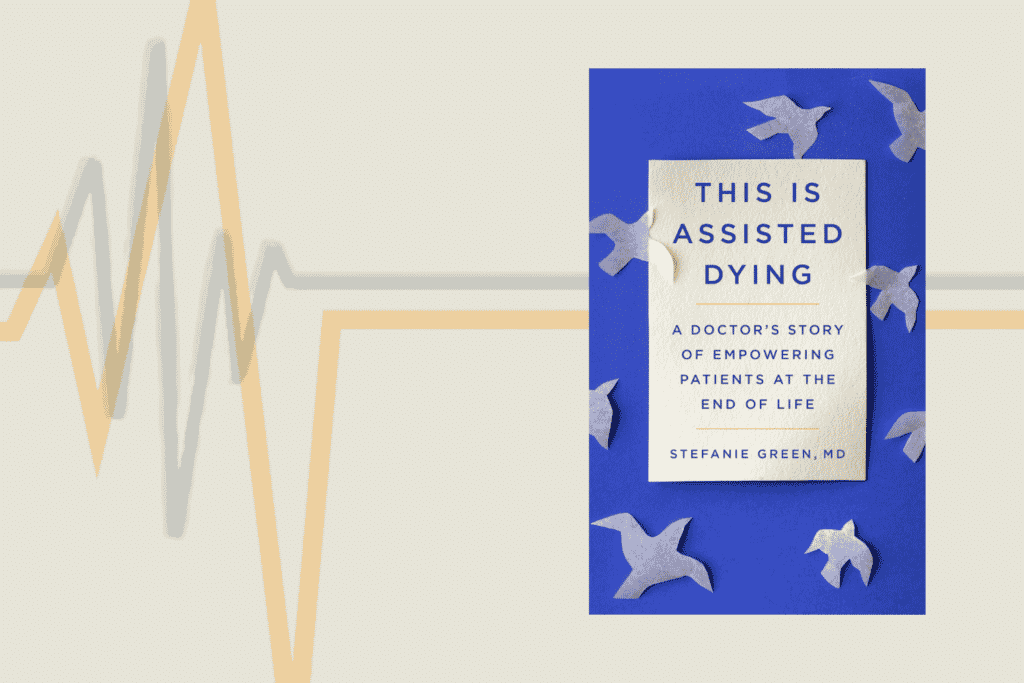
One of Indigo’s “most anticipated books of 2022” was This is Assisted Dying, a memoir by euthanasia provider Dr. Stephanie Green. This shows how entrenched the culture of death has become, that readers were eagerly anticipating this book. Having followed the progression of euthanasia in Canada very closely, we were curious to read this firsthand account of a doctor who has dedicated her career to promoting and providing euthanasia.

Dr. Green is a euthanasia provider in Victoria, BC. She previously practiced maternity and newborn care until euthanasia, which she refers to as MAiD (Medical Assistance in Dying), was legalized in Canada. At that time, she shifted her focus to providing euthanasia full time.

This is Assisted Dying is the story of Dr. Green’s first year providing euthanasia. She takes the reader on a journey to the most intimate situations her patients face and explores the vulnerability of patients at the end of life. She tells the stories of patients who are suffering terribly and want desperately for it to end and portrays herself as helping people by ending their suffering. Green is very focused on wording things in a certain way so that it doesn’t sound too much like she is killing a person. She calls the euthanasia procedure a “delivery,” viewing it as delivering a person to their death, just as she delivered newborn babies in her previous practice. She claims she is “empowering the person, not the disease.”  (pg 52)

Green paints a seemingly beautiful picture of how patients can “choreograph their death,” reflective of a culture that is obsessed with control over every aspect of their life from conception to death. She asks the reader to imagine a scenario: 

“What if you could decide, at the end of your life, exactly when and where your death would happen? What if instead of dying alone, in the middle of the night, in a hospital bed, you could be at home at a time of your choosing? You could decide who would be in the room with you, holding your hand, or embracing you as you left this Earth. And what if a doctor could help ensure that your death was comfortable, peaceful, and dignified? You might never look at death the same way again.” (pg 1)

A significant factor in all euthanasia discussions is this concept of dignity. Green’s research showed that the most common reason to request euthanasia was loss of autonomy and the loss of a sense of dignity. This stems from a viewpoint that does not include God, where people believe their dignity comes from how they perform and are perceived in this world. Where there is no concept of inherent dignity, there is also no sense of purpose in suffering.

One point that keeps coming up throughout the book is Dr. Green’s determination to operate within the law. She did not provide euthanasia before it was legal, and she is very determined to follow whatever regulations are currently in place. This begs the question, though – what happens when the law permits assisted death for more and more patients? Does the law determine what is right, or are there cases where her conscience would not allow her to provide euthanasia, such as a patient suffering from mental illness, or a minor?

In reading this book it seems possible that Dr. Green would indeed have a point where she would not support certain patients receiving euthanasia. However, additional research reveals her part in a recent submission to the Special Joint Committee on Medical Assistance in Dying in which they outline a protocol to euthanize even infants under the age of one. It seems that there is no end to the Canadian Association of MAiD Assessors and Providers’ (of which Dr. Green is a member) willingness to provide euthanasia. If a patient wants to be killed (or their parents want them euthanized, in the case of minors), any life is fair game when they view themselves through a lens of compassionate helping.

Dr. Green’s book is a good example of how well-intentioned people can go awry if they don’t have a strong foundation in God’s truth. This is Assisted Dying dresses euthanasia up in emotional language to deceive the reader into thinking that having doctors kill suffering patients is an act of compassion. Do not be fooled. Recognize instead how neglecting the biblical concepts of inherent dignity and sanctity of life has a devastating effect on the most vulnerable among us, and be renewed in your determination to stand against the expansion of euthanasia in Canada.