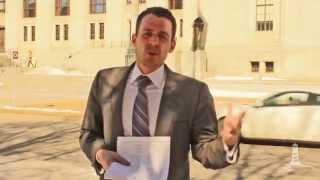
After 12 months of deliberation, the Supreme Court of Canada released its decision this morning in Loyola High School v. Quebec (Attorney General), upholding religious freedom first for the Loyola Jesuit school but also more broadly for all who seek to apply their faith to the education of their children. This is a case that every independent Christian school across the country has been watching closely.
At stake in this case was the religious freedom of parents and institutions to educate children according to a worldview that might be different than that of the State education bureaucracy. Thankfully, the Court was unanimous in finding that religious communities can teach their own faith to their children from their own perspective.
As you may remember, ARPA Canada led a coalition of 313 independent Christian schools and 11 post-secondary institutions to
intervene in the case. The coalition was called the Association of Christian Educators and Schools (ACES) and we argued that confessional schools must be accommodated as an alternative to State-run schools.
André Schutten, Legal Counsel for ARPA Canada, was in the counsel lock-down this morning and had opportunity to review the decision before it was made public. He noted the following in a press release to the media: “Our hope was that the Supreme Court would affirm hundreds of years of legal precedent that parents are the first decision-makers for their children, and that religious freedom includes the right to train children within a particular worldview. This morning, the Supreme Court has delivered.” He also said, “With this decision, the Court stood up for liberty and for parental rights. While the Court could have been stronger in some places, this is still a welcome decision.”
In light of this case, ARPA Canada will be encouraging our elected leaders in Ontario, Manitoba and Alberta to rethink their one-size-fits-all approach to religion, ethics and secularism. Over the past two years, these provinces have imposed a particular religious – that is, secular – worldview on all schools through Bill 13 (Ontario, 2013), Bill 18 (Manitoba, 2014) and Bill 10 (Alberta, 2015), while ignoring or suppressing the freedom of religious institutions and families.
Parents ought to have the first and final say on the religious and moral instruction of their children. While the State may assist parents in educating children, they may not override parental decisions relating to ethical and religious instruction. There has been a trend towards Statism in education in Canada. This decision gives hope to parents in stopping that slide.
Today, the Supreme Court of Canada released its decision in Loyola High School v. Quebec (Attorney General), upholding religious freedom for the Loyola community to teach the Catholic faith from a Catholic perspective.
At stake in this case was the religious freedom of parents and institutions to raise children according to a worldview that might be different than that of the State education bureaucracy. Thankfully, the Court was unanimous in finding that religious communities can teach their own faith to their children from their own perspective.
The Association for Reformed Political Action (ARPA) Canada led a coalition of 313 independent Christian schools and 11 post-secondary institutions to intervene in the case. The coalition was called the Association of Christian Educators and Schools and argued that confessional schools must be accommodated as an alternative to State-run schools.
André Schutten, Legal Counsel for ARPA Canada, was in the counsel lock-down this morning and made the following comments:
- “Our hope was that the Supreme Court would affirm hundreds of years of legal precedent that parents are the first decision-makers for their children, and that religious freedom includes the right to train children within a particular worldview. This morning, the Supreme Court has delivered.”
- “With this decision, the Court stood up for liberty and for parental rights. While the Court could have been stronger in some places, this is still a welcome decision.”
Mr. Schutten also spoke to the effect the Court’s decision should have on other provinces:
- “In light of this decision, ARPA Canada will be encouraging our elected leaders in Ontario, Manitoba and Alberta to rethink their one-size-fits-all approach to religion, ethics and secularism. Over the past two years, these provinces have imposed a particular religious – that is, secular – worldview on all schools through Bill 13 (Ontario, 2013), Bill 18 (Manitoba, 2014) and Bill 10 (Alberta, 2015), while ignoring or suppressing the freedom of religious institutions or families.”
- “Parents ought to have the first and final say on the religious and moral instruction of their children. While the State may assist parents in educating children, they may not override parental decisions relating to ethical and religious instruction. There has been a trend towards Statism in education in Canada. This decision gives hope to parents in stopping that slide.”
For a background on the Loyola case, click here. To read the ACES factum, click here.
— 30 —
Interview Requests: André Schutten, legal counsel, is available for comment this morning at the Supreme Court of Canada and is available throughout the day for in-studio or telephone interviews in Ottawa. To arrange an interview contact Niki Pennings, Administrative Assistant, at 1-905-577-5875 or [email protected]
For immediate release from the Association for Reformed Political Action (ARPA) Canada
March 18, 2015
ARPA CANADA AVAILABLE FOR COMMENT ON LOYOLA CASE CONCERNING FREEDOM OF RELIGION IN INDEPENDENT SCHOOLS
OTTAWA – The Supreme Court of Canada will release its decision in the Loyola case tomorrow morning at 9:45 a.m. The Association for Reformed Political Action (ARPA) Canada intervened in the case to defend Christian education and parental rights from the continual encroachment of the State.
At stake in this case is parental authority itself. Provincial governments are increasingly taking over the role of parents, requiring all students to be taught what it believes is true, and even removing the freedom of parents to take their children out from objectionable classes.
“Our hope is that the Supreme Court will affirm hundreds of years of legal precedent, and will send a loud and clear message to provincial governments to stop meddling in the religious affairs of families and independent schools,” says André Schutten, ARPA Canada’s legal counsel. “The State, especially when it comes to education, just needs to trust families and parents a little more.”
ARPA Canada pulled together a coalition of over 300 different independent Christian schools and associations from across the country creating the diverse Association of Christian Educators and Schools (ACES). ARPA Canada was able to present arguments to the Supreme Court on behalf of the ACES coalition.
ARPA’s legal counsel André Schutten will be present at the Supreme Court tomorrow and will be available for comment. For a background on the Loyola case, click here. To read the ACES factum, click here.
– 30 –
Interview Requests: André Schutten will be available for comment in the Supreme Court of Canada following the release of the decision and is available throughout the day for in-studio or telephone interviews in Ottawa. To arrange an interview contact Niki Pennings, Administrative Assistant, at 1-905-577-5875 or [email protected]
Update: March 19, 2015: The Supreme Court released their decision this morning and they have ruled in favour of Loyola this morning. Read more here.
On March 24, 2014, ARPA Canada appeared in the Supreme Court of Canada, leading a coalition of Christian schools from across the country, in order to defend Christian education from the continual encroachment of the State. The Loyola case will have a greater impact on a parent’s authority in raising their child in the fear of the Lord than any other case in recent history. We are still waiting for a final decision from the Court in this matter. Stay tuned for an update once the decision is released.
In order to represent the interests of independent Christian education and to bring that perspective forcefully to the Court, ARPA Canada built a coalition of Christian schools from across the country called the Association of Christian Educators and Schools Canada (ACES Canada). The ACES coalition includes 313 confessional Christian schools, 11 post-secondary institutions, and ARPA Canada. By receiving intervenor status, we were able to provide written arguments to the Court, on behalf of Christian educators and schools.
What is this case all about? Here follows a basic summary. (To read more about the background of this case, click here.)
The province of Quebec has ordered all schools and home schools to teach a class about ethics and religions. But not only is it telling schools what to teach. It’s also telling them how to teach it. All schools, including Christian private institutions, have to set aside their worldview (if that were possible) and teach the course from a secular perspective. They aren’t allowed to raise our Lord Jesus Christ above other religions and must encourage students to “create their own religion,” among other things.
One school in Montreal, Loyola Christian School, challenged this in court. They won at the first level but lost at the Quebec Court of Appeal. They finally appealed to the Supreme Court and thankfully the Supreme Court agreed to hear the case.
At stake in this case is parental authority itself. Provincial governments are increasingly taking over the role of parents, requiring all students to be taught what it believes is true, and even removing the freedom of parents to take their children out from objectionable classes.
Please continue to pray for the hearts of our Supreme Court justices, that they might render a good and just decision in this matter.
To view a 3-minute video update from ARPA’s legal counsel André Schutten, given immediately following the hearing, check out our YouTube video.
To read some reflections on the hearing from Cardus’ Ray Pennings, click here.
If you want to watch the hearing livestreamed, click here.
To read our written legal arguments (factum) see the PDF linked below.
To read Andre’s op-ed published by the Ottawa Citizen on the morning of the hearing, click here.
What follows is a beautifully written and insightful reflection on the Loyola hearing by vice-president of Cardus, Ray Pennings. The hearing was conducted in the Supreme Court of Canada on Monday morning, March 24, 2014. This reflection was originally published as a Cardus Daily blog. Reprinted here with permission.
Cardus has covered the issues involved in Loyola et al vs. the Attorney General of Quebec on many occasions. Always our position is that the organizations of civil society, including those that are religiously motivated, must be free to participate without hesitancy in our public space. This is at the heart of our understanding of freedom and democracy.
I had the privilege of a front row seat at Monday’s hearing. As befitting a Supreme Court, it is an impressive experience. Twenty-nine robed lawyers fidgeted nervously at the tables reserved for counsel, representing Loyola as the appellant, the Attorney General as the respondent, and the eleven organizations who had been granted intervener status. Chief Justice McLachlin presided over the arguments: an hour for the appellants’ lawyer, followed by ten minutes for each of the seven interveners granted the right to make oral arguments. Finally, the respondent had an hour, the appellant five minutes to respond. Throw in one 15-minute break and it was all over by lunchtime.
The judges on the bench allow the lawyer a few minutes to get started and into their grooves before the interrupting questions begin. To the appellants and supporting interveners, the questions had a similar theme. If you are going to argue freedom of religion, what about the state’s right to promote diversity, tolerance, and respect? And when these two rights run into conflict, how do we define the balance?
For the respondent, the questions were also uncomfortable. Did the Minister seriously consider the different nature of a Catholic school in making her decision and was the logical implication that no religious school could ever teach a religiously-based equivalency of this curriculum? Is this indeed the minimal impairment of the freedom of religion rights of the appellants?
It would be chasing fool’s gold to try and discern from the judges’ questions what their ultimate decision will be. The debate now will take place behind closed doors as the seven justices consider the arguments heard, take a position, assign one of their own to write it up in careful legalese (knowing that every word will be parsed and shape literally hundreds of subsequent legal decisions), and finally—six to nine months from now—release it for the rest of the world to evaluate.
But regardless of the verdict, I’m grateful for three things:
ARPA Canada’s legal counsel André Schutten shares some thoughts about the Loyola Supreme Court case hearing.
Update from Legal Counsel, André Schutten: I was very impressed by the arguments made in the Supreme Court this morning. Although I would have preferred a more forceful approach by the lawyer for Loyola, he still did a good job of defending his client. The seven interveners were able to strongly articulate the values and principles that ARPA and the ACES Canada coalition advocated for in our factum. Although the question of the “neutrality” of the State was not addressed enough and the role of parents was only touched on briefly, nevertheless I was very happy with the presentations. Also, the interactions with the judges seemed to go very well. From what I could tell, they were favourable to our position, some of them quite obviously so. All in all, today was a very good day. We now wait for the decision which should be written within the next year.
****
After months of waiting and praying, the Supreme Court of Canada is hearing the Loyola case on Monday. Our legal team André Schutten and Ian Moes will be giving us a video update after the hearing (posted online).
If you want to watch the hearing livestreamed today, click here.
To read our written legal arguments (factum) click here.
To read Andre’s op-ed published by the Ottawa Citizen this morning, click here.
For more background on the case, click here and here.
To read a helpful summary of the various arguments to be made in court today, please click here.
For media inquiries, please contact [email protected]