Status: At first reading in the Senate.
Description: Requires the government to maintain, update, and report on the progress of the existing National Strategy to Combat Human Trafficking.
Analysis: Human trafficking is one of the most egregious violations of human dignity in Canada today. While Canada has a national strategy to combat human trafficking, this is an issue that should always be a priority for the Canadian government.
Action Items: None.
A recent report from the United Nations Office on Drugs and Crime highlighted the extent of human trafficking around the world. Every other year, the UN releases data about the global reach of human trafficking, including trafficking for sexual exploitation, labour, or other reasons. The most recent data covers 2022 and notes that “Trafficking of girls for the purpose of sexual exploitation is recording an alarming increase in many regions of the world.”
The real rates of human trafficking are ultimately unknown because of the hidden nature of this crime. The UN report focuses on the number of victims detected, and the number of convictions made. Of course, more victims being detected could mean better enforcement rather than more actual trafficking. Still, comparing 2019 and 2022, the number of trafficking victims detected globally increased by 25%. In the same timeframe, the number of child victims increased by 31%.
There is no specifically Canadian data, but for the North American region (Canada, US, and Mexico) the following numbers emerged:
- Between 2019 and 2022, there were 28% fewer convictions for human trafficking, even though detection of victims rose by 78%.
- Of those trafficked, 56% are women and 25% are girls. Sexual exploitation is the main reason for trafficking, at 69%.
- Three quarters of trafficked people are trafficked domestically, that is, within the same country rather than between different countries.
The extent of sexual exploitation throughout North America once again shows the need to combat all forms of sexual exploitation. While the report does not discuss what leads to sex trafficking or what forms it takes, consider two key factors. Human trafficking is closely linked to prostitution and pornography, both of which generate demand for sex trafficking. The National Human Trafficking Hotline in the United States reports that, although the reason for sex trafficking is unknown in 51% of cases, pornography is the most known reason at 11%, followed by various forms of prostitution.
While some of the worst forms of pornography are illegal in Canada, there is very little effort from the government to decrease demand for it. Even aside from illegal pornography, though, all pornography promotes harmful views and behaviours. Pornography can cause addiction and distorts perceptions of sexuality. It objectifies women and is increasingly linked to violent behaviour and sexual abuse. Despite its negative impact on those viewing pornography, those depicted in pornography, and on society as a whole, Canada permits all forms of pornography to remain accessible. Canada needs stronger laws and enforcement around pornography if we want rates of sex trafficking to decrease.
Canada’s prostitution law, on the other hand, is a good law that prohibits purchasing sex and seeks to end demand for prostitution, recognizing the need to protect people from objectification and commodification. Prostitution is always sexual exploitation, dehumanizes women, and leads to an increase in sex trafficking. The impact of prostitution is not just on prostituted women, but on all women and girls. Jurisdictions with legalized prostitution see higher rates of sex trafficking to meet increased demand. The law must be robustly enforced to decrease demand for prostituted victims of human trafficking.
We can continue to advocate for better laws and enforcement from the federal government. ARPA Canada sent an updated policy report on pornography to MPs in 2024, as well as a newly updated report on prostitution earlier this year. We can pray that Parliamentarians will take these issues seriously and seek to reduce levels of human trafficking and sexual exploitation in the country.
Status: No longer active due to prorogation of Parliament.
Description: Requires the government to maintain, update, and report on the progress of the existing National Strategy to Combat Human Trafficking.
Analysis: Human trafficking is one of the most egregious violations of human dignity in Canada today. While Canada has a five-year plan national strategy to combat human trafficking from 2019-2024, this is an issue that should always be a priority for the Canadian government.
Action Items: None
Education. Palliative Care. Elder Care. Conscience. These issues have been covered in ARPA Canada’s recent policy reports. The reports, along with their recommendations, are excellent tools to help us present a biblical perspective to our civil authorities. Do they get read? Do they work? YES!
Here are some life-affirming initiatives from Alberta’s February 22, 2022 throne speech:
Continuing Care Act: The provincial government plans to introduce this Act as part of a “broader effort to protect vulnerable women and girls from sexual violence.”
Palliative Care: The government will continue efforts to improve access to palliative care. The throne speech states: “Improvements will focus on beginning palliative care as soon as possible, and keeping individuals in their homes and communities with support from those they know and love for as long as possible.” This is what ARPA Canada recommended in our Elder Care and Palliative Care policy reports. The throne speech rightly asserts that “patients facing end-of-life decisions must know that there are life-affirming options to physician-assisted suicide.”
Human Trafficking Task Force: The government “will expand its efforts to combat the scourge of this modern form of slavery.”
Missing Persons Act: Amendments will be made to this Act “to equip law enforcement with new tools to find victims of human trafficking and bring their captors to justice.”
Helping vulnerable pregnant women and girls: The government will significantly increase and expand prenatal benefits to mothers fleeing abuse and receiving income support.
Child, Youth, and Family Enhancement Act: The government will “ensure full implementation” of this act to include a motion “to simplify and accelerate the adoption process.” This will also be an opportunity for ARPA Canada to suggest amendments to family law contained in the Act. Lobby efforts have already begun on this front and will continue in the coming months.
Loss of an unborn child: Bereavement leave will be extended to employees who experience a miscarriage or stillbirth. This is the first throne speech to use the term unborn child, recognizing the humanity of our pre-born children.
Parents know what’s best for their kids: This line, often quoted by Premier Kenney, appears once again in the throne speech. The government, as recommended in our Educational Diversity policy report, will continue to support pluralism as a key principle in Alberta’s education system. Regulatory improvements are forthcoming to help new schools, including charter schools get established. Our home education supporters will be pleased to know that “home-schooled children with special needs” will be provided “access to specialized services.” Regardless of their educational choice, all Alberta students will receive the supports they need to succeed.
Well, there you have it. Our policy reports recommendations are being accepted! How cool is that? Praise God for government initiatives that support parents, preserve life, and protect the vulnerable!
Keep up the good work with relationship building and send Honourable Jason Kenney ([email protected]) a thank you note. I don’t think you’ll struggle to come up with a thank you list.
In 2020, the Ontario government introduced its 5-year anti-human trafficking strategy, investing $307 million between 2020 and 2025 to combat this injustice. Bill 251 expands on previous anti-human trafficking efforts, giving greater support to victims of trafficking, educating Ontarians about the issue, and providing more tools for law enforcement to crack down on human trafficking.
This week, Bill 251, the Combating Human Trafficking Act, passed 3rd reading in the Ontario Legislature and will soon receive Royal Assent. The bill was initially introduced by the Solicitor General of Ontario. A few weeks ago, we shared information regarding ARPA Canada’s submission and presentation to the Standing Committee on Justice Policy regarding human trafficking. Because it was introduced by a majority government, it was not surprising that it passed, but it is exciting to see the priority the Ontario government is giving to the issue of human trafficking.
Our written and oral submission to the committee focused on three main points. First, we care about the problem of human trafficking because all people are created in the image of God and possess inherent dignity. Human trafficking violates that dignity, reducing unique human beings to commercial objects. Second, human trafficking is closely connected to prostitution, especially when prostitution is legalized or increasingly accepted in society. Finally, sex trafficking exists because of the demand for prostitution, which causes traffickers to try to increase supply by trafficking more victims.
Although a bill against human trafficking should be widely supported, there was a push from some groups to oppose Bill 251 or significantly change it. The Justice Policy Committee ultimately made some changes to the bill as a result, including adding a requirement that the provincial government consult with minority groups, sex workers, sex worker advocates, civil liberties organizations, and organizations that support victims of human trafficking when reviewing the anti-human trafficking strategy every 5 years. Additionally, following concerns that police might abuse their enforcement power to review hotel registries, an amendment to the bill states that police forces must provide annual reports to the Ministry or their police board regarding suspected trafficking cases in hotels and requests to view hotel registries.
Overall, Bill 251 remains a strong piece of legislation that we are happy to see pass into law because of its focus on protecting those who are exploited. Regulations surrounding advertisements for sexual services and the ability for law enforcement to review hotel registries will help law enforcement discover and prevent cases of human trafficking. Additionally, the requirement to review the anti-human trafficking strategy every 5 years will help ensure that this government and future governments maintain an effective strategy against human trafficking. Finally, Bill 251 helps protect victims of human trafficking by increasing the use of restraining orders and offering more specific supports to victims under the age of 18.
ARPA Canada is concerned about the horrible realities of human trafficking in Ontario, and it is exciting to see a focus on addressing the problem through Bill 251.
Last week, the Ontario Standing Committee on Justice Policy discussed Bill 251, Combating Human Trafficking Act, 2021. ARPA Canada submitted recommendations on Bill 251 through both a written submission and an oral presentation to the committee. We encourage you to read the submission here.
Human trafficking is a major concern in the Province of Ontario and preys on vulnerable people, primarily women and girls. Between 2009 and 2018, the number of police-reported human trafficking incidents in Ontario (0.9 per 100,000 population) was nearly double the Canadian average (0.5 per 100,000 population).
Although the federal government determines criminal violations with regard to human trafficking, individual provinces have jurisdiction over educating the population about the issue, supporting victims of human trafficking, and encouraging enforcement of existing human trafficking laws. If passed, Bill 251 will strengthen each of these components in Ontario.
First, the bill would require hotels to keep a registry of guests so that law enforcement can have more tools at their disposal if they suspect that traffickers are using a hotel room for their crime. Next, the bill would require the government to maintain an anti-human trafficking strategy, and to review and update it every five years, seeking to ensure that it remains a priority for the current government as well as future governments. The bill would also permit regulations around advertisements for sexual services, as well as training about human trafficking to further prevent human trafficking, which is often a very hidden crime. Additionally, Bill 251 would make various amendments to ensure that 16- and 17-year-olds can receive greater supports if they have been trafficked and to extend the use of restraining orders to protect victims of trafficking.
Our written and oral submission to the committee focused on three main points. First, we care about the problem of human trafficking because all people are created in the image of God and possess inherent dignity. Human trafficking violates that dignity, reducing unique human beings to commercial objects. Second, human trafficking is closely connected to prostitution, especially when prostitution is legalized or increasingly accepted in society. Finally, sex trafficking exists because of the demand for prostitution, which causes traffickers to try to increase supply by trafficking more victims.
Overall, the changes in this legislation are positive, and ARPA supported the specifics of the bill while suggesting ways to improve it further. We recommended two amendments to the legislation. First, we suggested that the definition of hotel be changed to include small accommodation rentals such as Airbnb in addition to larger businesses. Next, we recommended that the protection and support of youth aged 16 or 17 should be expanded to protect young adults up to the age of 21 if sexual exploitation is believed to be taking place.
We are pleased to provide input to the Ontario government, and we are grateful to see an increased focus on addressing the problem of human trafficking in the province.
Register for the webinar with MP Arnold Viersen tonight, stats and facts about COVID, and defending girls.
Resolve in New Brunswick regarding Clinic 554 and a positive development regarding human trafficking in Alberta. And of course, our webinar lineup for the next week.
Links:
ARPA Webinars – https://staging.arpacanada.ca/news/2020/03/19/arpa-quarantine-webinars/
WNAL Webinars – https://weneedalaw.ca/2020/04/webinar-series-provincial-pro-life-laws/
Watch Monday’s discussion between André Schutten and Pastor Ken Wieske on Is ‘Corporate Worship an Essential Service?’ – https://www.facebook.com/arpacanada/videos/681843709055083
This week on Quick Updates:
– God and Government Youth is only days away!
– Colin has an update on a cybersex trafficking briefing he attended on Parliament Hill
– Andre is doing a Q&A live Thursday at 2pm Eastern and wants to see you there,
– Ed’s got an update from Alberta
– The deadline for the office admin position is Thursday January 31st!
By Lighthouse News
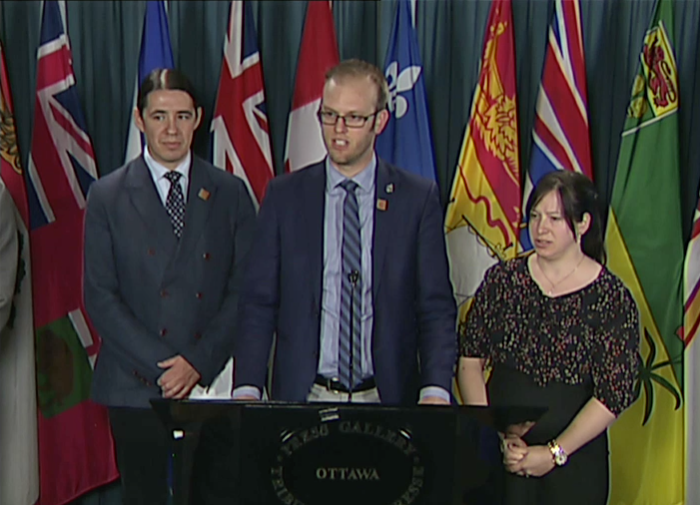
Peace River-Westlock MP Arnold Viersen has been selected as the co-chair of an All-Party Parliamentary Group to end Modern Slavery and Human Trafficking. The All-Part Parliamentary Group (APPG) was launched on April 26th, at a press conference in Ottawa.
Viersen says the group has members from all the major parties in both the House of Commons and the Senate. The APPG is modelled after the UK All-Party Parliamentary Group to end Modern Day Slavery. “That’s where we got the idea,” he says. “There’s a number of other Committees similarly set up here on Parliament Hill; one to end genocide, (another) on cooperatives, that kind of thing.”

MP Arnold Viersen
Viersen says the group will be looking at actions that have been taken in Britain, Europe, and in California, where there are laws in place to force large companies to be accountable to their shareholders on what kind of corporate impact they’re having on human slavery and sex trafficking. “One of the first projects that we’re taking on is called ‘Supply Chain Reporting’; we’ll be looking at how we can put some legislation forward around having publicly traded companies put forward a minimum of a one-page report – as part of their financial reporting – seeing their impact on human trafficking in the world.”
He says in other jurisdictions, that report has to be signed by the Directors of the company. “The fact that it’s signed by all the Directors makes them aware of the fact that Human Trafficking is a thing that you’ve got to be concerned about.”
He says practically speaking, it’ll be up to shareholders to determine the veracity of the reports. “Some companies like McDonald’s (restaurants) might say, ‘There might be some supply chain in the agricultural sector that maybe has an issue, but we’re pretty confident we’ve got that under control’, and if the shareholders believe them on that, it won’t be an issue. The next company – a mining company that’s working in Eritrea – might say ‘Hey, we’ve got nothing going on’, and people may not believe that.”
Other co-chairs of the group include Liberal MP Robert-Falcon Ouellette from Winnipeg, and Quebec NDP MP Christine Moore.
The International Justice and Human Rights Clinic at the Allard School of Law at UBC will be providing administrative support to the group’s work.
You can listen to the full interview with Arnold as featured on our Lighthouse News broadcast here.