In Canada, our law protects an individual’s reputation and good name. If you slander someone, they may sue you. While most of us can go about our day without worrying about defamation or libel lawsuits, they do feature in our collective consciousness more than you might think. Defamation cases sometimes dominate the international news cycle. Last year, you couldn’t avoid news of Amber Heard’s defamation suit against her ex-husband, Johnny Depp. The Duke and Duchess of Sussex also live a life laden with libel litigation.
These types of cases happen in Canada too – they just create smaller headlines. For example, a judge in Alberta ruled last month that five environmental groups were allowed to sue former Premier Jason Kenney because he claimed on social media that they were part of a “foreign-funded misinformation campaign”.
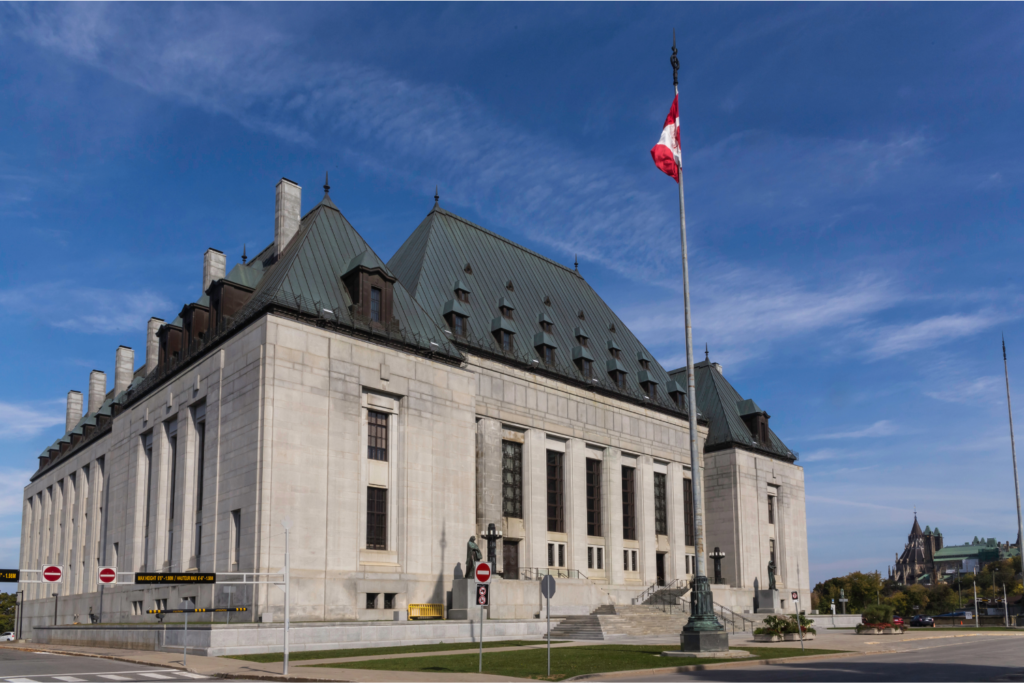
Also last month, the Supreme Court of Canada released its decision in a massively important defamation case called Hansman v Neufeld. Barry Neufeld was a public school board trustee in Chilliwack, BC who made Facebook posts criticizing the province’s SOGI123 program that supposedly equips educators to instruct students about gender identity and sexual orientation. As you might have guessed, SOGI123 does a lot more than just equip educators. Here’s how ARPAdescribed the program in 2018 soon after BC introduced it: “[i]t teaches a humanist understanding of sexuality as a subjective identity, divorced from biology, determined individually, and to be celebrated unconditionally.” Neufeld put things a bit more bluntly, calling SOGI123, a “weapon of propaganda” that teaches a “biologically absurd theory.”
Almost immediately after he made the posts in 2017, Mr. Neufeld made local news. Neufeld was heavily criticized both offline and online. One of his loudest detractors was Glen Hansman who, at the time, was president of the British Columbia Teachers’ Federation (BCTF). Hansman called Neufeld’s views bigoted, transphobic, and hateful. When approached for comment by reporters, he said that Neufeld undermined “safety and inclusivity” for “transgender and other 2SLGBTQ+ students” and that Neufeld had “tiptoed into hate speech.”
In response, Neufeld sued Hansman for defamation some eight days before the 2018 school board elections. Neufeld went on to win the school board seat that he held since 1993 with the second-highest vote total in the election. When Neufeld filed his lawsuit, Hansman used BC’s anti-SLAPP law to have the case thrown out. SLAPP stands for “strategic lawsuit against public participation,” i.e., suing someone to stop them from talking about something important. Anti-SLAPP laws help courts to filter out such lawsuits. Ontario, B.C., and Quebec have anti-SLAPP laws.
Hansman succeeded in the lower court in having the case thrown out. Neufeld succeeded in the Court of Appeal in having his defamation suit reinstated. The majority Supreme Court of Canada (SCC), however, upheld the lower court decision and dismissed Neufeld’s case. Of course, a good argument could be made that Neufeld, as an elected school board member and public figure, has no business suing his critics. However, the Supreme Court’s conclusion is less troubling than the reasons it used to get to that conclusion. This article focuses on three unsettling themes that emerge from the decision.
The Supreme Court endorses Gender Theory
It is always hard for something to be declared a fact in a courtroom. However, once it happens, it is very difficult to disprove that fact in later court cases because it has become an established precedent. Justice Karakatsanis, writing for the majority, established the following as social facts:
- There is such a thing as “sex assigned at birth”, which is different from one’s “gender identity;”
- Being transgender is often wrongly conflated with mental illness; and
- The Canadian public thinks transgender people are diseased.
The truth of these “facts” is still hotly debated worldwide. But the Supreme Court has told us all where it stands. Now every court and tribunal in Canada can quote the Supreme Court in other cases where they want to assert the truth of these so-called facts.
The Supreme Court endorses Critical Theory
You’ve probably seen news coverage of pro-LGBT marches or demonstrations. You may have seen signs with slogans such as “Our humanity is not up for debate.” At first blush, it seems nonsensical—is anyone saying that gay people or transgender people are a non-human species? Obviously not. But that is not what the activists are really saying. What they really mean is, “I have a human right to gratify my sexual desires. Anything short of full support for my sexual conduct excludes me from a human right.”
Since when did being human mean you can do whatever you want sexually? This use of language is anchored in a philosophical movement known as Critical Theory. Critical Theory is a system of philosophy championed by a group of intellectuals who studied the cultural effects of Marxism in the 1930s. Its main goal is human emancipation. Critical Theory focuses on organizing social research to liberate the downtrodden.
In the 1960s, building on Critical Theory, Jürgen Habermas theorized that how language is used enslaves certain groups because it can “encode, produce, and reproduce relations of power and domination.” Habermas felt that a practical use of his analysis is to reform how language is used and, thus to reform society’s institutions. The activities that you see at a protest are an elementary form of Habermas’ ideas: reforming the way language is used in order to disrupt power.
In Hansman v Neufeld, the Supreme Court adopts this liquid approach to language. The Court says that transgendered people are “especially vulnerable to expression that reduces their worth and dignity in the eyes of society and questions their very identity.” Elsewhere, the Court expresses itself in similar, yet more forceful language, saying, “[T]ransgender people often find their very existence the subject of public debate and condemnation.” The Supreme Court is simply repackaging the slogan “our humanity is not up for debate.” To frame SOGI issues as a contest between people who “want to exist” and others who “don’t want them to exist” is to make the result of the debate a foregone conclusion.
Supreme Court dirties the concept of equality
Finally, the majority of the Supreme Court says Hansman’s opinions are better than Neufeld’s, or at least do more to “promote equality.” This is a strange take from the Court. Anti-SLAPP laws have nothing to do with promoting equality and everything to do with protecting freedom of expression. So why does the majority bother to opine that Hansman’s speech promotes equality and is good for democracy? It is hard to avoid the conclusion that this is an offering at the altar of progressivism. The issue for the Court to decide was whether or not Neufeld’s defamation suit had sufficient merit to proceed to trial. The Supreme Court judges had no pressing need to comment on whether they thought Neufeld’s statements on sexual orientation and gender issues were good or bad. The lone dissenting judge put it aptly: “[T]he promotion of equality is in no way a factor tethered to the text of [BC’s anti-SLAPP law].” No judge should use means-end reasoning simply because they want a certain outcome. Hansman v Neufeld is not just a bad case because the judges kowtow to modern groupthink. It’s a bad decision because the judges fail to do basic legal analysis. This is what happens when you are so focused on being on the right side of history – you lose sight of how to do your job. We must demand much more of the highest Court in our land.
Activist outrage at small Ontario town for not flying the Pride flag
CBC reports a “controversial decision” by the township of Norwich to fly only civic flags (national, provincial, municipal) on the township’s flagpoles and “to no longer fly the Progress Pride flag”.
I could not find any CBC report on Norwich’s decision to ever fly the Progress Pride flag in the first place, which was no doubt also controversial.
But wait. What, you may wonder, is the Progress Pride flag? Behold:

Who is represented here? It’s quicker to say who is not, namely “cisgendered heterosexuals” (pardon my newspeak). Especially of European descent. So, Norwich, basically.
The more familiar and now ubiquitous six-coloured rainbow Pride Flag first flew in the “Gay Freedom Day Parade” in San Francisco in 1978. It quickly became an international symbol of gay pride. The plain old Pride flag was first officially raised on Parliament Hill for Pride Month in 2016 by Justin Trudeau’s administration. It has since evolved. In 2017, Philadelphia’s Office of LGBT Affairs first introduced the white, pink, teal, black, and brown stripes seen above to recognize trans and queer people of colour.
That’s right. The rainbow flag wasn’t colour-inclusive enough. With this new flag, sexual proclivities diversity still gets six colours, “gender identity” gets three (don’t worry, the white represents “gender neutrality”, not Caucasian oppressors), and racial diversity two.
But wait! Have we included everyone? Does this give pansexuals their due? What about demiboys? Polyamorists? Abrosexuals? The two-spirited? These and dozens of other “sexual minorities” have their own flags too. (Seriously.) If only there was a flag to represent everyone regardless of their sexual penchants or self-conception.
Why fly flags?
The Canadian flag does not represent religious, ideological, sexual, or racial unity. Rather, it represents civic unity. Whatever our personal characteristics or beliefs, we share the same land and the same civil government. Each of us enjoys the constitutional guarantee of the equal protection of the law. And no matter where we come from, by making Canada our home we also share in its history and institutions. If flags flown by governments represent any kind of pride, surely this is it. Pride of place, basic civic equality, and belonging in a peacefully shared home. And this is to say nothing of the specific history and symbolism in the Canadian flag, Ontario flag, or even the Norwich flag.
Why would a government, then, fly the Pride flag? Progressives contend that the flag signals to “sexual minorities” that they are included. But included how? Remember that we are talking about governments here. Why must governments raise a flag to communicate the “inclusion” of persons identified by some aspect of their sexuality? Are gay men, for example, excluded from citizenship? Are they not part of the nation or province or town? If gay men were excluded from citizenship or the equal protection of the laws, how would flying a rainbow flag remedy that problem?
CBC quotes Alex Wilson – who teaches “Queering Our Classrooms and Communities” at the University of Saskatchewan – as saying that raising the Pride flag recognizes sexual minorities’ “right to exist.” But why should anyone’s “right to exist” be in doubt? Well, progressives might say, because sexual minorities have been ill-treated and their identities (“gay,” “trans,” etc.) condemned. Let’s assume that’s true. Isn’t it also true of other groups? Churches are frequently vandalized and antisemitic aggression is on the rise. Quebec has even prohibited public servants and users of government servers from wearing religious symbols. Should civil government now raise crosses and fly the star of David to make Christians and Jews feel more included, to confirm their right to exist?
An argument could be made for doing so, I suppose. But here is the curious thing. The aggressive push to fly the Pride flag in every town and at every school has arrived well after our laws have been changed to affirm same-sex marriage, gender self-identification, and “alternative families,” well after public school curricula and libraries have been revised to celebrate every sexual orientation, and well after so-called gender affirming medicine was publicly funded (and body-affirming counselling shut down).
Flying the Pride flag is not an exercise in governments standing up for unpopular minorities, but a way for governments to signal their ideological commitments and tell you what yours should be. The Progress Pride flag proclaims a vision of human autonomy that not only refuses to recognize any normative limits (beyond “consent”) on what people do with or to their bodies, but that calls for the celebration of immoral and harmful behaviours.
Progressive propaganda
Professor Wilson (the teacher of “Queering our Classrooms and Communities” mentioned above) is surprised to see this “new” debate emerging regarding Pride flags and “LGBTQ visibility” when “it seems like something more likely to have been a controversial topic 35 years ago.” This particular form of gaslighting and propaganda – “We’re shocked that anyone alive today finds Pride controversial! Shocked!!” – has been common progressive fare for years.
It is designed to make those who oppose the progressive sexual agenda feel isolated, powerless, and demoralized. Certainly, we should not be naïve regarding how most Canadians think about sexuality and gender. At the same time, however, we should not assume everyone is OK with indoctrinating children in gender theory, mutilating gender-confused children’s bodies, or placing gender-bending child porn in school libraries.
Christians are often condemned for stoking “culture wars” for opposing the progressive sexual agenda. Meanwhile, CBC warns that Pride flags are being “targeted once again” (i.e. not flown absolutely everywhere), even while such sneaky concepts as “parental rights” are being “weaponized to usher in laws [in the U.S.] that target trans youth and their families” and that “target gender-affirming care” (i.e. protect children from mutilation).
The point is not that Christian opposition to progressive activism should never be criticized. But as the state broadcaster and other activists ramp up the rhetoric, we should not be cowed into silence. Let us faithfully continue our advocacy for a healthy and holistic anthropology that celebrates God’s good design of human bodies as male and female.
This blog was originally published in the Christian Renewal magazine and is reprinted here. You can see a pdf copy of the original article at the bottom of this page.
As a young child, I learned the acronym JOY: Jesus, Others, You. The point was that our focus should remain in that order, with Jesus, then others, coming before the self. But modern society has flipped that on its head. The self is all-important. Jesus and others are either less prominent or entirely absent from consideration.
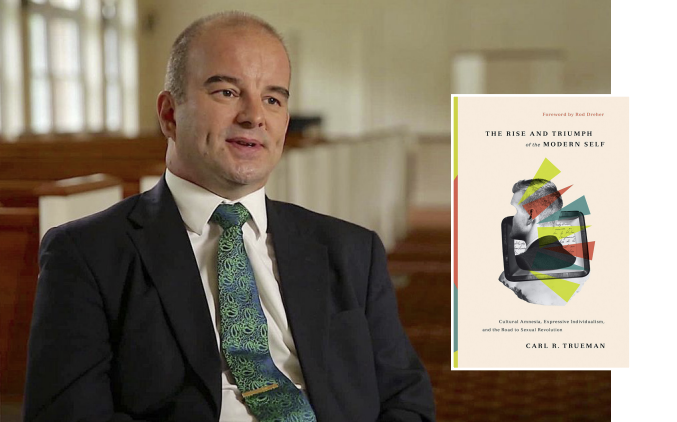
In The Rise and Triumph of the Modern Self, Carl Trueman asks why the phrase “I am a woman trapped in a man’s body” has come to be seen as a normal, coherent statement. Just a few decades ago, North Americans would have been baffled by such a statement. This statement requires a very specific notion of the self, one which is unique to modern society and which affects each one of us.
Our society’s focus on pleasure and instant gratification, and the associated rejection of sexual morality, has been influenced by the sexual revolution in the 1960s. But Carl Trueman makes a compelling argument that it comes more broadly from a deeper revolution in how we understand the self. Trueman offers a valuable perspective on our individualistic society, the dangers it presents for the Church, and how Christians ought to respond to it.
Individualism: Replacing God
Throughout most of Western history, society was built on objective foundations and standards of truth found in God’s Word. The world was seen as ordered by God, and human nature and life could not be explained without God. However, throughout the eighteenth century there was a radical shift as people tried to explain the world without God. Instead of God creating us in a particular way, for a particular purpose, Trueman says that in modern society, “we are who we choose to be, who we choose to make ourselves” (p. 176). As our society increasingly relies on technological advances, we are better able to create the illusion that we control our own existence.
For example, medicine seeks to change moral problems into medical problems. Contraceptives, abortion, and other medical interventions remove the “consequences” of sex. Doctors can now “change” a person’s sex from male to female, or at least give the outward illusion that they have done so. Medical and technological advancements have given many a way to replace God with perceived control of our own circumstances. Of course, this temptation is nothing new, reflecting the original sin of Adam and Eve in the garden when they ate the fruit and wanted to be “like God, knowing good and evil” (Gen. 3:5).
Expressive Individualism
To explain his view of the self, Trueman uses the term “expressive individualism,” a term borrowed from the philosopher Charles Taylor. By this term, he means “that each of us finds our meaning by giving expression to our own feelings and desires” (p. 46). Trueman goes on to discuss the idea of the therapeutic; the idea that people simply need to be happy and pursue their desires openly. This requires not only tearing down biblical morality, but also creating new definitions of morality so that people do not feel judged or rejected. And “where a sense of psychological well-being is the purpose of life, therapy supplants morality – or, perhaps better, therapy is morality – and anything that achieves that sense of well-being is good, as long as it meets the rather weak condition that it does not inhibit the happiness of others, or that of a greater number of others” (p. 360).
Since what matters is simply what makes people feel good, the law must also be transformed to make people happy. If people find their identity in their sexuality, the society around those people must also affirm their sexuality in order to make them happy. The law must also be transformed to achieve the greatest happiness for these individuals. This idea of the self helps us to better understand the outrage of society when a baker refuses to bake a cake for a same-sex couple, or a videographer refuses to film a same-sex wedding, or a doctor refuses to provide abortion or euthanasia. These are seen as moral criticism of something a person “needs” to make them happy and to be fulfilled.
The impact of this view can be seen in recent attempts to combat hate speech in Canada. Speech which makes a moral conclusion about another person’s actions is now seen as violent, because it is denying someone the ability to find meaning according to their feelings and desires. Simply failing to recognize or affirm someone’s sexual choices can be seen as victimizing that person. “The struggle to cultivate the right form of political consciousness or psychology means that things such as education and speech need to be carefully regulated in order to ensure the correct outcome” (p. 251). When man has replaced God, the so-called correct outcome is whatever man decides it is.
Individual Orientation
Prior to the age of individualism, the commitment of individuals was directed outward, towards beliefs, practices, or larger institutions; towards one’s duty to those around them. Today, however, that is reversed. Outward institutions are seen as servants of the individual’s feelings and desires. As a result, institutions need to be transformed so that they conform to whatever individuals want to make them. Take mainstream churches in Canada, for example, which increasingly preach a message that makes attendees feel good rather than preaching the gospel and convicting men of sin. Another example is families which become whatever individuals want them to be, with various “types” of marriages and parenting arrangements and laws which facilitate them.
Our society increasingly demonizes various “oppressive” structures which people need to be freed from. Institutions are seen as the facilitators of that oppression. Within this viewpoint, the traditional family trains children to be submissive to authority and to comply with moral structures. But for the expressive individual, “the dismantling and abolition of the nuclear family are essential if political liberation is to be achieved” (p. 235). Because our society has rejected God, it no longer values the institutions which God has given, but seeks to destroy them as oppressive institutions.
How Should We Respond?
Trueman does not spend much time on how Christians should respond to these developments, instead choosing to explain how we have gotten where we are as a society. Yet, he does touch briefly on the dangers for Christians. We too are expressive individuals, and too often we are symptoms of the society and culture around us. Because of our surroundings, we too are forced to make choices that previous generations did not have to make. In a sense, we ‘choose’ our religion, within which we have a vast number of options in terms of denomination and style. We choose our career, often based on what will be fulfilling for us as individuals. In Christian families, husbands and wives choose their roles much more than they have even in the recent past.
Having and making these decisions are not necessarily bad things. But so easily we substitute God for something less; we replace the Creator with created things. We want to feel good about ourselves, so we create our own morality and structure. We want to be our own individual people, so too often we find our identity in our feelings and desires rather than in biblical truth. We need to make choices in so many details of our lives, but we must be sure to choose rightly. A society grounded simply on the whims of individuals cannot last for long. We need to replace our perception of self as all-important with the knowledge that who we are and what we ought to do is grounded in God and in the truth of His Word.
Importance of Institutions
We cannot change the tide of culture alone. While our society seeks to tear down biblical institutions, we can seek to re-establish their importance. Most importantly, the instituted Church must act as the Body of Christ, as a community. We are shaped by the communities to which we belong, especially the stronger communities. “And that means that the church needs to be the strongest community to which we each belong.” We can be individually concerned about the problems we see around us, but we must also respond as a community, a community shaped by biblical worship and biblical truth.
Likewise the institution of the family. Various forces in society seek to destroy the traditional family because it presents a biblical moral structure that confronts them with their sin. We must in response prioritize and pray for strong families which shape us and our children to respond to our culture. Trueman explains that, especially through the LGBTQ movement and the rise of feminism in the 19th century, the traditional concept of the family has broken down. Men and women sought to break free from the supposed oppression of the traditional family and to be able to control themselves and their choices. The family is the natural and fundamental unit of society, and biblical families can be communities that respond to the individualism of our age.
We are rational, individual people. But we are also socially embedded in institutions and communities. Although Trueman presents the dangers of individualism, he does not speak explicitly of institutions and their importance. In a book titled On Thinking Institutionally, Hugh Heclo argues that we need to think of ourselves not as individuals, but within the broader picture of the institution(s) we are a part of. It’s not about satisfying ourselves and our own desires, but about doing what is right as moral actors who make choices. As church members, family members, employees, etc., we must think not only of ourselves, but about those around us and what is best for the institutions we participate in. But Heclo also notices the severe harms of individualism, writing “Dreams of the institutionless, abstract ideal have left human beings vulnerable to the yearning for total revolution, from the French Revolution onward through communism, fascism, and Maoism. The cost of pursuing the collective dream is well over a hundred million lives cut short in the century just past.” The search for a type of utopia is as common today as it has been in past centuries. But when people seek to make their world ‘better’ without the foundation of God and His Word, it only results in ruin.
Conclusion
We cannot ignore what is happening around us when it comes to the increased focus on the self, and we cannot think that we are unaffected. Trueman argues that if there is a time in history similar to the time we are now in, it is the second century. “The second-century is, in a sense, our world, where Christianity is a choice – and a choice likely at some point to run afoul of the authorities” (p. 407).
It’s so easy for Christians today to think that, as long as the sexual choices of others do not hurt anyone, then who are we to stop them? But that thinking falls into the idea that happiness is all that matters, and that there need not be a foundation for how we act. By focusing so intently on the self, and rejecting objective moral foundations, our society is destroying itself. In community, with our families and churches, we can show the world the blessing of finding meaning in biblical truth. While Canadian society and government seek for answers their own way, God has given us the answers we need through His Word, and we can share those answers with those around us.
June is Pride month across Canada and the Western world. It seems that everywhere you look, people are celebrating the right of people to identify themselves as whatever gender they want and marry a member of whichever sex they want. You simply need to walk down the street to see homeowners flying rainbow flags on their front porches, corporations changing their logos to celebrate Pride, or a city installing rainbow sidewalks around town.
So how can orthodox Christians respond to this pervasive celebration of Pride, and everything it stands for?
It’s relatively easy to respond within our Christian churches, homes, and schools, where we affirm the truth of Scripture (although even here Christians increasingly differ). We can reference Proverbs 16:18 and explain how pride is not something to celebrate, but an attitude of the heart that goes before a fall. It’s easy to quote Romans 1 and explain how same-sex activity violates God’s norm for creation. It’s standard to read through the creation account in Genesis 1 and see how God created humanity as male and female.
But how can we push back against the celebration of LGBTQ2S+ identities in a culture that no longer recognizes God’s Word as authoritative and may even call the biblical prescriptions bigoted and harmful?
Arguing Against the Celebration of Pride
One strategy is to push back against the celebration of Pride. This approach suggests that governments and major corporations should strive for neutrality in our diverse country. For instance, we could argue that, if a local government isn’t willing to fly a Christian flag or install a pro-life sidewalk, then they shouldn’t choose to fly a rainbow flag. We can argue that supporting some political causes and not others is a form of discrimination that governments, in particular, ought not to participate in. One municipal government in British Columbia recently followed this line of logic of their own accord when presented with a request to fly a rainbow flag during Pride month.
This can be an effective argument because its fundamental premise – that all people and groups should be treated equally – is largely shared throughout Canadian culture. Treating people and groups equally and trying to be neutral in a diverse and multicultural country is an easier course of action than trying to decide which causes to support and explaining the rationale for why one is better than another.
The problem with this approach is that it fundamentally agrees with the core value of Pride month itself: that all people should be treated equally even when it comes to allowing or celebrating immoral things such as same-sex marriage or gender-transition surgeries. It doesn’t break with liberalism’s god of freedom and choice, but simply uses their own argument against them.
Arguing Against the Celebration of Pride
A much more challenging, but a more biblical, response to the celebration of Pride is to focus on the Pride itself rather than the celebration of it. We shouldn’t simply try to prevent the celebration of a worldview but push back against the worldview itself. Doing this with speech that is always “gracious, seasoned with salt, so that you may know how you ought to answer each person” (Colossians 4:6) is a difficult task in a post-Christian society, but here are some suggestions:
- The feminist argument: The LGBTQ2+ movement seeks to discard the characteristics and identities that make women unique and different from men. Men and women are equal in the sense that they both, as human beings, should have the same rights and freedoms, but men and women are not interchangeable. There are biological, psychological, and ontological differences between men and women that we must preserve, rather than blurring the line between men and women. For instance, boys can like the colour pink and girls the colour blue without suggesting to each child that they must be transgender. We can see these concerns bubble up when biological men who self-identify as women compete in women’s sports or when a Supreme Court nominee can’t define what a woman is.
- The teleological (purpose) argument: Human reproductive systems and sexual activity have a natural purpose to it, namely procreation. The purpose of sex, either from a religious or an evolutionary perspective, is ultimately propagation. Of course, human reproduction can only arise naturally in a relationship between a male and a female; the male and female reproductive systems are meant to complement each other for the purpose of procreation. To put it even more provocatively, each human being only has half of a complete reproductive system; the “other half” of the reproductive system lies in another person of the opposite sex. Same-sex relationships are entirely incapable of natural reproduction because two male or two female reproductive systems are not designed to work together. Same-sex sexual activity by its very nature rejects this teleological purpose of sex and for human bodies.
- The child welfare argument: Children have a natural right to be raised by their biological mother and father. Both parents – the mother and the father – are distinct and irreplaceable to their children. Couples with same-sex relationships and transgender identities deprive their children of the leadership, nurturing, and care that a fully male father and fully female mother provide.
- The biblical argument: God created humanity in the binary categories of man and woman, male and female, and intended sexual activity to be exclusively within the bonds of a heterosexual marriage (e.g. Genesis 1:27, Romans 1). He created each human being to be unique, but he did not create each person’s gender or sexual orientation to be unique. Holding people to rigid gender stereotypes can lead to gender dysphoria. Any sexual activity or even desire for someone apart from your opposite-sex spouse and any self-professed gender identity violates God’s standards for creation and is morally wrong. For further resources on the biblical argument, see The New Reformation Catechism on Human Sexuality.
Countering LGBTQ2S+ Defenses of Pride
Chances are, if you raise any of these arguments with members or allies of the LGBTQ2S+ community, they will respond by saying that your position undermines their equality, rights, and/or freedom. Here are some suggestions of how to respond to these accusations:
- Equality, rights, and freedoms have limits. Complete marriage equality would naturally require the allowance of polyamory, incestuous marriages, and potential child marriage, yet Canadian society opposes all three on the grounds that someone cannot marry absolutely anyone they want. Constitutionally, the Canadian Charter of Rights and Freedoms states that all rights and freedoms are subject to “such reasonable limits prescribed by law as can be demonstrably justified in a free and democratic society.”
- No one has the legal right or freedom to require someone else to affirm their chosen identity. For instance, there are no “identity rights” in the Charter that require the state, much less a private citizen or institution, to recognize a given identity. The Charter gives people limited rights to “do” things; it does not give them any right to “be recognized as” something.
Finally, when voicing opposition to LGBTQ2S+ expression or identities, it is quite likely that Christians will be accused of being homophobic or transphobic. These accusations are easier to respond to (even if the commenter doesn’t agree with them):
- As Christians, we should never hate people because each person’s identity is fundamentally an image-bearer of God. We hate activities and even identities that God declared sinful, just as many other people hate activities or identities that they consider wrong. Environmentalists hate coal mining (but hopefully not coal miners) and try to eliminate the practice. Policemen hate drunk driving (but hopefully not the drunk drivers) and try to reduce the incidence of drunk driving. Liberals may hate conservative policies (but hopefully not conservatives) and strive to advance Liberal policies. In the same way, Christians ought to hate gender dysphoria and how it hurts the person experiencing it (but not hate the person experiencing it) and strive to resolve it according to God’s good prescription for humanity.
- Disapproval does not equal hatred. Christian love requires communicating disapproval for what is wrong because love does not “rejoice at wrongdoing but rejoices with the truth” (1 Corinthians 13:6). We can explain how this has an eternal dimension to it, how we don’t simply call out sinful behaviour because it is wrong at the moment but because each person will eventually have to give an account for their actions to a perfectly just Judge. Letting people merrily walk the road to eternal punishment is the most unloving thing a Christian can do.
Conclusion
ARPA’s mission is to “educate, equip, and encourage Reformed Christians to political action and to bring a biblical perspective to our civil authorities.” This requires us not to hide the light of truth under a basket on challenging topics such as gender identity or sexual orientation but to prepare each person to speak to these topics in a biblical and loving way. We hope that suggestions like these help you in this calling.
BURNABY, British Columbia, April 14, 2011 (LifeSiteNews.com) – The Board of Education for the Burnaby School District of British Columbia has been moving towards adopting a “Homophobia/Heterosexism” policy that would promote homosexuality and censor all opposition throughout all grade schools, middle schools, and high schools of the Burnaby public school system.
The draft policy, approved by the Board of Trustees February 22, 2011, defines “heterosexism” as a “mistaken assumption” that “all people are heterosexual and that heterosexuality is superior and the norm by which all other sexual orientation and gender identities are measured.” It says it “perpetuates negative stereotypes and is dangerous to individuals and communities.” Keep reading
ARPA note: This piece is even more applicable in Canada, thanks to our provincial and federal human rights commissions.
By Matthew J. Franck – Washington Post – Friday, December 17, 2010: In the debates over gay marriage, “hate” is the ultimate conversation-stopper. Some stories from recent months: A religion instructor at a midwestern state university explains in an e-mail to students the rational basis for Catholic teaching on homosexuality. He is denounced by a student for “hate speech” and is dismissed from his position. (He is later reinstated – for now.) Read more.
Karen Selick, National Post · Wednesday, Nov. 3, 2010: The Supreme Court of Canada has agreed to reconsider 20-year-old jurisprudence that limits free speech. The case under appeal is The Saskatchewan Human Rights Commission vs. William Whatcott. (more…)
By Patrick B. Craine TORONTO, Ontario, September 1, 2010 (LifeSiteNews.com) – As part of their campaign to scrap Ontario Premier Dalton McGuinty’s equity and inclusive education strategy, Campaign Life Coalition is warning that the strategy threatens to embed a systematic and unjust religious discrimination within school boards’ hiring and advancement policies. (more…)
By Thaddeus M. Baklinski, TORONTO, July 27, 2010 (LifeSiteNews.com) – The recent release of the Ontario Human Rights Commission’s annual report shows that the OHRC is activity promoting the homosexualist agenda in schools and elsewhere. Chief Commissioner Barbara Hall prefaced the report with the statement: “Our work can be summed up in three words: educate, empower and act – actions that can transform written rights into lived rights.”
Jesse Kline, National Post (Dec 23 2010): The Canadian Broadcast Standards Council (CBSC), an independent body that administers guidelines set out by Canada’s private broadcasters, recently made public a decision that finds the Christian television show Word TV in violation of its code of ethics. The council condemned the show’s host, evangelical minister Charles McVety, for, among other things, making “disparaging and unacceptable” remarks about homosexuals during Toronto’s Gay Pride parade.