Schedule

10:30 am – Gather at Queen’s Park

11:00 am – Rally and speeches

12:00 pm – March through Toronto

1:15 pm – Closing Remarks

1:45 pm – Departure

Keep in touch!

Sign up to receive updates and important information about the Let Kids Be Rally & March.

Sign up for updates

(From left to right)

Dr. Ann Gillies – Restoring the Mosaic – will speak on the science of medical transitioning.

Paul Lawton – Director of Grassroots Action, ARPA Canada – will share practical ways to stay active and engaged.

April Hutchinson – Keep Female Sports Female – will talk about her experiences with gender identity and women’s sports.

Mike Schouten – Executive Director, ARPA Canada – will serve as Master of Ceremonies.

KellieLynn Pirie – DeTrans Alliance Canada – will share her detransition story.

Location

Queen’s Park – 111 Wellesley St. W, Toronto, ON

Click image for Google Map

Getting Here

By Car

By Transit

Promotional Downloads

Email Banner

Rally Sign Option 1

Rally Sign Option 2

We would love to see you there.

The registration page is in the works… Stay tuned!

There are a limited number of spots so be sure to apply early!

Theology used to be considered “queen of the sciences.” Universities recognized that God’s Word is the lens through which we rightly see the world and practice other disciplines. Today, theology has been dethroned in what are now secular universities. 

Robert Smith’s task in The Body God Gives: A Biblical Response to Transgender Theory elevates theology (and, by extension, what he calls theo-anthropology and theo-ethics) back to its rightful place. Recognizing that we look at God’s works through His words, he critiques how sexuality and gender have been warped in history and culture and searches Scripture to see what God’s intentions are. Where many other books that assess gender ideology are short (e.g. Affirming God’s Image by Alan Branch), secular (e.g. Irreversible Damage by Abigail Shrier), historical (e.g. The Rise and Triumph of the Modern Self by Carl Trueman), or written in laymen’s language (e.g. God and the Transgender Debate by Ryan T. Anderson), Smith’s book is a carefully researched theological, historical, and philosophical examination of the issue. 

Sexuality and Gender in History and Culture 

Smith spends his entire book refuting and debunking the central claims of transgender theory: “that the sexed body does not determine the gendered self” (3), that “everyone has an inner gender identity… [t]hat determines whether you are a man or a woman (or neither); and human societies are obliged to recognize and legally protect gender identity, not biological sex” (16-17). Those are the truth claims of gender ideology. 

Although he doesn’t quite use this language, Smith comes very close to accusing purveyors of gender ideology of idolatry. The “conviction that the attribution of qualities (like sex or gender) to human bodies has effect only through language… verges on the supernatural, effectively granting God-like, body-forming powers to human words” (139). Christians confess that only God can create ex nihilo, out of nothing, through his Word. Gender ideologues confess that human beings create everything out of nothing but their words. 

Smith chronicles the rise of feminist, transgender, and queer theory. He describes the influence of one of the original second-wave feminists, Simone de Beauvoir, who “effectively cemented the conceptual distinction between sex and gender” (102). He references John Money, a professor of pediatrics and medical psychology at Johns Hopkins University Hospital, who coined terms like “gender role” and “gender identity.” UCLA psychiatry professor Robert Stoller further differentiated between gender, gender role, and gender identity. Judith Butler, the famed third-wave feminist and queer writer, argued that, rather than sex being the foundation of gender, it is actually the other way around. Because we are all embedded in relationships, languages, and cultures, Butler argues, there are no objective realities, only constructs. For Butler, all reality – including how we think of sex – is filtered through this lens.   

In response, Smith argues that “the sexed body reveals and determines the gendered self, and as a consequence, should ground gender identity, guide gender roles, and govern gender expression” (14).  

If you’re struggling to keep up, you’re not alone. It may be far simpler – and more accurate – just to abandon all these terms and insist on one: sex. If the gender ideologues depend on language so much to keep their ideology afloat, why not cut them off at the knees and deny that there is anything other than sex? That is what Billboard Chris says when he tours cities around the world, wearing billboards with simple slogans like “children cannot consent to puberty blockers.” He simply proclaims that there are only two sexes, zero genders, and infinite personalities. 

Smith believes that it is advantageous to distinguish gender from sex, defining gender as “the culturally mediated set of conceptions, expectation, and roles with being either male or female” (152). While most of the physical manifestations of our sex are unalterable (e.g. our chromosomes or genitals), we have some agency over how we express our gender. Drawing a distinction between the two can soften what would otherwise be rigid gender stereotypes (e.g. only girls like pink). The distinction also recognizes that our interactions with other people shape how we practice our gender in a way that biological sex does not. Despite seeing advantages to differentiating between sex and gender, Smith is adamant that we must anchor our understanding of gender in sex. He writes, “Sex, then, is the foundation; gender is the construction that rests on (and can only rest on) that foundation” (167). 

Sexuality and Gender in the Bible 

After looking at what our contemporary culture says about sex and gender, Smith turns to the ultimate authority: the Bible. Smith confesses that “human knowledge is necessarily dependent on divine revelation” (43). He affirms what Reformed Christians confess in Article 2 of the Belgic Confession, that God reveals himself – and all truth – in two sources: “general revelation (i.e., God’s self-disclosure in his works) and special revelation (i.e., God’s self-disclosure in his words)” (45). Since we see the truth most clearly in God’s Word, and cannot interpret general revelation without it, His Word must be our primary guide.  

Smith devotes several chapters to unpacking what the opening chapters of Genesis say on the topic “because of the foundational significance of these chapters for the Bible’s sexual anthropology” and “because of the way in which the other acts of the biblical drama build on and interact with these chapters” (174).  

Smith starts by asking how being created male and female reflects the image of God (Gen. 1:27). His answer is that “sexual dimorphism is the mode of the divine image, rather than its meaning” (205). In other words, the fact that human beings are male and female are two different ways of expressing the same image of God. 

Just because males and females both bear the image of God, however, doesn’t mean they are the same. The phrase “a helper fit for him” in Genesis 2:18, Smith explains, means more like “corresponding” to him, literally “like opposite him.” This correspondence between the sexes is obvious in how human reproductive systems are designed to fit and function together or how the different parenting styles of mother and father both uniquely provide something to their child. Although Smith doesn’t go into detail about how this differentiation works out in the actions of men and women, he does note that the man is “primarily turned toward ‘the world of things’ and the woman primarily turned toward ‘the world of persons’” (237). 

Smith also emphasizes that “sexed embodiment is foundational to personal identity” (209) and that “to be human is to be embodied and to be embodied is to be sexed” (215). This emphasis is needed because gender ideology falls prey to a form of Gnosticism which suggests that two parts of the human person – the body and the soul – can be in tension or even conflict with one another and that it is possible for a male soul to inhabit a female body. Despite recognizing that someone can genuinely feel that way, Smith argues from Scripture that it is impossible. We are “integral personal-spiritual-physical wholes” (219) and cannot be at war with ourselves.  

Thus, not only is our gender founded in our sex, but so too is our gender identity. This identity is not something chosen by man but received from God. “The central finding of this book” is that “God’s desire for my gender – that is, whether I should perceive and present myself as a man or a woman – is revealed by the design of my body” (275). “By this measure, medical transitioning is ethically indefensible (277). 

Sexuality and the Marriage Relationship

Smith explores the meaning and mystery of marriage as well. After Genesis 1 and 2 describe the creation of male and female, the final verses of Genesis 2 describe the marriage of man and woman. While noting that “the Old Testament has no technical language for marriage or marrying” (247), the institution of marriage is obvious in the description that “a man shall leave his father and his mother and hold fast to his wife, and they shall become one flesh” (Genesis 2:24). This becoming “one flesh” is a descriptor of sexual intercourse, but as the apostle Paul notes that one can become one flesh with a prostitute (1 Corinthians 6:16), Smith notes that the only proper place for “one flesh” relationships is within marriage. 

Thus, marriage is by definition heterosexual. “Marriage” between members of the same sex not only violates the creational pattern in Genesis 1 and 2 and the various commands against homosexuality across the Bible, but also the “eschatological marriage of Christ and the church” (264). Human marriage is ultimately a picture of the relationship between Christ and his church. 

But, of course, mankind didn’t remain sinless in their created gender and sexuality. Smith compares the devil’s original temptation of Eve to the “transgender temptation”: “(1) doubt about the goodness or reality of one’s sexed body; (2) resentment regarding the fact or appearance of one’s body; (3) unbelief regarding the rightness of the God-given body or one’s ability to be reconciled to it; (4) desire for a different body or to be a different sex; and (5) disobedience in the form of cross-gender identification or cross-sex presentation” (292).  

God’s curses on humanity at the Fall are also gender specific. Women would have pain in childbirth and wives would rebel against the authority of husbands (Genesis 3:16). And men, who Smith says are “primarily turned toward ‘the world of things’” (237), will have burdensome toil in their dominion over the ground. 

Moving forward in the biblical story towards the redemption of human gender and sexuality, Smith discusses how biblical laws (such as Deuteronomy 22:5’s prohibition against cross dressing and 23:1’s exclusion of eunuchs from the assembly of God) aim to guard against gender confusion and mutilating the body, with obvious application today. Likewise, Paul’s denunciation of the “effeminate” in 1 Corinthians 6:9 and discussion of head coverings and hair styles in 1 Corinthians 11 also point to the fact that “Christians are to ‘do gender’ (particularly, but not only, in public worship) in a way that signals their grateful recognition of both God-given sex differences and the particularity of their own biologically determined sex” (346). Rather than working against creation, Smith repeats several times that “our present task is to work with the grain of creation” (321).  

Finally, in the consummate life to come, Smith re-affirms our sexed identity. While marriage and arguably sexual intercourse will be absent from heaven (Matthew 22:30), Smith argues that we will retain our sexual and gender identity in the resurrection as these facets are core to human existence. “We may be confident not only that fallen gendered stereotypes will disappear but also that true gendered archetypes will remain” (365). This contrasts with some queer theologians who try to argue that we will be androgynous, sex-less beings in heaven. 

Conclusion 

The Body God Gives is important reading for any Christian who wants (or needs) to have a solid biblical and philosophical response to gender ideology. By surveying what our culture says about gender and sexuality and examining what the creation-fall-redemption-consummation narrative of Scripture says, Smith brings clarity to an issue that so many people today are confused about. “The sexed body reveals and determines the gendered self and, as a consequence, should ground gender identity, guide gendered roles, and govern gender expression” (14). 

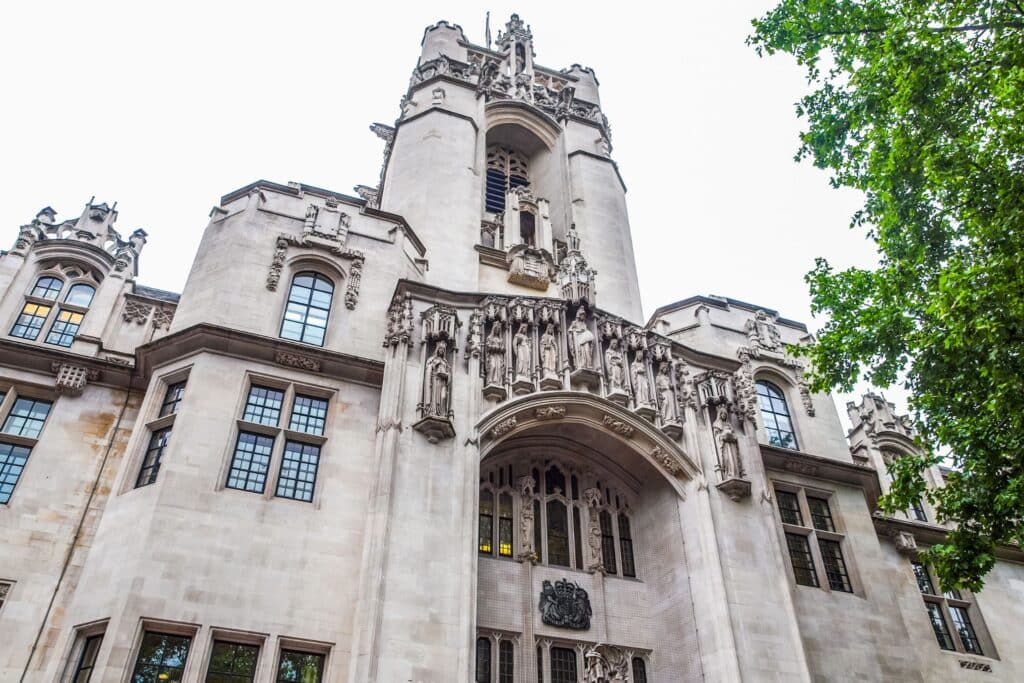
The UK Supreme Court recently ruled, in For Women Scotland, that “sex” and “woman” in the UK’s Equality Act refer to biological sex and biological women. The ruling makes clear that males do not have a legal right to enter woman-only shelters, dormitories, rape crisis centres, washrooms, or prisons in the UK.

It may surprise Canadians that both the Labour government and the opposition Conservatives support the Court’s ruling.

As the Minister for Women and Equality, Bridget Phillipson, said, “This ruling brings welcome clarity and confidence for women and service providers. Single sex spaces must be protected.” Conservative leader Kemi Badenoch commented: “Saying ‘trans women are women’ was never true in fact and isn’t true in law either.”

Meanwhile, in Canada, the legal presumption is that males who identify as women have a legal right to be treated as women by government and private actors alike. Consequently, women’s services and facilities risk liability under human rights laws if they exclude males.

Canada’s lack of clear protections for single-sex spaces and services needs fixing. But due to differences in the Canadian legal landscape, it will likely take legislative reform and not just successful litigation to achieve a similar outcome here. Here’s why.

The UK Equality Act

The UK’s Equality Act (2010), like the Canadian Human Rights Act and provincial human rights statutes, protects people against discrimination (based on sex, race, religion, etc.) in housing, employment, goods, services, and facilities.

The UK’s Equality Act also guards against discrimination based on “gender reassignment.” The Act says “a person has the protected characteristic of gender reassignment” if they intend to or have “chang[ed] physiological or other [i.e. social] attributes of sex”.

Contrast this with the undefined term “gender identity” in Canadian human rights laws, which implies a personal characteristic everyone possesses, supposedly separate from sex, but which effectively overrides sex in determining who counts in law as a man or a woman.

Also, unlike Canadian human rights laws, which lack sex/gender-specific terms, the UK’s Equality Act uses “man” and “woman” throughout. The Act also defines “woman” as “a female of any age,” which seems clear enough.

Nevertheless, the big issue in For Women Scotland was: What is a woman under the Act?

The For Women Scotland case

Here’s how the case started. The Scottish government contended that, to meet its obligation to appoint a certain number of women to public bodies, it could include males who had obtained a Gender Recognition Certificate (GRC). This depended on a non-biological interpretation of “sex” and “woman” in the Equality Act. For Women Scotland, a women’s rights group, challenged this interpretation.

It’s a different statute, the UK’s Gender Recognition Act, that allows a person to get a GRC, which changes their gender “for all [legal] purposes” – unless another statute says otherwise. While the Equality Act does not explicitly address GRCs, the UK Supreme Court concluded that it’s plain from both the content and historical context of the Act that when it uses “woman” and “sex”, it refers to biological women and biological sex.

For example, the Act specifies that sexual equality protects a “woman” against discrimination because “she is breastfeeding or pregnant.” “These provisions recognize that biological men cannot become pregnant,” the Court concluded.

The Court also pointed to the Act’s treatment of sex-specific spaces, medical services, sports, and accommodation as requiring a biological interpretation of “sex” to function coherently, as well as sex-specific requirements related to the armed forces.

The Court also noted that a key predecessor statute, the Sex Discrimination Act, was amended in 1999 to add protection for gender reassignment – without redefining “sex”, “man”, or “woman”. Indeed, legal protections for gender-reassigned persons were not achieved by redefining sex, but by adding “gender reassignment” to the law.

Oh, Canada  

Canada’s legal history on this issue is comparable. Since the 1960s, Canada has had laws against sex discrimination in employment, housing, and services – laws that allowed for sex-specific spaces or services, such as women’s shelters. 

Beginning in the 1990s, human rights tribunals, followed by the courts, began to protect transgender persons from discrimination by relying on the protected characteristics of both disability and sex.

Gender identity disorder (now called gender dysphoria) is a diagnosable condition and was counted as a disability in human rights law. So, relying on the protected characteristic of disability would arguably suffice to protect people with gender dysphoria from discrimination. For example, it would prevent a person with gender identity disorder from being denied housing or fired from their job (unless gender identity disorder makes them incapable of performing the job). And relying on “disability”, as our courts did until recently, would prevent such discrimination without undermining legal protections for legitimate single-sex spaces and services.

But relying on “sex”to protect anyone who identifies as transgender from discrimination brought confusion. The courts were trying to use a single word – “sex” – stand for two distinct ideas – identity based on biology and identity based on self-perception. These two competing ideas of what “sex” meant created confusion, and Canadian law developed to require that a man who identifies as a woman generally be treated as a woman – as belonging to the female “sex” for human rights law purposes, even before “gender identity” was added to human rights statutes.

Legislatures in Canada add “gender identity” to laws

If “sex” was already being interpreted this way by the early 2000s, why did Canadian legislatures bother to amend human rights statutes to add “gender identity” (mostly between 2012 and 2017)? It was not to resolve ambiguity around the term “sex” created by tribunals’ and courts’ broad interpretations of the term.

Instead, the impetus was to endorse and preserve judicial interpretations that prioritize gender self-identification over biological sex. Also, explicitly endorsing the concepts of gender identity and gender expression in law empowered public bodies (e.g., school boards) to support gender ideology in their policies. But it was clumsily done. Neither “sex,” “gender identity,” nor “gender expression” was defined.

Arguably, adding “gender identity” to human rights laws across the country should mean that “sex”, which remains a protected characteristic, should now be interpreted according to its ordinary meaning. After all, the new terms “gender identity and gender expression” now do the work that judges were trying to do by stretching the meaning of “sex”. But that has not been the result. Nor does it appear to have been the intent of legislatures when they added these new terms.

Legislative reform needed

Canada’s Supreme Court could conceivably rule one day that the only sensible interpretation of “sex” is a biological interpretation. As in UK law, Canadian law has plenty of clues that the term “sex” was understood by legislators to mean biological sex when these laws were enacted. For example, the Canadian Human Rights Act says that discrimination in relation to childbirth or pregnancy is discrimination based on sex. 

However, it seems unlikely that any Canadian court will issue such a ruling. Canada now has a significant body of case law, spanning decades, interpreting “sex” far more loosely (not that these cases bind the Supreme Court). Also, the last time legislatures addressed the issue, it was to bolster the gender self-identification approach by adding “gender identity” to the law, while concerns that already existed about the legal status of sex-specific facilities and services were ignored.

Finally, while UK law long used the terms “man” and “woman” in anti-discrimination law, in connection with mentions of sex, pregnancy, etc., Canadian human rights statutes have not. This makes it easier to drive a wedge between sex and gender, insisting that women’s rights have nothing to do with biology, and everything to do with social constructs.

So, while some might hope that litigation will resolve these issues, legislative reform is needed here first. Will Canadian politicians have the courage?

A Conservative opportunity?

Canada’s Conservatives promised to reverse the Liberal government’s policy that permits males identifying as women to serve time in women’s prisons, regardless of whether they’ve undergone medical transition treatments or surgery, unless there are “overriding health or safety concerns that cannot be resolved.”

The Liberal government implemented this shortly after Parliament passed Bill C-16, which added “gender identity” to the Canadian Human Rights Act and Criminal Code. Correctional Service Canada claims the policy is in line with the Act.

Stories of women being victimized by males in shelters and prisons are compelling. Safety concerns may not be considered “overriding” before female inmates are victimized. Gender affirmation is currently the priority. But even where a male inmate in a women’s prison does not overtly harass, threaten, or assault anyone, being incarcerated with male inmates can cause distress for female inmates, many of whom have been victims of male violence.

A reversal of the Liberal policy would face immediate human rights challenges. To preclude that and avoid any ambiguity about their policy’s legality, they should go further. They should table a bill to amend the Canadian Human Rights Act. While only the government can change the Correctional Service’s internal policy, any MP can table a bill to protect single-sex spaces, forcing debate on the issue in Parliament. Thus, though the Tories lost the election, they need not neglect this campaign promise.

Also, since provincial governments have jurisdiction over so much that impacts women, including provincial prisons, shelters, health care, etc., provincial conservative parties should commit to similar reforms in provincial human rights laws – clarifying that sex means sex (not gender identity), and that single-sex spaces and services are protected, like in the UK.

Amy Hamm is a registered nurse in B.C. and a J.K. Rowling fan. But her professional regulator, the B.C. College of Nurses and Midwives, is not a fan, for reasons we’ll get to in a moment.

Last month, the College’s Discipline Committee found that Ms. Hamm had engaged in professional misconduct due to her allegedly discriminatory and derogatory statements about men who identify as women. According to the Committee, Ms. Hamm’s statements “challenge the existence of transgender women, conflate sex and gender, and advocate for the denial of legal protections for transgender women.”

Let’s see if that’s a fair assessment.

Highlights of Amy Hamm’s Case

When Amy Hamm expressed her views on gender identity and transgenderism online, none of her supposedly “discriminatory” or “derogatory” statements were made in the context of providing patient care. It’s not as if Ms. Hamm was going around getting into arguments with patients about this. Indeed, there were no complaints from patients or anyone else about Ms. Hamm’s performance as a nurse.

Did Amy Hamm “challenge the existence of transgender women”?

Such an accusation is rather cliché today. And as empty as ever. Amy Hamm never denied that people experience gender dysphoria or that people identify as transgender. Rather, Hamm’s position is that self-identity cannot override biological realities—meaning that a man cannot become a woman simply by imagining or believing himself to be one.

The Committee found Hamm’s biological realism to be “unfair and untrue to transgender women” because it denied the “possibility” that they could truly feel like women. Essentially, the College took the baffling position that it is wrong to argue something is false if it might possibly be true and if questioning its veracity upsets certain people.

Did Hamm “conflate sex and gender?”

For almost all of Western history, the medical and scientific communities treated sex and gender as interchangeable terms. But the College asserts that Hamm engaged in misconduct by upholding this long-standing view that sex and gender are the same. The College asserts that holding such a view should be considered unprofessional. But Hamm does not actually hold this view.

The only evidence available to the Committee – statements made while Hamm identified as a nurse – shows that Hamm distinguished between sex and gender. In a position statement on her website, she explicitly states that sex is “based on biological reality” while “gender identity and expression are culturally-based.”

The College’s problem was not that Hamm failed to distinguish sex and gender—but that she didn’t do so in a way that aligned with the College’s preferred ideology. By stretching its interpretation of evidence, the Committee framed Ms. Hamm’s views as derogatory and discriminatory without demonstrating how they met that threshold.

Did Hamm oppose “legal protections for transgender people”?

One of the College’s most egregious accusations against Hamm was that she desired to strip transgender people of their legal protections. On the contrary, Hamm never argued against anti-discrimination protections. Her position was that such protections should be based on biological sex rather than gender identity. Otherwise, she argued, it “renders sex meaningless.”

Hamm argued that transgender people can and should be protected under human rights legislation. Despite this, the College concluded—without evidence—that Hamm’s view “erases transgender women” and was therefore discriminatory and unprofessional.

The Committee goes on to suggest that Hamm sought to “elicit fear, contempt and hostility towards the transgender community, particularly transgender women” through her comments. The Committee tried to attribute bad motives to her even thogh she made clear her concern was protecting women’s rights.

Incredibly, the Committee even cited a billboard Hamm helped put up that said “I heart J.K. Rowling” as evidence of Hamm’s hatred for transgender people. Rowling is (in)famous for standing up for women and sex-based legal protections rooted in biological reality.

Transgender Ideology Threatens Healthcare Workers

Throughout its decision, the Committee made broad ideological claims about gender. It refused to acknowledge the basic biological reality that “there are only two sexes,” dismissing this statement as an “oversimplification.” That a panel of medical professionals would reject such a fundamental biological fact raises serious concerns.

Unfortunately, this rejection of biological reality is a symptom of a broader problem. As explained by scholars like Carl Trueman, we live in a highly individualistic culture that encourages us not to love, but to reject our God-given bodies. In some sense, our culture suggests we can transcend our bodies and the natural limits our bodies impose in the pursuit of whatever we think will make us feel fulfilled.

Many Canadians are waking up to the social and political ramifications of this phenomenon. Last year, an Ipsos poll confirmed a decline of support for LGBTQ causes, due to increasing frustration with transgender ideology. Hamm’s views, far from being fringe, reflect a mainstream position. Yet, many governments and regulatory bodies continue to purge those who accept and respect objective reality.

Why Amy Hamm’s Case Matters

Something needs to change. Medical professionals in Canada are still under increasing pressure to conform to tenets of a gnostic civil religion.

A few years ago, the Ontario Court of Appeal ruled that doctors must provide effective referrals for procedures such as Medical Assistance in Dying (MAID) and abortion, even if doing so violates their conscience. Recently, in Manitoba, medical student Rafael Zaki sought judicial review after he was expelled for sharing a pro-life essay online.

Amy Hamm’s case is another example of the effort to purge ideological dissent from the medical profession and to suppress the truth about the damage caused by this pervasive ideology. Amy Hamm will likely not be the last victim. But let us hope and pray that her courage in this case will inspire others.

The good news

Last week, we wrote about four good bills in Alberta that enact Premier Smith’s promise to change the province’s approach to gender identity in health and education. Bill 26 in particular bans medical transitioning for minors under the age of 16, making Alberta the first province to do so. This is a huge development for which we thank Premier Smith’s government.

One of the bills – Bill 27 – addresses gender ideology in the classroom. It requires parental consent or notification (depending on the child’s age) for a school to adopt a child’s newly chosen name or pronouns. It also makes any instruction on gender and sexuality opt-in rather than opt-out, which will reign in indoctrination of children behind parents’ backs.

We give the province an A+ for having the principles and boldness to make these changes. In its over-arching objective, this legislation is great.

The bad news – overreach into independent schools

Despite the positives, Bill 27 also has problems that need fixing. It’s crucially important that Christians in Alberta speak up about these problems right away.

The main problem is that Bill 27 would establish government oversight over gender- and sexuality-related teaching in both publicand independent schools. Bill 27 says that all “learning and teaching resources that deal primarily and explicitly with gender identity, sexual orientation or human sexuality”, whether created by the school itself or any external party, must be approved by the Minister of Education.

The government no doubt intends to prevent inappropriate and ideologically loaded materials from being used. Such oversight may make sense, at least for government schools (although it raises questions about centralized control and could allow a Minister to ensure that all learning resources on sexuality and gender are ideologically skewed a certain way).

But it’s a particular problem for independent schools. If the Minister has oversight over how all schools teach gender and sexuality, parents who are displeased with how public schools do it might not have the option of getting something different from an independent school. That’s the reason that parents choose independent schools in the first place. They don’t want a centralizing authority like the Ministry of Education dictating what they can and cannot teach. Instead, independent schools are collections of parents who are passionate about educating their children in a certain way. They sacrifice time, money, and energy into creating independent schools.

Most independent schools are truly parent and community run organizations. The public school system and their publicly elected school boards used to be more like this, with school boards being responsive to local communities. But that local responsiveness has been undermined by decades of centralizing educational decision-making in the provincial Ministry of Education, eroding the authority of local school boards.

Requiring independent schools to submit their teaching and learning resources for government approval undermines the purpose of independent schools.

If passed, the bill would require Christian schools to submit their teaching resources on gender and sexuality to the Minister for approval. That means a Christian school’s ability to use, for example, the New Reformation Catechism on Human Sexuality, which is deeply rooted in scripture, would depend on the Minister’s permission.

This would impact ARPA, too. According to the legislation’s definitions, ARPA, as an external party, would be required to submit materials to the provincial government before giving any presentation on gender or sexuality in a Christian school. We’ve presented about the dangers of medical transitioning through our Let Kids Be campaigns in many Christian schools and encouraged our school clubs to distribute Let Kids Be flyers. Such activities would be subject to ministerial approval if this legislation passes.

Now, the drafters of the legislation likely thought that this wouldn’t be of concern to Christian schools. Bill 27 would not change Christian schools’ freedom to provide religious instruction in general, aside from the (likely unintended) impact on teaching about sexuality and gender discussed above. But the Alberta government likely doesn’t recognize how intertwined the Christian worldview is in all subjects in Christian schools. Our faith permeates all areas of our life and education. The government likely does not expect Bill 27 to require them to become the arbiters of religious truth in Christian school courses that deal with gender and sexuality.

More bad news – underreach regarding gay-straight alliances

A further problem is that the Ministerial oversight that is supposed to help keep inappropriate materials out of schools would not apply to gay-straight alliances (GSA) in schools. So, while the formal classroom instruction around gender and sexuality would be subject to ministerial approval, GSAs could organize LGBTQ events, materials, or presentations without oversight by the Minister. GSAs are not classes, but they are used to educate students regardless, including to give lessons and distribute literature, and should not be exempt from oversight. The existing Education Act is already too insistent on the allowance of GSAs. If any change should be made, it should be to make GSAs subject to the rules of other clubs, not extend further special exemptions to them.

Too much power for the Minister?

Essentially, this policy gives the government a weapon when it comes to exterminating bad teaching of gender and sexuality. Right now, the intention of this weapon is to point it against modern gender ideology. But, with a change in government, this weapon could just as easily be turned against traditional teachings about gender in both public and Christian schools. It is far better for this broad government power to be contained or removed from the legislation than risk it falling into the wrong hands, such as a less friendly education minister.

The legislature could address this problem by:

  1. Removing the requirement for the Minister’s approval,
  2. Narrowing the requirement so that it applies only to public schools,
  3. Clarifying that any learning and teaching resources dealing with gender or sexuality that incorporate a religious perspective are exempt, or
  4. Replacing the ministerial discretion to approve materials with a direct ban on teaching resources that promote gender ideology.

Taking Action

The idea that all learning and teaching resources related to gender and sexuality in all schools must be approved by the Minister of Education directly encroaches on the independence of Christian schools. Before this legislation passes, we need to use our voices to remind our provincial government that it is not appropriate for the government to approve or disapprove of Christian learning resources.

Although the purpose of Bill 27 – to get modern gender ideology out of schools – is excellent and the government of Albert deserves our praise for taking this bold and necessary step, there is still this significant problem in the legislation. So, we urge all of you, while the legislation is still being debated, to send an EasyMail to your MLA and the Minister of Education. Heartily thank him or her for the courage and intent of this legislation to get harmful gender identity out of schools and enhance the involvement of parents in their children’s education. But then highlight the danger of entrusting the provincial government with the authority to police all learning and teaching resources on gender and sexuality.

Listen to the audio

MANITOBA

BRITISH COLUMBIA

This year, New Brunswick Premier Blaine Higgs took a stand. In changing a school policy to require schools to talk to a student’s parents before recognizing a student’s claim of a new gender identity, he was the first Canadian premier in years to stand against modern gender identity theory and in favour of parental rights. He has staked the leadership of his party and the province on this issue. So far, he remains standing. But will he remain standing after the next provincial election?

Higgs’ Stand

In May 2023, Higgs’ government changed Policy 713, which laid out the province’s policy on sexual orientation and gender identity matters in public schools. It made three substantial changes:

  1. Students under the age of 16 had to get their parents’ permission to change their name on official school documentation. Students who were unwilling to talk to their parents about a change in their gender identity would be referred to a professional (e.g. a social worker) to help them speak to their parents about their transition.
  2. Wording that allowed students to participate in extracurricular activities “consistent with their gender identity” was dropped, presumably to give schools greater leeway to limit participation in extracurricular activities based on biological sex.
  3. It mandated that every school must have a private universal changing area and washroom and refrain from making all public washrooms gender neutral.

The first change in particular – requiring students under the age of 16 to get parental consent for a name change in school – is a big win for the principle that parents have the responsibility to raise and educate their children. Before this change, students could – and did – socially transition at school (e.g. change their name, use new pronouns, or dress as the opposite sex) but keep this transition hidden from their parents at home. Premier Higgs had specifically mentioned the skyrocketing rates of rapid onset gender dysphoria as a justification for the policy. (Rapid onset gender dysphoria refers to when someone, typically a teenage girl, suddenly identifies as transgender after never giving any prior indication that they were struggling with gender confusion.)

Recent survey data suggests that Higgs’ changes are in line with popular opinion. Forty-three percent of Canadians believe that parents should be informed and give their consent for a school to recognize their child’s new name, pronouns, or gender identity. A further 35% agree that parents should at least be notified of these changes. A mere 14% of Canadians think that children should be able to identify however they want without their parents knowing or consenting.

And yet, there is a debate on whether taking a stand in favour of parental rights and against modern gender identity theory is a winning strategy politically. Saskatchewan Premier Scott Moe obviously thinks it is. This past fall, his government followed New Brunswick’s lead and went a step further by passing a parental bill of rights in education, with Premier Moe stating, “I believe the leading experts in children’s upbringing are their parents.”

Other commentators suggest that this isn’t a politically winsome issue, citing Manitoba’s recent election results. In that race, former Premier Heather Stefanson campaigned in Manitoba’s October election on a promise to review and update the province’s policies around parental involvement in their children’s education, but lost her re-election bid.

And some other governments are sitting squarely on the fence on this issue. Ontario Minister of Education Stephen Lecce restated that the government of Ontario recognized that parents should be involved in the education of their children. Since then, the Ontario government has been silent on the issue. The Alberta United Conservative Party voted in favour of adopting Higgs’ school policy at their last convention. However, Premier Danielle Smith would not commit to implementing the policy.

Higgs’ Opposition

Premier Higgs has staked the leadership of his party on this issue. In the summer of 2023, he held a comfortable majority government, holding 29 of the 49 seats in the New Brunswick legislature. The change to Policy 713, however, angered many of his fellow Progressive Conservative MLAs and fractured his caucus, leading to “endless meetings” on the topic. Things came to a head when six of his cabinet ministers and two more backbench MLAs failed to show up for their House duty to protest their leader’s handling of the issue, giving the Progressive Conservatives only 20 votes in the legislature and the opposition party 20 votes as well (the Speaker of the House normally does not vote). Two of his cabinet ministers resigned their posts but remained within the caucus. If disgruntled MLAs were to vote with the opposition parties on a confidence vote, the Higgs government could collapse.

Furthermore, a majority of the Progressive Conservative riding association presidents attempted to trigger a leadership race to replace Higgs as leader of their party. That effort failed, albeit narrowly. At the same time, the New Brunswick Children and Youth Advocate released a report reviewing the changes to Policy 713, and strongly opined against the policy changes.

Higgs’ Future

Faced with this precarious situation, Higgs threatened to call a snap election prior to the next scheduled election in October 2024 as a way to force his caucus to fall in line. Such a snap election could be viewed as a referendum on his changes to Policy 713 with the possibility that some of his dissident MLAs would be replaced by MLAs who support his position on parental rights. Higgs even went so far as to hire a campaign manager and to deck out a new campaign bus with his likeness and campaign slogan emblazoned on the side.

A fall snap election didn’t materialize, however, as the Progressive Conservative MLAs who criticized Higgs’ change to the Policy 713 supported his government on other pieces of legislation throughout the fall legislative sitting. Higgs didn’t introduce many new pieces of legislation this fall and finished passing the other bills left over from the spring session, suggesting that Higgs is preparing to call a snap election in the spring. Currently, his Progressive Conservative Party is trailing in the polls but narrowly ahead in the seat projections, suggesting that the next election will be close. In a unique move, Higgs is soliciting campaign donations from not just New Brunswickers but Canadians across the country to support his re-election bid.

Higgs’ stand for parental rights and against modern gender theory drew Faytene Grasseschi, one of the leaders of the Christian political advocacy organization 4MyCanada to seek the Progressive Conservative nomination in one riding in the next New Brunswick election.

Regardless of when the next election is, it very well might be a referendum on parental rights and modern gender theory.

Canada’s Future

As such, the result of the next New Brunswick election could be a bellwether for if and how other provincial parties will wade into this issue. Saskatchewan’s Premier Moe is already championing this issue but Manitoba’s former Premier Stefanson lost an election running in favour of parental rights (albeit as a very small part of her campaign). Alberta and Ontario are sitting on the fence.

Who will break the deadlock? As of right now, it seems like the balance will tilt in favour of whichever side wins the next New Brunswick election. If the Progressive Conservatives under Higgs win on a platform that prominently champions parental rights and pushes back against modern gender theory, it could benefit parental rights in other provinces. If, however, they lose an election that is seen as a referendum on modern gender theory, then we may go back into an era where provincial governments of all stripes are unwilling to touch the issue.

In our last article, we looked at how the world answers the question Who am I? The secular answer to that question is that you can be whoever you want to be.

But Christians have a different answer, one that is not only true but one that also better leads to human flourishing. Every human being is made in the image of God. That’s the way you are.

This reality comes out in the opening chapters of Genesis. In Genesis 1:26-27, God says, “Let us make man in our image, after our likeness… So God created man in his own image, in the image of God he created him.”

In his book The Air We Breathe, minister and evangelist Glen Scrivener comments,

“In Genesis 2, mankind is formed from the dust. Materially speaking we are base and brittle, and our lives are brief. But we are also breathed upon by God. There is bottom-up-ness to us and top-down-ness to us. We are dirtbags kissed by heaven. Beloved dust. In ourselves we are [not worth much]. But we are touched by the divine too, and in connection with God we are precious beyond all earthly valuation.”

We can be tempted to focus too heavily either on the dirt or on the divine touch. But the Biblical view holds our dirtiness in balance with our likeness of God. Paradoxically, we are but “dust” as many verses describe, and yet, in the words of the psalmist, we area “little lower than the angels.” Some translations say a “little lower than God” (Psalm 8:5). Why? Because we are made in His image. That’s the way we are.

Even though in Genesis 3 Adam and Eve fell into sin, that did not mean they lost their identity as image bearers of God. No one can lose their identity as an image bearer of God. As evangelist and Old Testament scholar Christopher J. H. Wright explains,

“God does not give to human beings the image of God. Rather, it is a dimension of our very creation… the image of God is not so much something what we possess as what we are. To be human is to be the image of God.”

If unbelieving human beings were to lose the image of God, then they would be worthless dirtbags. There would be no reason for God to say to Noah,“Whoever sheds the blood of man, by man shall his blood be shed, for God made man in his own image” (Genesis 9:6).

Fallen human beings still retain the image of God.

Think about it this way. Imagine a great work of art. And now imagine this valuable painting is defaced through vandalism. Such vandalism not only degrades the art but mocks the artist.

So it is with human beings. Psalm 139 describes how we are fearfully and wonderfully made. Wonderful are His works! When you harm another person or you harm yourself, you mock the Triune LORD of heaven and earth. You deface His intricately painted self-portraits.

But though the image may be defaced, it is always still there.

Male and Female He Created Them

Let’s go back to Genesis 1:27. It is a three-line poem, and the last line is as important as the first two.

“God created man in his own image,

In the image of God he created him,

Male and female He created them.”

Male and female. God designed human beings to be members of one of those two categories. Every single cell in the human body – all 100 trillion of them – bears the genetic marker of our sex. Our sexual identity as male or female is a good gift from our good Creator.

So, what is biological sex? It may seem like a simple and obvious question, but our world is muddying the waters so much that we must state the obvious. Biological sex refers to the physical characteristics of being male or female: your chromosomes, your genitalia, or your hormone balances. Michelle, for example, is a biological female. That’s the way she is.

Until very recently, gender was either synonymous with sex or was a grammatical concept. Today, however,gender has come to refer to the psychological, social, and cultural characteristics of being male or female: whether you are the head of the household, whether you are expected to shave your legs, or what your hairstyle is. Michelle is a woman. That’s the way she is.

Biblically speaking, it is impossible to divorce sex from gender. Rev. Chris Gordon, a minister in the URC in California, recently published The New Reformation Catechism on Human Sexuality. It mimics the Heidelberg Catechism but focuses on modern questions of gender and sexuality. In the sixth question and answer, he asks, “But aren’t we able to make a distinction between biological sex and gender in search of our identity?” Note the emphasis on human choice and searching for identity in that question. The answer:

“No. God established a natural order

in the creation of male and female,

that is good for us

as image bearers of God.

To introduce gender as a new category of personhood

separate from the biological category of sex,

in pursuit of a different sexual identity,

is unnatural to the creation order,

and harmful to the purpose for which God made us.”

And here’s another. Q&A 8 of that New Reformation Catechism asks, “Does God permit us to change our sex?” The answer:

“Certainly not.

To reverse how God created us as male or female,

due to fallen, unchosen thoughts and self-perceptions

would be an act of rebellion,

and a gross distortion of God’s creative handiwork

in specifically forming us for His own glory.”

In other words, you can try to rebel against this identity of male or female, but fundamentally it’s not something you can change. You can’t change the chromosomal makeup of your 100 trillion cells. You cannot overrule God’s decision to create you male or female. It is part of the way you are.

Let Kids Be

In connection with this ongoing debate and increasing cultural pressure to accommodate self-made gender identities, ARPA has launched the Let Kids Be campaign.

As you’ve heard from us before, ARPA is you. The success of campaigns like Care Not Kill and We Need a Law have demonstrated the way our small Reformed Christian community can have an outsized impact on the national conversation. With God’s blessing, we have been able to do things we never thought possible. We’ve seen national conversations changing even on social issues like euthanasia and abortion.

With this new campaign, we hope to replicate and build upon those successes that came about as a result of your passion and engagement. It is time to join in a unified way on this conversation our society is having about gender ideology.

As we have done with Care Not Kill with its focus on mental illness and euthanasia, or We Need a Law with its focus on sex-selective abortion or pre-born victims of crime or an international standards abortion law, this new campaign aims to tackle one of the most controversial (and critical) aspects of gender ideology – medical transitions for minors. Just as has been done before, we envision this campaign becoming a force for change, one that influences media narratives, engages Members of Parliament, and resonates across the country.

The strength of these focussed campaigns is that we can distill an issue into core messages based around talking points that are easily accessible and memorable points for our supporters. You probably remember, “Canada has no abortion laws” or “Euthanasia should never be a solution for mental illness.” Those messages, consistently repeated and highlighted, have filtered into public consciousness and even been repeated by politicians and reporters. By making the messaging quick, easy to remember, and readily accessible, we can greatly increase the impact of these arguments.

As was seen in recent marches across the country opposing gender ideology in schools, we aim to bring together Canadians from all walks of life to call on our elected officials to end the insanity that is medical transitions for minors.

With your help, this new campaign will engage our communities, raise a red flag in our provincial legislatures, and bring this conversation right up to the national level.

Our goal is to end the barbaric practice of medical transition for minors by encouraging our government to follow the lead of countries that have reviewed the evidence and curtailed medical transitioning for minors. No more puberty blockers, no more cross-sex hormones, no more surgical transitions for minors. Full stop.

We want to live in a country where we let kids be, made in the image of God as male or female. Childhood is a turbulent and dynamic time, and, as we saw already, most kids struggling with gender dysphoria don’t need hormones or surgery. They need time. They need help. They need to know that they already are made in the image of God. Like the Christians who ended other barbaric practices in the past – slavery in the British Empire, foot-binding in China, the degrading treatment of women in the Roman Empire – we need to use our theology to wage war on this new ideology.

This is why we’ve launched the Let Kids Be campaign.

Here are four things you can do right away, what we like to call ‘small acts of faithfulness’:

  1. Spread the word. As you can find on the website, we’ve created promotional materials like flyers and stickers to help you carry our message into your communities. These tools will enable you to spark conversations and inspire change. Share them far and wide, from classrooms to coffee shops, from city streets to rural mailboxes. Order some for yourself.
  2. Write a letter to the editor. For years, it was almost impossible to find articles criticizing medical transitioning in the popular media, but more and more are being written and finding their way into national and local news outlets. Join the conversation.
  3. Write to your MLA/MPP, alerting them to the growing evidence against medical transitioning. Since our society sees medical transitioning as a form of health care, and health care is the responsibility of the provinces, we need our provincial MLA/MPPs to take action more than our federal MP. You can reach your provincial MLA/MPP easily by either sending them an EasyMail or ordering some Let Kids Be postcards to mail to them.
  4. Pray. Pray that our country would cease the destructive practice of offering medical and surgical transitioning for minors.

Conclusion

Finally, do not be afraid. Be of good cheer.

We have seen positive developments. We have witnessed several provincial governments across the country take a stand and say that parents should be informed and involved if their child starts a gender transition in school. Saskatchewan just passed an entire parental bill of rights in education that touches on this subject. We have seen the grassroots of an entire political party vote in favour of banning medical and surgical transitions. We have seen a million-man march across Canada decrying gender ideology. There is growing evidence about the harms caused by medical transition, and even a lawsuit against medical practitioners who helped one woman transition without questioning her reasons or best interests.

So those are signs of some change coming.

But an even greater source of hope lies elsewhere.

Recently, one of the ARPA staff members was chatting with Senator Ian Shugart, just weeks before he passed away from cancer at the age of 66. Ian was the former secretary to the privy council, Canada’s top civil servant. He’s a Christian who devoted his entire life to public service. And, reflecting upon his life in public service, he had one thing to say: “Christians should be the least cynical citizens in the country.”

Sadly, sometimes Christians are the most cynical citizens in the country.

But why? We know our God reigns. And He is faithful! The repeated message of the Scriptures is that God delivers His people. There is no reason – no reason in the world – why God cannot deliver His Church in Canada from the madness that we see around us.

Our reflection of the image of God is marred, and we are surrounded by marred image-bearers of God. But there is a personal message of good news.

Jesus.

God sent His only begotten Son to this earth. He, as the writer of Hebrews says, “is the radiance of the glory of God and the exact imprint of his nature” (Hebrews 1:3). He restores God’s perfect image in us. He was resurrected to a new, glorified body and enjoys a perfect relationship with God the Father. That’s the way he is right now, and that is the way all those who believe in him will one day be.

Who am I?

This question dominates our society. Everywhere we look, we see examples of people trying to discover themselves, to redefine themselves, to find their identity.

Consider some popular movie characters. In Disney movies, we have Mulan, Elsa, and Rapunzel who struggle to overcome family expectations or cultural stereotypes to discover their true selves. Or consider the whole superhero genre. Spiderman, Batman, and Superman all wrestle with their superhuman qualities and their civilian alter egos. 

The point is not to show that the ARPA staff watch too many movies. (In fact, some of us haven’t seen any of these movies.) Our point is to show our modern world’s infatuation with the question of identity.

This struggle to answer the question, ‘Who am I?’ plays out in the real world too. We see this especially clearly in the recent transgender movement and its identity-focused narrative. Michelle’s story illustrates this. She didn’t have an easy childhood. She had trouble making friends at school and was often bullied. She started harming herself at the age of eleven and attempted suicide at 20. Michelle was treated for social anxiety and clinical depression, but these treatments didn’t improve her well-being. A year into therapy, an online community suggested that something else was causing her angst: that she was actually transgender and that she needed to socially, medically, and surgically transition for her to fully express her true identity.

Who am I? The answer from many movies, from Michelle’s online community, and from our culture is clear: your identity is something you discover for yourself. Whether that identity is around gender, family ties, or our place in the world, our culture tells us that our identity is received by God but achieved through our own effort.

Rather than confessing with Scripture, as summarized in the Heidelberg catechism, that “I am not my own but belong body and soul, in life and death, to my faithful saviour Jesus Christ,” the creed of our culture is that “I am my own and belong, body and soul, in life and death, to myself” and maybe, just maybe, to the people around me that I like.

This is seen perhaps most clearly in modern gender theory. It says that gender is entirely socially constructed, meaning that it isn’t objectively real. Human beings invented it. All the expectations placed on men and women aren’t valid. But it gets more radical than that. For gender theorists today, biological sex itself is socially constructed. We aren’t born with a sex. We are simply assigned a sex at birth. That’s “the way you are,” they say.

In this paradigm, human beings and human choices are elevated to the status of a god. This is the idol of our day: that autonomy (self-law) is supreme.

Gender Identity and Gender Dysphoria

This is why our modern world has invented the concept of gender identity. With gender identity, rather than accepting the sex and the gender that God has given you, you can pick your gender. And if you don’t want to be a man or a woman, you can invent your own gender. We can create our own meaning and identities and do whatever we want with our bodies.

That’s what Michelle’s online community was telling her – that she didn’t have to accept the fact that she was a woman. If identifying as a man – as identifying as transgender – made her feel better, then she should identify as a man. It is the way you are, they would say.

Now, worldview is certainly a big part of this concept of gender identity. But there is also something else at play here: gender dysphoria. Gender dysphoria is confusion about your gender and distress with your physical body and it is a diagnosable mental health condition.

We don’t know what causes this gender dysphoria in every case. But here are four things we do know.

First, gender dysphoria often goes away naturally. About 80% of children who experience gender dysphoria before puberty will outgrow it after puberty. When it is present before puberty, it doesn’t need medical treatment. It needs time. That’s why it is important to let kids be. They are made in the image of God as male or female, as a boy or girl.

Second, gender dysphoria is often socially contagious. In 2018, a study found that girls with a friend who identifies as trans are more likely to identify as trans themselves. Even more surprisingly, entire friend groups of girls sometimes identify as trans together. We see this reflected in the number of referrals to gender clinics.In the United Kingdom, referrals to the country’s sole gender clinic increased from under 100 per year to over 5000 per year in little over a decade. These changes in gender identity among teenage girls happen so suddenly and so often that researcher Lisa Littman came up with a new term to describe it: rapid onset gender dysphoria.

Third, medical and surgical transitioning are anything but caring. The medical community calls this treatment “gender-affirming care” but there is nothing caring about these treatments and so we don’t think that it is accurate to use that term. The goal of medical and surgical transitioning is to reshape the body rather than letting kids be.

It starts with puberty blockers. As their name implies, these blockers prevent a child from going through puberty and developing as God intends. These drugs halt normal adolescent development by stopping the production of the male hormone testosterone or the female hormone estrogen. Puberty blockers might not necessarily lead to ugly consequences, but their intent still to prevent children from developing as God intended them to.

The next step is cross-sex hormones. Cross-sex hormones basically trigger puberty of the opposite sex. Soon after her online community suggested that she might be trans, Michelle was prescribed such cross-sex hormones after only 3 appointments with a doctor and without any diagnosis of gender dysphoria. These hormones – testosterone in Michelle’s case – deepened her voice and triggered the growth of more body hair and a more muscular body.

Because God did not design women to run on testosterone or men on estrogen, there is a stunningly long list of side effects with cross-sex hormones. Some of these risks are extremely serious themselves – cardiovascular disease, brain tumors, and osteoporosis for example. These conditions are almost never found in young people. Yet, this hormone therapy is starting at fourteen. Thirteen. Twelve.

But that’s not the end of the story.

The final stage in a gender transition is surgery. Surgical transitions remove healthy tissue and even entire organs. Michelle had one of these surgical procedures: a double mastectomy, the removal of both of her breasts, so that she could look more like a man.

The message of medical transitioning is clear. If you don’t like the body that God has given you, our society encourages you to forge a new one. Not happy with the way you are, well that’s easy. There’s a drug or a surgery for that.

All three of these interventions – puberty blockers, cross-sex hormones, and surgical interventions – are almost guaranteed to lead to infertility.

Fourth, there is no way that kids can consent to these procedures. In Canada you need to be 18 or 19 to adopt a pet, apply for a credit card, buy lottery tickets, cigarettes, or alcohol, watch R-rated movies, or vote. We recognize that these are activities that children and young people are not yet ready to have access to.

By contrast – unbelievably – there are no age requirements to consent to puberty blockers, cross-sex hormones, or a surgical transition. Kids as young as 8 or 9 (in the case of puberty blockers) are making these life-altering decisions about their bodies. Our society refuses to simply let kids be. Our society is at war with the way we are.

In light of these four facts – that gender dysphoria often resolves itself, that gender dysphoria today is socially contagious, that medical and surgical transitioning is anything but caring, and that kids can’t consent to these procedures – we are starting to see other countries around the world putting the brakes on medical and surgical transitioning. Finland, Norway, Sweden, France, the United Kingdom, and a growing number of American states are drastically curtailing these treatments or even banning them outright. They are all saying let kids be.

And yet, here in Canada, the generally accepted approach to gender dysphoria is to transition the child. We have no laws or clinical guidance about how doctors are to practice this gender-affirming care. We do whatever the international activists – the World Professional Association for Transgender Health – suggest.

Michelle followed this path. She never really thought of herself as a boy, much less as transgender. It was only when she encountered trans advocates online and only after they suggested that she might be trans did she start doubting the sex that God had given her. Back when she visited a counsellor, then a therapist, and then a doctor, none of them diagnosed her with gender dysphoria. And yet, they still referred her on for a medical and surgical transition. After extensive treatments, Michelle came to a realization. Medical transitioning wasn’t solving her underlying poor mental health. She realized she wasn’t transgender after all. She abruptly began the process of what is called “detransitioning.” She quit her hormone therapy, and she is presenting once again as a female.

After a proper examination of her mental health, Michelle received a full diagnosis of ADHD, borderline personality disorder, clinical depression, autism, and traits of PTSD. It was these mental health conditions – not gender dysphoria – that caused her distress.

Michelle still suffers from the irreversible effects of her medical transition. Her low voice, male-pattern balding, and facial hair are here to stay. She could have another surgery to give her the appearance of breasts, but she will never be able to breastfeed a child. And she will never be able to become pregnant.

Michelle was not a minor when she medically transitioned, but the same story has happened to Canadians at younger and younger ages. And if she as a full-grown adult made this terrible mistake, how can we expect children and adolescents to make the correct decision?

How we answer the question ‘Who am I?’ matters. Our culture tells us we create our own identity, but Christians know we are not the creators of our own identity – it is given to us by the Creator who made both male and female in His image and declared them good. It is the Christian perspective that brings true body-affirming care.

Saskatchewan is aiming to be the first province in Canada to enshrine a parental bill of rights into its education legislation.

The story behind this legislation started several months ago, when New Brunswick announced that it would change its school policies to require schools to obtain the consent of parents before allowing a child under the age of 16 to adopt a new gender identity at school. Saskatchewan’s premier, Scott Moe, soon announced that he would implement a similar policy in his province.

After Premier Moe announced that he would implement this policy, a LGBTQ legal advocacy organization challenged the new policy in court. They argued that the policy would lead to discrimination and would misgender children. The provincial child advocate also claimed that the policy would violate “the rights of students to gender identity and expression.” (The Charter of Rights and Freedoms does not mention gender identity or expression, but the Saskatchewan Human Rights Code does.) The judge granted an injunction to stop the policy from coming into effect until the court made a final decision.

Premier Moe was undeterred, stating that “Our government is extremely dismayed by the judicial overreach of the court blocking implementation of the Parental Inclusion and Consent policy – a policy which has the strong support of a majority of Saskatchewan residents, in particular, Saskatchewan parents. The default position should never be to keep a child’s information from their parents… It is in the best interest of children to ensure parents are included in their children’s education, in their classrooms and in all important decisions involving their children.”

Following this strong statement, the very first piece of legislation introduced in Saskatchewan’s fall legislative sitting was a parental rights bill that invokes the notwithstanding clause. The notwithstanding clause in the Charter of Rights and Freedoms allows provinces to override certain rights and freedoms for a certain length of time. The purpose of this clause is to ensure that elected parliaments and legislatures, rather than the courts, have the final say on laws and policies. Unlike the United States, where the constitution and the courts reign supreme, Canada was built on a model of government that holds the elected parliament as supreme.

Here is the full list of rights enshrined in this legislation:

A parent or guardian of a pupil has the right to:

(a) act as the primary decision-maker with respect to the pupil’s education;

(b) be informed on a regular basis of the pupil’s attendance, behaviour and academic achievement in school;

(c) consult with the pupil’s teachers and other employees of the school with respect to the pupil’s courses of study and academic achievement;

(d) have access to the pupil’s school file;

(e) receive information respecting the courses of study available to the pupil, including online learning, and to make decisions as to which courses of study the pupil enrols in;

(f) be informed of the code of conduct and administrative policies, including discipline and behaviour management policies, of the school;

(g) be informed of any disciplinary action or investigation taken by the school in relation to the pupil’s conduct;

(h) if the pupil has been expelled from school, request a review and reconsideration of the expulsion after a year;

(i) be informed and consulted in relation to the pupil’s school attendance problems;

(j) be consulted or request a review in relation to the pupil’s capacity to learn;

(k) excuse the pupil from participating in the opening exercises [of religious instruction classes];

(l) be consulted before any medical or dental examination or treatment is provided to the pupil;

(m) if sexual health content is to be presented to pupils in the school:

  1. at least 2 weeks before the sexual health content is presented to the pupils, be informed by the principal of:

    a) the subject-matter of the sexual health content; and

    b) the dates on which the sexual health content is to be presented to the pupils; and

  2. if the parent or guardian so chooses, withdraw the pupil from the presentation of the sexual health content by giving written notice to the principal;

(n) if the pupil is under 16 years of age, provide consent before the pupil’s teachers and other employees of the school use the pupil’s new gender-related preferred name or gender identity at school; and

(o) be a member of the school community council of the school.

We applaud the government of Saskatchewan for not only taking a stand on the issue of gender identity but also for taking the rights and responsibilities of parents seriously in this legislation. This type of legislation is one of ARPA’s recommendations in our newly released Sexual Orientation & Gender Identity report. We hope that other provinces will follow Saskatchewan’s cue and take greater steps to safeguard parental authority in educational matters.