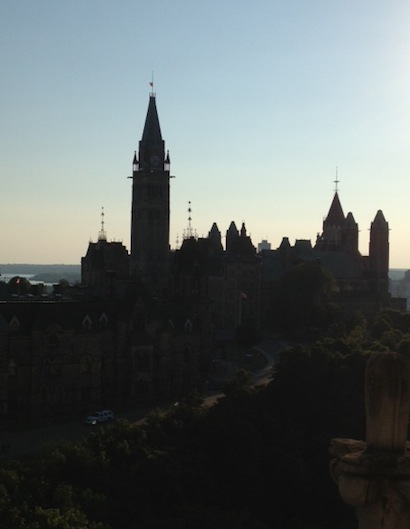
On June 18th, the House of Commons adjourned, setting the stage for an election campaign that will end the 41st session of Parliament. This is an appropriate time to look back on the past four years and see what was accomplished, especially through the lens of ARPA Canada and the issues that we focus on.

Pre-born Human Rights:

When the Conservatives were handed a majority in the last federal election, many Christians hoped that pre-born human rights would finally be addressed. These hopes were in vain. Although some courageous MPs stood up for the pre-born, the leadership of all the political parties in the House of Commons did their utmost to suppress these efforts.  

Motion 312, championed by MP Stephen Woodworth, was the first motion that held promise. It asked that “a special committee of the House of Commons be appointed and directed to review the declaration in Subsection 223(1) of the Criminal Code of Canada which states that a child becomes a human being only at the moment of complete birth.” Local ARPA chapters hosted presentations by Mr. Woodworth on this motion and many ARPA supporters encouraged MPs to support it. But with the party leaders all vocally opposed, the motion died in the House by a vote of 203 to 91. Yet Motion 312 reignited a discussion that was quiet for too long. Momentum for addressing this injustice was building.

(more…)

The plans for the new Toronto casino have crumbled in a pretty spectacular way. In a crushing defeat, the Toronto casino was sent to the dustbin of history with a vote of 38-6! What is most impressive about the story is that grassroots Canadians are credited with making it happen. Regular Canadians, worried about the health of families, concerned about the ability of small and mid-size businesses being able to compete with casinos and disgusted by the cruelty of governments making incredible sums of money off of addicts, these Canadians took the time to let their councillors know, they took the time to call or write, they took the time to engage in municipal hearings, to engage the media and to learn to speak about the issue intelligently. And they won! Together with councillors like Mike Layton, who heard their concerns, the casino was halted. (Read the National Post story here)

Now with Toronto out of the game, the big casino lobby (they are big and they have lots of money!) will turn their attention to other areas: Hamilton, Ottawa, Kitchener and other places. But we can win there too! And we can take this fight to the province as well, telling our MPPs and Premier that the government should not be in the business of bookies, profiteers, hustlers, and swindlers. They should focus on a failing health system, a broken public education system, and a lethargic justice system, not the casino business.

This week, ARPA Canada sent a letter to Toronto’s Mayor Rob Ford and the 44 councillors urging them to reconsider the Mayor’s position on building a casino in the downtown core. Mr. Ford is on record as advocating for the casino as a financial saviour of the city. Sadly, he has dismissed outright many of the social scientific evidence that demonstrates the incredible costs to the city in law enforcement and lost revenue for small and mid-size business as well as the heavy toll on addiction services and the losses to familes and employers because of gambling addictions. Thankfully many of the councillors have been receptive to our position. Check out our letter attached, and consider sending a note to Mr. Ford encouraging him to rethink his position. 

In a troubling twist of process, Bill C-290, the sports-betting bill, has passed from the House of Commons into the Senate without a standing vote. This Bill seeks to legalize single-sport betting in Canada. For many reasons, including the inefficient use of government funds for revenue generation, the social ills it causes (including 200 suicides a year!), the undermining of the integrity of sport, and the dubious democratic process employed in this instance, we all need to urge the Senate to exercise their role as the Chamber of Sober Second Thought, and to stop the passage of Bill C-290. This is urgent – the Senate is almost done with the bill! We’ve made it easy to do. Just click on read more for a sample letter and the contact information for the Senators in your province. For more background, read this excellent op-ed by Member of Parliament Michael Chong as well as this article and letter to Ottawa City Council.

(more…)

The City of Ottawa recently sent a letter to the Ontario Lottery and Gaming Corporation (OLG), expressing interest in becoming a host city to a large gaming entertainment centre (read: casino). You can learn more about that story here. We were happy to hear that at least some councillors were hesitant about the idea, expressing concern over the social welfare of the city. ARPA Canada drafted a letter to Mayor Jim Watson and the 23 councillors outlining the risks and hidden costs of such a project and urging caution. Often overlooked, the costs to public health and public security far outweigh any economic benefit such a project can bring to a city. Check out the letter below, and if you’re from Ottawa or the surrounding area, we encourage you to contact the mayor and your councillor and urge them to rethink their interest in this project. The mayor’s contact information can be found here and your councillor’s contact information can be found here.

ARPA Note: Be sure to check out a witty new poem by ARPA reader Mr. A Blokhuis that speaks to this exact issue: Spin the Wheel, Suckers!

By Derek Miedema, Researcher, Institute of Marriage and Family Canada, March 21 2012: Who is Canada’s biggest gambling addict? As it turns out, our provincial governments. When times get hard, with deficits growing and debt piling up, governments turn to gambling to take up the slack. When regular folks overspend and go over budget, the usual response is not to open up a larger line of credit. Not so with governments. Not satisfied with high levels of taxation, and overspending at every turn, gambling took an average of $534 for every adult Canadian adult in 2011—money given directly to provincial coffers.

(more…)

By Derek Miedema, Institute of Marriage and Family Canada: Gambling in Canada is big business. Statistics Canada reports that gambling brought in over $13 billion in revenue in 2008.1 The decisions of British Columbia, Ontario, Quebec and the Atlantic provinces to allow government-sanctioned online gambling are a sign that governments still want more…The purpose of this paper is to bring to light the negative effects of gambling on the families of Canadian problem gamblers. Read the report here.

National Post, July 16, 2010: The government of British Columbia has just launched an online gambling website, the first government-sanctioned online casino. The B.C. Lottery Corporation will offer 75 casino-style games for the website Playnow.com. There will be bingo, the ability to purchase lottery tickets, betting on sporting events, and all the usual games, like blackjack, roulette and poker. How this sits with the government’s mandate to enforce “responsible gambling” remains to be seen. [Read more here.]

The Globe & Mail is running a series on gambling and its first two articles reveal some staggering statistics about the harm of the gaming industry in Canada. Click here to read “Casinos spend millions to make losers feel like winners” and click here to read “The million dollar club: losing big, losing often.” Gambling is taking an increasingly large toll on the well-being of Canadians, destroying families and hurting communities. We need to be a voice in our communities to keep casinos and gaming centres away.

By Gary Mason, Globe and Mail, August 24, 2009: In government, one never says never. Which is why politicians should always be careful about proclaiming war on potential revenue streams.

A couple of years ago, the minister in charge of policing in B.C. said he was out to eradicate online gambling. But then one day, Rich Coleman switched portfolios and was suddenly overseeing gaming, a huge government revenue producer. [Continue reading this article here.]