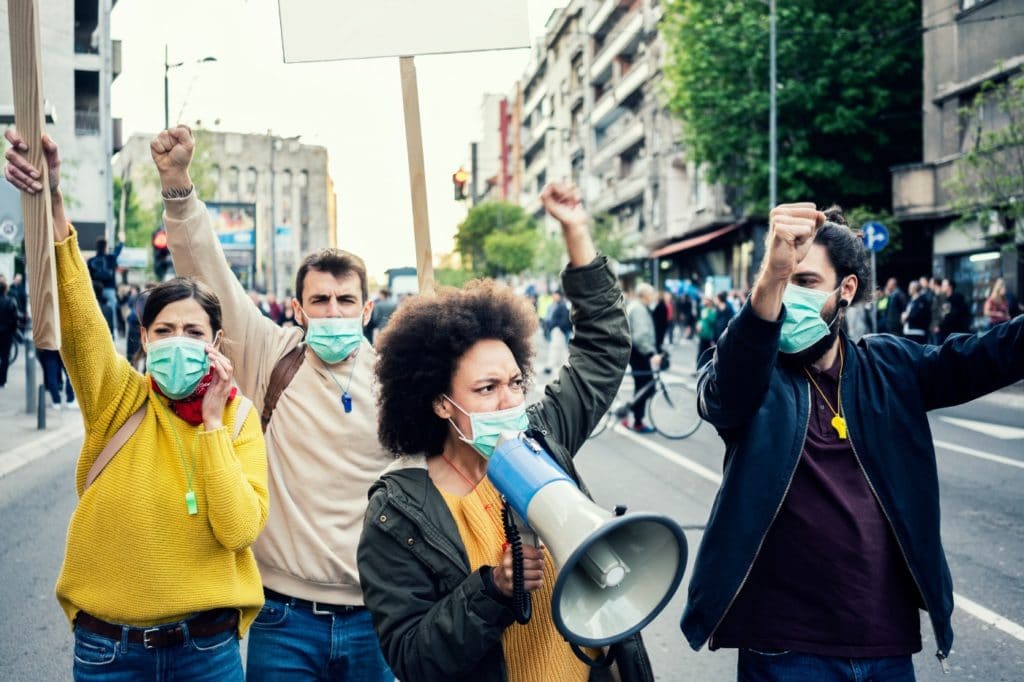
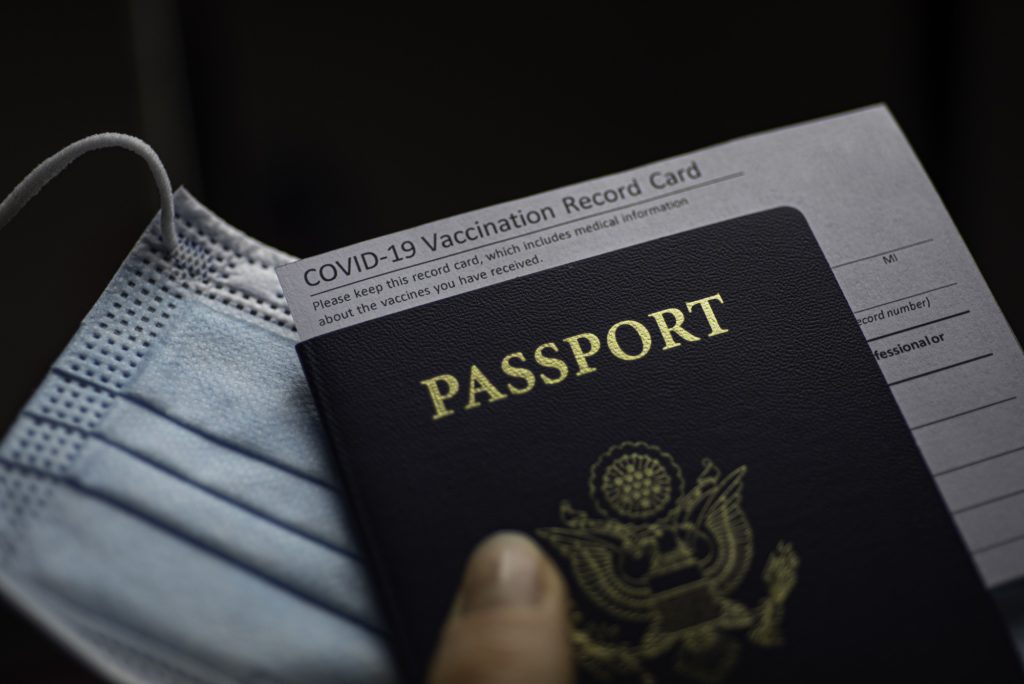
Randy Hillier, a former Progressive Conservative and then independent MPP, was a prominent critic of COVID-era lockdowns, mask mandates, and vaccine passports. In 2021, Hillier attended and helped organize several outdoor gatherings to protest such policies.  

Consequently, Hillier was charged with two provincial offences under the (somewhat ironically named) Reopening Ontario Act. He faced a penalty of between $10,000 to $100,000 and up to a year of prison. 

But Hillier challenged the constitutionality of the specific regulation under the Act that he was charged with violating. That regulation did not allow outdoor gatherings of any size at all, although it allowed very small indoor or outdoor gatherings for weddings, funerals, and religious worship services. 

Hillier contended that the regulation violated his freedom of peaceful assembly under section 2(c) of the Canadian Charter of Rights and Freedoms. Unlike most COVID court cases, Hillier’s case was exclusively about freedom of assembly. 

The lower court upheld the regulation. Last week, a unanimous Court of Appeal ruling overturned that ruling and declared the regulation to be constitutionally invalid. This is the first major court ruling that found COVID-era restrictions on gatherings unconstitutional. Every other ruling – including the three cases that ARPA intervened in in British Columbia, Manitoba, and Ontario regarding worship services – had upheld the bans on gathering. 

Court of Appeal overturns lower court ruling 

Justice Lauwers, for a unanimous Court of Appeal, distinguished this case from the failed challenges to strict size limits on worship gatherings, noting that “while Ontario tailored restrictions on religious gatherings to facilitate freedom of religion, no such tailoring was performed to facilitate the right to peacefully assemble.” 

The Court concluded that there was no evidence that the government had even considered making any exceptions to its general gatherings ban to allow for some form of limited, peaceful assemblies and political protests. “The effect of the ban in this case was to stifle assembly aimed at expressing collective opposition to the ban itself.” 

Justice Lauwers noted that there is little case law on freedom of assembly, as constitutional cases involving assemblies are often litigated primarily on other grounds – especially freedom of religion, expression, and association. Consequently, the Court relied heavily on academic commentary on freedom of assembly rather than on court precedents. 

The purposes of freedom of assembly 

But freedom of assembly is important in its own right. “[T]he point in setting the right of assembly apart from [expression] and [association] is the assembly itself,” the judgment says, quoting a recent essay on freedom of assembly by Professor Jamie Cameron. “Put another way, the assembly is, in its own right, ‘the constitutional event’.” 

Given the lack of precedent, the judgment relies extensively on Professor Cameron’s analysis of what freedom of assembly requires, as well as Professor Richard Moon’s.  

The Court considers the underlying purposes of freedom of assembly, noting that assembly “can advance the democratic goals of ‘self-government, truth seeking, and self-realization’” and can “empower unheard, marginalized voices.” A public assembly can “leverage a message of protest or dissent, forcing the community to pay attention and become involved in redressing grievances.” 

The Court also highlighted several points from Professor Richard Moon’s commentary on freedom of assembly. Notably, “a demonstration is an act of solidarity […] but also [a] collective act of expression.” Protests may “help overcome the fragmentation of public discourse,” and “[give] a sense of presence, and connection with others, that is lacking in mediated forms of communication.” Also, Moon writes, protests “can make visible the extent and depth of support for a position.” 

Freedom of assembly protects both the act of assembling together in a physical location and the activities related to achieving that, such as planning for and publicizing the gathering, and travelling to and from the assembly. Further, digital connectivity and virtual meetings may complement but do not replace participation in physical public assemblies. 

Ontario government failed to enact proportional gatherings limit 

The Court found that the government had failed to consider whether there were less restrictive means of achieving its legislative goal of minimizing the spread of COVID. Put another way, the government failed to consider if there were forms of limited public protest that could be permitted without unacceptable risk of viral spread. At the same time, the government had come up with tailored (albeit very restrictive) policies for other activities, such as shopping for essentials, or gathering for a funeral or a worship service.  

Justice Lauwers goes on to conduct a “proportionality analysis,” as required by Supreme Court of Canada precedent. This analysis requires judges to weigh the “deleterious effects” on a Charter right or freedom against the “salutary effects” of the law or government decision being challenged in court. In other words, did the benefits of the policy outweigh the costs? 

Before answering this question, Justice Lauwers notes, “The core problem with [determining] proportionality is that the detriments to be suffered by individuals and groups in any case […], on the one hand, and the benefits that accrue to the common good, on the other, are usually incommensurable.” By “incommensurable,” he means: “There is no common basis, common denominator or common measure for evaluating and balancing the competing claims of the individuals and groups negatively affected by a law or decision, against any benefits to the common good.” 

It is heartening to see judges acknowledge this problem, since the “proportionality” analysis can easily be used to disguise judicial policy or political biases. Still, this is the approach prescribed by the Supreme Court, so Justice Lauwers does his best. He highlights that “there is no evidence as to the increase in risk posed by the outdoor protests in which Mr. Hillier participated.” The onus was on the government of Ontario to show that allowing any outdoor protests of any size posed a significant risk. It failed to do so. 

Takeaways 

First, this is a personal win for Randy Hillier. Unless the government appeals, Hillier will be free from the threat of penalties, as the regulation he is charged with breaching has been declared void. 

Second, the restrictions on peaceful assembly are no longer in force, so this ruling didn’t strike down any law. But it forms an important precedent that should give governments pause before completely banning a constitutionally protected activity, even temporarily.  

Finally, we congratulate our friends at Christian Legal Fellowship for publishing the 2022 essay collection about protecting Charter freedoms that included Professor Cameron’s essay, mentioned above, which proved to be of great assistance to the court.   

You’d be hard pressed to find a topic that has been discussed more in the last year than vaccine mandates. As we were heading into the summer of 2021, the federal and provincial governments were debating whether to enact vaccination requirements. Most provinces brought in a mandate of some sort by late summer/early fall. The federal government was the last jurisdiction to enact their mandatory vaccination policies, in the late fall.

Last summer, ARPA Canada took the position that Coercive Vaccine Mandates Are Bad Public Policy. In the months following these mandates we have witnessed what is arguably the most divisive time in our nation’s history. This was predicted in our article where we wrote: “Forcing citizens into decisions, particularly a decision that directly impacts what they put into their bodies, is likely to further anger and alienate those who were hesitant or outright resistant.” At this point, most mandates have been removed or, in the case of the federal government, suspended, but the fallout of these terrible policies will be felt for some time.

One response we’re seeing is attempts to pass legislation that would limit the federal government’s ability to enact these types of heavy-handed policies moving forward. On June 2nd, Conservative leadership candidate MP Pierre Poilievre tabled Bill C-278, The Prevention of Government Imposed Vaccination Mandates Act. The bill proposes changes to the Financial Administration, Aeronautics, Railway Safety and Canada Shipping Acts, as well as the Canada Labour Code. In his speech to introduce the bill, Poilievre said, “This bill would ban the government from imposing vaccine mandates as a condition of travel or employment. If the bill passes, the government would no longer be able to require federal workers to get vaccinated in order to keep their paycheques and jobs. It would also ban the federal government from requiring vaccines in order for people to travel. In other words, it would allow all Canadians, regardless of their personal medical decisions, to continue to work in the federal sector or travel on trains, planes and other federally regulated modes of transportation, regardless of whether they are vaccinated.”

On June 15, Niagara West MP Dean Allison introduced Bill C-285, the Medical Freedom Act. Allison introduced the bill with these words, “The bill would amend the Canadian Human Rights Act to add conscientious belief and medical history to the list of prohibited grounds of discrimination. The bill seeks to protect travelers from being banned because of their medical status. It would protect employees from reprisals by their employers because of a medical choice. The bill would also safeguard employees’ EI benefits in the event that they are let go because of a medical decision they made for themselves.”

Both bills, if passed, would make changes to the Canada Labour Code in an effort to add protections for Canadian workers specifically as it pertains to Covid-19 vaccinations. One significant difference between the two bills is that Bill C-278 only refers to Covid-19 vaccinations, whereas Bill C-285 is much broader in its addition of conscientious belief and medical history as protected grounds in the Human Rights Code.

It’s positive to see bills being brought forward in response to the divisive vaccinate mandates and proof of vaccination policies. The House of Commons has risen for its summer break, so these bills won’t be addressed any further until the fall. But stay tuned for grassroots activity on these bills in the fall. In the meantime, you can still get in touch with your own MP and encourage him or her to support these bills when the time comes.

Without a doubt, the courts that have had the most work navigating Covid-19 are our family law courts. Whether it was one parent intending to leave the Atlantic bubble, a situation where one parent was in a polyamorous relationship trying to figure out how many households were involved, decisions around schooling and so much more. Most recently, courts have been grappling with what to do about parents who disagree over whether children should be vaccinated or not.

Justice Pazaratz heard just such a case on February 18th in Ontario dealing with a shared custody situation with three children ages 14, 12, and 10. The eldest child chose to be vaccinated with the support of both parents. The younger two, however, have not been vaccinated and do not want to be. The father wants the court to order them vaccinated and the mother opposes this.

Justice Pazaratz is concerned with our culture

The reason I wanted to draw your attention to this case, however, is not because of how the judge resolves the case, but because of the way he addresses the broader conversations we are having as a culture. You see the father in arguing his case accuses the mother of supporting the People’s Party of Canada, perpetuating Covid-related conspiracy theories and vaccine hesitancy, and sharing views questioning the efficacy of the government’s Covid-19 policies. And he gives these as reasons why she shouldn’t be the decision-maker.

Justice Pazaratz was not impressed with these arguments, saying: “How is any of this relevant? Have we reached the stage where parental rights are going to be decided based on what political party you belong to?… Can you simply utter the words ‘conspiracy theorist’ and do a mic drop?”

This is a court of law, not the court of public opinion

He goes on obviously unimpressed with the tact taken by the father and concerned about the broader cultural trends including in the courts, “We’re seeing more and more of this type of intolerance, vilification and dismissive character assassination in family court.  Presumably, we’re seeing it inside the courtroom because it’s rampant outside the courtroom.  It now appears to be socially acceptable to denounce, punish and banish anyone who doesn’t agree with you. A chilling example: I recently had a case where a mother tried to cut off an equal-time father’s contact with his children, primarily because he was ’promoting anti-government beliefs.’ And in Communist China, that request would likely have been granted. But this is Canada and our judicial system has an obligation to keep it Canada.”

Justice Pazaratz makes it clear: the important factor is not the parent’s political affiliation or beliefs, but the best interests of the child. And labelling something as a conspiracy theory or misinformation is not a shortcut to avoid dealing with the information presented. For example, one of the documents put forward by the mother was a fact sheet from Pfizer. Hardly a fringe source. Should it be dismissed just because it doesn’t support the father’s beliefs?

A lesson to us all: listen

This is the crux of why I think this decision is so interesting. We live in a time where we dismiss people before even hearing their reasons. This was on display over the past few weeks when our Prime Minister refused to listen to the convoy, but instead persisted in mischaracterizing them as racists, misogynists, and the like. With leadership like that, it’s hardly surprising that we see this play out all across the country.

But this approach ignores the actual people – image-bearers of God and worthy of respect. And is it not effective at drawing people into real unity and harmony as a country. Such an approach, whether by our Prime Minister or in the courts doesn’t lead to justice and harmony, but to division and oppression.

And it’s lazy. As Justice Pazaratz says so well: “is ‘misinformation’ even a real word? Or has it become a crass, self-serving tool to pre-empt scrutiny and discredit your opponent? To de-legitimize questions and strategically avoid giving answers.  Blanket denials are almost never acceptable in our adversarial system.  Each party always has the onus to prove their case and yet ‘misinformation’ has crept into the court lexicon.  A childish – but sinister – way of saying ‘You’re so wrong, I don’t even have to explain why you’re wrong.’”

We’re all called to treat people better. Whether they are our brothers and sisters, our neighbours, people on social media, or parents in a legal matter. We would all do well to take Justice Pazaratz’s challenge to heart.

And, in case you were wondering, Justice Pazaratz concludes: “It’s irrelevant to my decision and it’s none of anyone’s business. But I am fully vaccinated. My choice. I mention this because I am acutely aware of how polarized the world has become. We should all return to discussing the issues rather than making presumptions about one another.”

It’s not a hard decision to read through and I’d recommend it. You can find it here.

Tabitha Ewert serves as the legal counsel for WNAL and ARPA Canada

Valentine’s Day is an opportunity to celebrate relationships. Usually, those relationships are between boyfriends and girlfriends, husbands and wives. But this Valentine’s Day, Justin Trudeau celebrated a different relationship: his family’s historic love/hate relationship with the rights and freedoms of Canadian citizens.

Back in 1982, the crowning achievement of Pierre Elliot Trudeau’s tenure as Prime Minister was the enshrining of the Canadian Charter of Rights and Freedoms in the Canadian constitution. Apparently, Pierre Trudeau thought that the Canadian Bill of Rights, passed by one of his predecessors a couple of decades earlier, did not adequately protect the rights of Canadians.

And, judging by Pierre Trudeau’s own actions, he was right. He himself had trampled the rights and freedoms of Canadians underfoot when he enacted the War Measures Act in response to the FLQ crisis when a Quebecois separatist group (the Front de Libération du Québec) kidnapped two politicians (Deputy Premier Pierre Laporte and British diplomat James Cross). When asked how far he would go to address the FLQ crisis, he famously said, “Just watch me.”

And watch Canadians did. Trudeau invoked the War Measures Act, the first and only time that it was invoked during peacetime. This War Measures Act enabled the federal government to arbitrarily censor virtually all means of communication, arrest and detain citizens, control the movements of naval vessels, dictate the transportation of persons or things, and appropriate private property.

Some at the time (and many more since) criticized Trudeau for his disproportionate use of force and his suspension of civil liberties. Tommy Douglas, the leader of the federal NDP at the time, remarked that “the government, I submit, is using a sledgehammer to crack a peanut.” One RCMP officer testifying about the affair likened the use of the War Measures Act to quell the FLQ crisis to using “an atomic bomb for a riot on St. Catherine Street.” Richard Gwyn, one of Trudeau’s biographers, opines that “Trudeau smeared irredeemably his reputation as a champion of civil liberties. No other prime minister has been so severely criticized for crushing civil liberties.”

Fast forward half a century. Justin Trudeau campaigns in his first election that he will “ensure that Canadians are not limited from lawful protests and advocacy.” By his third election, he’s running on a platform that mentions “rights” 69 times. Not quite the same as entrenching civil rights into the Canadian constitution, but still a respectable commitment to his father’s legacy.

And then on Monday, Justin Trudeau follows his father’s footsteps in a much less admirable way by invoking the Emergency Measures Act (an updated version of the War Measures Act). Just like his father, Justin Trudeau is the first to use this legislation in peacetime. Just like his father, Justin Trudeau is abrogating the rights of many to address the actions of a few. Just like his father, Justin Trudeau is using a sledgehammer to crack a peanut.

This week’s emergency declaration is arguably harder to justify. Back in 1970, Pierre Trudeau was responding to a quasi-terrorist group that had detonated hundreds of bombs, kidnapped two prominent politicians, and even executed one of their hostages. Even if Trudeau overreacted, demonstrable violence had broken out and a swift response was needed.

But in 2022, there is no violence to speak of. Canada Unity hasn’t detonated bombs around Ottawa. No one has been kidnapped. A mob hasn’t stampeded through Parliament. The vast majority of protestors around the country aren’t breaking the law or, if they are, they are breaking relatively minor laws like obstructing traffic or parking illegally. There may indeed be a good reason to remove the protestors for any “mildly” illegal activity that is going on but invoking the nuclear Emergency Measures Act is a grossly disproportionate response.

Justin Trudeau seems to have finally broken up with the Charter of Rights and Freedoms. The bigger question now is: what’s his new crush?

Levi Minderhoud is the British Columbia Manager for the Association for Reformed Political Action (ARPA) Canada.

Suffering is part of life. It comes in many shapes and forms, and we will all experience it in one way or another. It is painfully obvious that mandatory vaccines for COViD-19 have brought all manner of trial and suffering directly into the lives of Canadians. In my work, I hear the stories daily. Some of them are gut-wrenching. Spouses unable to visit their dying husband or wife in the hospital because they haven’t been vaccinated. Families unable to connect with loved ones because of the prohibitions on travel for the unvaccinated. Work and school opportunities missed or lost altogether because of mandatory vaccine policies. Regardless of what you think about the efficacy of the COViD-19 vaccine, there is no disputing that mandatory policies have impacted many, many people and brought trials and suffering into their lives.

A Right Response

The first response to this suffering is to call on the name of the Lord and plead for His mercy as we endure vaccine mandates alongside many other government regulations. Both personal and corporate prayer are crucial aspects of our response. But there is more to do. We have the ability in Canada to directly correspond (in many ways) with those in authority over us. We can set up meetings, have phone calls, and engage in email conversations with most of the people serving in provincial or federal legislatures. In addition to direct communication, we can also engage in indirect efforts such as petition and letter-writing campaigns.

We can also protest. ARPA Canada has been organizing lawful public demonstrations for over a decade. We believe these are an effective way to find support from like-minded people as well as educate your fellow citizens as you bring attention to the suffering that you or another vulnerable group are enduring. In short, when suffering is experienced as the result of government action (or inaction) we are not called to simply endure and do nothing about it. Rather, while our response to those God has put in authority over us needs to be respectful, it can still be persistent and incessant.

The Result

In the past week, some provinces have removed (or committed to remove) the mandatory vaccine provision, while others, including the federal government, seem insistent on keeping this policy in place for some time yet. In my home province of British Columbia, the government just last week expanded the mandatory vaccine policy to include all health care professionals that had not been covered by it yet, including chiropractors, dentists, midwives, and acupuncturists. Clearly, respectful, forms of engagement with our government have not produced the desired result. Nothing seems to change. It’s as if the government isn’t hearing us and doesn’t care about the impact of restrictions on our lives.

A Wrong Response

Not experiencing the result that we want could be a reason to alter our response. The people of Israel did this repeatedly. We read in Isaiah 40 that they responded to suffering by saying, “My way is hidden from the Lord, and my right hand is disregarded by my God.” In their misery and suffering, they were sure that God had forgotten about them. That is why we read of the Israelites struggling with idol worship so often, the most well-known instance being their experience with the golden calf after the exodus.

We have a tendency to act just like the Israelites when things don’t go our way. But taking matters into our own hands is not a God-honouring response to suffering. At worst this models a distrust of our Father in heaven who has promised that all things work to the good of those who love Him (Rom.8:28) and it calls into question the doctrine of the sovereignty of God, as though somehow the mandatory vaccine policies could not be part of His plan and it is now up to us to adjust the plan so it aligns with what must be His actual will.

Wrestling deeply with God’s sovereignty and will is good, but not when it pulls us away from a right response to suffering. The consequences of a flawed response to mandatory vaccine policies are resulting in Christians engaging in and supporting many forms of unlawful activity as they seek to have these policies overturned. A convoy that drives down city streets from time to time is completely defensible from a Biblical worldview perspective. It expresses respectful disappointment with the status quo and asks for, but does not mandate, change. Parking trucks on that same street (whether in Ottawa or in front of an international border crossing) until the magistrate gives in to your demands is not a right response. God wants us to engage with our authorities. After all, we are all prophets and prophetesses (LD 12 of the Heidelberg Catechism) and we need to express the truth as it relates to the public square; this is part of our calling. But when that isn’t responded to favourably, we ought not to resort to unbiblical forms of communication.

The Sovereignty and Will of God

Two years of COViD-19 has brought incredible suffering. Thousands of lives have been lost. And now thousands more are being impacted by mandatory vaccine policies that seem ineffective and unnecessary. At times we wonder where God is in all this. In truth, we don’t know why God has brought this suffering, and we don’t have to know. We won’t have to answer for what those in authority have decided to do. But we will have to answer for how we respond.  

At the end of the day, we are called to rest our heads on the pillow of God’s sovereignty.* In doing so we are participating in an act of submission; submitting to the trials that God puts on our paths and growing in holiness through it.

Could it be that in God’s sovereign plan mandatory vaccinations are just a continuation of a lot more tyrannical policies that lead to an increase in trials and suffering? Yes, and we need to accept that and grow closer to God through this suffering.

Does this mean we adopt a passive posture? Absolutely not.

Does this mean we adopt a militant posture? Absolutely not.

We need to respond in God-glorifying ways that don’t employ the same coercive, divisive tactics that are being used on us. We need to recognize the sovereignty of God in the suffering that mandatory vaccine policies have brought. It is His work, and we are called to humbly embrace the uncomfortable work of God.

As Christians, our response to suffering needs to be rooted in the sufferings of Jesus.

In the second chapter of 1 Peter, we read these words, “For to this you have been called, because Christ also suffered for you, leaving you an example, so that you might follow in his steps. He committed no sin, neither was deceit found in his mouth. When he was reviled, he did not revile in return; when he suffered, he did not threaten, but continued entrusting himself to him who judges justly.”

Christ-like Christian love is profoundly countercultural. It is a love that is patient and kind, that does not insist on its own way (1 Corinthians 13). In all our suffering we are called to look to Jesus, not only for how He saves us, but also as He guides us in how we are to respond to suffering.  Like Jesus, we can confidently turn to and lean on the unchanging God who always judges justly.

*The phrase “pillow of God’s sovereignty” was used in a congregational prayer by a guest pastor when praying for my son Markus who is fighting cancer.

Mike Schouten is the Director of Advocacy for ARPA Canada.

The Freedom Convoy rolling into Ottawa at this very minute has attracted the attention of hundreds of thousands of Canadians, including Reformed Christians. Started by truckers to protest the federal government’s mandate that truckers must be fully vaccinated to cross the border, this protest – like virtually every large demonstration – has attracted people with a wide variety of goals and plans to achieve those goals.

The common thread for this convoy, though, is freedom. Within Christian circles, freedom is almost always considered to be positive. But freedom, popularly defined as the ability to do what we want, is neither good nor bad. Freedom understood this way allows people to act upon the desires of their hearts, desires which may be sinful due to our depraved human nature or which may be good due to the sanctifying work of the Holy Spirit.

For example, people have a great deal of freedom to marry who they want in Canada. From a Christian perspective, this freedom is positive for Joe and Sally, a young Christian couple who wish to be married to each other in the LORD, but it is negative freedom for Adam and Steve, two men who desire to be married to each other by the state. Existing restrictions on the freedom of whom you can marry, such as the prohibition on incestuous or polygamous marriages, are positive restrictions according to Scripture.

This is because true freedom, in the words of Lord Acton, is not the freedom to do what we want, but the ability to do what we ought.

This is the lens through which Christians should consider the Freedom Convoy. Is the goal of this protest to agitate for the freedom to do whatever we want, or the freedom to do what we ought? Biblical “oughts” include attending corporate worship services, caring for the sick and the lonely, and working to provide for yourself, your family, and those in need.

Freedom “wants” might include going to movie theatres or restaurants without having to be vaccinated or wearing a mask. In these instances, it is good to check our hearts for our motives. Are we genuinely concerned the government is overstepping its biblically-mandated authority? Or are we just really wanting to go grab a burger or watch Spiderman: No Way Home? In other words, are we acting according to the God-given pattern for society or the self-given pattern for our own life?

Participants in the Freedom Convoy are advocating for all of the above: the ability to do what we ought to do, the ability to do what we want, and perhaps even the ability to do what we ought not to do. From what I can tell, the general purpose of the convoy – to protest lockdowns and vaccine mandates generally – is to primarily defend the ability to do as we ought, with a lot of freedom of as we want thrown in too. Unfortunately, there is no way to separate the efforts to preserve the freedom to do what we ought from the efforts to regain the ability to do what we want, or even what we ought not to do. It’s simply not possible for the rest of the world to realize that an individual might stand for certain truths represented by this movement but are skeptical of its other goals.

This is where our presence matters. In a world when political movements and political parties and political figures are a mixture of good and bad, it will be very rare that we will be able to be 100% behind a movement, party, or person. But too often our solution is to sit on the sidelines instead of actively trying to shape the future for the better.

So, consider being a part of the Freedom Convoy and prayerfully help direct this energy for good rather than letting those with motivations that are not God-glorifying motives lead it. Support the call for governments to withdraw vaccine mandates and loosen lockdowns; refute the narrative that the government is trying to sterilize the people through vaccination. Participate in peaceful protest; deter those who would support violent protest. Let your speech be seasoned with salt and let your attitude reflect genuine respect for the authority God has placed over Canada; dissuade those chanting “f— Trudeau.”

Through it all, may our actions be guided not by a selfish desire to do whatever we want to do, but a godly desire to do what we ought to do.

The Ontario Legislature often returns from their summer break in mid-September and continues with the work they had started before the break. But, with the federal election in full swing this September, the government chose to prorogue the legislature (end the current session) and return on October 4th with a new session. So, following the extended break, with the provincial election in June 2022 coming into sight, the Ontario Legislature has been quite busy over the past month. Some of this activity is particularly worth noting.

Every new session of the Legislature begins with a speech from the throne. In the speech, where the government can share their priorities, the government once again emphasized the importance of prioritizing health and long-term care moving forward. The opposition is also keen to share their priorities leading up to the election and many of their private members’ bills also have a focus on health and long-term care. Over 35 bills have been introduced in the past few weeks. Some of these prioritize important policies which align with various recommendations in ARPA Canada’s recent elder care policy report. Others focus on more concerning policy options.

Long-Term Care

When a legislature is prorogued, all bills that have not been passed need to start the process over. This was the case with the More Than a Visitor Act. MPP Lisa Gretzky has re-introduced this bill which recognizes the value of care from family and friends for residents in a formal care setting. This bill, if passed, would allow designated caregivers to visit residents in congregate care settings, to provide physical and tangible support – even during a pandemic. The More Than a Visitor Act has been reintroduced as Bill 19. As when this bill was first introduced, we encourage you to send an EasyMail to your MPP in support of this legislation.

Another of ARPA’s elder care recommendations is that governments work with care homes to develop minimum staffing requirements for long-term care. Bill 14, the Time to Care Act, seeks to ensure that long-term care residents have at least four hours a day of nursing and personal support services. Last year, the government committed to having this in place by 2024-25 and shows the same priority in recent long-term care legislation. Last year, the Ontario Long-Term Care COVID-19 Commission also provided recommendations to the government, many of which were in line with ARPA Canada’s recommendations on Elder Care. Another private member’s bill, Bill 4, seeks to ensure that the Ontario government implements those recommendations and reports on the progress being made.

Vaccinations

Bill 6, the Jobs and Jabs Act, is another private member’s bill that many Ontarians have been paying attention to. This bill would prohibit employers from intimidating or dismissing employees based on their vaccination status or their refusal to disclose vaccination status. On the surface, the intent of the bill is helpful, with its desire to ensure that employees are not penalized based on their personal medical decisions. However, we also ought to be concerned when the government tells private businesses who they can and cannot fire. Because the legislature randomly draws ballots for when private members’ bills will be discussed, this bill will not be on the agenda for 2nd reading until March 2022.

Protests

There are also two different private members bills that seek to ban COVID-19 protests outside of hospitals and other health facilities. This is concerning because Ontarians should be allowed to protest if they choose, as long as they are not breaking existing laws around obstruction, trespassing, or other misbehaviours. You can read some further commentary on this topic here. If you are concerned about this, you can also send an EasyMail to your MPP here.  

Gender

Another bill of concern is Bill 17, the Gender Affirming Health Care Advisory Committee Act. This bill seeks to create an advisory committee that would make recommendations to the Minister of Health with regards to “improving access to and coverage for gender-affirming health care.” The bill goes on to define gender-affirming health care as “procedures, medical treatments and referral processes that align a patient’s body and physical presentation with their gender identity.” Recommendations from the committee would likely include things like improving access and coverage for procedures related to gender transition, expanding OHIP coverage for various sex-change treatments, and how to “define gender-affirming health care procedures as lifesaving procedures.”

Bill 17 explicitly promotes and normalizes sex-change surgeries and other medical procedures and treatments for gender dysphoria, instead of supporting body-affirming counselling for those who struggle with their gender and sexuality. The Gender Affirming Health Care Advisory Committee Act has already passed second reading with all-party support and has been forwarded to the Standing Committee on Social Policy for further study.

Stay Tuned

We mention just a few of the current bills on the Ontario agenda to look at some of the priorities that MPPs have been promoting with the return of the Legislature. We can continue to encourage our elected representatives to promote positive elder care, including prioritizing the involvement of family caregivers and ensuring adequate staffing ratios in long-term care homes. At the same time, we can point out areas of concern where our MPPs do not view the role of the government correctly, or where they have an improper understanding of healthcare and its purposes. As some of these bills progress, we will provide updates and action items as necessary.

In a concerning development, the government of New Brunswick, through its latest Covid-19 restrictions, now requires churches to choose one of two paths for corporate worship. One path requires churches to require proof of full vaccination for anyone who comes to worship and participate at the communion table.  If a church agrees to enforce a vaccine passport policy, then those who enter there are not required to physically distance, there are no capacity limits, and congregants can sing while masked. There is another path for churches who believe their congregation should not be segregated and refuse to require full proof of vaccination as a condition of corporate worship or to access the sacraments. For those churches, the rules prohibit singing, impose a 50% seating limit with social distancing, and require a fixed seating plan among other things. Similarly, Manitoba’s latest restrictions include this distinction: “Faith-based indoor gatherings have been reduced to 25 people or 33% capacity… faith-based gatherings can take place without restrictions for fully vaccinated people.”

These are the first instances we have seen in Canada where provincial governments are applying the Covid-19 vaccine passports to churches. We are grateful that no other provincial government to date has done so, but we are concerned other provinces may follow suit.

Imposing vaccine passports on worship services unnecessarily infringes on the separation of church and state

ARPA Canada believes that the civil government should not impose vaccine requirements on worship services nor require churches to impose vaccine requirements as a condition for attending worship. In a piece we recently released, we said:

“The civil government does not have authority from God to determine who comes to worship. The call to come is free and open to all. It is in corporate worship that the keys of the kingdom are clearly exercised: the preaching of the gospel (including through the administration of the sacraments) and church discipline. These keys are given to the church, not the state.”

Participating in gathered, assembled worship is the obligation of every individual at the call of the elders. It is not a permitted activity bestowed on the bride of Christ at the discretion of the civil government. The civil government is given authority by God to pursue public justice (Romans 13), but it is the church who holds the keys of the kingdom (Matthew 28:18-20) including determining when and in what manner worship is to take place. The church, then, “governs itself according to the pure Word of God, rejecting all things contrary to it and regarding Jesus Christ as the only Head.” (Belgic Confession, Article 29). That is, the church must recognize that it is Jesus as their head who determines who may come to worship – not the civil government.

We go on to say:

“There are Scriptural reasons and standards by which someone could be denied admission by church leaders. One reason relates to contagious diseases, but the standard for denying access to the assembly of God on the grounds of a contagious disease is set through careful consideration of a variety of scriptural principles by the church elders and not by the civil government.”

Ceding that authority to determine who may come to worship is a case of rendering unto Caesar what is God’s.

A choice that’s not really a meaningful choice

We can be thankful at least that New Brunswick and Manitoba are not imposing the vaccine passports directly on churches, treating the church and corporate worship like restaurants or movie theatres. Had provincial governments picked this route, the issue would be much more clear-cut. Instead, these provincial governments have given churches the choice between vaccine passports and very few restrictions or no vaccine passports with much greater restrictions.

It should be noted that the choice offered to churches isn’t really a meaningful choice at all. As one Christian nurse put it, the church is the emergency room for the soul. And just like the ER at the hospital where she works accepts all patients who need help, whether they are smokers or obese or unvaccinated, so the church needs to tend to the souls of all who come to the door for help, whether they are vaccinated or not.

Even if 100% of their members are vaccinated, a church that does not verify vaccination status and is open to guests who may possibly be unvaccinated would be stuck in the “unvaccinated” category with severe restrictions on corporate worship. This doesn’t mean their worship service is filled with unvaccinated people. Rather, the worship service would be comprised of people whose vaccine status is simply unknown. And the likelihood that 100% of the members of a church are vaccinated is very slim anyway. The unity of the church, particularly manifest at the Lord’s Supper table and experienced in corporate worship, has a very low tolerance for segregation. Any separation must be rooted in Scriptural principles.

We encourage a response

We are encouraged to see many provinces refraining from imposing vaccine passports on churches. British Columbia, which had treated churches very poorly from November to May, is now treating churches with much more respect. That’s worth acknowledging and applauding. And this is due, in part, to Christian leaders (and others) carefully, thoughtfully engaging with political leaders behind the scenes in that province. Praise God for listening ears! So far, Alberta and Ontario seem reluctant to impose a vaccine mandate on churches as well. But we shouldn’t just assume it will stay this way.

ARPA staff have heard about many churches already writing to provincial leaders, thanking them for not applying the vaccines to churches and urging the provinces to hold the line on this. This is great news! Being proactive against divisive policies is necessary. The social and spiritual health and unity of local communities – including religious communities – have profound public health benefits. The healthier and more united churches are, the more these churches can bless the communities in which God has placed them.

Whether you’re an office-bearer or not, you should speak up on this issue in encouraging and winsome ways. We have seen over the past 18 months a consistent lack of understanding by our culture of the role of the church. Rather than wait for more problems to develop, this is a key time to enlighten our government of what the church is, what worship is, and why vaccine passports are an unacceptable policy. This is also a good time to offer prayer and encouragement to these representatives during this very difficult time. Combining your request with a token of appreciation (like a bouquet of flowers or a large collection of cards and coloured pictures from young children in the congregation) can go a long way to building a mutually respectful relationship with a local member of your provincial legislature.

We communicate with our governments in the knowledge that He who sits enthroned in heaven is in control and actively working on our behalf. And so, as you undoubtedly already do, continue to practice the exhortation of Paul “that supplications, prayers, intercessions, and thanksgivings be made for all people, for kings and all who are in high positions, that we may lead a peaceful and quiet life, godly and dignified in every way.  This is good, and it is pleasing in the sight of God our Savior” (I Tim 2:1-3).

May we continue to have the freedom to worship our God according to His Word, and may the unity and courage of the bride of Christ be a witness to our country of the sure hope we have.

Last week, the province of Quebec passed a law making it illegal to participate in a protest relating to the COVID-19 pandemic within 50 meters of a COVID-19 testing or vaccination site, health or social services institution, or an education or child care facility. The law even forbids someone from inciting anyone to organize such a demonstration. Other provinces – such as the government of British Columbia and the official opposition and a private member in Ontario – and even the federal government are contemplating issuing similar laws.

These proposals have arisen after a number of demonstrations outside schools and hospitals took place across the country, many of which were organized by nurses to demonstrate their support for fellow health care workers’ choice not to be vaccinated. Some of these demonstrations made it difficult for ambulances and other vehicles to access the hospital. One school in British Columbia locked down after protesters entered the school.

Such protest-free “bubble zones” that regulate speech and expression in a particular area are not new. British Columbia, Ontario, Quebec, Alberta, and Nova Scotia all have legislation that forbids pro-life expression or even offering information about abortion within certain parameters around abortion clinics, hospitals, or doctors’ offices. Politicians at the time justified the legislation as necessary to prevent extreme actions against abortion doctors or women on their way to the abortion clinic, even though harassment, assault, and other apparent concerns were already illegal. We oppose these laws as disproportionate infringements on freedom of expression, and there is currently an ongoing constitutional challenge of the Ontario law waiting for trial.

In the wake of increasing calls for protest-free zones in relation to COVID-19, here are a few suggestions for legislators, law enforcement, and protestors.

Legislators – Don’t Do It

Legislators should resist the temptation to prohibit all COVID-related protests, even if it is a politically popular choice. The right of peaceful assembly, including the right to protest, is a fundamental political freedom that should not be infringed upon lightly. Throughout Canadian history – and, indeed, Western history – protests like the Winnipeg General Strike and the On to Ottawa Trek have been pivotal avenues for social and political change.

We can make a distinction between restrictions on gatherings that target the content or subject matter of the gathering as opposed to the place or manner of the demonstration. For example, noise by-laws impact the manner in which protests are conducted regardless of the content of the message. Bubble zone laws, on the other hand, specifically target the content of the speech, making it illegal to express disapproval of abortion or COVID policy. The latter is far more troubling and constitutionally suspect.

Also, all three levels of government should not equate the actions of one person or a small minority of people to an entire crowd. In many demonstrations, some people may indeed go too far, but governments should not assume that the actions of those individuals represent the intent of everyone else. Proposing and passing legislation that prohibits the freedom of peaceful assembly and democratic expression of everyone based on the actions of a handful of an unruly few, is a grossly disproportionate infringement of fundamental rights and a heavy-handed use of the law.

Applying these criteria to the demonstrations at hand, no level of government should forbid demonstrations just because they dislike the purpose of the protest, such as protests opposing mandatory vaccinations or promoting an alternate policy approach to handling COVID. We allow for lawful dissent on all sorts of policies. This is an important aspect of the way our democracy works. Demonstrators should be constitutionally free to present their case in the public square.

Law Enforcement – Enforce the Law

Instead of legislators creating new laws which specifically outlaw protests based on the subject matter, law enforcement should endeavour to enforce the existing laws governing general conduct around protests. Remember, the Charter right is to peaceful assembly, meaning assemblies that cause havoc aren’t given constitutional protection. If an anti-vaccination protestor illegally obstructs roadways, trespasses on private property, or assaults anyone, law enforcement should use reasonable means to try to enforce the laws on the books. Much of the impetus for laws outlawing COVID protests outside of hospitals or schools is fueled by the (alleged) misconduct of some demonstrators, more so than the content of their protest. Adding more laws that ban the same activities doesn’t aid the police.

This enforcement should not be applied selectively. Whenever demonstrations cross the threshold of legality, law enforcement should attempt to restore order. Otherwise, just laws become a mockery instead of carrying the weight they justly deserve. Whether COVID protestors impede access to a hospital, teachers on a labour strike block access to a school, climate activists block bridges, or members of First Nations block railways, it is incumbent on law enforcement to endeavour to enforce existing laws before the legislature try to craft new ones.

We fully recognize that there are complex assessments that go into crowd and riot control.  Throughout history, we have witnessed law enforcement use excessive force to break up rallies or detain criminals. Sometimes this squelches the problem, but sometimes it turns a disorderly protest into a violent riot. In other cases, excessive police action transforms illegitimate protestors into martyrs for their cause. There may also be times where the prudent thing for law enforcement to do is to remove a law-abiding person from a law-breaking protest or assembly. We pray that God might give law enforcement both the courage to enforce the law whenever possible, and the wisdom to know what intervention would be most effective.

Demonstrators – Be Winsome

And finally, demonstrators be winsome as you advance your cause. Political demonstrations are a key method of democratic expression, and these rallies are fueled by the zeal of the demonstrators. But if the desire is to persuade the public it is important to remember that your rally may detract from a cause because of the behaviour of some more radical protestors who attach themselves to your group. We also need to remember that we have responsibilities about how to behave as Christians that transcend the advancement of a political cause. So, here are some suggestions for how to successfully advance your cause as a Christian:

Conclusion

All of the points above can be summed up in one phrase, applicable to everyone: do the right thing with wisdom. Legislators, respect the important political and legal rights of your citizens. Law enforcement, endeavour to uphold the law. Demonstrators, model your behaviour to advance your cause.

There is no question that demonstrations are key forms of democratic, political expression that governments should be very hesitant to regulate. Protests are important in our religious history too; there is a reason why those who broke off from the Roman Catholic church were called protest-ants. But when we protest, where we protest, why we protest, and how we protest are all important considerations as we participate in democratic discourse together.

Several provincial governments have rolled out vaccine passports and/or require proof of vaccination against Covid-19 to attend events or enter “non-essential” spaces like gyms, restaurants, and theatres. Some provincial leaders have publicly mused about requiring proof of vaccination for church attendance. Both Manitoba and New Brunswick have developed a system where worship services have little or no restrictions if proof of vaccination is required. Alternatively, places of worship are required to operate at reduced capacity and implement increased restrictions if no proof of vaccination is required in those provinces. Federally, our prime minister is adamant that his government will require Covid-19 vaccination for federally regulated employees and for travel by plane or train. And many businesses, universities, and other government and non-government institutions are also requiring vaccination as a condition of employment or to be on their premises.

There are two separate policy issues here: vaccine passports and mandatory vaccines. Although distinct, they raise similar underlying concerns for us. ARPA Canada’s stance is that coercive vaccine mandates (directly as a condition of employment despite having bona fides reasons to not be vaccinated, for example, or indirectly though vaccine passports) are bad public policy. That conclusion, on its own, doesn’t determine whether we should submit to the policy. But we believe such a coercive policy does more harm than good and would be particularly wrong if imposed on churches. Let’s start with the issue of churches first.

Imposing vaccine mandates on churches is wrong

Elders of the church are given the authority and responsibility to call members of the local church together for corporate worship. When the people of God gather together, they are not segregated: there is neither Jew nor Greek, slave nor free, male nor female, but all are one in Christ Jesus (Colossians 3:11-17, see also 1 Corinthians 10:17). In other words, civil government does not have authority from God to determine who comes to worship. The call to come is free and open to all. It is in corporate worship that the keys of the kingdom are clearly exercised: the preaching of the gospel (including through the administration of the sacraments) and church discipline. These keys are given to the church, not the state. While the civil government may put reasonable limits on numbers within a building (fire codes, etc.) they cannot dictate the types of people who can gather for worship of God.

While the civil government may put reasonable limits on numbers within a building (fire codes, etc.) they cannot dictate the types of people who can gather for worship of God.

This is not to suggest that there is never a reason for someone to be denied admission to corporate worship. There are Scriptural reasons and standards by which someone could be denied admission by church leaders. One reason relates to contagious diseases but the standard for denying access to the assembly of God on the grounds of a contagious disease is set through careful consideration of a variety of scriptural principles by the church elders and not by the civil government.

Furthermore, as Dr. Ted Fenske writes in a beautifully honest self-evaluation, for many of us Christians, our emotions of fear and of hope have been misplaced. We have generally exhibited an excessive fear of Covid-19 (or of tyranny or of vaccines) despite our confession that we belong in life and death to a faithful saviour Jesus Christ, who promises us eternal life, and repeatedly tells us to fear the Lord and not our circumstances. And we have generally misplaced our hopes in vaccines, as wonderful as the medical technology may be, to rescue us (or misplaced hope in the Charter, or courts or certain politicians), despite our hope being built on nothing less than Jesus’ blood and righteousness. If there is any place that these misplaced fears and hopes can be corrected, it will be in the church, under faithful gospel preaching, united despite our differences at the table of fellowship. For the civil government to dictate whom the church may (not) admit is a clear step too far and should be resisted by the church.

Coercing citizens to take a vaccine is bad public policy

Not only would imposing vaccine passports or mandates on churches be wrong, imposing coercive vaccination policies on the general public is also bad public policy for a few reasons:

  1. Convince, don’t coerce. Good public policy in this case should, as much as possible, convince the majority of people to get on board through education and awareness. While a civil government can promote and encourage healthy diet, it can’t require obese citizens to take diet pills. People need to understand and accept the public good of a policy decision for it to be maximally effective. Forcing citizens into decisions, particularly a decision that directly impacts what they put into their bodies, is likely to further anger and alienate those who were hesitant or outright resistant.
  2. Freedom of conscience (enumerated as a fundamental freedom in section 2(a) of the Charter) should be respected. As ARPA Canada details in a forthcoming policy report on freedom of conscience, to violate a person’s conscience is to do violence to their integrity. Both within the Church and outside it, some people are compelled by conscience to get the Covid-19 vaccine or to refuse it. The conscience is a moral compass which helps people act according to their beliefs of right and wrong. It judges one’s own conduct and is ultimately accountable to God. It is wrong for a person to disobey their conscience, to do what they believe to be wrong (1 Corinthians 10:23-33). Exemptions for religious, medical, or conscientious reasons can be obtained for other mandatory vaccinations within Canada such as those for children enrolled in school. Similar exemptions should be available for the Covid-19 vaccine as well (this currently varies from province to province).
  3. Bodily autonomy is important. Christians who are outspoken against abortion and euthanasia might shy away from an argument for bodily autonomy. But there is a significant difference: in abortion, we are talking about the intentional killing of another human being, the preborn child. Regarding euthanasia, Christians have long drawn a clear line between intentionally killing a patient (immoral) and a patient refusing medical treatment (a moral option, depending on intent). Vaccination falls into that latter category – a moral option that a person can choose to refuse.
  4. Christian thought has long held that decisions around what we put into our bodies (diet, medicine) are personal decisions for which adults are responsible directly to God. The body is the temple of the Holy Spirit (1 Corinthians 6:19) and we need to take care of it (see Q&A 105 of the Heidelberg Catechism, Matthew 4:7). If a person is genuinely concerned that getting the vaccine will do more harm than good or that getting the vaccine is otherwise unwise, unethical, or morally wrong, they must be convinced, not coerced, of the opposite view. And if they cannot be convinced, then less violence is done by respecting that choice than coercing the individual to take the vaccine. The Supreme Court of Canada’s rulings on medical decision making (under section 7 of the Charter, the right to life, liberty and security of the person) have so far supported this principle.
  5. Having said that, Christians are not only responsible to God, but also to other people, whether neighbours or other office holders (elders, employers, etc.). The church may discipline someone who ingests too much alcohol for unrepentant drunkenness. Your employer may fire you for operating machinery while intoxicated with marijuana. So, though nobody should force you to put medicine or food into your body, it does not necessarily mean there should be no consequences for your choices of what (not) to ingest. In the context of the Covid-19 vaccine, an employer may feel that vaccinating her employees is the best course of action. Such an employer should be free to encourage all employees to be vaccinated, and even insist on it subject only to reasonable or bona fides exceptions which should be accommodated as much as possible.
  6. Mandating vaccines across the board runs roughshod over the exceptional cases. We saw something similar with mask mandates where, for months, the needs of people with hearing impairment or breathing difficulties were ignored or even harassed by service providers or members of the public. With broad mandates, we should expect the same kind of treatment for the minority of people who cannot take the vaccine for medical reasons or reasons of conscience. British Columbia’s plan to disallow medical, religious, or conscientious exemption to the vaccine mandate is particularly concerning.
  7. Good public policy will prefer a least restrictive or invasive means to substantially achieve the policy goal: rapid tests, for example, are less invasive and, for some people, preferred over the vaccine. Not only that, but rapid tests are arguably more effective: a person who is not carrying the virus cannot pass it on, whereas a vaccinated person has a (very slim) possibility of carrying and passing on the virus. Such an approach will also differentiate between the ambivalent who have simply not bothered getting a vaccine out of laziness, and those who have wrestled with the question and have a bona fides reason not to take the vaccine.
  8. People should, subject to certain limits required by justice, be free to associate or not associate with whomever they wish, including in commercial or business settings. A store should be free to serve vaccinated and unvaccinated people if they choose. But if a restaurant or theatre freely decides they only want to allow vaccinated people in their space (subject to employment and human rights law considerations) then so be it. These decisions should be made by the private institutions, not under pressure from the civil government.

Let’s boil it down: what are we allowing in principle if we support or allow a coercive mandatory vaccination program? In principle, we would be affirming that the civil government has the power to coerce a minority of the population to inject a foreign substance into their bodies, a particular substance that the minority believes (rightly or wrongly) is either unsafe, unethical, or immoral. This is a bad precedent and should be opposed.

So, what do we do?

These coercive policies are having real-world consequences for Canadians. Some people are expecting to lose their jobs while others may be forgoing post-secondary education, as just two examples. Anger and resentment is festering. It is very apparent that we are living in a different social and political-legal climate than just two years ago. Yet, as Paul says, “We are perplexed, but not driven to despair.” God is sovereign and He still affords us many opportunities to shine the light of the gospel into our communities. Here follow some initial thoughts at what you can do at this time:

  1. Whether vaccinated or not, if you agree that coercive vaccination policies will do more harm than good, your elected representatives need to hear from you. Please use our EasyMail system to send a note to your MLA or MPP (copied to the premier and the public health officer of your province). Even better, give them a phone call. Thank them for their work and encourage them to not impose vaccine mandates on churches. Urge them to respect personal medical decisions and protect the privacy of their citizens. And remind them that you are praying for them. Always engage respectfully, realizing that their task is a difficult one, in which they are required to weigh public health policy with individual freedom and responsibility.
  2. Start a community conversation by writing a Letter to the Editor of you local paper. Make use of ARPA Canada’s EasyLetter system which will give you contact information for those editors, as well as tips on writing your letter.
  3. For those who are vaccinated, your voice is important in defending your brothers and sisters who believe they cannot be vaccinated, at least not at this time, whether for medical, moral, or other reasons. Speak up for them, even if you disagree with their reasons.
  4. For those who risk losing their job: if you are a member of a union, check with your union rep and seek help with filing a grievance. If not unionized, you may want to call a lawyer. Employment law requires “reasonable accommodation to the point of undue hardship” for claims grounded in religion or disability. For example, an accommodation might be to have a regular Covid-19 test instead, or to work in an area with low in-person contact. If you were fired, you should have received a compensation package. If not, you may want to ask about it.
  5. For those who have started university this fall and cannot be vaccinated: you probably have a choice to either do remote learning for a(nother) year, or to defer your studies for a year. Some universities are not requiring proof of vaccination, so you might consider a transfer. Other universities are allowing for medical exemptions and/or exemptions under the Human Rights Code. The Code protects against discrimination based on “creed” which those who conscientiously object to vaccination might be able to rely upon. You can ask for an exemption from the university on those grounds.
  6. For those who are barred from accessing “non-essential services” like restaurants, movie theatres, certain forms of travel, and so on, be patient. To be a conscientious objector doesn’t mean we shouldn’t ever have to suffer inconvenience from time to time. That said, for those with a medical exemption, you may have a discrimination claim on the basis of disability. However, pursuing such a claim will be onerous.
  7. Finally, for those who have not been vaccinated, if you have no medical, ethical or conscientious reason not to be vaccinated, and you face the prospect of not being able to access certain services, it is a legitimate choice to get the vaccine. We should oppose the government mandating the Covid-19 vaccine, but it is legitimate for you to decide that your best course of action is to get the shot.

Living in Canada today comes with increasing challenges. There is a gathering storm around many of the issues and institutions we care about. This latest development around vaccine mandates might feel like the storm is only gathering strength. About this gathering storm one author writes, “[Christians] have a real and undeniable political responsibility. We bear a real cultural responsibility. We may not produce the culture, but we operate in the culture and are stewards of the gospel in our cultural context. We have many responsibilities as Christians, but we have one gospel hope – the gospel of Jesus Christ. Our hope does not rest with temporal victory – though it understands the importance of politics – it rests in the One who sits at the right hand of the throne of God.”

All of these developments are within His power and hand. Jesus promises to protect and care for His church. We can move forward in confidence, resting in the assurance that nothing can move Him from the throne.

ARPA Canada’s response does not weigh in on the question of the efficacy or safety of the Covid-19 vaccine. We encourage our readers to speak with their own doctor or to a Christian doctor or nurse in their community about the vaccine. Dr. Ted Fenske, a Christian cardiologist in Edmonton, AB, wrote a thorough article on vaccines expressly for a Christian audience back in December 2020, which may be a good place to start.

And we welcome your feedback! There are strong differences of opinion on this issue so please do be charitable in your critique. If this article was helpful, let us know. And if there are ways to improve or strengthen it, we’d love to hear from you too.