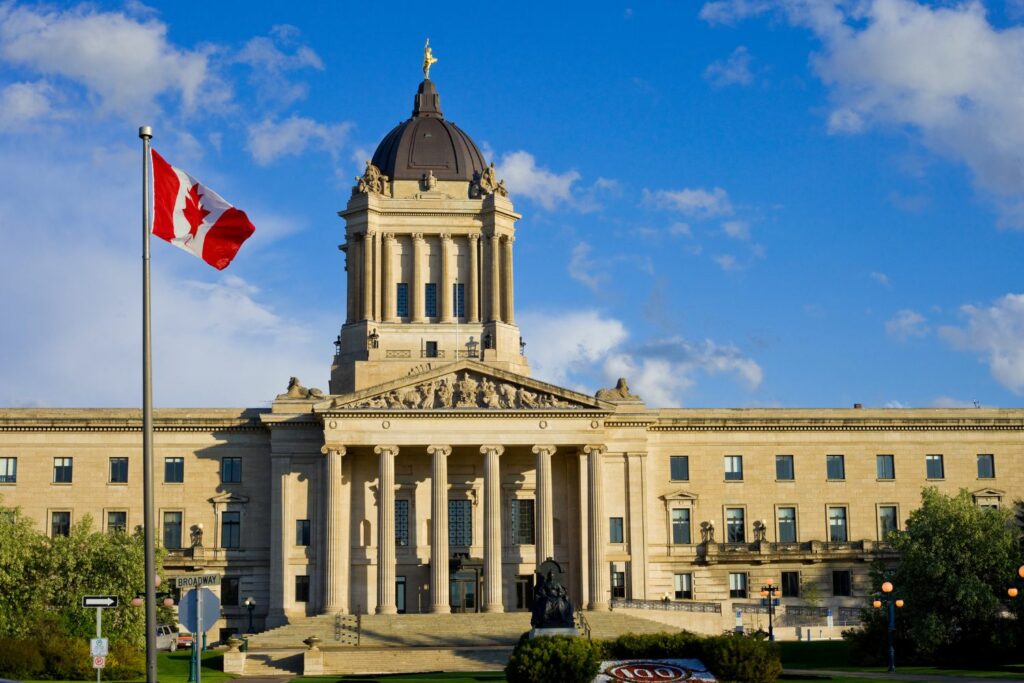
Manitoba’s Minister of Families has introduced a bill to ban pro-life outreach and demonstrations near abortion providers. Bill 8, the “Safe Access to Abortion Services Act” was tabled in the legislature on March 7. Minister Nahanni Fontaine declared in introducing the bill that “Abortion is health care, it’s a human right. And while some citizens may not agree with abortion, don’t have one.” She added that if people “feel the need to protest against these human rights, they’re welcome to do it here at the Manitoba Legislature.”
If passed, the bill would make it an offense to do any of the following within an “access zone” where surgical abortions or abortifacient drugs are provided:
(a) “attempt to advise or persuade a person to refrain from accessing abortion services”
(b) “attempt to inform a person concerning issues related to abortion”
(c) “attempt to perform an act of disapproval concerning issues related to abortion”
(d) “persistently request that a person refrain from accessing … or providing or assisting in the provision of abortion services,” or
(e) continuously or repeatedly observe a facility for the purpose of preventing provision or access.
By default, an access zone (also called a “bubble zone”) covers an area of 50 metres around the perimeter of the facility in question, but it can be expanded by regulation to cover “any other prescribed area.”
The bill also has provisions that forbid harassing an abortion provider in any place or by electronic means. Canada’s Criminal Code already prohibits harassment, intimidation (including stalking a person or impeding their free movement), assault (including making threats), mischief (including interfering with lawful use of property), nuisance, and causing a public disturbance, making these provisions redundant.
Manitoba’s Bill 8 targets peaceful efforts to inform, persuade, or express disapproval of abortion, things which are not prohibited by criminal law. The government has not cited any specific instances or evidence of anyone in the province being prevented from accessing or providing abortion, or of anyone being harassed.
Manitoba’s Bill 8 is similar to legislation already in place in Ontario, British Columbia, Alberta, Newfoundland, Nova Scotia, and Quebec.
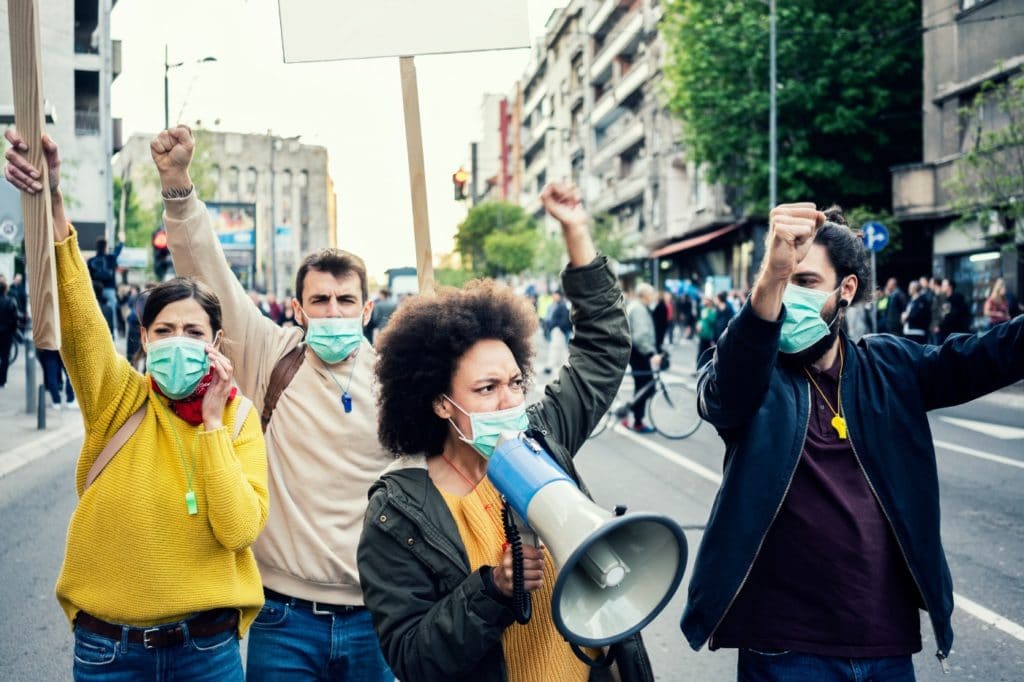
Last week, the province of Quebec passed a law making it illegal to participate in a protest relating to the COVID-19 pandemic within 50 meters of a COVID-19 testing or vaccination site, health or social services institution, or an education or child care facility. The law even forbids someone from inciting anyone to organize such a demonstration. Other provinces – such as the government of British Columbia and the official opposition and a private member in Ontario – and even the federal government are contemplating issuing similar laws.
These proposals have arisen after a number of demonstrations outside schools and hospitals took place across the country, many of which were organized by nurses to demonstrate their support for fellow health care workers’ choice not to be vaccinated. Some of these demonstrations made it difficult for ambulances and other vehicles to access the hospital. One school in British Columbia locked down after protesters entered the school.
Such protest-free “bubble zones” that regulate speech and expression in a particular area are not new. British Columbia, Ontario, Quebec, Alberta, and Nova Scotia all have legislation that forbids pro-life expression or even offering information about abortion within certain parameters around abortion clinics, hospitals, or doctors’ offices. Politicians at the time justified the legislation as necessary to prevent extreme actions against abortion doctors or women on their way to the abortion clinic, even though harassment, assault, and other apparent concerns were already illegal. We oppose these laws as disproportionate infringements on freedom of expression, and there is currently an ongoing constitutional challenge of the Ontario law waiting for trial.
In the wake of increasing calls for protest-free zones in relation to COVID-19, here are a few suggestions for legislators, law enforcement, and protestors.
Legislators – Don’t Do It
Legislators should resist the temptation to prohibit all COVID-related protests, even if it is a politically popular choice. The right of peaceful assembly, including the right to protest, is a fundamental political freedom that should not be infringed upon lightly. Throughout Canadian history – and, indeed, Western history – protests like the Winnipeg General Strike and the On to Ottawa Trek have been pivotal avenues for social and political change.
We can make a distinction between restrictions on gatherings that target the content or subject matter of the gathering as opposed to the place or manner of the demonstration. For example, noise by-laws impact the manner in which protests are conducted regardless of the content of the message. Bubble zone laws, on the other hand, specifically target the content of the speech, making it illegal to express disapproval of abortion or COVID policy. The latter is far more troubling and constitutionally suspect.
Also, all three levels of government should not equate the actions of one person or a small minority of people to an entire crowd. In many demonstrations, some people may indeed go too far, but governments should not assume that the actions of those individuals represent the intent of everyone else. Proposing and passing legislation that prohibits the freedom of peaceful assembly and democratic expression of everyone based on the actions of a handful of an unruly few, is a grossly disproportionate infringement of fundamental rights and a heavy-handed use of the law.
Applying these criteria to the demonstrations at hand, no level of government should forbid demonstrations just because they dislike the purpose of the protest, such as protests opposing mandatory vaccinations or promoting an alternate policy approach to handling COVID. We allow for lawful dissent on all sorts of policies. This is an important aspect of the way our democracy works. Demonstrators should be constitutionally free to present their case in the public square.
Law Enforcement – Enforce the Law
Instead of legislators creating new laws which specifically outlaw protests based on the subject matter, law enforcement should endeavour to enforce the existing laws governing general conduct around protests. Remember, the Charter right is to peaceful assembly, meaning assemblies that cause havoc aren’t given constitutional protection. If an anti-vaccination protestor illegally obstructs roadways, trespasses on private property, or assaults anyone, law enforcement should use reasonable means to try to enforce the laws on the books. Much of the impetus for laws outlawing COVID protests outside of hospitals or schools is fueled by the (alleged) misconduct of some demonstrators, more so than the content of their protest. Adding more laws that ban the same activities doesn’t aid the police.
This enforcement should not be applied selectively. Whenever demonstrations cross the threshold of legality, law enforcement should attempt to restore order. Otherwise, just laws become a mockery instead of carrying the weight they justly deserve. Whether COVID protestors impede access to a hospital, teachers on a labour strike block access to a school, climate activists block bridges, or members of First Nations block railways, it is incumbent on law enforcement to endeavour to enforce existing laws before the legislature try to craft new ones.
We fully recognize that there are complex assessments that go into crowd and riot control. Throughout history, we have witnessed law enforcement use excessive force to break up rallies or detain criminals. Sometimes this squelches the problem, but sometimes it turns a disorderly protest into a violent riot. In other cases, excessive police action transforms illegitimate protestors into martyrs for their cause. There may also be times where the prudent thing for law enforcement to do is to remove a law-abiding person from a law-breaking protest or assembly. We pray that God might give law enforcement both the courage to enforce the law whenever possible, and the wisdom to know what intervention would be most effective.
Demonstrators – Be Winsome
And finally, demonstrators be winsome as you advance your cause. Political demonstrations are a key method of democratic expression, and these rallies are fueled by the zeal of the demonstrators. But if the desire is to persuade the public it is important to remember that your rally may detract from a cause because of the behaviour of some more radical protestors who attach themselves to your group. We also need to remember that we have responsibilities about how to behave as Christians that transcend the advancement of a political cause. So, here are some suggestions for how to successfully advance your cause as a Christian:
- Follow the law (unless you have a very compelling reason why an unlawful act is justified). This is our moral obligation and is also wise. Lawlessness will generally land you not only in hot water with law enforcement but also in the court of public opinion. The March for Life, for example, always puts the Ottawa police on notice, and applies for the proper permits.
- Be courteous. Beyond even the letter of the law, be courteous to fellow protestors, passers-by, and especially those whom you are protesting against. Think about things on a more personal level; do you usually convince someone by shouting in anger, or having a calm reasonable discussion with them? Again, this is not just a strategy, but a Christian obligation. As Paul wrote in 2 Timothy 2:24-25 “And the Lord’s servant must not be quarrelsome but kind to everyone, able to teach, patiently enduring evil, correcting his opponents with gentleness. God may perhaps grant them repentance leading to a knowledge of the truth,” Let our demonstrations be one of reason and solidarity that depends on God to change hearts, not one of anger or slander. A demonstration that is simply a display of anger and frustration will be dismissed as just that.
- Try to be very clear and very focused with your messaging. Many of the recent protests outside hospitals were organized by nurses in support of nurses. Yet, many misunderstood this message due to the competing messages on display and a lack of understanding both within the hospital and in the general public as to the cause of the protest. Selective reporting contributed to that misunderstanding, but don’t underestimate the value of clearly communicating a concise message during the protest as well as to the local media beforehand. Letters to the editor are a great way to do that.
Conclusion
All of the points above can be summed up in one phrase, applicable to everyone: do the right thing with wisdom. Legislators, respect the important political and legal rights of your citizens. Law enforcement, endeavour to uphold the law. Demonstrators, model your behaviour to advance your cause.
There is no question that demonstrations are key forms of democratic, political expression that governments should be very hesitant to regulate. Protests are important in our religious history too; there is a reason why those who broke off from the Roman Catholic church were called protest-ants. But when we protest, where we protest, why we protest, and how we protest are all important considerations as we participate in democratic discourse together.
Resolve in New Brunswick regarding Clinic 554 and a positive development regarding human trafficking in Alberta. And of course, our webinar lineup for the next week.
Links:
ARPA Webinars – https://staging.arpacanada.ca/news/2020/03/19/arpa-quarantine-webinars/
WNAL Webinars – https://weneedalaw.ca/2020/04/webinar-series-provincial-pro-life-laws/
Watch Monday’s discussion between André Schutten and Pastor Ken Wieske on Is ‘Corporate Worship an Essential Service?’ – https://www.facebook.com/arpacanada/videos/681843709055083
The staff and board are in Ottawa this week; Colin performs some magic; Tabitha talks bubbles; Ed chills out.
By Lighthouse News
A law to restrict speech, persuasion, and protests near abortion clinics in Alberta continues to move through the legislature. Bill 9 received second reading last week. Not only will the bill substantially interfere with freedom of expression of pro-lifers, it will obliterate the opportunity for any alternative help for pregnant women.
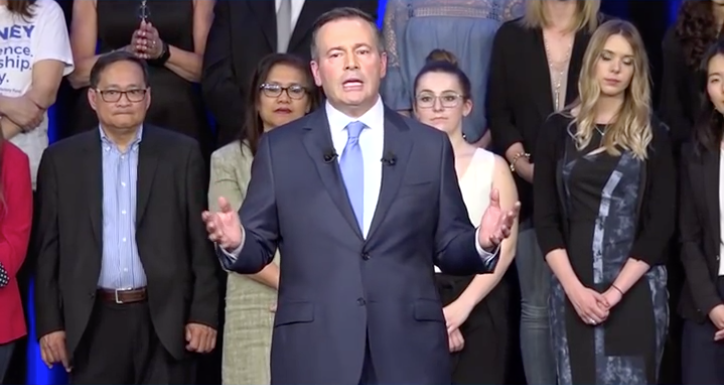
Alberta’s opposition United Conservative Party is following through on a pledge not to vote on the proposal – either for or against. Leader Jason Kenney has labelled it a piece of “political mischief” from the governing NDP, designed to distract voters from apparently more important economic issues.
UCP members walked out of the legislature during both first and second reading votes on the bill.

ARPA Canada lawyer, John Sikkema
ARPA lawyer John Sikkema says in one sense Kenney’s strategy is understandable, but it’s not in line with the way a legislature is supposed to operate. “It’s the job of the opposition to ask questions, but we’re in an environment where (when) the opposition asks questions – which they’re supposed to do – they’re met with accusations of not caring about women (and) being pro-harassment.”
He says that paradigm is “very damaging to our politics. Rather than the opposition being shamed into not opposing the bill, they need to be pressured into opposing it for the sake of principle. For them to oppose it isn’t the offensive thing, for them not to oppose it (is). “Even if they share the concern about the potential for harassment, it’s their job to ask the tough questions. They’re supposed to do that.”
Sikkema says history will not be kind to politicians who don’t do their jobs. “When things like freedom of expression are left to the courts to deal with, we end up with somewhat degraded politics.”
ARPA has launched an email campaign to put pressure on the UCP caucus to speak out against the bill. You can send your email from this link.
You can listen to the full interview with John as featured on our Lighthouse News broadcast here.
ARPA Canada routinely asks for you, our supporters, to submit respectful letters to our elected representatives. Every once in a while we see a fantastic example of winsome, principled, and respectful engagement. Below is one such example.
Dear Mr. Kenney,
I hope this message finds you well. It is with some trepidation that I write to you on the subject of your abstention from the NDP’s abortion clinic bubble zone Bill. Though I balk at the thought of sidestepping the opportunity to publicly question and critique such a law, your appraisal of the politics underlying the timing and nature of this vote (that it is merely bait intended to distract) is not without merit. I do not envy your position as an elected official in times such as these. As such, my purpose here is not to harangue you for the abstention, but to encourage and appeal to your conscience over the longer run. Like many others, I expect a UCP majority is forthcoming.
However, my question for you is: what then?
The popular myth in contemporary politics, that economics and morality are somehow distinct categories, is just that, a myth, and a pernicious one at that. While this common canard allows many a so-called progressive-conservative to pander some percentage of votes from both sides on the more contentious moral issues of our day, more often than not it facilitates compromise where there should be none. The myth of State neutrality on questions of fundamental morality leaves those striving to conserve the great institutions of our civilization – the Family, the local Church, the University, and the Rule of Law – at odds with the very government that purports to serve them. It is often said that politics is downstream from culture, and law from politics. There is no escaping the moral dimension of government and legislation; it is simply a question of whose morality shall govern.
My point here is that while I can see the tactical wisdom behind your abstention, the language by which you’ve justified it – which suggests precisely the mythical dichotomy described above – could hardly be more Philistine. Economics is not a distinct category from morality in the political realm. A government concerned only with dollars and cents is as base and indolent as a man concerned only with his stomach.
My concern in all of this being that your language in the handliing of this Bubble Zone affair suggests that you have or soon will forget the so-called “social conservative elements” who continue support of you financially and otherwise on the premise that you are in fact morally principled, if not God fearing. There is no neutrality Mr. Kenney, not even in the affairs of State. The creation and giving of law itself is an inherently religious exercise. Every law and every intentional lacuna in the law is an institutionalization of somebody’s morality or immorality and has inescapable moral consequences for both society at large and its various elements.
I take you as one who recognizes that the depravities of Man which render civil government just and necessary are the same depravities which require that it be limited in scope and sphere. However, to the extent that civil laws are made and enforced, they must conform to what is good and right and beautiful before God (the ultimate moral reality written upon every heart of man, if you will) – lest our legislation cease in the authority of law and serve only to further corrupt our people. Our great civilization has flourished and, sadly, declined, in direct proportion to its adherence to this ancient dogma.
The NDP’s bill concerning the Bubble zone may not be stopped by a UCP vote at the present time, the makeup of seats being what it is. But anyone who has given serious thought to the issue – to the pastoral and benign nature of nearly all pro-life counseling (notwithstanding our disingenuous media) and the ample safeguards for purveyors and consumers in the abortion industry under existing law – can see this bill is an affront to both reason and morality. The catastrophic frequency with which our society violently dismembers it’s young, often for no other cause than convenience, is perhaps the most vivid demonstration of our commitment to the idol of callous and narcissistic self. To prohibit the right-minded from pleading and exhorting, however peaceably and compassionately, with those about to engage in this mortifying ritual, that they might choose another way, is an unspeakable betrayal of justice.
The language of this bill is overbroad and it will undoubtedly harm the many individuals and groups who invest time, treasure and talent in the noble cause of life. What will become of those care centres located in proximity to abortion clinics? What will become of those who wish to pray silently for the nascent lives about to be snuffed out and the hands by which the act will be done? Who will be there to offer women the alternative, the choice, of adoption or motherhood at the brink? Who will raise these questions to the NDP in your absence?
With this in mind I pray your conscience would be set immovably on the immediate repeal (or whatever functionally equivalent “amendment” may appease both justice and rhetoric at that time) of such legislation as may come to pass post-election. There is no neutrality on issues of life and justice.
I will continue supporting you in hopes that you will not abandon what is good and beautiful and right for all Albertans. It is possible for the state to legislate in ways that promote family, liberty, education and piety while tolerating those who choose to go a lesser way. I submit that such is the better road. Tolerance, that lost art, does not require us to be nihilist in our public pursuits. Legislate towards what is right and remove all state and legislative incentives to what is abhorrent. Our laws enshrine and perpetuate our values, whatever they may be..
May your conscience compel you, and may you have the courage to fear God and love mercy more than you fear man and love security in the coming months and years. May God bless you and yours as you undertake to administer the common good of us all.
Yours Very Truly,
Benjamin J. Ferland
Take Action: Send an EasyMail letter to share your concerns with your MLA
On April 5, the Alberta government introduced Bill 9: Protecting Choice for Women Accessing Health Care Act. The bill would create “access zones” around abortion clinics in which it would be illegal to attempt to persuade someone not to get an abortion, to attempt to inform someone about issues related to abortion or alternatives to abortion, or to merely express disapproval of abortion in any way.
Beyond “access zones”, the bill makes it an offence to “persistently request” someone not to provide abortion or to even try dissuading him or her “from becoming a physician who provides abortion services.”
These offences are all punishable by hefty fines and prison.
This is a bad law. It is a betrayal of the most fundamental principles of a free society. It ought to be vigorously opposed, especially by MLAs, who have been entrusted as stewards of Alberta’s democracy.

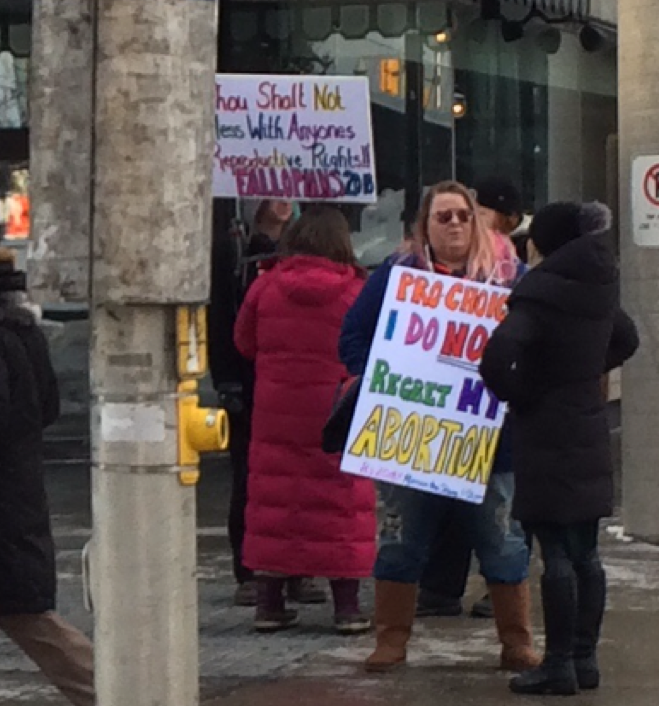
A woman in Ottawa holds a sign within an “access zone”. Remove the word “NOT” and she would be arrested.
Despite the rhetoric about putting a stop to harassment and threatening conduct, this bill is really about censorship. Harassment, intimidation, uttering threats, obstruction, and causing public disturbances are, among other reprehensible actions, already illegal under criminal law. ARPA is strongly opposed to any threatening or intimidating conduct. The way to prevent that is to enforce existing laws. Bill 9 is designed to prohibit peaceful pro-life outreach.
This law is especially unjust and dangerous as a legal precedent because it censors one side of the debate on an important social and moral issue, while permitting the other side to speak freely. As we’ve seen in Ontario, pro-choice activists can demonstrate inside bubble zones.
Pregnant women (and their pre-born children!) deserve better. They deserve to be free to take a pamphlet from a concerned neighbour that informs them about pregnancy care and childcare support. Pre-born children are living members of the human family, and we should be allowed to advocate for them and have an opportunity to offer life-affirming options to women considering abortion.
If you agree take just five minutes right now and send this EasyMail letter to your Alberta MLA, urging them to vote against this unconstitutional piece of legislation.

Cyril Winter
One of the most recognizable pro-life activists in Ottawa has passed away.
For much of the past seven years, Cyril Winter had been fixture outside the Morgentaler Clinic on Bank Street, holding various signs, with messages such as “Potential Life Destroyed” or “Choose God’s Love, Not Murder”, and often with images of aborted babies.
Last month, Winter became the first person charged under Ontario’s “Safe Access to Abortion Services Act”, more colloquially known at the “Bubble Zone Law.”
Winter was 70 years old. In what was likely his last media interview earlier this month, he told Lighthouse News host Al Siebring that his arrest on February 7th was a case of betrayal by police. “I was surprised and shocked that they came after me, because (two police officers) had interviewed me on the Friday before and basically okayed the sign that I was carrying.” That sign, Winter said, had nothing to do with abortion. Instead, it read: “Freedom of Expression and Religion; No Censorship.”
Winter says when he read the actual charges against him, it was clear that they weren’t referencing the sign, but that authorities instead had made up “a series of lies, pretending that I was doing things like ‘photographing clients, land, or staff’, and ‘observing for purposes of persuading’”. Winter said in the interview that actual security video from the clinic’s own security cameras would prove that the charges were groundless.
The Lighthouse News interview was done from a hospital bed at the Ottawa Heart Institute, where Winter had been admitted for stenting of several coronary arteries. The surgery took place on Friday, March 9th. On Tuesday, his brother Chris posted to Facebook that Cyril had passed away shortly after the surgery.
He was due to appear in court on the charges on March 23rd.
**UPDATE: Bill 163 passed in Ontario, regardless of our opposition**
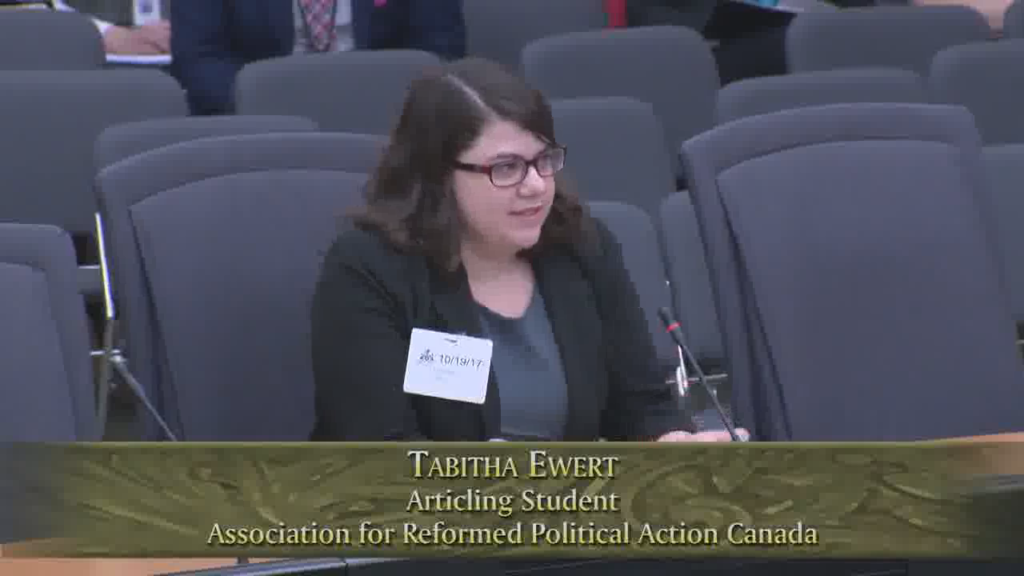
Ontario’s “Safe Access” legislation (Bill 163) proposes to ban all disapproval of abortion around abortion clinics, hospitals and pharmacies. The Standing Committee on General Government at Queen’s Park in Toronto studied the bill on October 19. The Members of Provincial Parliament (MPPs) on the committee heard from a variety of organizations on both sides of the issue and I was grateful for the opportunity to present ARPA Canada’s concerns.
For more information on what “safe access” legislation is, you can read our previous post. In my presentation, I reminded the committee that, earlier this year, the Ontario Superior Court ruled that government censorship of abortion statistics is an unconstitutional violation of freedom of expression. I argued that this legislation is similarly unconstitutional.
Where this bill forbids criminal activities (like assault) it is an unnecessary duplication of the Criminal Code (and an encroachment on Parliament’s jurisdiction). Where the bill forbids peaceful demonstrations, prayer vigils, or publishing dissenting opinions, it infringes freedom of expression.
Those in favour of the bill suggest that it’s pro-women. But protecting women’s rights or making a step forward for women’s rights cannot include fining and imprisoning other women who disagree with you.
Judging from their questions (or lack thereof), it did not appear that the Liberal or PC MPPs engaged with my arguments. The NDP MPP did ask me about the comparison to a similar BC law, but was rather dismissive of my response.
This attitude continued through much of the other presentations made to the committee that day. The Committee members from all three parties were focused on showing how supportive they were of the bill. When a presenter was supportive of the bill, they asked questions like “Is there anything else you would like to say?”, “Were you properly consulted on this bill?”, or “Is there anything more you would like to see in this bill?” However, those who had legitimate constitutional, policy, or social concerns about the bill were either ignored or treated with some hostility.
I was disappointed in the lack of engagement with the serious problems with Bill 163 (even though others expressed the same issues). The MPPs on the committee were more concerned with appeasing supporters of this bill than determining whether it was good law.
That being said, I was able to show principled opposition to this bill, rooted in a thorough constitutional analysis, and my hope is that I at least gave them something to think about.
For immediate release from the Association for Reformed Political Action (ARPA) Canada
October 25, 2017
Ontario Government censors one side of abortion debate
Today the Ontario Liberals – with the help of all Opposition parties – passed Bill 163 by a vote of 86-1. This new law creates “safe access zones”, also known as bubble zones, around abortion providers, prohibiting the expression of any dissenting view on abortion.
“Censoring speech in certain areas, simply because you may not agree with that speech, is unconstitutional and violates free expression in the public square,” said Tabitha Ewert, a recent law graduate and articling student for the Association for Reformed Political Action (ARPA) Canada. Ewert presented to the Standing Committee on General Government during the one-day hearing on Bill 163. “In passing Bill 163, the Ontario government has opened themselves to further constitutional challenges in court.”
In June of this year, the Ontario government lost a case when ARPA Canada challenged their exemption of abortion statistics from Freedom of Information requests in court. The Ontario Superior Court ruled that this censoring of abortion statistics inappropriately infringed on freedom of expression as guaranteed by Section 2(b) of the Charter of Rights and Freedoms. In fact, the judge ruled there was no evidence to suggest that such censorship was necessary today.
Anna Nienhuis, spokesperson for the We Need a Law campaign, was surprised to see this bubble zone legislation come so quickly on the heels of that loss in court. “Mere months later,” she said, “we see the government trying again to give abortion special consideration that no other medical intervention receives or even requests, again infringing on Section 2(b) Charter rights.”
The safe access zones are being introduced following allegations of harassment, such as spitting, by protestors outside Ottawa’s Morgentaler Clinic. “Attorney General Yasir Naqvi should be doing his job and focusing on prosecuting any actual acts of harassment by individuals,” stated Nienhuis, “not targeting all peaceful pro-life people as a group.”
“We do not ban protests on Parliament Hill for fear of making MPs uncomfortable when they come to work. We do not ask those who have lost their hair from chemotherapy to stay away from entrances to hospitals for fear of making new patients feel uncomfortable. We do not shut down bars if two people get into a brawl inside,” added Nienhuis. “To silence an entire group over the alleged criminal behaviour of one individual and to put personal discomfort above freedom of expression is unconstitutional and something no Canadian should support, knowing it could be their opinion that falls out of favour next.”
Nienhuis also argues that this move to silence conflicting views on abortion “paints women as fragile and indecisive, undermining any belief in the pro-choice message that abortion is empowering. Abortion clinics exist for profit, and blocking those willing to stand for life is easier than standing out there themselves to encourage and support women choosing abortion.”
“The Ontario government needs to stop making exceptions for abortion, and let the debate play out in the public. If they are so scared of dissenting opinions, they should consider why they lack the confidence to let their position speak for itself.”
– 30 –
To read the decision of the Ontario Superior Court referred above, click here.
Interview Requests:
For further comment, contact Hannah Sikkema, media facilitator at 1-866-691-2772, ext. 1 or [email protected].