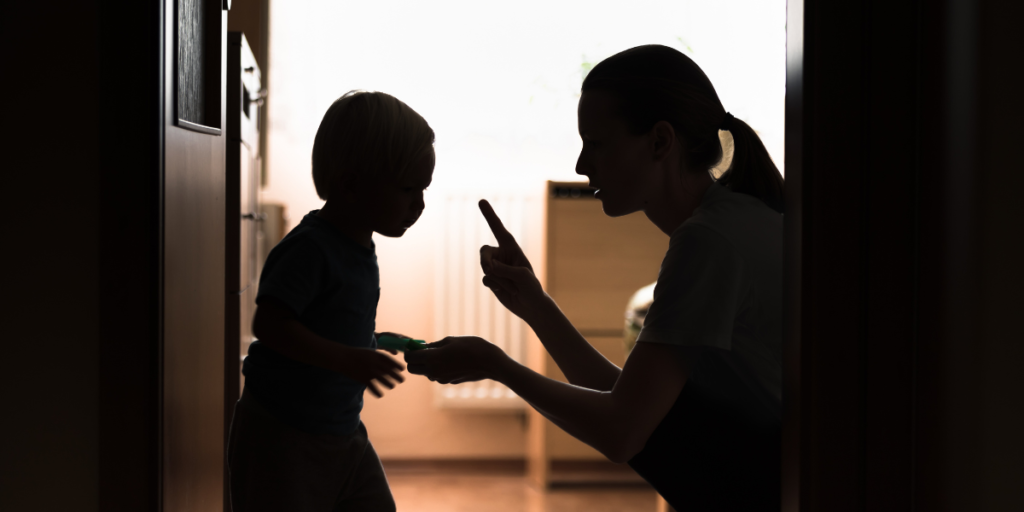
Should Canadian parents be allowed to physically discipline their children or should the government criminalize the practice? As ARPA Canada noted in a recent article, two Canadian politicians have introduced bills which would ban corporal discipline.

Status of Bills

Bill C-273, introduced by MP Peter Julian, is titled An Act to amend the Criminal Code (Corinne’s Quest and the Protection of Children). The name comes from a federal government lawyer named Corinne Robertshaw who, as MP Julian notes, “saw first-hand the results of allowing physical punishment of children and the death and injury of children throughout the 1970s and 1980s.” Bill C-273 has not yet reached 2nd reading in the House of Commons.

In the Senate, Senator Stan Kutcher introduced Bill S-251, An Act to Repeal Section 43 of the Criminal Code (Truth and Reconciliation Commission of Canada’s call to action number 6). Both bills would remove a criminal code provision that permits limited physical discipline of children. Bill S-251 has passed 2nd reading in the Senate and is being studied by the Senate Standing Committee on Legal and Constitutional Affairs. ARPA Canada recently submitted a brief to that committee to urge them to respect parents’ responsibility to discipline their children. ARPA Canada recommends either leaving the law unchanged or simply making clarifying amendments. You can read ARPA Canada’s brief here.

Evidence

Physical abuse is illegal. Canada’s Criminal Code only allows parents to use force for the purpose of correction that “does not exceed what is reasonable under the circumstances.”

In 2004, the Supreme Court of Canada ruled that the Criminal Code provision permitting reasonable corrective force did not violate children’s rights under the Charter. The Court also clarified what is and is not permitted. For example, force may not be used on a teenager or a child under the age of 2, must address actual behaviour, and may not involve the use of objects such as rulers or belts.

Proponents of bans argue that corporal discipline is ineffective in correcting behaviour and harms children. They also point out that several developed nations have banned the practice.

However, the purported evidence against corporal discipline confuses the cause-and-effect relationship between discipline and children’s outcomes. Research that appropriately considers the different factors involved in discipline of children suggests that mild conditional discipline is as good as, or better than, other forms of discipline, and reduces anti-social behaviour and noncompliance in children.

Sweden was the first country to ban corporal discipline in 1979 and is often heralded as an example to emulate. However, evidence from Sweden indicates that criminalizing mild corporal discipline has resulted in profound negative consequences for children and families, and that allowing parents to use physical corrective force (as Canada currently does) may prevent other negative outcomes in children.

Ultimately, this evidence reinforces the foundational principle that parents, not the civil government, are in the best position to raise children. The Canadian government ought to respect the institution of the family and the role of parents and not interfere except in cases of serious abuse or neglect. As such, Canada must respect parental discretion to discipline children within existing legal limits.

How Can You Get Involved?

The Canadian public and politicians continue to debate whether parents should be permitted to use corporal discipline. Maybe it’s also a discussion you’ve had with your spouse or with friends. ARPA Canada has just published a revised and updated Respectfully Submitted policy report on corporal discipline. In this report, we consider evidence and arguments for and against corporal discipline, ultimately concluding that Canada should not enact further restrictions. This report was first published in 2013 and updated in 2016. The recently updated version (2023) reflects new research on the issue.

Canadian MPs and Senators are actively considering what they should do about corporal discipline. We encourage you to read through the report and connect with your representatives to encourage them to read it as well. You can also send an EasyMail on this topic at easymail.staging.arpacanada.ca. At this point, the focus of the EasyMail is on Bill S-251, since the Senate bill has advanced further than the House of Commons Bill. Please contact us at [email protected] if you have any feedback, suggestions for improvement, or other questions on the report.

In the past 25 years, multiple attempts have been made to ban spanking and other forms of physical punishment in Canada. Prior to the current session of Parliament, the most recent attempt was in 2015 when a senator introduced a bill to ban spanking. Since that time, calls to ban spanking have grown. Canada’s Truth and Reconciliation Commission recommended that corporal discipline be banned, and in 2015 Prime Minister Trudeau promised to implement all of their recommendations. To date, over 65 countries around the world have entirely banned corporal discipline of children and the number seems to keep growing. In 2022, two separate bills were introduced in the House of Commons and the Senate to do the same in Canada. Bill C-273 was introduced in May 2022 but has not yet gone to 2nd reading. Bill S-251, on the other hand, is actively being debated at 2nd reading in the Senate.

Bill S-251

On June 16, 2022, Senator Stan Kutcher of Nova Scotia introduced Bill S-251, An Act to repeal section 43 of the Criminal Code (Truth and Reconciliation Commission of Canada’s call to action number 6). The goal of the bill is to remove section 43 of the Criminal Code which states:  

“Every schoolteacher, parent or person standing in the place of a parent is justified in using force by way of correction toward a pupil or child, as the case may be, who is under his care, if the force does not exceed what is reasonable under the circumstances.”

Senator Kutcher’s bill is focused on Recommendation 6 of the Truth and Reconciliation Commission’s 94 calls to action which were released in 2015. The Commission calls on the government to repeal section 43 “in order to redress the legacy of residential schools and advance the process of Canadian reconciliation.”

Senator Kutcher argues that repealing section 43 is a small but necessary step on the path to reconciliation and that violence against children must be stopped. He also cites supposed evidence that spanking is harmful to children and even quotes the Bible, seeking to prove that Jesus “recognized the responsibility of kind and considerate parenting, and that did not include hitting children.”

What is Corporal Discipline?

Corporal discipline is broadly defined as any punishment in which physical force is used with the intention to cause some degree of discomfort and to bring about a change in behaviour.

Some of the language used by advocates against corporal discipline includes ‘hitting,’ ‘violence,’ or ‘assault.’ When language like, “we should ban child abuse” or “ban violence against children” is used, it’s hard to disagree. But child abuse and violence against children are (and ought to be) already illegal. What advocates for spanking bans fail to mention is that section 43 does not permit just any kind of physical punishment. In 2004, the Supreme Court clarified what section 43 means by the phrase “the force does not exceed what is reasonable under the circumstances.” The force must be sober and reasoned, addressing actual behaviour, the child must have the capacity to understand and benefit from the correction (cannot be under the age of two), must not harm or degrade the child, may not be administered to teenagers, may not involve objects such as rulers or belts, and may not be applied to the head.

There is no element in our existing law that permits abuse or violence against children. Instead, corporal discipline must be seen as the use of reasonable, non-injurious physical force with the intention and purpose of correction or control of a child’s behaviour. Repealing section 43 of the Criminal Code will criminalize parents who discipline their children within the boundaries set by the current law.

Advocates of a spanking ban argue that spanking is harmful to children and that it increases the risk of violence and mental disorders in children. However, much of this research is faulty at best, failing to differentiate between different methods of physical discipline. Overall, controlled, non-abusive spanking actually tends to reduce negative behaviour in children compared to other disciplinary tactics.[1]

Conclusion

Parents ought to be able to raise their children as they see fit (within limits, of course). And those limits are already defined in Section 43 of the Criminal Code. Many parents believe they have the responsibility to discipline their children, not out of anger, but out of a desire to protect and train them to be good citizens. The government can never replace parents in the life of a child and must not try to do so by legislating how children ought to be raised.

We continue to follow this issue in the Senate and the House of Commons and will provide updates on any new developments.


[1] Robert E. Larzelere and Brett R. Kuhn, “Comparing child outcomes of physical punishment and alternative disciplinary tactics: a meta-analysis,” Clinical Child and Family Psychology Review 8(1), 2005: 1-37.