Kids in Canada can easily access internet pornography – often without even meaning to.
Bill S-209, currently being considered in Canada’s Senate, would mandate meaningful age-verification mechanisms for access to pornographic sites. Other jurisdictions have already enacted such laws, which are proving effective.
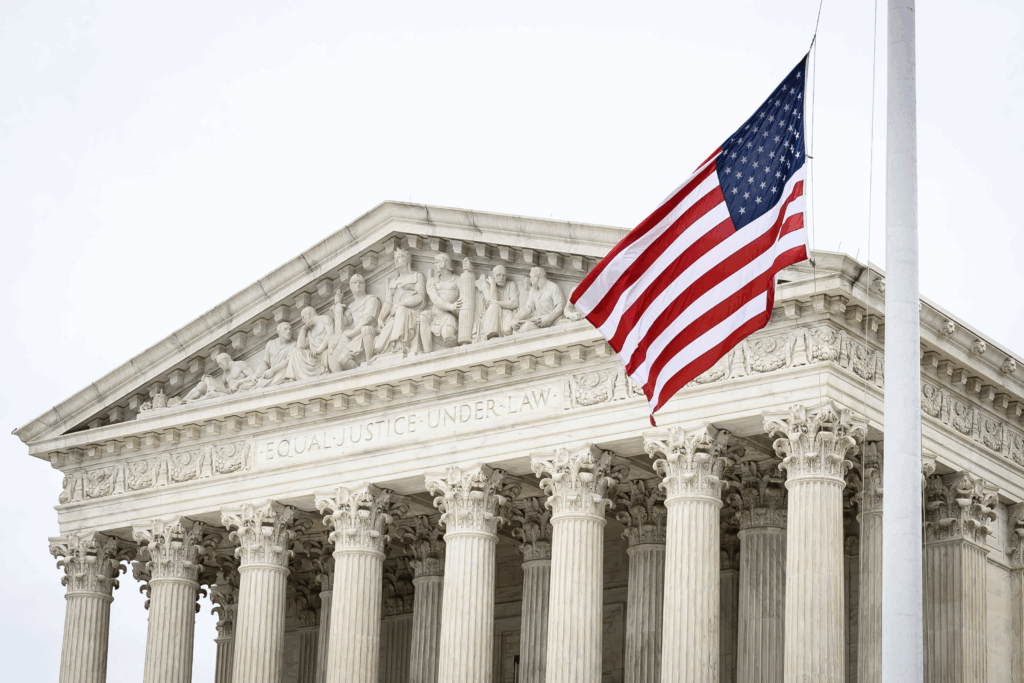
The first US state to pass an age-verification law was Louisiana, followed by nearly two dozen others. Among those was Texas, which just won a legal battle at the US Supreme Court to uphold its law. The Court, in Free Speech Coalition v. Paxton, found that Texas’ age-verification law does not violate free speech.
Legal Challenge
The Free Speech Coalition challenged Texas’ law, arguing that it violates free speech. Generally, pornography is considered protected speech provided it is not obscene, which is a high bar. The first court to review the Texas law struck is down, reasoning that Texas should have pursued a “less restrictive means” to prevent children from viewing porn, such as encouraging parents to install content filters. Texas appealed, and the higher court upheld the law as a valid means of pursuing the state’s interest in protecting children.
In a 6-3 decision, the US Supreme Court also ruled in Texas’ favour, noting that the purpose of the law (to prevent children from viewing porn) is pressing, and that it does not burden the speech of adults more than necessary.
Although US courts are cautious about violating free speech, there are types of speech that are not protected by the constitution, including obscenity, defamation, and fraud. But because a lot of pornography would not be considered obscenity, it would generally be considered protected speech. However, pornography that is not considered obscene per se may also be obscene for minors, the Court reasoned. The Court also noted that minors can now access both benign and extreme content with an ease that would have been unimaginable when previous court decisions addressed the question of protecting minors from porn. In 2024, 95% of American teens had access to a smartphone, and 93% used smartphones several times per day. Justice Thomas emphasized the sheer quantity and ease of access to internet porn, noting that in 2019, Pornhub published 1.36 million hours (150 years) of content.
Ultimately, the Supreme Court clearly stated that adults have no constitutional right to avoid age-verification, even if adults have a constitutional right to view pornography. Texas’ law is not a ban on pornographic content, but simply a requirement to ensure all viewers are over 18. Age-verification has been used for many years for in-person age-restricted activities, including registering a handgun, voting, getting married, or purchasing a pornographic magazine. These requirements have never been disputed. Age-verification is also already used for online gambling, alcohol and tobacco sales, and renting a car. It is also used by some porn websites, by choice. The specific methods of age-verification required by the Texas law are government-issued ID and transactional data, and both were deemed valid methods by the Court.
Privacy concerns are also commonly raised by opponents of age-verification. They worry about the stigma of pornography use and the potential for data breaches and loss of privacy. The Court addressed these concerns only briefly, but noted that porn companies and third-party age-verification companies have every incentive to protect privacy. After all, they are trying to promote their companies, and users can avoid their sites if they are not protecting privacy. Additionally, the Court noted that social stigma is no reason to exempt porn companies from valid regulation.
Three Takeaways
The United States is possibly the most ardent defender of free speech in the world. Yet their highest court also recognizes that laws protecting children are critical even if they hinder adults’ freedom to some degree. If Canada passes Bill S-209 or other age-verification requirements, our law will likely be challenged as well, for similar reasons. The US Supreme Court’s Paxton ruling explains why such constitutional challenges should fail.
We must protect children from porn and hold companies accountable for who they allow on their websites. As for privacy concerns, adults can choose whether to upload whatever information is necessary to verify their age, and decide which sites to trust. Canadians already use identity-verification methods online for shopping, banking, tax filing, and much more. While laws restricting access to pornography could go much further, age-verification is a good place to start. It aims to protect children from easily accessing pornography from anywhere and holds pornography companies accountable if they fail to use meaningful age-verification methods.
Age-verification may make viewing pornography slightly more difficult for adults. Let’s hope that many adults will choose to forego porn rather than upload age verification, and that overall porn consumption consequently drops. Tellingly, the porn industry hates age verification laws. In response to age-verification laws, Pornhub, one of the largest porn companies in the world, chose to stop operating in certain jurisdictions with such laws rather than implement proper age-verification.
Conclusion
The U.S. Supreme Court’s decision in Paxton is a key development in the global effort to protect kids from pornography. Online porn is not only much more extreme, but also much easier to obtain and view secretly than it once was. Canadian society must abandon the notion that easy access to porn is a right and instead understand the profound damage it does to our lives and our culture. We are thankful to see good court decisions on this anywhere in the world and we pray that Canada will also pass and successfully defend age-verification legislation.
As the Canadian Senate considers Bill S-209, take a few minutes to send an Easymail asking them to pass the legislation as quickly as possible.
Across much of the western world, governments are beginning to recognize the harmful effects of pornography, particularly on young people.
In the United States, 24 states have passed age-verification legislation, requiring viewers of pornography to verify that they are over the age of 18. Most of these states have also called pornography a public health crisis because of the range of negative impacts it has on society. A bill in the U.S. Senate is seeking to implement age-verification requirements across the country.
The United Kingdom and France have also passed age-verification requirements that are coming into effect this year. Because of France’s age-verification law, Pornhub, one of the largest pornography websites in the world, blocked access to its website in France rather than comply with age-verification. Pornhub similarly blocked access to its site in 17 U.S. states in response to their age-verification laws. In a society where pornography has been easily accessible to anyone at any age, such laws are reducing ease of access to pornography.
Before the last federal election, Senator Julie Miville-Dechene introduced Bill S-210, which would have implemented age-verification standards in Canada. You can read more about ARPA’s support for Bill S-210 here. Bill S-210 passed the Senate and only had 3rd reading left in the House of Commons, but the bill died on the order paper when the 2025 federal election was called. At 2nd reading in the House of Commons, the bill had received unanimous support from Conservative, Bloc Quebecois, NDP, and Green MPs, as well as over a dozen Liberals.
Now that Parliament is sitting again, Senator Miville-Dechene reintroduced a slightly revised bill, Bill S-209. The Bill has already passed 2nd reading in the Senate and will be studied in Committee.
Bill S-209
Bill S-209 is an important initiative to protect children from pornography. The bill’s purpose is “to protect public health and public safety and, in particular, to
(a) protect the mental health of young persons by restricting their access to pornographic material;
(b) protect Canadians — in particular, young persons and women — from the harmful effects of the exposure of young persons to pornographic material, including demeaning material and material depicting sexual violence; and
(c) deter organizations that make pornographic material available on the Internet for commercial purposes from allowing young persons to access that material.”
Bill S-209 would require companies to verify that a person is over the age of 18 before they can view pornography online. Currently, in Canada, children can easily access pornography online without verifying their age. Bill S-209 would require effective age-verification, which refers to using physical or digital identity documents to verify age, or age-estimation technology, such as facial scans or other biometric or behavioural scans. Specific, effective methods would be determined by a government regulatory body following the bill’s passage.
If an organization fails to verify age and allows a young person to access pornography, it may be subject to fines of $250,000 for a first offence, or $500,000 for subsequent offences. If a site fails to comply with the regulations, the government agency in charge of enforcing the law can apply to a court to have the site blocked in Canada.
Moving Forward
The previous version of this legislation came close to becoming law and it’s great to see another attempt early in this new Parliament. Despite support on both sides of the political spectrum, the bill will face criticism from those who fear government regulation of the internet or worry about privacy concerns. But this law is an important step in combatting pornography in Canada.
Today, online pornography is not only much more extreme, but also much easier to obtain and view secretly than it once was. The intent of age-verification laws is to protect children from accessing pornography. But if it has the added impact of making it more difficult for adults to access pornography and thus reducing overall consumption and addiction, or if it results in sites like Pornhub blocking access in Canada, it will be an added benefit.
Of course, parents need to understand the impact of pornography and how to protect their children from it as well. But parents cannot hold pornography companies accountable with the force of the law like governments can. While more can be done to combat pornography, Bill S-209 is an important place to start.
As this bill moves through the Senate, send an EasyMail to your senators, asking them to better protect children from pornography and to support Bill S-209.
Status: At Committee in the Senate.
Description: Makes it illegal to make pornography accessible to young persons online and requires pornography companies to verify the age of potential viewers of pornography.
Analysis: This bill strengthens the prohibition of minors’ access to pornography by creating fines of up to $250,000 for the first offence and $500,000 for subsequent offences. Pornography companies cannot claim that they did not know the age of the pornography consumer (e.g. plead ignorance) as a way to get out of the fine but must verify the age of any potential pornography consumer. For more about this bill, read Age Verification Bill Reintroduced in the Senate.
Action Items: