After each federal election, the Prime Minister’s office releases Mandate Letters for each of the cabinet ministers. These letters explain the Prime Minister’s expectations for each member of his cabinet and lay out challenges and commitments that come with their role. At the same time, these letters are made publicly available so that Canadians can understand some of the priorities that the federal government will focus on over the next few years.

The ministers’ mandate letters were released on December 16, 2021. The basic template of each letter focuses on recovery from COVID-19, climate change, the rights of Indigenous Peoples, systemic inequity of minority groups within Canada, and general expectations for ministers. Many of the objectives and commitments in the letters are similar to what the government had promised prior to the election, so there are no major surprises. However, specific commitments are worth noting as we keep an eye on how they develop over the coming years.  

Charitable Status

In line with the Liberals’ election promise regarding charitable status for certain organizations, the Deputy Prime Minister and Minister of Finance has been tasked with the following: “Introduce amendments to the Income Tax Act to make anti-abortion organizations that provide dishonest counselling to pregnant women about their rights and options ineligible for charitable status.” It’s unclear how exactly the government would remove charitable status from pro-life organizations or how far that would extend. However, the possibility is very concerning, and ultimately the government needs to recognize the value and importance of organizations like pregnancy care centres.

Hate Speech

Before the summer break in 2021, the government had introduced both Bill C-10 and Bill C-36, which focused on hate speech and regulating online content. Although those bills died when the election was called, the Liberals are once again focused on regulating and limiting freedom of expression both online and in public. The Minister of Housing and Diversity and Inclusion was given the following task: “As part of a renewed Anti-Racism Strategy, lead work across government to develop a National Action Plan on Combatting Hate, including actions on combatting hate crimes in Canada, training and tools for public safety agencies, and investments to support digital literacy, to prevent radicalization to violence and to protect vulnerable communities.”

In addition, the Minister of Justice will “continue efforts with the Minister of Canadian Heritage to develop and introduce legislation as soon as possible to combat serious forms of harmful online content to protect Canadians and hold social media platforms and other online services accountable for the content they host, including by strengthening the Canadian Human Rights Act and the Criminal Code to more effectively combat online hate and reintroduce measures to strengthen hate speech provisions, including the re-enactment of the former Section 13 provision.” This seems to be a replication of what was previously Bill C-36. However, there is a possibility that this legislation will include positive components around combatting online pornography as well as more negative limits on freedom of expression. ARPA Canada’s analysis of last year’s Bill C-36 can be found here.

The Minister of Canadian Heritage is expected to “reintroduce legislation to reform the Broadcasting Act to ensure foreign web giants contribute to the creation and promotion of Canadian stories and music.” The previous version of this legislation, Bill C-10, also included the possibility of regulating social certain private social media content that was determined to be a ‘broadcast.’ Further information around Bill C-10 can be found here.

We will be keeping watch to see what exactly is included in this type of legislation if and when it is introduced.

Pre-born Children

The government often speaks of ‘sexual and reproductive health’ to refer to abortion access. The recent mandates encompass that, and also specifically include issues such as in vitro fertilization and surrogacy. The Minister of Health is mandated to: “work to ensure that all Canadians have access to the sexual and reproductive health services they need, no matter where they live, by reinforcing compliance under the Canada Health Act, developing a sexual and reproductive health rights information portal, supporting the establishment of mechanisms to help families cover the costs of in vitro fertilization, and supporting youth-led grassroots organizations that respond to the unique sexual and reproductive health needs of young people.” 

The Minister of Finance and the Minister for Women and Gender Equality and Youth are tasked with “expand[ing] the Medical Expense Tax Credit to include costs reimbursed to surrogate mothers for IVF expenses.”

One issue here is the clear plan to continue pressuring the province of New Brunswick to fund abortions in private clinics, something they are the only province not to do. More on that topic can be found here.

The focus on in vitro fertilization and surrogacy raises questions and concerns about how far these procedures might become commercialized in Canada. For further information on these issues, you can read ARPA Canada’s policy reports on both in vitro fertilization and surrogacy.

Gender and Sexuality

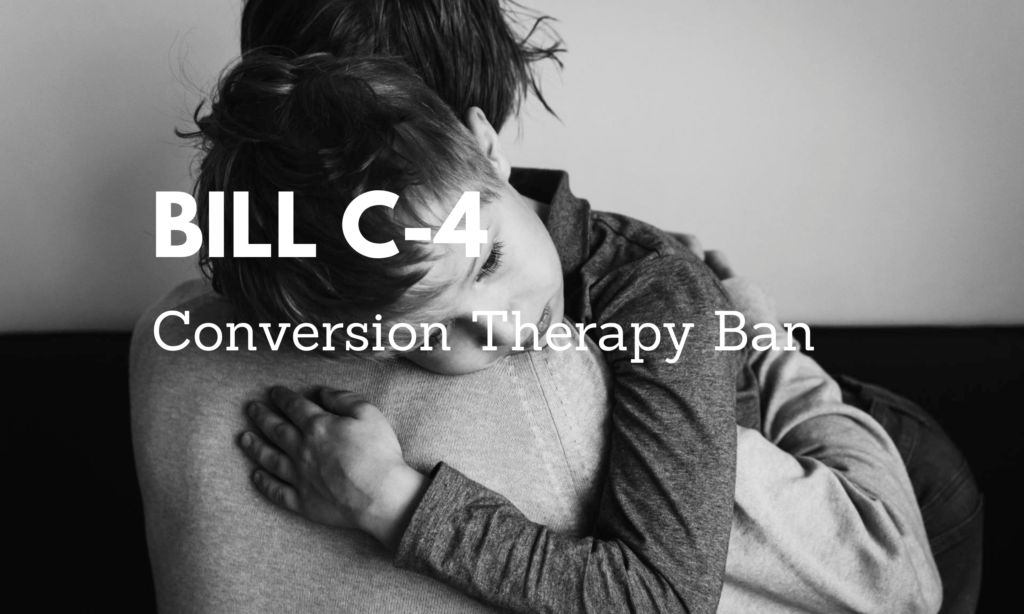
Regarding issues of gender and sexuality, the mandate letters only speak in broad terms, especially since Bill C-4, which banned so-called ‘conversion therapy’ was passed before the mandate letters were released. There is a lot of language around efforts to promote equality and remove discrimination for minority groups both in Canada and around the world.

The Minister of Justice is told to: “Build on the passage of Bill C-4, which criminalized conversion therapy, [and] continue to ensure that Canadian justice policy protects the dignity and equality of LGBTQ2 Canadians.”

The Minister for Women and Gender Equality and Youth is directed to “launch the Federal LGBTQ2 Action Plan and provide capacity funding to Canadian LGBTQ2 service organizations” and “continue the work of the LGBTQ2 Secretariat in promoting LGBTQ2 equality at home and abroad, protecting LGBTQ2 rights and addressing discrimination against LGBTQ2 communities, building on the passage of Bill C-4, which criminalized conversion therapy.”

It is hard to say what ‘building on the passage of Bill C-4’ looks like exactly because specifics are not provided. However, Bill C-4 is concerning on multiple levels, and building on it will likely follow in a similar vein.  Further information on Bill C-4 can be found here.

Child Care

Child care continues to be an issue the federal government is pushing. The Minister of Families, Children and Social Development is tasked with concluding negotiations with provinces that have not yet signed an agreement with the federal government (Ontario and New Brunswick), and ensuring that $10-a-day child care is available throughout Canada. They also plan to “introduc[e] federal child care legislation to strengthen and protect a high-quality Canada-wide child care system.”  You can read more about a Christian perspective on universal child care here.

Drug Use

The Minister of Mental Health and Addictions is tasked with advancing “a comprehensive strategy to address problematic substance use in Canada, supporting efforts to improve public education to reduce stigma, and supporting provinces and territories and working with Indigenous communities to provide access to a full range of evidence-based treatment and harm reduction, as well as to create standards for substance use treatment programs.”

This is not a new issue but there seems to be a new emphasis on it. Bill C-5, a reiteration of Bill C-22 from the previous Parliament, seeks to move increasingly towards treating substance abuse as a health issue instead of a criminal issue.

Conclusion

The issues presented here are priorities of the federal government, and they also raise various questions and concerns about what changes to legislation and regulations on these topics will look like. Stay tuned for further resources and action items as we see how these issues develop over the next few years.

In the wake of the unanimous passage of C-4 (conversion therapy) through the House of Commons and the Senate, a number of ARPA staff took to the keyboard and submitted letters to the editor decrying this development. Here’s what five staff had to say…

C-4 Blew Up

Published by Daniel Zekveld in the Ottawa Sun

C-4 is an apt bill number for the conversion therapy bill that blew up in the House of Commons and more recently in the Senate, leaving our democracy suffering as a result. Last I checked, democracy meant that we Canadians choose people to represent us. But, apparently, it makes no difference when it comes to conversion therapy, a bill that was controversial in the past session of Parliament and remains controversial among many Canadians today.

The reason we have opposition parties is to oppose government legislation. Even if it isn’t opposing the principle, opposition parties are supposed to improve legislation through the parliamentary process.

But this has all changed. Supposedly legislation can pass every step in the House of Commons within 48 hours with all-party unanimous consent, and likewise in the Senate. No need for debate. No need for improvement. No opposition. In fact, hardly enough time for constituents to provide input to their representatives. This is problematic in the context of Bill C-4, but also sets a dangerous precedent for other pieces of legislation.

Democracy in Canada briefly exploded over Bill C-4. That doesn’t mean it’s broken forever, but it’s time for our MPs and senators to seriously consider their roles in passing legislation for the good of all Canadians.

Many Canadians have reason to be concerned with the wording of Bill C-4, even if it contains some good. Does our government care anymore?

O’Toole’s Tories do not understand the role of the Opposition

Published by Mike Schouten in the Toronto Star

Did MPs shirk their responsibilities in this instance?

You bet they did.

In a speech to the Empire Club of Canada in 1949, one of the greatest Conservative leaders John Diefenbaker said this about the role of the Opposition: “If Parliament is to be preserved as a living institution, His Majesty’s Loyal Opposition must fearlessly perform its functions. When it properly discharges them the preservation of our freedom is assured. The reading of history proves that freedom always dies when criticism ends. … [The Opposition] finds fault; it suggests amendments; it asks questions and elicits information; it arouses, educates and moulds public opinion by voice and vote. It must scrutinize every action by the government and in doing so prevents the shortcuts through democratic procedure that governments like to make.”

Diefenbaker would consider his party’s passivity on Bill C-4 to be a dereliction of duty.

The fact that it was the Opposition who moved to pass this bill without scrutiny amplifies the neglect.

Parliamentary Procedure in Laypersonese

Submitted by Ed Hoogerdyk

So, on December 1, 2021, the Opposition presented this motion in the House of Commons:

That, notwithstanding any Standing Order or usual practices of the House, Bill C-4, an act to amend the Criminal Code (conversion therapy) be deemed to have been read a second time and referred to a Committee of the Whole, deemed considered in Committee of the Whole, deemed reported without amendment, deemed concurred in at the report stage and deemed read a third time and passed.

The masked members of the House passed the motion, hugged, shook hands, and danced.

In laypersonese the motion reads:

We have a great idea! Let’s forget that lawmaking is one of our most important responsibilities. It’s almost Christmas and we don’t want all this legislative stuff to take up most of our time. Think about it: no study, no debate, no work! So, let’s put democracy on hold, skip all this needless process hoopla, and just pretend that it all happened anyway! We say pass C-4 and dance on the floor!

Dear Canadians, isn’t this embarrassing? Let’s hope the Senate takes at least an extra half hour in their deliberations to make up for it, before body-affirming counseling becomes illegal for children, teens, and consenting adults who do not identify as heterosexual or cisgender.

A New Kind of Conversion Therapy

Submitted by Anna Nienhuis

Mere days into the new session of Parliament, all political parties collaborated to fast-track Bill C-4, a bill to ban conversion therapy. This move, instigated by the official opposition (many of whom voted against a similar bill earlier this year), eliminated any possibility of debate, study, amendments, or voting – basically all the steps we have a House of Commons and opposition party for.

Bill C-4 bans any practice that has a goal of changing someone’s sexual orientation from homosexual to heterosexual or gender identity from transgender to cisgender. It remains legal to counsel a cisgender or heterosexual individual to become transgender or homosexual, but it is illegal to try to persuade in the opposite direction.

Coercing or forcing people to change their sexual orientation or gender identity is wrong. But counseling those who wish to be comfortable and confident in their biological bodies should not be wrong. And subjecting those struggling with their gender identity to invasive and often irreversible treatments to change their God-given bodies should be wrong.

We are trading one type of conversion for another. Coercion, shaming, force, and silencing are not being eliminated, simply shifted to another group: those who believe in the biblical truth that God’s creation of male and female is a beautiful thing and that people should be helped to be comfortable in their bodies, regardless of whether their interests or personalities align with unnecessary gender stereotypes associated with their biology.

Bill C-4 effectively bans counselors from offering body-affirming counseling to LGBTQ2S+ children, teens, and adults seeking to address their gender dysphoria or unwanted sexual behaviours. It’s bad legislation, and our democratic system completely failed to make it better.

Conversion Therapy Bans Go Too Far

Submitted by Levi Minderhoud

It seems these days that everyone is opposed to conversion therapy. Almost every media article I’ve read on the topic defines conversion therapy something like this: “conversion therapy is a widely discredited and harmful practice that tries to change an individual’s sexual orientation or gender identity.” The House of Commons recently passed a bill – unanimously – that bans conversion therapy.

But even if you agree with the main thrust of these bans, this conversion therapy ban goes too far. We don’t ban people from trying to change other identities; Christians are free to evangelize to Sikhs and Liberals are free to convince New Democrats to change their political identities. Our identities often change naturally through life. Why should it be a criminal offence to try to persuade someone to change their sexual or gender identity?

Even more concerning is the fact that conversion therapy bans also prohibits conversations that try to change someone’s behaviour. Even if you think that aspects of your identity can’t change, surely it should be legitimate to try to influence someone’s behaviour? Canadians are free to try to convince their neighbour to mow their lawn more frequently, vote for the Green party, or get their COVID shot. Why should it be a criminal offence to try to persuade a friend not to look at gay pornography or a son not to wear a dress?

The most concerning part of conversion therapy bans is that it tries to criminalize not only outward actions but internal beliefs, the belief that one sexual orientation or gender identity is better than another. This attempt to criminalize beliefs runs completely counter to the pluralistic, multicultural nature of our country. It seems that Canadians value a diversity of sexual orientations and gender identities over a diversity of beliefs.

And that’s a concerning state of affairs.

Have you had a letter to the editor published recently? If so, we’d love to hear from you!

The Federal Conversion Therapy Ban (Bill C-4) passed unanimously through the Senate yesterday; Senator Mobina Jaffer mentioned the flood of emails she received from concerned Canadians in her speech on Bill C-4; Office bearer training regarding conversion therapy bans in Ontario; Tabitha shares how a victory in court continues to influence decisions today

This blog post was originally published in Convivium Magazine. It is reproduced here with permission.

On December 1st, I watched in stunned disbelief as the Conservative Party of Canada proposed, and then unanimously supported, a motion to expedite the Liberal’s Bill C-4, an act to amend the criminal code in order to ban conversion therapy. In less than 30 seconds, a bill that will profoundly impact religious communities and members of the LGBTQ community, and threatens to undermine fundamental freedoms in disturbing ways, skipped over the entire Parliamentary procedure of the House of Commons: second reading and debate, Justice committee study with experts and stakeholders, report stage, final debate and the third reading vote.

Six days later, the Senate – that supposed chamber of sober second thought – repeated the gimmick, with Conservative Senator Housakos, the acting leader of the opposition in the Senate – putting forward a motion for the unanimous consent of the Senate to pass the bill without any study or deliberation. To my knowledge, never has a piece of criminal legislation sailed through both houses of Parliament without any study whatsoever.

In reflecting on the past week, one of my thoughts is how far the leadership of this conservative party has fallen from more principled days in opposition, like those of the Right Honourable John Diefenbaker. I could only imagine him angrily chastising the party he led from December 1956 to September 1967 for what they had done (or more accurately, what they had failed to do) in the House of Commons in the late afternoon of December 1st, 2021. So, I decided to posthumously interview the Leader of Her Majesty’s Loyal Opposition (1956-57, 1963-67) and former Prime Minister (1957-1963) to get his thoughts.

*Interviewer’s note: In what follows, all quotations noted with quotation marks are historically recorded statements made by Diefenbaker. Anything without quotation marks may or may not be editorialized additions.

André Schutten: Mr. Diefenbaker, thank you so much for agreeing to this rather unconventional sort of interview. It’s not my regular habit to interview or consult the dead.

The Right Honourable John Diefenbaker: You ought to be careful young man. King Saul didn’t fare so well after consulting the ghost of Samuel. But I really don’t mind being disturbed this time. I was rolling in my grave anyway.

AS: I can only imagine. For the benefit of our readers, let me set the context. On Monday, Justice Minister David Lametti tabled Bill C-4 in the House of Commons. This bill proposes to criminalize a practice known as conversion therapy and expands on two previous bills from the prior Parliament (Bill C-8 and Bill C-6). Many critics of the bill, including feminist groups, doctors, religious leaders, and freedom advocates, have winsomely engaged in the debate over this issue for the past two years. The big issue with the bill is not whether to ban conversion therapy. All agree on that point. The issue turns on the definition: the definition of conversion therapy in the bill is very broad and goes well beyond capturing the coercive and tortuous practices that have been long discredited. Fix the definition, say the critics (and I am one of them), and you fix the bill.

JD: Yes, I follow. But I overheard some of the Conservative Members of Parliament saying – a pathetic excuse, honestly – that they were only returning the same bill to the place in the Parliamentary proceedings that it was at when the election was called?

AS: It is a little unnerving that the ghost of John Diefenbaker is listening in on Conservative caucus deliberations.

JD: It would be good for them to know. Most of them would do well to consider the afterlife…

AS: Indeed. But yes, the excuse that they were just returning the bill to where it was before the election is misleading for two reasons: first, this is a new Parliament, so any government that wants to retable a bill always starts over. But more importantly, this isn’t the same bill. The Liberal government fundamentally changed this bill, increasing the breadth of the ban, even banning spiritual counselling for consenting adults and banning “wait-and-see” approaches to gender dysphoria in young kids. This bill tramples freedom: freedom of expression, freedom of religion and conscience, freedom to pursue the medical or spiritual care one as one sees fit.

JD: “Freedom includes the right to say what others may object to and resent… The essence of citizenship is to be tolerant of strong and provocative words.” You know, probably my most oft-quoted statement (and it’s a good one, if I may say so), is that, “I am a Canadian, free to speak without fear, free to worship in my own way, free to stand for what I think right, free to oppose what I believe wrong, or free to choose those who shall govern my country. This heritage of freedom I pledge to uphold for myself and all mankind.”

AS: That’s a bold and visionary statement Mr. Diefenbaker. And I agree. Sadly, your party didn’t uphold that pledge this week. The topic was just too sensitive for some of them. Some of them tell me they were “taking too much heat.”

JD: “You can’t stand up for Canada with a banana for a backbone.”

AS: [*chuckles]

JD: “We must vigilantly stand on guard within our own borders for human rights and fundamental freedoms which are our proud heritage……we cannot take for granted the continuance and maintenance of those rights and freedoms.”

AS: I agree. I’m not sure the Opposition members understand just what they’ve done. I am most concerned about the kids and other Canadians struggling with deep, existential questions about who they are, how they should live, and how to square their deep feelings and questions of identity with their spiritual commitments. This bill bans access to one set of answers. But the Conservatives also sold out on that heritage of freedom. Look, I’m a constitutional lawyer and I’m telling you, this bill tromps all over freedom of religion for pastoral counsellors, freedom of conscience for medical professionals, freedom of expression for preachers and teachers, freedom of association for communities of faith, and – perhaps ironically – the equality rights of members of the LGBTQ+ community.

JD: The what community?

AS: The LGBTQ+ community. That acronym developed a little after your time, I guess. Anyway, for those who are gay or lesbian, or who are attracted to the same sex but want and choose to live according to their spiritual or religious convictions, they are prevented by the government (with the applause of the opposition) from accessing the kind of help and services that you or I would be able to access.

JD: Yeah, that is ridiculous.

AS: What surprised or shocked me most was that the Opposition motion in support of the government bill was unanimous. Not one MP or Senator stood against it even though some 60 of those MPs had voted against a more mild version of the bill just six months earlier. Judging by the reaction on the floor, there were a small number of that caucus who were coerced to keep their mouth shut or lose their job, despite that same morning their leader having pledged a “free vote” on this issue. A few good men and women must have been threatened by their fellow Conservatives to keep quiet.

JD: “What is the difference between a cactus and a conservative caucus? On a cactus, the pricks

are on the outside.”

AS: [*laughter]

JD: “One moment [Parliament] is a cathedral, at another time there is no words to describe it when it ceases, for short periods of time, to have any regard for the proprieties that constitute not only Parliament, but its tradition. I’ve seen it in all its greatness. I have inwardly wept over it when it is degraded.”

AS: I was inwardly weeping this week. I’m guessing a few good MPs were as well. I see this, first and foremost, as a failure of leadership. But let’s talk about the role of the Opposition in Parliament some more.

JD: “The Opposition that fulfills its functions makes as important a contribution to the preservation of the Parliamentary system as does the government of the day.”

AS: Well, what is that function then? Can you expand on that?

JD: “If Parliament is to be preserved as a living institution, His Majesty’s Loyal Opposition…”

AS: Actually, it’s Her Majesty’s Loyal Opposition now…

JD: Okay. Well, I was quoting from the speech I gave in October of 1949 to the Empire Club of Canada. And at that time the Head of State was King George VI. And so I said, “If Parliament is to be preserved as a living institution, His Majesty’s Loyal Opposition must fearlessly perform its functions. When it properly discharges them the preservation of our freedom is assured. The reading of history proves that freedom always dies when criticism ends. It upholds and maintains the rights of minorities against majorities. It must be vigilant against oppression and unjust invasions by the Cabinet of the rights of the people. … It finds fault; it suggests amendments; it asks questions and elicits information; it arouses, educates and molds public opinion by voice and vote. It must scrutinize every action by the government and in doing so prevents the short-cuts through democratic procedure that governments like to make.”

AS: I love that line: “Freedom always dies when criticism ends”. Brilliant. And I completely agree with how you ended that: the Opposition “prevents the short-cuts through democratic procedure that governments like to make.” Well said. Sadly, the Opposition this week did the exact opposite. They gave the government a short-cut!

JD: “Parliament is a place where in full discussion freedom is preserved, where one side advances arguments and the other examines them and where decisions are arrived at after passing through the crucible of public discussion. The Opposition that discharges its responsibilities becomes the responsible outlet of intelligent criticism. Indeed, most, if not all, authorities on constitutional government agree that Britain’s freedom from civil war since the development of the party system is due in the main to the fact that the Opposition has provided an outlet and a safety-valve for opposition.”

AS: You used the phrase “intelligent criticism.” I like that. And I saw that in the last Parliament with Bill C-6 (the previous iteration of this bill). I saw 62 MPs speak winsomely, thoughtfully, carefully, on a sensitive issue, giving intelligent criticism. Parliament can criminalize tortuous, coercive conversion therapy without going too far, without violating fundamental freedoms. But then this week, due to fatigue, laziness, cowardice, I’m not sure what, but they caved.

JD: “[T]he experience of history has been that only a strong and fearless Opposition can assure preservation of our fundamental freedoms and of the rights of the individual against executive and bureaucratic invasions of those rights. Quintin Hogg, an outstanding member of the British Parliament has given the answer in these words: ‘Countries cannot be fully free until they have an organized Opposition. It is not a long step from the absence of an organized Opposition to a complete dictatorship.’”

AS: So true. So, would you say that the Opposition must oppose in each and every instance?

JD: “The Opposition cannot oppose without reason. Its alternative policies must be responsible and practicable for it has a responsibility to the King to provide the alternative government to the one in power. Without an Opposition, decision by discussion would end and be supplanted by virtual dictatorship for governments tend to prefer rule by order-in-council to Parliament and bureaucrats prefer to be uncontrolled by Parliament or the courts.”

AS: This is definitely a big issue that I’ve been tracking especially in the last two years. The executive and bureaucratic branch is almost wholly untethered by the legislative branch. We sometimes say we have “responsible government” but I feel like it’s in name only.

JD: “The responsibility of the Opposition has been greatly increased, for in the last few years the Cabinets in the various Parliaments of the British Commonwealth have recovered most of the powers lost two hundred years ago. It must not be forgotten that Parliament gave up many of its rights during the days of war and allowed fundamental freedoms to be abrogated. These rights were given up as security for victory. These freedoms must be restored and only with a strong Opposition is restoration certain.”

AS: History is repeating itself! Parliament (and the provincial legislatures) have allowed fundamental freedoms to be abrogated in many ways in the face of a pandemic, and these freedoms were given up as security for safety. But here too, the criticism from the opposition in any province or in Parliament seems only that the government has not abrogated freedoms enough.

JD: “It is human nature for governments to find the Opposition distasteful and the longer governments are in power the more they become convinced that they govern by Divine Right and that their decisions are infallible. Only a strong Opposition can prevent a Cabinet with a commanding majority from ruling without regard to the rights of minorities.”

AS: Tell me about it. We have drifted a long way in the last few decades Mr. Diefenbaker.

JD: “The absence of a strong Opposition means a one party state. A one party state means an all-powerful Cabinet. It is as true in the twentieth century as it was in the nineteenth when Lord Acton wrote, ‘All power corrupts; absolute power corrupts absolutely.’”

AS: Actually, he said, “Power tends to corrupt, and absolute power corrupts absolutely.”

JD: Watch your sass there, son.

AS: Sorry sir. Please go on.

JD: “There have been tremendous changes in government in the last fifty years but it is nonetheless true now as it was at the beginning of this century that only with an organized and effective Opposition can democracy be preserved. Canada’s freedom and destiny is in the custody of the Opposition no less than it is of the Government. Government has become so complex and its ramifications so extensive that no matter how industrious a member of Parliament may be, it is impossible to master all the problems that come before Parliament and more so in that there are not available to the Opposition the trained civil servants who are at the disposal of the government at all times.”

AS: This is a really good point. I remember meeting once with the official opposition’s justice critic. He told me he had two policy staffers. That’s it. His counterpart on the government side has 3,000 lawyers at his disposal within the Justice Department. The justice critic was outgunned and appreciated any extra advice I could offer for that reason alone.

JD: “In my opinion the Opposition will not be able to discharge its duty unless it has available to it trained and outstanding research experts whose salaries will be paid by the state.”

AS: I guess, in the meantime, this is where groups like my employer ARPA Canada come in?

JD: Yep. That’s exactly right. The more you can help and the more your community can support you, the more impact for good you will have.

AS: Thank you. I’ll make sure our constituents hear that too. They have been incredibly supportive in the past decade, I must say.

JD: “While Parliament has its short-comings it remains the bulwark of our freedom. … Parliament must continue to be the custodian of freedom. To that end it must constantly change its procedure to meet the changing needs of a modern world but must be changeless in its concept and tradition. Parliament will only remain the guardian of freedom and our free institutions so long as His Majesty’s Loyal Opposition is fully responsible and effective in the discharge of its functions.”

AS: That’s a great note to end this interview on, Mr. Diefenbaker.

JD: You should really get your readers to read my whole speech on the role of the opposition. It was quite a good speech, if I do say so myself.

AS: It is an excellent speech and should be mandatory reading in every grade 10 civics class and a prerequisite for anyone to serve as a Member of Parliament. I’ll post a link to the speech Mr. Diefenbaker.

JD: Post a what?

AS: Never mind. Thank you so much for sharing your wisdom and your vision for the role of the opposition. And thank you for being a principled leader in your time, one to whom others who follow in your footsteps ought to aspire. May you rest in peace.

*In the interview above, I use quotation marks to indicate direct quotes from Mr. Diefenbaker’s past speeches or writings. Where there are no quotation marks, the interviewer has used his imagination to communicate what the ghost of “Dief, the Chief” might have said in an interview.

Send an EasyMail to Senators today! – https://easymail.staging.arpacanada.ca/?topic=10685 Bill C-4, banning so-called ‘conversion therapy’ was unanimously passed in the House of Commons and has now been fast tracked into the Senate. Write to your Senators asking them to oppose this legislation.

On December 1, the House of Commons passed a motion that was introduced by MP Rob Moore, the Justice Critic for the Conservative Party. Here is what MP Moore said:

I am asking today for unanimous consent from the House to adopt the following motion. I move:

That, notwithstanding any Standing Order or usual practices of the House, Bill C-4, an act to amend the Criminal Code (conversion therapy) be deemed to have been read a second time and referred to a Committee of the Whole, deemed considered in Committee of the Whole, deemed reported without amendment, deemed concurred in at the report stage and deemed read a third time and passed.

Not one MP stood to oppose unanimous consent, and a bill that will have tragic consequences for parents, spiritual leaders, counsellors, and, most importantly, Canadians of all ages struggling with sexual and gender identity questions passed through the entire House of Commons process and proceeded directly into the Senate in a mere matter of moments.

Context

In the previous Parliament, 62 MPs had the courage to vote against Bill C-6 because of its poorly drafted definition of conversion therapy. That vote occurred in June, just prior to Parliament being dissolved for the Fall election. On November 29, just a week into the new Parliamentary session, the Liberals introduced Bill C-4, a conversion therapy ban even worse than its predecessor. Less than 48 hours later, not one single MP was willing to oppose a motion to have Bill C-4 proceed directly to the Senate without debate, analysis, vote or the possibility of amendments in the House.

What is the role of Her Majesty’s Loyal Opposition?

In a speech to the Empire Club of Canada in 1949, one of the greatest Conservative leaders John G. Diefenbaker said this about the role of the Opposition: “If Parliament is to be preserved as a living institution, His Majesty’s Loyal Opposition must fearlessly perform its functions. When it properly discharges them the preservation of our freedom is assured. The reading of history proves that freedom always dies when criticism ends. … [The Opposition] finds fault; it suggests amendments; it asks questions and elicits information; it arouses, educates and molds public opinion by voice and vote. It must scrutinize every action by the government and in doing so prevents the short-cuts through democratic procedure that governments like to make.

Diefenbaker would consider the Conservative Party’s passivity on Bill C-4 to be a dereliction of duty. The fact that it was the Opposition who moved to pass this bill without scrutiny amplifies the neglect.

Who will be most impacted?

What is even more concerning is that the changes to this bill will receive no scrutiny from our democratically elected representatives. Bill C-4 will deny both children and adults who are dealing with unwanted desires regarding their sexuality and gender the broad range of choices for counselling and spiritual support that are widely available to all other Canadians. If passed by the Senate, this bill will allow a heterosexual teen to receive help with a pornography addiction but will criminalize a gay or lesbian teen for pursuing similar help. Children struggling with gender dysphoria will be rushed toward synthetic hormone injections and the surgical removal of healthy, functioning body parts, with alternatives criminally silenced.

Why this is concerning

Members of Parliament had the opportunity to point out flaws like this through the normal parliamentary process. Now they don’t. Canadians would have had the opportunity to engage in civil discourse with their elected lawmakers in expressing their concerns if the bill followed the normal parliamentary process. Now they don’t.

As a Christian advocacy group, this is deeply concerning to us, not only on this issue but also on how we proceed with many other files.

We are preparing to engage with other public policy debates such as limits on free speech and regulations surrounding assisted suicide. Will the response on these issues be similar to the response to conversion therapy bans? Will MPs again neglect the duty of the Official Opposition?

Relationships first, policy second

ARPA Canada has worked hard for many years to communicate respectfully and constructively with elected officials, building relationships many with Members of Parliament. We encourage our supporters to do the same.  We will continue to do so, although we feel that some of those relationships have been seriously undermined by what happened in the House last week.

Unfortunately, the inaction on Bill C-4 has created further distrust in the political process and a feeling of betrayal for social conservative constituents across the country. There is a growing question, which may also be a question in the minds of some MPs as to whether the Conservative Party of Canada or any mainstream party is a viable vehicle to advance the policies Christians care about.

A plea to politicians

Politicians, especially those who want to take a biblical stand, have a special, albeit challenging, task. We hold them up in prayer regularly so that with God’s help they will be able to carry out their office with conviction and integrity. We encourage them to uphold biblical principles that are related to the many serious issues that they grapple with every day. We hope we can move forward from here to rebuild a relationship built on trust, openness, and a common goal of working for the good of our fellow Canadians.

Wednesday December 8th:

Watch this week’s Quick Update video for more analysis, review, and encouragement about what happened with Bill C-4 this past week.

UPDATE: Senate passes Bill C-4 by unanimous Opposition motion.

Tuesday December 7th, the Senate passed Bill C-4 unanimously, like in the House of Commons, by an opposition motion by Conservative Senator Leo Housakos.

Director of Law and Policy André Schutten and Director of Advocacy Mike Schouten recorded a livestream just after the decision. You can watch their reactions below.


UPDATE: Tuesday December 7th

Yesterday we asked you to send an email to Senators in your province asking them to debate and amend Bill C-4. The goal we set was 2400 emails in a span of 24 hours. Thanks to everyone who has already responded to this call to action! This morning we are closing in on 1000 emails and would love to see that number increase throughout the day!

Will you join us in a last push?

The Senate meets today at 2 pm EST to discuss Bill C-4. Wouldn’t it be great if their inboxes were flooded with emails from concerned Canadians. Let’s pray that with our messages in their minds, they enter the chamber today with the intent of taking a long hard look at this legislation.


It was only a few days ago that we shared the disappointing news that Bill C-4 (conversion therapy ban) had been fast-tracked through the House of Commons at the instigation of Conservative Party. This news really hurt as it was just a few months ago that well over half of their caucus voted against this terrible legislation.

The bill is now in the Senate, so by God’s grace we still have an opportunity to encourage amendments that make it less bad.

But, it appears that the Senate is also prepared to fast-track Bill C-4! Things are happening incredibly quickly and while it is frustrating that parliamentary procedure seems to have gone by the wayside, there still is a small window for us to try and make a difference.

Will you commit to sending an email to the Senators in your province? We are hoping to have at least 2400 emails reach the Senate within the next 24 hours – 100 emails an hour for 24 hours. With God’s blessing and your help we can do this!

ARPA’s EasyMail system is the tool we are using to achieve this goal. As the name suggests, it’s super easy and you can begin by clicking the button below.

Please also take a moment to pray:

Pray:


Yesterday, the Conservative party introduced a motion to unanimously pass Bill C-4 (conversion therapy bans) through the House of Commons. The motion carried without even one MP having the courage to object.

As André mentioned in the video we released last night, we are extremely disappointed with this development. After reviewing the situation with the team this morning, we believe that those who need to hear from you are the ones who had the courage in June to vote against this bill.

There were only 5 sitting days between the vote in June on Bill C-6 and the introduction of C-4 in November. Yet the result could not be more different. Yesterday’s developments are extremely concerning because the decision of these MPs (who had already voted against this bill in June) to not do anything will have negative impacts on children and adults who are struggling with their gender and sexuality. This was a politically crass decision that has real-world consequences for vulnerable people.

What can you do?

We are encouraging all ARPA supporters to commit to phoning and writing a good old-fashioned, hand-written letter to at least 5 of these MPs about the unanimous passing of Bill C-4.

What do I write?

Here are some thoughts:

– In June you voted against this.

– You faithfully expressed your concern about what was wrong with this bill.

– Yesterday you did nothing to prevent it sailing through the Commons without debate.

– There is now no opportunity to amend this bill in the House so that conversion therapy is properly defined.
Current MPs that voted against C-6

If your MP is not one of the ones listed and you want to include them in your communication as well, click here.

One-Pager – Conversion Therapy Bans

Conversion therapy bans can be supported if they are well-defined and capture only coercive or dangerous therapeutic practices such as shock therapy. The problem is that the conversion therapy bans being passed in Canada capture the good with the bad by using an overly broad definition.