Bill 89 which changes child services legislation is now law in Ontario. Bill 89 could allow for government intervention where someone thinks a child is not being properly supported by parents who hold to some religious conviction that does not endorse the LGBTQ worldview. It also removes religion as a consideration for the child’s wellbeing. We were concerned this would pass unanimously, but 23 MPPs bravely stood against it (see below). Please send them a note of thanks with our EasyMail that’s been made here. You can also send a note to your MPP who voted in favour of Bill 89 here.
MPPs who voted against Bill 89:
PC Party: Ted Arnott; Bob Bailey; Toby Barrett; Steve Clark; Lorne Coe; Vic Fedeli; Ernie Hardeman; Michael Harris; Lisa MacLeod; Gila Martow; Jim McDonell; Monte McNaughton; Julia Munro; Rick Nicholls; Sam Oosterhoff; Randy Pettapiece; Todd Smith; Lisa Thompson; Bill Walker; Jim Wilson; John Yakabuski; Jeff Yurek.
Trillium Party: Jack MacLaren
PC MPPs absent for vote:
Patrick Brown, Raymond Cho, Randy Hillier; Sylvia Jones; Norm Miller; Laurie Scott.
MPPs who voted for Bill 89:
Liberal Party: Laura Albanese; Granville Anderson; Yvan Baker; Chris Ballard; Lorenzo Berardinetti; James Bradley; Michael Chan; Bob Chiarelli; Mike Colle; Michael Coteau; Grant Crack; Steven Del Duca; Bob Delaney; Nathalie Des Rosiers; Vic Dhillon; Joe Dickson; Han Dong; Brad Duguid; Kevin Daniel Flynn; John Fraser; Jennifer French; Ann Hoggarth; Eric Hoskins; Mitzie Hunter; Helena Jaczek; Sophie Kiwala; Marie-France Lalonde; Jeff Leal; Tracy MacCharles; Harinder Malhi; Amrit Mangat; Cristina Martins; Deborah Matthews; Bill Mauro; Kathryn McGarry; Eleanor McMahon; Ted McMeekin; Peter Milczyn; Reza Moridi; Glen Murray; Indira Naidoo-Harris; Yasir Naqvi; Arthur Potts; Shafiq Qaadri; Lou Rinaldi; Liz Sandals; Charles Sousa; Harinder Takhar; Glenn Thibeault; Daiene Vernile; Soo Wong; Kathleen Wynne; David Zimmer.
ND Party: Gilles Bisson; Sarah Campbell; Catherine Fife; France Gélinas; Percy Hatfield; Paul Miller; Peggy Sattler; Peter Tabuns; Monique Taylor; John Vanthof.
ARPA extensively covered the procession of this bill since it’s introduction in December of last year. We have multiple articles, videos and blog posts on this issue which you can view below. Thank you to all of those who responded to our calls to action!
Final Vote on Bill 89 – Take Action
Bill 89 Pushes Gender Ideology in Child Services
Blog post: ARPA presents to committee reviewing Bill 89
Does Bill 89 protect at-risk kids?
Does Bill 89 promote human rights?
Blog post: Five Bills in Five Years: Gender Ideology in Ontario

The final vote on the bill was held last Thursday morning, and it received royal assent Thursday afternoon.
ARPA and other pro-family groups had been putting a lot of pressure on MPPs to vote against the bill. While it ultimately passed, it appears the lobbying did have an impact.
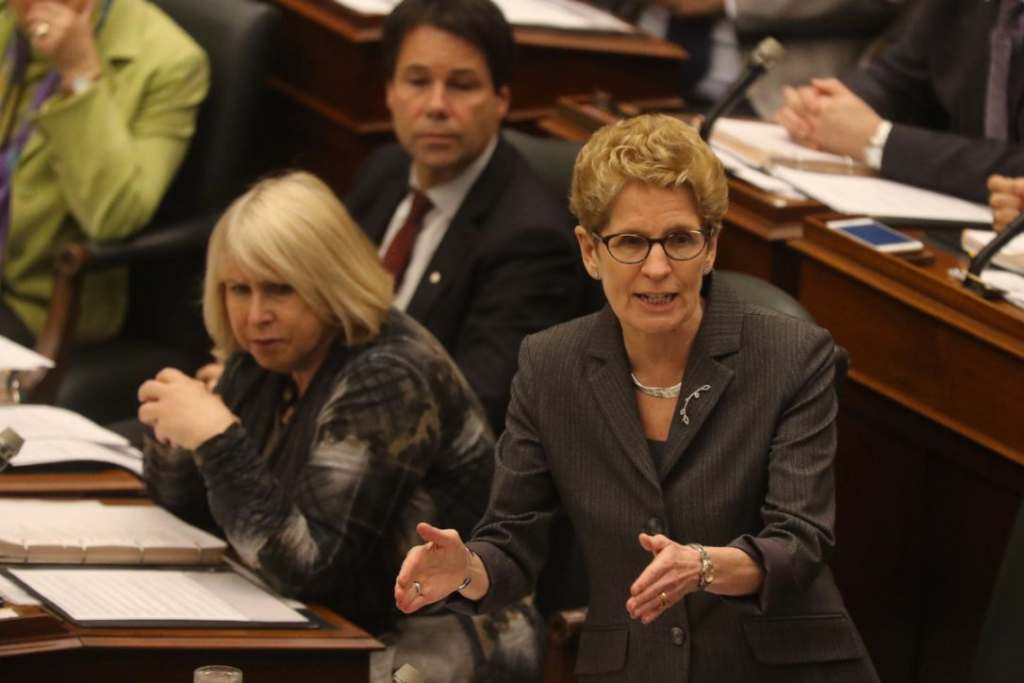
When the bill was introduced at second reading back in March, it passed unanimously. On final reading, that didn’t happen. The Conservative caucus – at least those who showed up for the vote – opposed the bill as a block. The final vote was 63 to 23 in favour. Every single Liberal MPP voted in favour of the legislation. PC Leader Patrick Brown was absent from Queen’s Park for the vote.
Ontario’s Bill 89, the “Supporting Children, Youth and Families Act” has reached final reading in Queen’s Park. The Committee on Justice Policy finished its review of the bill last week.
We do not yet know when the final vote in the Assembly will be, but we expect it could be between May 29 and June 3.
Parental authority not respected
ARPA Canada and other organizations have called on MPPs to amend Bill 89 to include clear protection of the right of parents to teach their children according to their conscientious or religious beliefs – including on matters of sexual identity and conduct.
Sadly, no such amendment has been made.
Government overreach not retracted
ARPA has also called for the list of personal identifying characteristics taken from the Human Rights Code – which includes gender identity and gender expression – to be removed from Bill 89. No such amendment has been made.
Bill 89 incorporates the list of protected personal characteristics (race, age, sex, sexual orientation, gender identity, etc.) from the Human Rights Code, but divorces this list from its statutory context, which limits its application to housing, employment, and service provision and includes protections for freedom of conscience and religion.
The Child and Family Services Act, which Bill 89 would replace, has never included the long list of protected personal characteristics found in the Human Rights Code. Adding this list of “identifiers” is not only unnecessary – the Human Rights Code already applies to children’s aid societies and adoption agencies – it is also fundamentally unsound. It prioritizes the state’s controversial equality doctrines over freedom of conscience, religion, and expression and extends the trans-affirming mandate into the realm of the family.
Oppose Bill 89
At this late stage, we believe it is necessary to urge MPPs to oppose Bill 89 unless amended by adding clear provisions to protect religious freedom or by removing the Human Rights Code list of identifiers.
Urging MPPs to oppose Bill 89 if not amended is not to say that the bill does nothing good. For example, the bill updates the terminology with respect to First Nations, Inuit, and Métis communities, using those terms rather than “Indian”, while also facilitating greater direct involvement from an Aboriginal child’s community in the child’s care. But such changes can be made without at the same time making changes that are detrimental to parental authority, religious freedom, and children’s wellbeing.
Sadly, Bill 89’s pro-subsidiarity approach with Aboriginal children is not followed with the rest of the bill. Ontario’s legislative history shows that where “gender identity” is added to a statute, ideological policies follow and the state’s power to enforce its equality doctrines expands.
Being engaged long term
Many people are understandably saddened by the swift advance of this government’s social agenda. Bill 89 is likely to pass. It is a government bill and the government controls the legislature. But by speaking up and spurring a discussion about it now, we can plant the seeds for better policy in the future.
We remain hopeful that we can work with the Progressive Conservatives towards greater protections for freedom of conscience and religion in child services and other contexts.
Of course, we do not put our trust or our hope in rulers. But we are thankful for the gift of good government. We do believe that God is pleased when His laws and His design are honoured. And we believe it is loving towards our neighbours to stand up for the truth. More specifically, in this context, we believe it is loving to oppose the legal entrenchment of the belief that one’s gender is one’s choice, a matter of self-identity, which others must affirm.
That is why ARPA encourages Christians to be engaged citizens. Being an engaged citizen is one of many of a Christian’s responsibilities, but it is an important one.
As Bill 89 approaches final reading, we encourage you to email and phone your MPP about Bill 89. To read more about the bill, see the articles linked on this page.
Finally, consider becoming involved in politics locally. Even now, parties are selecting candidates for the next provincial election. How can you be involved beyond voting in the general election?

ARPA lawyer John Sikkema says the amendment won’t actually do anything to protect parents or foster parents. “As the Minister said, where someone is not affirming their child in their sexual orientation or gender identity, that may be considered a form of child abuse because these things are being added as matters to be considered in promoting the child’s best interest.” But Sikkema says that begs the question of how parents are free to respond in a way that’s consistent with their beliefs and worldview. He says the proposed amendment does “absolutely nothing” to remedy that dilemma.
Committee debate is continuing on the Bill, and there’s still no firm date for a full debate in the legislature.

Earlier this month, ARPA lawyer John Sikkema made a brief appearance before the Justice Committee at Queen’s Park. Sikkema says he only had five minutes to speak, so he focused specifically on why adding those definitions from the Human Rights Code to the law was “bad public policy.” For example, he says, gender identity is problematic because gender identity and gender expression involves “behaviours that parents might respond to differently depending on the circumstances and the child.”
The Committee started the wrap-up of its consideration of the bill last Thursday, and it’s headed back to the legislature soon. Sikkema says this is the stage that presents the best chance of getting amendments to the bill, and ARPA has picked two key points it would like added. You can see those points, and email your Ontario MPP, at this link. Sikkema also wrote a more extensive blog post about his appearance before the Committee, which you can see here.
by John Sikkema
On Thursday afternoon, April 6, I appeared before the Ontario legislature’s Standing Committee on Justice Policy on behalf of ARPA Canada to discuss Bill 89.
I was given five minutes to present to the Committee, which was supposed to be followed by nine minutes of questions from Committee members. (More on that, below.)
Given the short presentation time, I focused on why it is bad public policy to add a long list of personal identifying characteristics (the child’s race, family diversity, creed, sex, sexual orientation, gender identity, gender expression, and more) as matters that must be considered whenever foster and adoption agencies, child protection services, or judges make decisions about a child’s care. The list is taken from the Human Rights Code of Ontario, which the government uses for its facile and misleading talking point that Bill 89 advances human rights.
First, I pointed out that neither of two independent agencies – the Coroner’s Jury and the Auditor General of Ontario – which examined the child services system and released extensive reports in 2015 recommended any such change. Yet Bill 89 is supposedly a response to these reports.
Second, unlike the list of identifying characteristics that Bill 89 takes from the Human Rights Code, the “religious faith, if any, in which the child is being raised”, which Bill 89 would remove from the current law, is a discernible fact regarding the way in which a child is being raised. Taking it into account can help to ensure stability and continuity in a child’s life and to respect the parents’ rights to direct the upbringing of their children.
Bill 89, however, would direct child protection workers, judges, and others to consider various aspects of a child’s subjective identity that may be difficult or impossible to discern, particularly at a younger age, and also liable to change. Moreover, it is not at all clear how such characteristics should be discerned, weighed, and how they will play into decision making about a child’s care. Rather, Bill 89 gives the Minister broad regulatory powers to fill in the gaps.
The third reason that adding the list of identifying characteristics is bad policy is that it removes this list from its proper context in the Human Rights Code. The Human Rights Code, while generally prohibiting discrimination based on race, sex, gender identity, etc., has built-in protections for freedom of religion and association. The Code permits religious institutions, for example, to deviate from the state’s equality doctrines for good faith reasons. The Code also allows a person to discriminate when leasing his or her own shared living space. Such provisions honour fundamental freedoms of belief, religion, expression, and association. Bill 89 does not. It lifts the equality provision out of the Code and by doing so disregards the conscience of people who in good faith do not share the government’s beliefs
Fourth, Bill 89 extends the state’s sometimes controversial equality doctrines (consider the Ontario Human Rights Commission’s policy on gender identity) beyond the realm of employment, housing, services, and vocational associations – where the Human Rights Code applies – and into the realm of home and family, where the Code does not apply. This is a dangerous government overreach.
It’s one thing for the state to demand that an employer accommodate a person’s trans-identity, address them by their preferred name, permit them to dress a certain way, use a certain washroom, etc. It’s another thing entirely for the state to expect this of parents vis-à-vis children. I’m sure every MPP knows many people who, while responding compassionately in their own way, would not actively affirm their little boy in the belief that he is a really a girl or socially transition him to live as the opposite gender, based on the parents’ reasonable belief that doing so is wrong or is simply not in the child’s long-term best interests.
The fifth reason this change is bad policy is that sexual orientation, gender identity, and gender expression are particularly problematic additions to the law in the child and family services context. Unlike race, sex, or age, sexual orientation and gender identity involve two distinct things that human rights law typically lumps together. First is the psychological disposition inwardly orienting one towards certain feelings and behaviours. Second is the decision to orient one’s public behaviour to express one’s inward disposition. That is, sexual orientation and gender identity have implications regarding behaviour and actions in a way that race does not.
The term “transgender”, for example, does not merely describe someone who experiences distress at his biological sex, but also a male who wishes to present himself as female. People will have reasonable disagreements regarding the propriety of such behaviour. The government should not coerce conformity with its opinion on such matters from parents, caregivers, and child service providers.
Questions from Committee Members
Each party gets three minutes for questions. The Liberals had the first opportunity, but asked no questions. Instead, one MPP recited prepared talking points—points we’ve heard before, which we refuted in our written submission, and which were not responsive to my presentation.
The Progressive Conservatives asked innocuous questions. They seemed to be concerned about the difference between the terms “creed” and “religion”, since Bill 89 replaces the latter with the former. I explained that our concern was not with the word “creed” per se, but with the fact that Bill 89 replaces “the religious faith, if any, in which the child is being raised” with the child’s race, creed, gender identity etc. The former is about taking into account how a child is being raised, the latter is a list of factors that, in the government’s view, define a child’s subjective identity. I also explained that replacing a parent’s right “to direct the child’s education and religious upbringing” with a right to direct a child’s upbringing “in accordance with the child’s or young person’s creed”, as Bill 89 does, undermines parental authority.
Finally the NDP. The NDP member simply shook her head and said “no questions”, thus forfeiting her time. This particular member had been complaining that the Liberals were rushing the process and not giving witnesses enough time to speak.
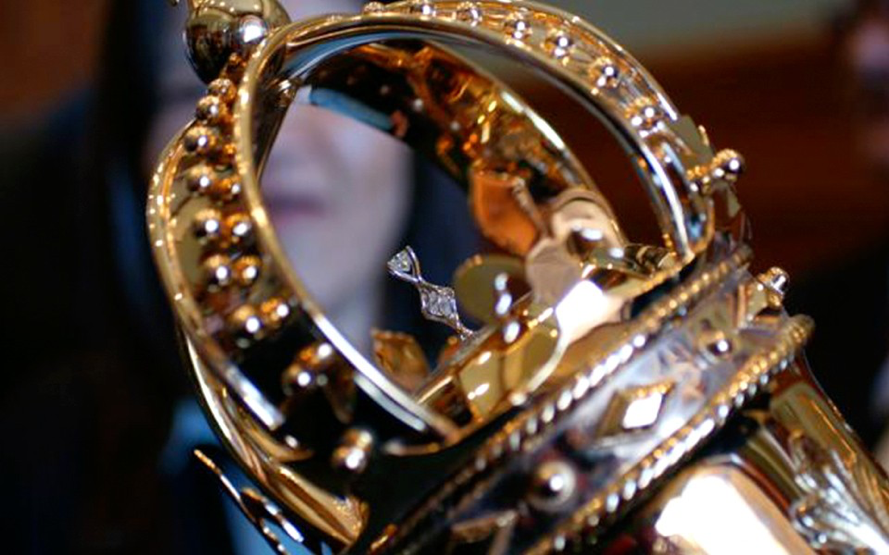
Later, as I was walking through the main hall of Queen’s Park, I noticed a plaque describing the Ontario legislature’s ceremonial mace (pictured above). The plaque said that the polished diamond in the mace is inscribed with the motto of the Legislative Assembly of Ontario, Audi Alteram Partem – “Hear the other side” – a motto which seemed to be a nuisance for the handful of government MPPs running this Committee.
One Liberal MPP later asked another witness (paraphrasing): “You’ve opposed our government’s sex ed curriculum, so why should we listen to you?” Um, democracy?
Make yourself heard
We need to make sure that all MPPs, not just the few on the Committee, hear from people who take issue with Bill 89 as currently written. Yesterday we posted a new Bill 89 Action Item on our website. If you haven’t yet completed this action item, please consider doing so today.
The Committee reviewing the bill has finished hearing from witnesses and will proceed to its final review of the bill this Thursday (April 13). This is the stage of Committee review where amendments can be proposed. In our latest EasyMail on Bill 89, we’ve proposed two amendments, as you’ll see. These two are taken from a list of ten amendments that ARPA proposed in its written submission to the Committee, which you can view here.
Take Action: Send an EasyMail letter to share your concerns with your MPP
The Standing Committee on Justice Policy will do a “line by line” review of Bill 89 this Thursday, April 13. This is the last opportunity for Committee members to propose amendments. In our written submission to the Committee, ARPA included a list of ten proposed amendments, but now that it’s “crunch time”, we need to focus on just two (below).
In case you are not familiar with Ontario’s Bill 89, it would replace the current Child and Family Services Act, which governs child protection services, foster care, and adoption, and would:
- give the state greater power to subject families to its view of sexual identity and morality;
- embed gender identity ideology into child and family services law;
- empower state agencies and judges to require foster and adoptive families to hold certain views regarding sexuality and gender identity as a pre-requisite for receiving children into their care;
- undermine parental authority in a child’s religious upbringing and education; and
- increase the potential for children’s aid intervention in family affairs.
The government claims that Bill 89 would not undermine parental authority nor change the grounds for intervening in family matters to protect children. In ARPA’s analysis, this is simply not true. However, if the government insists that it does not intend to change the law in this way, then it should have no problem supporting the two amendments set out below.
- Add a subsection (4) to section 1 of the bill, stating:
Clarification: religious freedom
(4) Nothing in this Act affects the constitutional freedoms of conscience, religion, and expression, and in particular the freedom of parents to hold and to teach their children their conscientious or religious beliefs with respect to matters of sexual identity and morality.
- Add a section 73.1 in Part V (Child Protection) of the bill, stating:
Clarification: gender dysphoria
73.1 Nothing in this Part requires a parent or caregiver
(1) to actively affirm or to socially condition a child in a gender identity that is incongruent with the child’s birth sex; or
(2) to provide or facilitate access for a child or young person to medical services that are not medically necessary, which includes puberty inhibitors and cross-hormone treatments as treatments for gender dysphoria;
and failure to do so shall not be considered grounds for finding that a child is in need of protection within the meaning of subsection 73(2).
Please send this EasyMail, urging your MPP to adopt the above amendments to Bill 89.
By John Sikkema
Bill 33 in 2012 (“Toby’s Act”), Bill 13 in 2012 (“Accepting Schools Act”), Bill 77 in 2015 (“Affirming Gender Identity Act”), Bill 28 in 2016 (“All Families Are Equal Act”), and now Bill 89 (“Supporting Children, Youth, and Families Act”): together these bills represent the swift advance of a left-wing social agenda in Ontario.
Bill 33 added “gender identity and gender expression” to Ontario’s Human Rights Code in 2012. Ontario was the first jurisdiction in North America to pass such a law. Bill 13 required public and Catholic schools to allow gay-straight alliances and to root out “homophobia”, “biphobia”, and “transphobia”. Bill 77 prohibited “reparative therapy” for minors struggling with issues of sexuality or gender identity disorder.
Bill 28 removed the words “mother” and “father” from Ontario law, while allowing people to become parents through “pre-conception parentage agreements” with up to four unrelated and unmarried adults. Bill 89, currently at committee stage, would among other things integrate gender identity and expression into child and youth services law.
Except for Bill 13, which the Official Opposition fought well, these bills received little scrutiny. Each stems from, at least in part, the newly orthodox gender ideology.
Before “the five”
Years before any of these bills, “trans” persons had significant legal protection against discrimination under the Human Rights Code. Of course, like everyone, they were protected against discrimination based on race, age, sex, religion, and so on, but as of the late 1990s, the grounds of “sex” and “disability” in the Code were interpreted to cover transgenderism and transsexualism also. Human rights tribunals protected people against job loss, unfair treatment, or harassment for asking to be called by a different name, use a different washroom, or dress in a “gender non-conforming” manner, over a decade before “Toby’s Act” passed in 2012.
What then could be the harm in adding “gender identity and gender expression” to the Human Rights Code? What harm could it do to explicitly require employers and housing and service providers not to discriminate against someone because of their “gender identity and gender expression”? If “cross-dressing” or “sex-change” surgeries or new pronouns make you uncomfortable, get over it. If a biological man wants to be treated as a woman, accommodate him (“her” if you don’t want to be sued). Such reasoning was used to placate (sometimes to shame) the sceptical, but fails to acknowledge the difficulties. It would be cruel to kick a tenant out of his apartment for wearing a dress, but how about asking a man to leave a woman’s shelter? What about not allowing a man to play on a women’s sports team? Such questions should not be dismissed offhand as fear mongering. Where the law requires the state and society to treat men as women or vice versa, depending on the individual’s “internal sense” of their gender and associated behaviours, legitimate concerns arise.
The short march from Toby’s Act to Bill 89
Two years after Toby’s Act (2012), the Ontario Human Rights Commission released its new “Policy on preventing discrimination because of gender identity and gender expression”, which beefed up its earlier policy from 2000. You’ve probably heard Professor Jordan Peterson and others criticize this Policy because of its restrictions on free speech. The advancement of this ideology in increasingly radical form has serious consequences, not only for freedom of religion and expression, but also for public health and even public finances.
Already in 2008, the Liberals announced that Ontario would publicly fund sex-change surgeries—elective procedures that do not improve mental or physical health outcomes for persons who experience gender identity disorder. Similarly, Ontario pays for puberty-blocking drugs and cross-hormone treatments, which can cause life-long sterility. Such treatments can cost thousands of dollars per person per year. Yet studies indicate that chemical and surgical impersonation of the opposite sex is associated with negative health outcomes and high suicide rates, even in parts of the world that are considered the most “trans affirming”.
Paul McHugh, Professor of Psychiatry at Johns Hopkins Medical School and former psychiatrist in chief at Johns Hopkins Hospital says, “The idea that one’s sex is a feeling, not a fact, has permeated our culture and is leaving casualties in its wake. The most thorough follow-up of sex-reassigned people—extending over thirty years and conducted in Sweden, where the culture is strongly supportive of the transgendered—documents their lifelong mental unrest. Ten to fifteen years after surgical reassignment, the suicide rate of those who had undergone sex-reassignment surgery rose to twenty times that of comparable peers.”
Adding the dubious concept of “gender identity” to the Human Rights Code, which is unnecessary in order to protect trans people from discrimination or harassment, set the stage for more aggressively pushing gender ideology through government policies and institutions.
Not content to fund “sex reassignment” surgery and cross-hormone injections, MPPs voted unanimously in 2015 to prohibit alternative treatment methods for gender identity disorder. Bill 77 went from second reading to Royal Assent in only three months. It dictates medical policy in the name of political correctness, removing good options for parents and children. One such option was renowned child psychiatrists like Dr. Kenneth Zucker and Dr. Susan Bradley, who believe that encouraging children to be comfortable with their birth sex helps prevent long-term psychopathological problems. Dr. Zucker was removed from his Toronto clinic following Bill 77. More than 500 researchers and clinicians signed a petition in support of him. No matter.
Is affirming a child’s transgender identity, socially conditioning them in that identity, and chemically and surgically altering their bodies to align with that identity the best path? Or is the approach of Dr. Zucker and Dr. Bradley, preferred by many parents, better? How can that even be determined reliably when government brings the hammer down on the latter’s methods? In any case, should the government not defer to parents and doctors to determine the best path?
Gender ideology goes to school
Meanwhile, transgenderism and transsexualism are being normalized in public schools. Bill 13 (2012) defined bullying in a manner that focused on “power imbalance” between bully and victim based on factors including gender identity and expression. It also mandated that school boards promote a positive school climate inclusive of all students, “including pupils of any “race … sex, sexual orientations, gender identity, gender expression, age, marital status, family status or disability” and that boards (including Catholic boards) permit LGBT-positive clubs to be active in their schools and to use the name “gay-straight alliance”.
School boards now cite Bill 13 and Bill 33 (2012) as the basis for their policies. The Toronto District School Board’s policies are typical:
- “[S]chool board and school staff are expected to challenge gender stereotypes and integrate trans-positive content into the teaching of all subject areas […].
- School board and school–based curriculum leaders must integrate trans‐awareness and trans‐ positive advocacy training into staff professional development curricula. Librarians must acquire trans‐positive fiction and non‐fiction books for school libraries and encourage the circulation of books that teach about gender non‐conforming people.”
- “School leaders should make an effort to hire and retain transgender and gender non‐conforming staff. TDSB policy and Provincial legislation requires school board leaders to ensure staff are educated in gender diversity, advocacy and anti‐transphobia education, in challenging gender stereotypes, and in using gender neutral and inclusive language.”
- “A school should never disclose a student’s gender non-conformity or transgender status to the student’s parent(s)/guardian(s)/caregiver(s) without the student’s explicit prior consent.”
- “All students have a right to safe restroom facilities and the right to use a washroom that best corresponds to the student’s gender identity, regardless of the student’s sex assigned at birth.”
- “All students, including transgender and gender non‐conforming students have the right to be addressed by a preferred name and pronouns […]. This is true regardless of whether the student has obtained a legal name or sex designation change.”
- “Employees who wish to use pronouns other than the masculine or the feminine (such as ‘ze’, ‘hir’ and ‘they’) need to be accommodated equally.”
- “School staff must ensure students can exercise their right to participate in gender segregated sports and physical education class activities in accordance with each student’s gender identity.”
Pushing the idea that gender varies independent of sex and that children may fall anywhere along a gender spectrum confuses children. Gender ideology is liberalism in the extreme. Freedom is good, but the freedom to define your identity necessarily has limits. You cannot (yet) identify as disabled if you are not, or as a different age or race or species than you in fact are, and expect the government and society to affirm it. Children have a limited capacity for exercising autonomy. How they self-identify will inevitably be shaped by what they are taught.
Given how recent the policy changes in this area are, particularly in schools, there is a lack of reliable data and long-term studies on their impact. There are, however, credible reports that more children are struggling with identity issues. In November, the National Post reported that doctors are seeing a steady increase in referrals for young children experiencing gender dysphoria. The Independent in the UK reported last year that the latest figures from the Gender Identity Development Service (GIDS) in the UK, for example, revealed that the number of children referred to GIDS increased from 94 in 2009-2010 to 969 from April to December of 2015. New “gender clinics” are opening throughout the U.S. and Canada.
Children should be taught that all persons have dignity and intrinsic worth. All people are equal. Nobody should be bullied, mistreated, assaulted, or harassed. But that does not require affirming transgenderism as healthy and good, any more than respecting members of another religion requires teaching children that all religions are true and good. It does not mean we should teach boys that they can be girls, girls that they can be boys, or both that they can be both or neither. Ontario’s human rights tribunals first began protecting trans persons on the ground of disability. Gender dysphoria (recently changed from “gender identity disorder”) is still listed in the DSM-5 psychiatric diagnostic manual. We don’t need to affirm a disorder as normative in order to treat those who have it with dignity and respect.
What causes this disorder is not well understood, but environmental factors can doubtless play a role. Teaching tools such as the “Gender Unicorn” for very young children are disorienting. Might such policies cause a rise in gender dysphoria among children? New educational resources tell children that what is important is “gender identity”, which does not need to match biological sex. “Only you know whether you are a boy a girl,” the Gender Fairy, a “trans-positive” book tells children. “No one can tell you.”
Gender ideology comes home
This brings us to the Liberals’ Bill 89, the “Supporting Children, Youth, and Families Act”. This government apparently takes its cues for child services law from the Gender Fairy. Replying to questions on the bill, which adds gender identity and expression as factors to be weighed in determining a child’s best interests, Ontario’s Child and Youth Services Minister, Michael Coteau, said, “I would consider that a form of abuse, when a child identifies one way and caregiver is saying, no, you need to do this differently.” Don’t tell your son he’s a boy. That’s up to him (her, them, or zir).
“Abuse is abuse is abuse,” Minister Coteau says. “If a child is being abused, it can come in many different forms. If it’s abuse and if it’s within the definition, a child can be removed from that environment and placed into protection where the abuse stops.” What definition is he talking about? Neither the current Child and Family Services Act nor Bill 89 define abuse. Rather, the term appears in the provision that describes a “child in need of protection”. A child in need of protection includes a child who has suffered emotional harm where there are reasonable grounds to believe that the harm resulted from the actions, failure to act, or pattern of neglect on the part of the parent or caregiver. It also includes a child at risk of suffering mental or emotional harm whose parents or caregivers do not provide treatment. But what if the parents find the state-approved “treatments” inappropriate or harmful? What are they to do?
If a child’s bests interests are determined in part by their sexual orientation or gender identity, can people who would not affirm a child’s trans identity or approve of certain kinds of sexual behaviour expect to be treated fairly when it comes to fostering or adopting? These are reasonable questions. (Just ask a foster parent you know.)
ARPA has heard from some MPPs that they intend to support Bill 89 for two reasons. First, because it’s about protecting children (who could be against that?). Second, because it brings the Child and Family Services Act into line with the Human Rights Code. While both may appear to be good reasons at first glance, both are mistaken. ARPA recently ran two articles our website explaining why, which you can read here and here. If you haven’t yet read the basics about Bill 89 and the issues it raises, I suggest you begin here.
Going forward
Bill 89 should be stopped, unless amended. Of course, it’s a government bill. Government bills tend to pass when the government has a majority of seats in the legislature. Still, it is worth criticizing and opposing. Meaningful scrutiny of and opposition to government bills today can begin to lay the foundations for better policy tomorrow.
Politics requires coalitions to get things done. No doubt, the coalition of those supporting bills like the aforementioned five include not only true believers in gender ideology, but also those persuaded that legislating “trans rights” is compassionate, those afraid of being labeled bigots for their views, and those who would simply rather not talk about social issues.
ARPA’s Gender Identity Policy Report for Parliamentarians explains the issue through a framework founded on principles of grace and truth. The Report’s recommendations, which involve reversing several recent enactments, are recommendations for lawmakers acting as lawmakers. Ultimately, founding law and policy upon a mistaken anthropology is neither compassionate nor just. Sex and gender are not independent of each other. But gender dysphoria calls for a compassionate response.
There is plenty that individuals and civil society organizations can do to love transgender people. I suspect that many employers – including Christian employers – would be happy to hire them. I also happen to think it should be left up to employers, particularly small business owners, to decide if they want to hire or continue to employ a trans person, or any other person. I’ve worked for family businesses, for example, where children are often helping or hanging around the worksite. For such business owners, I doubt their concerns would have much to do with how an employee sees himself, but rather with his behaviour.
Could your workplace accommodate a man who wants to be addressed with feminine pronouns, dress as a woman, and use the women’s washroom, for example? Perhaps it could and would. Maybe people should be free to decide. Requiring everyone to accommodate transgender expression under threat of financial penalties or more (such as mandatory sensitivity training and new workplace policies), all based on the view that not affirming one’s gender identity is a human rights violation, is an overreach, an ideological (you might say religious) imposition. Still, we should ask ourselves: how are we being a living example of Christ’s love to our transgender neighbours?
Transgenderism remains rare. Many people will not know anyone who openly identifies as transgender. But if you do or in case you will, here is some practical advice for loving your neighbour from Denny Burk, a Professor of Biblical Studies.
ARPA Canada’s Grassroots Manager Colin Postma talks about our radio ads regarding Ontario’s Bill 89.
Today we tackle the claim that Bill 89 is needed in order to bring Ontario’s child services law into better alignment with human rights law.
The Opposition Critic for Children and Youth Services, Sylvia Jones (recently replaced by Gila Martow), expressed her support for the government’s Bill 89 early on, saying, “What I see in the legislation is now it’s just matching what’s in the Human Rights Code.” Here again, the Opposition could use a healthy dose of skepticism as it reviews government legislation.
Yes, Bill 89 incorporates the list of protected personal characteristics (race, age, sex, sexual orientation, gender identity, etc.) from the Human Rights Code, but it divorces this list from its statutory context, which limits its application to housing, employment, and service provision, and includes protections for freedom of conscience and religion.
In sections 1 to 6, the Code specifies that it applies to services, housing, employment, and membership in labour and professional associations. Section 14 permits programs designed to serve specific disadvantaged groups to discriminate. Section 18 allows religious, educational, and other institutions to serve the interests of their members in accordance with their beliefs. Section 18.1 says religious officials are not required to solemnize a marriage that would be contrary to their beliefs. Section 19 preserves separate (Catholic) school rights. Section 21 says you can discriminate in choosing who can rent your shared living space. Section 22 authorizes insurance providers to discriminate for good faith reasons. Section 24 permits religious, philanthropic, and other institutions to discriminate in hiring and employment for good faith reasons. These sections all describe lawful forms of discrimination. Such provisions honour fundamental freedoms of belief, religion, expression, and association.
Moreover, there are spheres of life where the Code simply does not apply, such as in your personal and family life. You are free to marry whom you wish. You are free to teach your children what you wish, to encourage them to learn and to do certain things and spend time with certain people and not others. You have the right to help your child through the difficulties of life as you see fit, subject only to demonstrably justified limits on that freedom, such as where the child is being objectively harmed by mistreatment or neglect.
Equality provisions require context
The Child and Family Services Act, which Bill 89 would replace, has never included the long list of protected personal characteristics found in the Human Rights Code (nor has any other statute in Ontario before Bill 13 amended the Education Act in 2012). Adding this list of “identifiers” from the Human Rights Code is not only unnecessary – the Human Rights Code already applies to children’s aid societies, adoption agencies, etc. – it is also fundamentally unsound. It prioritizes equality (or the state’s view of what equality demands) over freedom of conscience, religion, and expression. And it extends the application of the state’s controversial equality doctrines from employers and service providers to parents and caregivers.
The only statute this list appears in today is the Education Act, which, since Bill 13 amended it in 2012, requires school boards to “promote a positive school climate that is inclusive and accepting of all pupils … of any race, ancestry, place of origin, colour, ethnic origin, citizenship, creed, sex, sexual orientation, gender identity, gender expression, age, marital status, family status or disability.” In 2012, the Opposition voted against Bill 13 and put forward their own bill to address bullying in all its forms, a bill that was not preoccupied with “perceived power imbalance based on the aforementioned individual factors,” as one Opposition MPP explained during debate in the legislature. Opposition MPPs also criticized Bill 13 for forcing Catholic schools to allow Gay Straight Alliances. In short, the Opposition did its job well. Although Bill 13 passed, a better option was proposed and there may yet come a day to implement it.
One school board has relied on Bill 13 in defense of its decision to deny a parent’s request for notification when controversial topics are taught to his children, particularly regarding matters of sexuality. The Board argued, successfully (though the ruling is being appealed), that allowing a child to leave the classroom when controversial matters regarding sexuality are taught would be contrary to “values of inclusion” and lead to “feelings of exclusion or marginalization by students”. Bill 13 only applies directly to public and Catholic school boards, but Bill 89 applies to all families. It’s one thing for the government to push its ideology regarding sexuality and gender in public institutions. It’s another for it to force it on families.
Bill 13 was criticized for lacking a full consideration of the Constitution Act, 1867, the Charter of Rights and Freedoms and the Ontario Human Rights Code. The same can be said of Bill 89.
Important questions unanswered … and unasked
So what practical effects will the addition of the Human Rights Code list have? Bill 89 itself is vague on details, but would give the Minister extensive power to make regulations “governing how service providers, in making decisions in respect of any child, are to take into account the child’s race … sex, sexual orientation, gender identity and gender expression”. In short, the Minister gets to decide on the details, without consulting the legislature.
That should make you (and the MPP who represents you) uncomfortable. The Minister of Children and Youth Services, Michael Coteau (also the bill’s sponsor) – the one who would have this regulatory power – has given us some insight into how he thinks. QP Briefing reports:
Coteau said … that it could be abuse for an LGBT teen to be told their identity is wrong and they should change. ‘I would consider that a form of abuse, when a child identifies one way and a caregiver is saying no, you need to do this differently,’ he said. ‘If it’s abuse, and if it’s within the definition, a child can be removed from that environment and placed into protection where the abuse stops,’ he said.
It’s remarkable that the Minister’s remarks have only received attention from QP Briefing, a niche political publication in Toronto. But more remarkable is the fact no Opposition MPPs have called the Minister out for these remarks. The Minister’s comments were reported over a month ago. ARPA brought them to the Opposition’s attention (and began questioning the government about them) over two weeks ago. Even if the Minister was stretching the legal definition of abuse or neglect under Bill 89 (it’s not clear he was), he should be questioned anyway – he is the Minister to whom Bill 89 grants extensive regulatory power.
Here are a few questions the Opposition might want to ask the Minister. If a boy says he is a girl and his parents insist he is not and try to help him accept that he is a boy, is that child abuse? If a child struggling with gender dysphoria wants to start taking puberty blockers and a parent is opposed, should the state intervene? How does the government intend to use the broad regulatory power that Bill 89 would afford to it? How will freedom of conscience and religion factor into this? Will the government ensure that families who do not share its views on matters of sexuality and gender will not effectively be excluded from fostering and adopting?
Here’s what we know from the bill itself. Where “the child suffers from a mental, emotional or developmental condition that, if not remedied, could seriously impair the child’s development and the child’s parent … does not provide treatment or access to treatment”, or where “there is a risk that the child is likely to suffer emotional harm [anxiety, depression, withdrawal, self-destructive behaviour, or delayed development] and the child’s parent … does not provide services or treatment or access to services or treatment,” such a child is “in need of protection” under the law. And affirming a child’s “gender identity and gender expression” is an integral part of protecting the child’s “best interests” under Bill 89.
Two years ago, Queen’s Park voted to ban “reparative therapy” for minors but allow “sex reassignment surgery”. Puberty blockers and cross-hormone treatments, meanwhile, are also publicly funded “treatments” for minors – causing lifelong sterility. Treatment can also include counselling that affirms the child’s perception of his or her “gender identity” or sexuality. If a child is suffering or at risk of suffering mental or emotional harm in connection with gender dysphoria, a parent must provide access to treatment. But what if the parents or caregivers do not find the state-approved “treatments” appropriate? What are they to do?
Children wronged by government’s idea of “human rights”
You’ve probably heard about how employers and service providers can be penalized for refusing to use a person’s preferred pronoun or for “reinforc[ing] traditional heterosexual gender norms”, according to the Ontario Human Rights Commission. Thankfully, the Human Rights Code does not tell you how to raise your children. It does not apply to parents. But Bill 89 extends the trans-affirming mandate into the family. The foster family, the adoptive family, and every family.
Yet the popular and politically correct approach to issues of sexual identity may actually be more harmful. Dr. Kenneth Zucker was Psychologist-in-Chief at Toronto’s Centre for Addiction and Mental Health, Head of the Gender Identity Service for 30 years until 2015 (when his clinic closed under political pressure), and internationally recognized as an authority in this field. Dr. Zucker helped children work through their gender identity disorder, being convinced that affirming and socially conditioning children to identify as the opposite gender is usually not the best path. (By the way, has anyone in Queen’s Park ever stood up for Dr. Zucker?) Dr. Joseph Berger, Consulting Psychiatrist and Fellow of the Royal College of Physicians and Surgeons of Canada and Professor of Psychiatry at the University of Toronto, said that scientifically, there is no such thing as a man trapped in a woman’s body or vice versa.
Dr. Paul McHugh, M.D., is University Distinguished Service Professor of Psychiatry and a professor of psychiatry and behavioral sciences at the prestigious Johns Hopkins University School of Medicine. He was also psychiatrist-in-chief at the Johns Hopkins Hospital for 25 years. Last year, Dr. McHugh published a study with Dr. Lawrence Mayer, Ph.D., scholar in residence in Psychiatry at John Hopkins and professor of biostatistics at Arizona State University. They concluded that there is little scientific evidence for the therapeutic value of interventions to delay puberty or modify the secondary sex characteristics of adolescents and no evidence that all children who express gender-atypical thoughts or behavior should be encouraged to become transgender. They also noted that sex-reassigned individuals were about 19 times more likely to die by suicide compared to control groups. Yet the Ontario government bans the kind of therapy Dr. Zucker provided to hundreds of grateful children and their parents.
The National Post reports that “an increasing number of children as young as preschoolers [are] appearing at gender identity-clinics across the country, convinced they are of the opposite sex.” More “gender clinics” are opening in Canada and the U.S. It’s no wonder, given that schools must teach children that their gender is unique to them and may fall anywhere along a spectrum of genders. (Where is the opposition on that, by the way?) Yet we are supposed to trust that, as gender ideology is pushed in schools and more children become confused and distressed about bodies, that adding “gender identity” to child services law is in the best interests of children and a human rights necessity.
If the government’s policies promote sexual confusion and favour surgical abuse to the gentle approach of Dr. Zucker, then maybe its understanding of human rights has gone terribly wrong.