**UPDATE: Bill 163 passed in Ontario, regardless of our opposition**
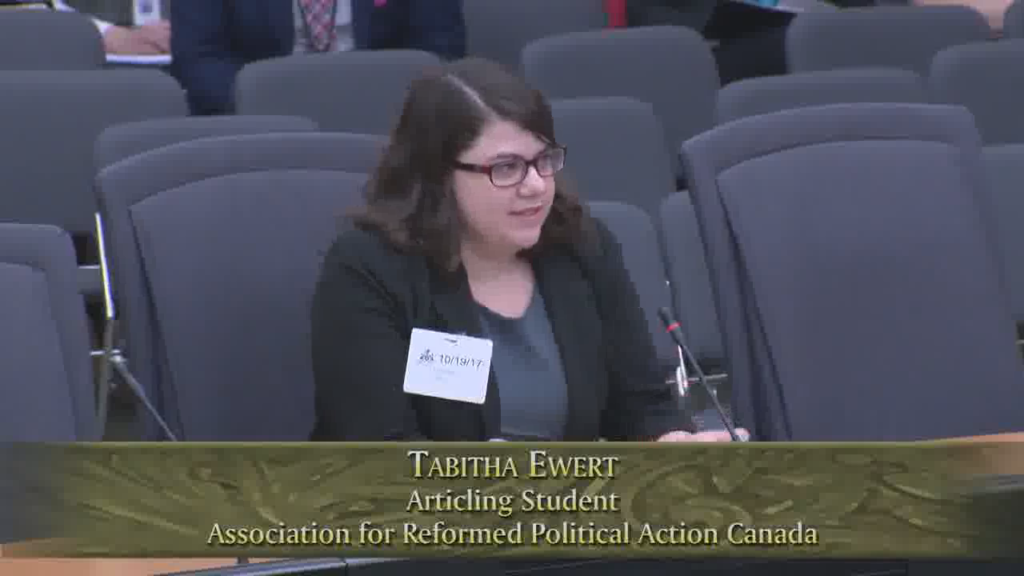
Ontario’s “Safe Access” legislation (Bill 163) proposes to ban all disapproval of abortion around abortion clinics, hospitals and pharmacies. The Standing Committee on General Government at Queen’s Park in Toronto studied the bill on October 19. The Members of Provincial Parliament (MPPs) on the committee heard from a variety of organizations on both sides of the issue and I was grateful for the opportunity to present ARPA Canada’s concerns.
For more information on what “safe access” legislation is, you can read our previous post. In my presentation, I reminded the committee that, earlier this year, the Ontario Superior Court ruled that government censorship of abortion statistics is an unconstitutional violation of freedom of expression. I argued that this legislation is similarly unconstitutional.
Where this bill forbids criminal activities (like assault) it is an unnecessary duplication of the Criminal Code (and an encroachment on Parliament’s jurisdiction). Where the bill forbids peaceful demonstrations, prayer vigils, or publishing dissenting opinions, it infringes freedom of expression.
Those in favour of the bill suggest that it’s pro-women. But protecting women’s rights or making a step forward for women’s rights cannot include fining and imprisoning other women who disagree with you.
Judging from their questions (or lack thereof), it did not appear that the Liberal or PC MPPs engaged with my arguments. The NDP MPP did ask me about the comparison to a similar BC law, but was rather dismissive of my response.
This attitude continued through much of the other presentations made to the committee that day. The Committee members from all three parties were focused on showing how supportive they were of the bill. When a presenter was supportive of the bill, they asked questions like “Is there anything else you would like to say?”, “Were you properly consulted on this bill?”, or “Is there anything more you would like to see in this bill?” However, those who had legitimate constitutional, policy, or social concerns about the bill were either ignored or treated with some hostility.
I was disappointed in the lack of engagement with the serious problems with Bill 163 (even though others expressed the same issues). The MPPs on the committee were more concerned with appeasing supporters of this bill than determining whether it was good law.
That being said, I was able to show principled opposition to this bill, rooted in a thorough constitutional analysis, and my hope is that I at least gave them something to think about.
For immediate release from the Association for Reformed Political Action (ARPA) Canada
October 25, 2017
Ontario Government censors one side of abortion debate
Today the Ontario Liberals – with the help of all Opposition parties – passed Bill 163 by a vote of 86-1. This new law creates “safe access zones”, also known as bubble zones, around abortion providers, prohibiting the expression of any dissenting view on abortion.
“Censoring speech in certain areas, simply because you may not agree with that speech, is unconstitutional and violates free expression in the public square,” said Tabitha Ewert, a recent law graduate and articling student for the Association for Reformed Political Action (ARPA) Canada. Ewert presented to the Standing Committee on General Government during the one-day hearing on Bill 163. “In passing Bill 163, the Ontario government has opened themselves to further constitutional challenges in court.”
In June of this year, the Ontario government lost a case when ARPA Canada challenged their exemption of abortion statistics from Freedom of Information requests in court. The Ontario Superior Court ruled that this censoring of abortion statistics inappropriately infringed on freedom of expression as guaranteed by Section 2(b) of the Charter of Rights and Freedoms. In fact, the judge ruled there was no evidence to suggest that such censorship was necessary today.
Anna Nienhuis, spokesperson for the We Need a Law campaign, was surprised to see this bubble zone legislation come so quickly on the heels of that loss in court. “Mere months later,” she said, “we see the government trying again to give abortion special consideration that no other medical intervention receives or even requests, again infringing on Section 2(b) Charter rights.”
The safe access zones are being introduced following allegations of harassment, such as spitting, by protestors outside Ottawa’s Morgentaler Clinic. “Attorney General Yasir Naqvi should be doing his job and focusing on prosecuting any actual acts of harassment by individuals,” stated Nienhuis, “not targeting all peaceful pro-life people as a group.”
“We do not ban protests on Parliament Hill for fear of making MPs uncomfortable when they come to work. We do not ask those who have lost their hair from chemotherapy to stay away from entrances to hospitals for fear of making new patients feel uncomfortable. We do not shut down bars if two people get into a brawl inside,” added Nienhuis. “To silence an entire group over the alleged criminal behaviour of one individual and to put personal discomfort above freedom of expression is unconstitutional and something no Canadian should support, knowing it could be their opinion that falls out of favour next.”
Nienhuis also argues that this move to silence conflicting views on abortion “paints women as fragile and indecisive, undermining any belief in the pro-choice message that abortion is empowering. Abortion clinics exist for profit, and blocking those willing to stand for life is easier than standing out there themselves to encourage and support women choosing abortion.”
“The Ontario government needs to stop making exceptions for abortion, and let the debate play out in the public. If they are so scared of dissenting opinions, they should consider why they lack the confidence to let their position speak for itself.”
– 30 –
To read the decision of the Ontario Superior Court referred above, click here.
Interview Requests:
For further comment, contact Hannah Sikkema, media facilitator at 1-866-691-2772, ext. 1 or [email protected].

The presentation was made by ARPA articling law student Tabitha Ewert, and she started by referencing this spring’s court victory on Ontario’s ban on the publication of abortion statistics.
Here’s a partial transcript of what she said:
The court found in that case that censoring of such data was an unconstitutional violation of free expression. In essence, the court recognized that there is an ongoing discussion about abortion in this province, and that the government cannot interfere with that discussion.
And so we are happy to see that this government is bringing FIPPA in line with that ruling, but we have major concerns about the rest of this bill and the way that it interferes with the ongoing public discussion.
I have two main points that I would like to make regarding this bill. The first is that it’s unnecessary – we have Criminal Code prohibitions that cover all of the extreme behaviours such as assault. And the second point I want to make is with regard to freedom of expression and peaceful protestors who would be covered by this bill.
So first of all, it is unnecessary. There is just no evidence that without this bill women’s safety or access to abortion would at all be infringed. In Canada, we have safe access to abortion. And part of the reason for this safe access is the fact that we have Criminal Code prohibitions that prohibit such things as assault, threatening, intimidation, or harassment. These provisions cover abortion clinics just as they cover the rest of the province.
And the one incident that is referred to in support of this bill – the alleged spitting in Ottawa – that is assault. That can be charged under the Criminal Code. There’s no reason for the province to supplement the Criminal Code in that situation. In fact, it is unconstitutional for them to do so because only the Federal government can pass Criminal Code prohibitions. And the sponsor of this bill, the Attorney General, should be prosecuting such crimes rather than inventing new laws that also silence peaceful protestors.
And for my second point – the freedom of expression – making it illegal to show disapproval of abortion; that is not about protecting patients or physicians. That is about silencing dissent on the issue. It’s about silencing pro-life speech. But we have no right to be free from dissent in Canada, no matter what issue is at stake.
I just want to be clear on this point, because there’s a lot of rhetoric around this issue. Protecting women’s rights or making a step forward for women’s rights, cannot include fining and imprisoning women who disagree.
And that is what this bill does. It says if you hold a certain opinion, you cannot express it. Your constitutional rights are not protected. That is unconstitutional, and it does not aid the important ongoing public discussion that is going on in Ontario over the issue.
For extreme behaviour – for harassment, for assault – that is covered under the Criminal Code. For peaceful protestors, there is no need to silence them in this ongoing discussion.
You can watch a full video of Tabitha’s appearance at this link.
ARPA’s articling student, Tabitha Ewert, speaks to the Standing Committee on General Government in Toronto about their proposed ‘Bubble Zone Bill.’ This bill proposes to ban any sort of dissenting opinions on abortion from being published or heard within a so-called “bubble zone” around any abortion clinic, hospital or pharmacy. The government bill is being rushed into law, with the opposition fully supporting it. With only two hours notice, Tabitha was able to speak to the committee at the one-day hearing. All three provincial parties are in full support of this leglislation.

We Need a Law articling student Tabitha Ewert says the new bill addresses that issue in two ways. “It replaces the complete exclusion of abortion information with (the notion) that information related to abortion cannot be released if it identifies individuals or a facility.” And she says the second exclusion is “a bit of an unknown”; that provision prohibits the release of any information that “could reasonably be expected to threaten the health or safety of an individual or the security of a facility.” She says that part of the law is still being analyzed.
ARPA is looking at various options to oppose the bill. Ewert says initially, those efforts will focus on lobbying MPP’s to vote against it, but if the bill does pass, there is “a potential for a legal challenge.” If you live in Ontario, you can send an EasyMail to your MPP on this issue at this link.
Take Action: Send an EasyMail letter to share your concerns about “Safe Access Zones” legislation with your Ontario MPP
Ontario’s Minister of Justice, Yasir Naqvi, plans to introduce “Safe Access Zones” legislation – also referred to as “bubble zone” laws. This would prevent any pro-life messaging around abortion clinics, hospitals, and abortionists’ homes. This legislation is unnecessary, harmful, and even illegal.

What is Safe Access Zones Legislation?
Ontario is not the first province to introduce a bubble zone law. The proposed legislation will likely mirror BC’s Access to Abortion Services Act passed in 1996. This Act creates “access zones” which include the abortion providers’ residences and offices, and any other facility that the Justice Minister chooses. It then outlines a number of activities that are now illegal in these zones.
These activities include:
- “Harassment”
- “Sidewalk interference”
- “Protest”
- Video-recording abortion providers or patients
Certainly, pro-lifers should spread their message in a way that does not harass or intimidate anyone. The problem is that this law doesn’t just capture people who engage in aggressive or criminal behaviour.
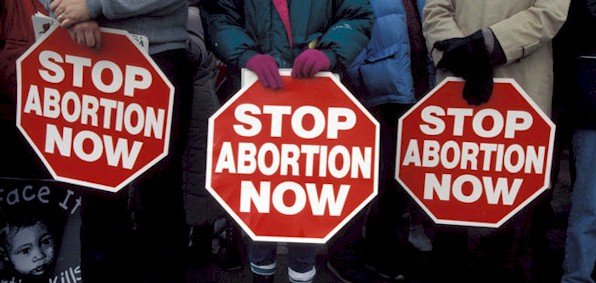
Protesting, for example, is defined as any act of disapproval of abortion. Holding a sign that says, ‘abortion is wrong’ is illegal in bubble zones. “Sidewalk interference” includes simply informing a person about abortion. This means handing out a pamphlet outlining the effects of an abortion would be illegal.
A crisis pregnancy volunteer, for example, informing a pregnant woman of her pro-life choices outside an abortion clinic could be fined $5,000 or go to prison for 6-months.
Three Problems with Safe Access Zones Legislation
The obvious first problem is that such a law would severely limit freedom of expression protected by the Charter of Rights and Freedoms. This law silences speech and the onus is on the government to demonstrate that such restrictions is justified and proportionate.
Secondly, the Ontario government does not have the jurisdiction to pass this law because it specifically targets the pro-life message. Two people could be standing next to each other, one with a sign that says ‘abortion is wrong’ and one with a sign that says ‘abortion is right’. Only the pro-life sign is illegal. It is a rule of Canadian constitutional law that provincial and municipal governments may not censure certain messages based on their content. This guards against local ideological biases.
Abortion in Canada is legal (though not a constitutional right), but that does not mean that Canadians can’t express opposing opinions on the issue. Safe Access Zones legislation silences one side of the debate, which is not something Ontario has the authority to do or should do.
The third problem is that this type of law aims at supplementing the Criminal Code, which only Parliament has the authority to do. If a pro-lifer (or anyone else) actually harasses an abortion provider or recipient, they should be charged under the Criminal Code. The criminal law has certain criteria for what constitutes harassment. Ontario’s law would remove some of those criteria and essentially assume that someone communicating a pro-life message is harassing others, no matter how peacefully that message is presented.
The Ontario government claims this is about ensuring access to abortion or protecting patients and doctors from harassment. But who has been denied access? Where are the women who have been harassed – and where are the criminal charges? The government has no evidence to back up its claim.
For more information on the legal arguments against Safe Access Zones legislation, see ARPA’s submissions to the Ontario Attorney General.
If you agree with our assessment, send your Member of Provincial Parliament a note of concern urging them not to support Safe Access Zones legislation.
Oppose “Safe Access Zones” legislation
As always, edit it as you like, and please be respectful. Thank you!

LN: “Safe Access Zones Legislation”. It’s kind of like BC’s so-called “bubble zone” law. The idea is to prevent protests within a certain distance of abortion clinics specifically. You appeared before a panel of Ontario government regulators last week to talk about this. ARPA had actually written a submission on the issue. Fundamentally, that submission starts with the notion that this proposed law is beyond the jurisdiction of a province to enact. Can you expand on that a little bit?
JS: Sure. So what the law in BC does is basically say “if you are caught doing certain things in certain places, you can be subject to a major fine or actually go to jail.” Obviously that limits freedom of expression, and there’s a Charter of Rights and Freedoms argument to be made there. There’s also a division of powers argument. If this law basically condemns certain actions that the government considers a public evil or a threat to people’s safety and so on, that is essentially criminal law. To prohibit something – penalize it, have prison as a penalty – is criminal law. And the province isn’t allowed to do that. Only the federal government is.
LN: But BC’s “bubble zone” legislation has gone to court, and it was upheld. Was that just a weak court ruling that didn’t go all the way through the process? Because I sense the Ontario government is kind of hanging its’ hat on the fact that this has already been challenged and found to be OK in British Columbia.
JS: That’s right. So the BC history is quite interesting. BC introduced its law in the mid-nineties, shortly after new abortion clinics had opened following the Morgentaler ruling. Those clinics actually were subject to large protests that actually obstructed people from entering; locks were glued and that kind of thing. Now, court injunctions generally took care of most of that, and yet kind of in that moment or responding to that tension the government introduced its bill. You might say it took advantage of the tension at that time. And the people who challenged that law in the early stages were self-represented. And one self-represented litigant did raise the division of powers issue.
It’s hard to know how it was argued; I don’t have the record of the transcript of that case. But it seemed to be dismissed kind of out-of-hand, with (no) great explanation from the lowest court, (and) it was never given substantial treatment by the higher court. In fact the BC Court of Appeal doesn’t even give leave to appeal on that issue, and I suspect that’s because there was no one really making good submissions on that at the time.
LN: One of the other cases you make – and as I was reading through the brief, this is sort of where my eyes glazed over a little bit, frankly, and maybe I don’t “get it” – but the bullet headline says “Ontario’s proposed law would attempt to tailor criminal offences to particular settings.” I get that in a sense, because the law says you can’t protest outside “abortion clinics” specifically. But what’s wrong with that?
JS: The way the province would try to defend this law is to say: “We’re not sending people to jail for a general act that we disapprove of and so on” (which would be criminal law). “We’re basically just ensuring access to health care.” This is the kind of language that they use: “People need to enter clinics, the Ontario government is responsible for providing health care. Abortion we consider to be health care, and so if you’re getting in the way of that, we just need to make sure that people can access Ontario government services. This isn’t about punishing people for something we consider bad. It’s just necessary at these particular locations to make sure people can get in the door without being harassed, intimidated, and so on.”
Now the fact that the law is applying specifically to activity outside of abortion clinics – although it does have another provision that applies generally to communications with abortion providers anywhere – but the fact that it applies to certain locations; that would be used to argue that the province is allowed to do that. Provinces and towns can regulate activity in the streets. They can prohibit you from holding large signs that might be unsafe for the sidewalk and in the street and things like that. So they would argue that it’s “regulation of local matters”, “conduct in the street” for the purpose of these “services being accessible”, “the streets being safe”, and so on.
But if we look at the Criminal Code, we have offences like harassment and intimidation and mischief, the Criminal Code already is tailored for certain situations and certain people. So towards certain geographical settings; certain offences have higher penalties if they’re committed near a school; the offence of mischief – damaging property – has specific provisions relating to religious property, cultural property, war memorials, things like that. You can have a higher penalty for damaging that kind of property. Likely because certain offences committed in certain contexts and with relation to certain kinds of property are considered a bigger threat to public peace and that kind of thing.
So if Parliament thought it were necessary to say “look, given that abortion is a sensitive issue, if harassment occurs outside of a hospital or a clinic,that can be factored into your sentence.” Parliament can do that. If Parliament wanted to say “look, if you’re harassing a doctor, that’ll factor into your sentencing.”
LN: So the point is that it’s Parliament that has to enact this, it can’t be a province that does it.
JS: That’s right.
LN: The report concludes with what I consider to be a fairly powerful statement, and I’m just going to read it here. “If this government enacts (this law), it can expect robust legal challenges. The precedents upholding B.C.’s law are not binding here.” Is ARPA already looking at a legal challenge, should this pass?
JS: We are. I can’t make any promises, of course, but we are definitely exploring all the possible legal arguments; this division of powers argument being part of that. You know, the situation in BC – which the courts there thought justified that law – they really don’t apply here. I mean, the review of every law is going to be fact-specific, and in our recent FIPPA victory, the court there looked and said, “Where is your evidence that this law is necessary; censoring abortion data?” And they pointed to a story from over 15 years ago about a violent attack on an abortion doctor, which seemed to have no connection to abortion data. And similarly, certain threats and things that may have no connection to peaceful protestors or people just trying to provide information on pregnancy care – that kind of thing – near abortion clinics.
The question would be: “If you’re blanket-prohibiting all kinds of talking to people outside of abortion clinics about abortion, what is the connection between some kind of threat and that kind of a law?” And if there’s no evidence there, then that makes for a pretty good case on our side.

ARPA’s Director of Law and Policy, André Schutten, says there are big problems with the legislation. “To quote Christie Blatchford from the National Post, who is herself pro-choice, the State is using an ‘elephant gun’ to kill a flea.” Schutten says just because there have been a few complaints about protestors outside one clinic in Ottawa, it’s “ludicrous” for the government to impose a total ban on all clinics across the province. He says the proposed law would be a “total infringement” on freedom of expression, amounting to “total overkill.”
There’s already a law like this in place in BC, which has been upheld by the Court of Appeal in that province, but the issue has never actually been taken to the Supreme Court of Canada.
ARPA lawyer John Sikkema is also researching another issue around this. The argument could be made, Schutten says, that the province has no jurisdiction to make such a law; that “the infringement of expression in this way is something that only the federal government could pass.” Sikkema is researching that issue over the summer, and hopes to publish on the issue in a legal journal later this year. The law will likely be introduced in the fall sitting of the Ontario legislature.