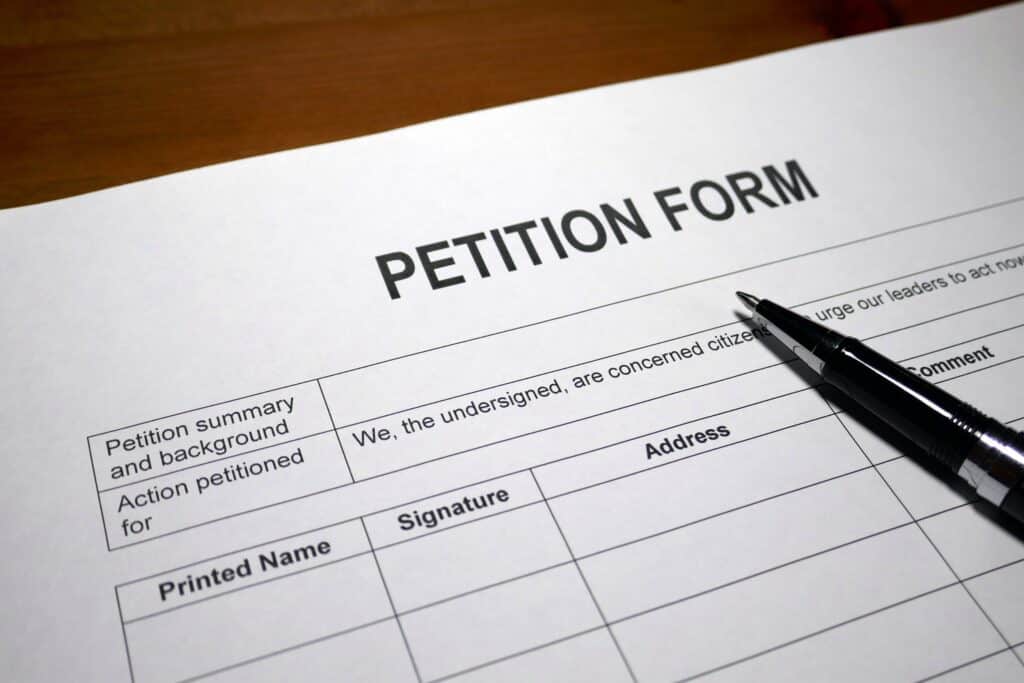
An effort is underway to remove public funding for independent schools in Alberta. It’s not coming from the UCP government. It’s not even coming from the opposition NDP. It’s coming from one public school teacher. 

On October 7, Elections Alberta approved an Alberta Fund Public Schools citizen initiative that asks, “Should the Government of Alberta end its current practice of allocating public funds to accredited independent (private) schools?” 

What’s a citizen initiative? 

Such citizen initiatives are a relatively new thing in Alberta, though the concept is a familiar one. A successful citizen initiative requires the government to either draft a new law, policy, or constitutional amendment or hold a referendum on a particular issue. The modern form of citizen initiatives was introduced by the Citizen Initiative Act passed in 2021. 

The original Citizen Initiative Act required that, for a citizen initiative to move forward, 10% of eligible voters must sign a petition supporting the initiative. Under these rules, a petition would need 293,976 signatures collected over 90 days to move forward. However, in July, the government amended the Citizen Initiative Act to require only 10% of the number of voters who actually voted in the last election for it to move forward.  Since only 40-70% of eligible voters turn out to vote in provincial elections, this change significantly lowered the number of signatures needed. Now, a citizen initiative only needs 177,732 to move ahead. 

The change also lengthened the signature collection period to 120 days. In this case, the signature collection process began on October 14. Signatures can be collected until February 11.  

What’s the likelihood that this succeeds? 

The Citizen Initiative Act only allows paper petitions, making it difficult to collect 177,732 signatures.  

To put these numbers into context, the official petition with the greatest number of signatures in recent federal Canadian history was a 2023 petition that expressed a lack of confidence in the Trudeau government and called for a general election. It garnered 387,487 signatures. But that petition was conducted online and open to all Canadians, not limited to pen and paper signatures in one province. 

But one recent citizen initiative in Alberta did meet the required threshold. Earlier this year, a former deputy premier of Alberta launched the Forever Canadian petition that declares Albertans’ desire to remain in Canada and counter the call for Alberta to separate from the rest of Canada. That paper petition, which closed last week, received 456,388 signatures. Elections Alberta is currently verifying the signatures and will publish the results of the petition by January 6. 

A couple of things give the Alberta Fund Public Schools petition a shot at reaching the signature threshold.  

First of all, public school teachers have the organizational means to get paper signatures. The Alberta Teachers’ Association (ATA) represents approximately 46,000 teachers across the province. The ATA generally opposes the government funding of independent schools, claiming that any money that goes to independent schools comes at the expense of public schools. If the ATA was able to get every public school teacher to sign the petition, and that teacher was able to get their spouse and two relatives or friends to sign, the petition would reach the required number of signatures without the need to canvas the general public at all. 

Second, the state of public education is already in many citizens’ minds. On October 6, public school teachers went on strike, cancelling school for three and a half weeks. The strike only ended because the government passed legislation ordering teachers to go back to work. All of this has made supporters of the public education system angry, perhaps angry enough to sign the Alberta Funds Public Schools petition en masse

That said, as of November 10, with 92 days left in the signing period, the Alberta Fund Public Schools has 13,799 signatures. At this pace, the petition is on track to get 135,450 signatures, short of the required 177,732. 

What’s at stake? 

Nearly half a billion dollars in public funding for independent schools. 

Alberta is the most generous province to the typical independent school. Ontario and the Maritime provinces provide no financial assistance to independent schools. Most independent schools in British Columbia, Saskatchewan, and Manitoba receive 50% of the equivalent public school funding. That figure rises to 60% in Quebec. The Alberta government subsidizes most independent schools with 70% of the base instructional grant for public schools.  

As generous as Alberta is towards independent schools compared to the other Canadian provinces, the most just policy would be for provincial governments to fund independent schools the same as public schools. Currently, the government is playing favourites, privileging government-run schools over independently-run schools. This despite the fact that most independent schools provide a similar (or even superior) quality of education. 

According to the government’s enrolment records and budget, the government spends $461 million on 48,024 independent school students. That works out to about $9600 per student. If the government were to pull all funding from independent schools, schools would look to comparable tuition increases to cover the gap. Under this scenario, the average family with four kids in school could be asked to fork over a further $38,000 per year if this petition is successful. 

It’s a stretch to say that defunding independent schools is an existential threat. Independent schools in provinces like Ontario operate without any public funding. But the removal of funding would almost certainly lead to a significant decline in the number of students attending independent schools, as parents are squeezed financially. 

Why the push? 

The application for the citizen initiative lists four reasons for the campaign. 

Reason #1: The majority of Albertans agree that public funds should only be used to fund public schools.  

This is factually true. A recent poll by Angus Reid found that 35% of Albertans want independent schools to be defunded, 25% think they should receive less money, 23% opine that they should continue to receive the same level of funding, and 10% desire more funding for independent schools. 

But just because something is politically popular doesn’t mean that it is the morally right choice. The voice of the people is not the voice of God. As mentioned above, the most just and equitable solution would be for the government to fund all educational institutions equally, rather than favouring government-run schools. 

Reason #2: Public Schools include Public, Catholic, and Francophone schools that are open to all students, without payment of tuition.  

Again, this is true enough. Alberta has the greatest diversity of school choice in the public system. They even have charter schools, which are public schools run by independent boards. 

Of course, the only reason that such schools admit all students without the payment of tuition is because the government fully funds them! If the government fully funded independent schools as well, most of them wouldn’t charge (much) tuition either.  

Independent schools do have restrictions on who can attend their schools. Some public schools do as well. But that doesn’t have to be framed as an exclusionary model. Public schools operate more or less on the model of requiring a diversity of students to attend a uniform set of schools. Independent schools operate on the idea that there should be a more uniform student body within a diverse set of schools. That change of emphasis need not make independent schools ineligible to receive public funding, especially when independent schools save the government money and often have better educational outcomes than public schools. 

Reason #3: A strong public education system, with choice, excellence, and inclusion, benefits all citizens of our province.  

There is little evidence that a government has to rely on an entirely public system to achieve this. In fact, the provinces that fund independent schools the most and thus have the highest proportions of independent school enrollment – Quebec, Alberta, and British Columbia – tend to outperform other provinces that provide no financial assistance to independent schools. Beyond academic performance, independent schools tend to produce better citizens. There is a strong body of evidence that a robust independent school system bolsters the performance of the entire education system. 

Reason #4: Diverting public funds back into public schools would help alleviate some of the funding shortages that public schools have been experiencing.  

On its face, this is true. Giving public schools more money would reduce funding shortages. But there is no requirement in the petition or the public finance that the government reallocate any cancelled funding for independent schools to the public school system. They could simply save that money or reallocate it to other areas where it is needed more (e.g. health care). 

Furthermore, the implicit idea behind this fourth reason is that pumping more money into education automatically leads to better educational outcomes. The focus becomes on how much money the government is spending rather than how well students are faring. It is true that Alberta spends the least amount of money per student ($13,494 per student). But Alberta also has some of the best student outcomes in the country. Alberta should pride itself on getting so much bang for their buck. 

Finally, withdrawing partial funding to independent schools might not end up saving the government much money. That $461 million per year would not be going to independent schools, but if enough independent school students switched to the public system because they simply couldn’t afford far higher tuition rates, the government might have to spend even more money on the public system. After all, the government only subsidizes independent schools to the tune of 70% of the operating costs of the local public school. It (currently) does not cover the capital costs (e.g. the building itself) of independent schools either. But the government covers 100% of public schools’ operating costs and would have to build more public schools if there were an influx of students. 

So what can you do? 

Right now, the big concern is that public school supporters may get enough signatures for this citizen’s initiative to move forward. If they get enough signatures, the government must respond. There isn’t really anything that we can do to stop people from signing the petition. But we can still advocate for independent schools. If this citizen initiative does get enough signatures and eventually triggers a referendum, then making the case for independent schools to our neighbours and community members will be indispensable. Their votes will count. But right now, it is also worth reaching out to your MLA, the Education Minister, and Premier Smith, encouraging them to support independent schools as much as they can.  


This event exists to equip thoughtful Christians with a deeper understanding of how faith
shapes public life, exploring what it means to pursue justice, order, and the common good
in a culture that often misunderstands or marginalizes biblical convictions.

We aim to encourage our audience not necessarily just to do more, but to think more
biblically, and stand more confidently in the public square as those entrusted with a gospel
that speaks to all of life.

Join us for
August 4-28 2026

Register Now!

Over Four Weeks In Ottawa, You’ll:

Why does it matter?

Register Now!

What’s it all about?

ARPA Canada is hosting a one-month educational training program to prepare young people for faithful political engagement. Participants will explore biblical foundations for political action, learn about Canada’s constitutional history and legal system, study current policy issues, and develop skills through readings, assignments, and interactive seminars. ARPA Academy will serve to equip young people to face the opportunities and challenges of engaging in the public square.  

ARPA Academy is for Christian young people, ages 18-25, who are keen to apply their faith to the public square. ARPA Academy will deepen your worldview and open doors to further political action.  

The 2026 Academy will run from August 4-28.

FutureCareer Considerations

Living in Ottawa while participating in ARPA’s educational and worldview training provides a stepping stone towards further work in politics or the non-profit sector. Participants can build connections through this program and receive support from ARPA staff towards working on Parliament Hill, in a provincial legislature, or with a Christian non-profit organization.  

Even if you decide to pursue work outside of the public or non-profit sector, this one-month intensive program will deepen your Christian worldview and equip you for political engagement as a Christian citizen.

Program Cost

Application Process

Register Now!

Information Meeting Dates

  • November 27 at 8 PM EST
  • January 29 at 8 PM EST

Please reach out to [email protected] to request a meeting link.

A little over a month ago, the Alberta government initiated a public survey to gauge what the provincial government should do about sexually explicit books in public school libraries. We encouraged you to participate in this process, so thanks to all of you who took the time to fill out the survey!

The results of the survey were recently released. The results are mixed, as you can see from the responses on each of the survey’s major questions.

Have you ever been concerned about a book in a school library being inappropriate for a certain age group due to sexually explicit content?

While concerns about access to sexually explicit content in public school libraries is common among socially conservative circles, that concern isn’t shared by the broader society in Alberta. Only 31% of people surveyed mentioned that they had ever been concerned about a public school library book being inappropriate for a certain age group due to sexually explicit content. That is a sizable minority, but nearly twice that number have never shared these concerns. Either there truly isn’t any objectionable material in those libraries, these folks don’t know or don’t care what materials are available, or they are fully in favour of sexually explicit material being available for every age level.

At what age should children be able to access materials with sexually explicit content in school libraires?

There is a wide diversity of opinions on this question. The plurality of respondents (34%) opine that sexually explicit materials should never be available in school libraries while only half that number (16%) think that they should be available at every grade level. The remaining respondents are somewhere in between those two positions, with 4% saying that they should be available starting in elementary school, 22% by middle school, and 23% by high school. Framing the question in this way makes it seem like the most supported action is for sexually explicit content to be entirely removed from schools.

But if we add up at which point Albertans think sexually explicit material should be available (e.g. the twenty-two percent who think that such material should be available starting in middle school would also be in favour of it being available in high school), the picture looks a bit different. Looking at the question this way, a supermajority (65%) are supportive of these materials being available in high schools and 42% in middle schools.

Now, the survey doesn’t break down what types of sexually explicit material they are talking about. Most parents would have few qualms of science textbooks depicting sexual organs in high schools, but far more parents would be uncomfortable with novels describing sexual activity in detail. The purpose of one set of books is educational while the purpose of the other set is to incite sexual desire.

Who do you think should decide what materials are age appropriate in school libraries?

When asked who should decide what is appropriate for school libraries, the top responses were school librarians (70%) and teachers (55%). In other words, the education “experts.” Parents came in a close third (52%). The fact that parents aren’t at the top of the list illustrate how the Christian principle that parents should have the primary responsibility over their children’s education isn’t top of mind for most Albertans. Elected school boards were also towards the bottom of the list, with only 34% of respondents opining that the school board get involved in these decisions, despite the fact that they were elected to oversee these public school districts.

Given the range of actors that survey respondents want to be involved (or not involved) in determining when and where sexually explicit materials should be in school libraries, it is hardly surprising that there isn’t a clear consensus on what should be done.

How do you think school libraries should handle materials with sexually explicit content? 

The most common response to this question was for school librarians to restrict access based on age/grade level (41%). Essentially, respondents – who already stated that school librarians should have the most control over what sexually explicit material is available – tend to want to give them the discretion to determine what is appropriate. Nevertheless, a sizeable percentage (29%) think that public school librarians should entirely remove this content from their shelves. This percentage is only slightly less than the percentage of people (34%) who think that, in general, this content should not be available to students at all.

Parental involvement and consent relating to sexually explicit material

Two questions dealt with how far parents should be involved in this issue. A majority (62%) agree that parents should play a role in reporting or challenging the availability of sexually explicit content in school libraries (compared to 34% who disagree). But this doesn’t seem to be an endorsement of parents actually having any power over the availability of these materials. Implementing the policy as worded in the survey would probably give parents the opportunity to ask school librarians or school trustees to review certain materials that they think are inappropriate but leave the final decision in their hands.

When asked if parental consent should be required for children to access sexually explicit content in school libraries, respondents were sharply divided. Fifty-one percent disagreed that parental consent should not be required while 44% agree that they should.

Taken altogether, the results of this survey reveal only half-hearted support for parents to play a substantial role in determining what content should be available in public schools.

How supportive are you of the Government of Alberta setting consistent requirements for school boards in how they select and manage school library materials?

And finally, one question surveyed Albertans on what the provincial government should do. (This was really the point of the entire survey.) If the provincial government was looking for a clear mandate to regulate books in school libraries, they didn’t get it. A majority of Albertans (55%) are not supportive of the provincial government stepping into this issue, with a full 46% being not at all supportive. Only 39% wanted the provincial government to intervene. Despite these results, the province has announced that they will indeed bring in provincial guidelines for public school library books.

Conclusion

Like the survey respondents, Reformed Christians might have conflicting thoughts on the role of the provincial government in this matter. If we truly believe that parents should be the ones directing the education of their children, it doesn’t really make sense for the provincial government to mandate what should or should not be available in public school libraries. Parents should have that power, perhaps through existing parent advisory councils.

Unfortunately, public schools are far from parent led. If we really wanted to entrench the right and responsibility of parents in matters of education, far more systematic change would be required. For example, allowing only parents whose children are enrolled in a given public school district to vote in school board elections and empowering that parent-elected board to have far more control over the school or school district would be two transformative steps.

But that’s not the system of public education that we have now. If parents lack the power to keep sexually explicit content out of public school libraries, school boards are politically afraid to take a stand, and school staff (teachers, admin, and librarians) are increasingly dominated by progressive sexual ethics, the provincial government may need to intervene.

Alberta is updating its Education Act again. And just like the last update, which took steps to remove gender ideology from schools, this update is another step in the right direction.

Bill 51, the Education Amendment Act makes several changes, but two are notable to us.

Boards can’t expel elected trustees

First, Bill 51 prohibits a public school board from removing a trustee from their position for violating the school board’s code of conduct. The provincial government is basing that change on the principle that only voters – not other politicians – should be able to throw an elected trustee out of office. Voters can make this decision by either not re-electing that trustee in the next election or through a local recall initiative.

While the government didn’t cite a specific instance of a school board trustee being kicked off a school board, one high profile case in Alberta was the removal of Red Deer Catholic school board trustee Monique LaGrange for comparing LGBTQ+ ideologues with Nazis.

In other provinces there have also been issues with school boards calling for the removal of their fellow elected trustees. In 2024, we wrote about Durham (Ontario) school board trustee Linda Stone, who was banned from attending school board meetings after questioning puberty blockers for minors. Earlier this year, Abbotsford (BC) school trustees Jared White and Mike Rauch were censured for liking and sharing a post announcing President Trump’s executive order on reserving women’s sports for biological women only. Former Chilliwack (BC) school trustees Barry Neufeld and Heather Maahs were censured several times for standing up for a traditional view of gender and sexuality. Most of these censures were based on boards concluding that the trustees violated the code of conduct requirement to foster “inclusive” school environments.

From “private” to “independent” schools

Second, Alberta’s Bill 51 changes every reference to a “private” school to “independent” school in provincial legislation. In his remarks on the bill, Education Minister Demetrios Nicolaides explains:

“There can be a negative connotation associated with the term ‘private school.’ Unfortunately, many of our exemplary independent operators are unnecessarily viewed in a negative way as a result of some of this terminology. We have fantastic independent schools who serve in an incredible way students who need customized learning and specialized learning in many different circumstances… These are not elite institutions charging thousands and thousands of dollars in tuition fees. These are institutions that work to provide the very best education to individuals that require customized and tailored programming. I believe it’s important that we ensure our Education Act, our governing legislation here, is updated in accordance with these provisions and terminology to better reflect the very nature of schools operating and the work that they do.”

This is a semantic change, but an important one, because it affirms that independent schools serve the broader public good and help shape students into good citizens. Alberta’s Education Act states that education “is the foundation of a democratic and civil society” and education’s purpose “is to develop engaged thinkers who think critically and creatively and ethical citizens who demonstrate respect, teamwork and democratic ideals.”

The previous distinction between public and private schools suggests that public schools further the interests of society while private schools further only the private interests of a select few. Nothing could be further from the truth. Independent schools serve the public good as well. They too form citizens that will contribute to the public good, whether that be informed voters, regular volunteers, or hard-working employees. The entire country – not just the students themselves – benefits from having well-formed students.

And there is good evidence that independent schools do a better job than public schools of forming good public citizens. As we note in our policy report on educational diversity, graduates of independent schools tend to have better grades, higher graduation rates, greater charitable giving, and more volunteering than their public school counterparts. On top of such metrics is the critical importance of raising the next generation in the fear of the LORD (a key focus of many independent schools) and equipping them to be a salt and light (the greatest possible public good).

Referring to private schools as independent schools, then, refocuses on who is running the schools rather than who benefits from them. Public schools are operated by the government for the public good. Independent schools are not operated by the government but still promote the public good. British Columbia, Saskatchewan, and Manitoba all refer to “independent schools”, so this change in Alberta brings them in line with the other western provinces.

Conclusion

These two changes – giving school trustees more freedom to speak out on topics like gender and updating the terminology around independent schools – are little steps in the right direction of having a more pluralistic education system. Please consider sending your MLA a note expressing your support for these changes in Bill 51.

At the end of March, Minister of Service Alberta and Red Tape Reduction Dale Nally introduced Bill 48, the iGaming Alberta Act. Minister Nally explained, “We know that no form of gambling is truly safe. But we can help make it safer by making sure it comes with key social responsibility tools.”  

Governments have a variety of options when it comes to online gambling. They could ban it. They could legalize online gambling regardless of which sites provide it. Or they could regulate it – meaning they can stipulate rules and safeguards that companies must follow in order to legally provide online gambling.  

Alberta is looking to do the latter.  

If passed, Bill 48 will create a new Crown corporation called the Alberta iGaming Corporation, which will regulate private online gambling companies. The rules for online gambling and potential safeguards for gamblers would be determined by the future Crown corporation and the government.  

Currently, online gambling in Alberta is only legal through Play Alberta, a platform launched in 2020. That platform includes casino games, sports betting, and lotteries. It has over 356,000 player accounts, and generated $235 million in government revenue in 2024, up more than $42 million from the previous year.  

Yet one of the government’s concerns is the amount of gambling happening through unregulated sites, other online gambling companies that are not legal. Minister Nally estimates that less than half of all the online gambling done in Alberta takes place on Play Alberta. 

Alberta recently gathered feedback from Albertans through a consultation on online gambling. They noted that “iGaming has grown in popularity and visibility since August 27, 2021, when single-game sports betting was legalized in Canada.” In 2023, Premier Smith asked Minister Nally to implement “a comprehensive online gaming strategy with a focus on responsible gaming and provincial and Indigenous revenue generation.” Yet the government argues that they’re not doing it for the money – instead, they say they want to regulate existing online gambling in order to protect gamblers.  

Ontario is the only other province that has tried this, in 2022. While it’s difficult to know how much online gambling would have grown had Ontario not opened it up to private companies, it is clear that online gambling is becoming more popular. Overall, gambling is causing serious harm, and levels of gambling addiction seem to be increasing. At the same time, gambling is not only more available and accessible but also heavily promoted through relatively unrestricted advertising.  

While governments may say they’re not regulating online gambling for the money, revenue is part of the incentive. Ontario’s gambling revenue has continued to grow since expanding legal online gambling, as the province gets 20% of gambling revenue from regulated companies. Allowing and regulating online gambling includes an implicit approval of it, encouraging people to gamble ‘safely.’ But as Minister Nally noted, “no form of gambling is truly safe.”  

Over the next couple weeks, ARPA Canada will release two more articles that examine the issue of gambling more broadly. Is gambling simply harmless recreation, or a destructive vice? What is the extent of gambling’s effects in Canada today, and how should governments respond? Stay tuned for those articles. In the meantime, if you live in Alberta, reach out to your MLA to let them know your thoughts on regulated online gambling.   


We would love to see you there.

The registration page is in the works… Stay tuned!

There are a limited number of spots so be sure to apply early!

Are you a high school student eager to make a difference in your community and province?Join us this fall for an event designed just for you!

Introducing our theme, “Not ashamed” based on Romans 1:16a, “For I am not ashamed of the gospel, for it is the power of God for salvation to everyone who believes.” 

Our mission is clear: to educate, equip, and encourage young Christians like you to step into the realm of political action with confidence and purpose. Each one of us has a unique role to play in shaping our society for the better and sharing the good news of the gospel of salvation in Jesus Christ to a world that desperately needs His love and truth.

Throughout the event, you’ll gain valuable insights and practical tools to actively engage in your province and local community. Through inspiring workshops and speakers, you’ll be equipped to make a meaningful impact wherever you go.

Join us as we embark on a journey to bring the message of God’s word to a world hungering for truth and hope. Don’t miss out – reserve your spot today and be part of something unforgettable!

Register Below!

MANITOBA

BRITISH COLUMBIA

Childhood is a time for exploration, play, and growth.

We need to let kids be – let them grow and develop naturally. Medical transitions for minors should be completely off the table.

Join us at the 2023 Fall Tour where we’ll introduce you to a new campaign aimed at bringing attention to this important topic.

Events will start at 7:30 pm.

Registration is not required this year, but you can sign up if you’d like event notifications! (Registrations will be available soon).

OTTAWA & MARITIMES

ALBERTA

ONTARIO

MANITOBA

BRITISH COLUMBIA

boo