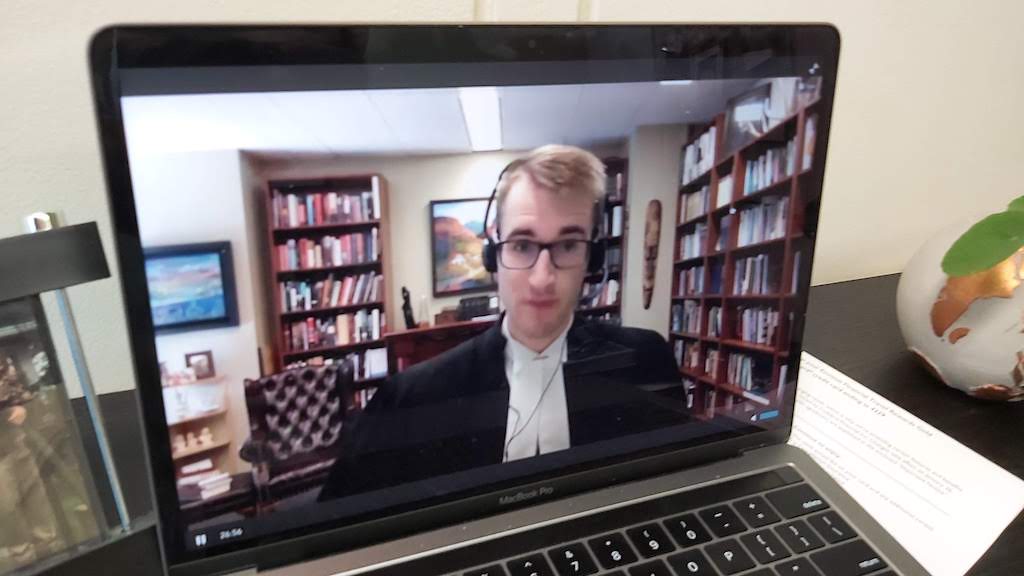
On Friday, May 21, 2021, the Supreme Court of Canada released their decision in Ethiopian Orthodox Tewahedo Church et al. v. Aga et al. The unanimous decision is a resounding victory for the authority and autonomy of the church over questions of doctrine and membership. Thank the Lord for this positive development!
This case was appealed to the Supreme Court after the Ontario Court of Appeal ruled unanimously that the civil courts could adjudicate a dispute between several former members* and the Ethiopian Orthodox Tewahedo Church regarding their membership status and other matters.
The controversy that gave rise to this case had to do with a theological movement within the church that some members considered heretical. The plaintiffs in this case had participated in a church committee established to investigate this heretical movement and made recommendations to church leaders regarding what to do about it. The church leaders only followed the committee’s recommendations in part. The plaintiffs allegedly continued to agitate for more steps to be taken against the alleged heretics. In the church leaders’ view, the plaintiffs were causing further division and strife. Eventually, their memberships in this particular church (but not the larger denomination) were suspended. It was considered by the church to be a disciplinary step. The church also issued a trespass notice to them, telling them not to attend a specific cathedral until they reconciled with the church.
The members sued their church. They asked the lower court to order the church to reinstate them as members and even asked the secular court to compel the church to take certain steps to implement the committee’s recommendations, including censuring other church members for (alleged) heresy.
The Supreme Court hearing and decision
The church made several important arguments at the Supreme Court. First, because there were no property rights or other recognized legal rights (like property, employment, or contract rights) attached to the plaintiffs’ membership in the church, there was no legal basis for taking the church to court. The court agreed, noting that “Jurisdiction to intervene in the affairs of a voluntary association depends on the existence of a legal right which the court is asked to vindicate.” (para. 3, 27-32). Second, the issues raised by the case were not appropriate for a civil court to adjudicate, since they involved questions of interpreting and applying the Bible and religious teaching. Third, the remedies sought by the plaintiffs were not appropriate for a civil court to order and would interfere with the Church’s freedom to govern itself as a religious body.
The Court ended up disposing of the case with a particular focus on the question of contracts. The disgruntled members had argued (and the Ontario Court of Appeal had supported this idea) that the bylaws and constitution of the church (similar to a Reformed Church Order) was a legal document, and that membership in the church was a contractual relationship. Since contracts are reviewable by courts, the argument went, the membership in this church and expulsion from it was reviewable. The Supreme Court soundly rejected this argument. They wrote, “In the religious context, even the use of concepts such as authority and duty need not reflect an intention to create legal relations: the parties may be speaking of religious obligations rather than legal ones.” (para. 41). The Court also stated, “More importantly, becoming a member of a religious voluntary association – and even agreeing to be bound by certain rules in that religious voluntary association – does not, without more, evince an objective intention to enter into a legal contract enforceable by the courts.” (para. 52).
ARPA Canada’s intervention
ARPA Canada intervened in this case to provide a Reformed perspective on the relationship between and the limits of the government’s civil jurisdiction and the Church’s spiritual jurisdiction. ARPA argued that a civil matter must be raised in order for a civil court to hear a case. The plaintiffs’ lawyer argued that ecclesiastical rules for discipline and other governance matters would be pointless if they were unenforceable in civil court. ARPA argued in reply that church teaching and rules for discipline and other matters do not need the backing of civil power to be meaningful or effective. As Calvin wrote, “church discipline requires neither violence nor physical force, but is contented with the might of the word of God.”
The Supreme Court was obviously engaged with ARPA Canada’s argument; they even cited ARPA specifically, writing, “courts should not be too quick to characterize religious commitments as legally binding in the first place (as the intervener the Association for Reformed Political Action (ARPA) Canada observed).” (at para. 42).
Implications of the ruling
This ruling is a wonderful restatement of the independent jurisdiction of the church over matters of church discipline (membership in the church) and doctrine (and how to deal with alleged heresy). For this we can be very thankful. However, there are hints in this decision that churches that incorporate might be subject to secular court review in the matter of a dispute between members and their elders. Reformed churches, in particular, must be cautious when it comes to the question of incorporation. When a church incorporates, it agrees to follow certain statutory rules, which grant certain legal rights to their members. This could result in a flipped relationship between elders and members, where members can exercise veto power over elder decisions. This would be contrary to Reformed ecclesiology. We recommend that any new Reformed church that may be instituted, or any current Reformed church that is incorporated, consult with a Christian lawyer who understands Reformed ecclesiology to ensure that any legal arrangements are done to minimize the potential for secular court review of elder decisions. Contact us at [email protected] to discuss further.
For further reading:
You can read the Supreme Court’s Aga decision for yourself.
You can also watch the video recording of the hearing – John Sikkema makes arguments for ARPA at the 56:30 mark.
You can read ARPA’s written submissions to the court.
For more background on this case, see our first article on the Aga case and the important issues it raises.
For further exploration of the relationship between church and state when it comes to church discipline, see our essay “Who Holds the Keys to the Kingdom Of Heaven?” That essay is the first of a series. Part 2 is “Scripture, Not State Law, Instructs How to Do Church Discipline.” Part 3 is “Handing Over the Keys? The Challenge of Church as Legal Entity”.
*Note: although the Church in this case had formed a corporation to hold church property, the church members were not corporation members.
On Wednesday, December 9th, ARPA Canada participated in the Supreme Court of Canada hearing in Ethiopian Orthodox Tewahedo Church et al. v. Aga et al. The video recording of the hearing is available here (see ARPA at 56:30) and you can read ARPA’s written submissions here.
This case was appealed to the Supreme Court after the Ontario Court of Appeal ruled unanimously that the civil courts could adjudicate a dispute between several former members* and the Ethiopian Orthodox Tewahedo Church (EOTC) regarding their membership status and other matters.
The controversy that gave rise to this case had to do with a theological movement within the Church that some members considered heretical. The plaintiffs in this case had participated in a Church committee established to investigate this movement and make recommendations to Church leaders regarding what to do about it. The Church leaders only followed the committee’s recommendations in part. The plaintiffs allegedly continued to agitate for more steps to be taken against the alleged heretics. In the Church leaders’ view, the plaintiffs were causing further division and strife. Eventually, their memberships in this particular Church (but not the larger denomination) were suspended. It was considered by the Church to be a disciplinary step. The Church also issued a trespass notice to them, telling not to attend at a specific Cathedral until they reconciled with the Church.
The members sued their Church. They asked the lower court to order to the Church to reinstate them as members and to take certain steps to implement the committee’s recommendations, including censuring other church members.
The Church made several important arguments at the Supreme Court. First, because there were no property rights or other recognized legal rights attached to the plaintiffs’ membership in the Church, there was no legal basis for taking the Church to court. Second, the issues raised by the case were not appropriate for a civil court to adjudicate, since they involved questions of interpreting and applying the Bible and religious teaching. Third, the remedies sought by the plaintiffs were not appropriate for a civil court to order and would interfere with the Church’s freedom to govern itself as a religious body.
ARPA Canada intervened in this case to provide a Reformed perspective on relationship between and the limits of the government’s civil jurisdiction and the Church’s spiritual jurisdiction. ARPA argued that a civil matter must be raised in order for a civil court to hear a case. The plaintiffs’ lawyer argued that ecclesiastical rules for discipline and other governance matters would be pointless if they were unenforceable in civil court. ARPA argued in reply that church teaching and rules for discipline and other matters does not need the backing of civil power to be meaningful or effective. As Calvin wrote, “church discipline requires neither violence nor physical force, but is contented with the might of the word of God.”
For further reading:
For more background on this case, see our previous article on it.
For an further exploration of the relationship between church and state when it comes to church discipline, see our essay “Who Holds the Keys to the Kingdom Of Heaven?”
That essay is the first of a series. Part 2 is “Scripture, Not State Law, Instructs How to Do Church Discipline.” Part 3 is “Handing Over the Keys? The Challenge of Church as Legal Entity”.
*Note: although the Church in this case had formed a corporation to hold church property, the church members were not corporation members.
Some fantastic news out of the Supreme Court of Canada today! ARPA’s Director of Law & Policy discusses a big win for church autonomy with lawyer John Sikkema. Tune in to hear more!
Phone or email federal Justice Committee members about a way to make euthanasia Bill C-7 less harmful, we release a policy report on Elder Care, a new intervention in a legal case at the Supreme Court in December, and prayer requests.
Are churches potential hotspots or simply effective COVID contact tracers? Good news that the Aga Case will be heard by the Supreme Court, an update on the Delta Hospice in BC, and the WNAL Merchandise Store will be opening later this week!
In 2018, we told you about a Supreme Court case called Wall v Highwood Congregation of Jehovah’s Witnesses. In that case, Mr. Wall took a Jehovah’s Witnesses Congregation to court for “disfellowshipping” him. Mr. Wall succeeded in the lower courts, but lost his case at the Supreme Court of Canada (SCC). The SCC decided unanimously that civil judges have no business reviewing a religious body’s decision to expel a member where no legal right is at stake.
That case raised the fundamental issue of churches’ freedom to govern themselves, particularly in matters of church membership, free from state interference. Thankfully, the SCC decision in Wall respected this freedom.
Sadly, last month Ontario’s highest court found a way to get around the precedent set in Wall. This is cause for concern and it confuses the law in this area. In Aga et al v Ethiopian Orthodox Tewahedo Church (2020), the Ontario Court of Appeal ruled that the plaintiffs, former church members, had a legal basis for taking the church to court.
The basis? When the plaintiffs became members, the Court reasoned, the Tewahedo Church’s Constitution (akin to a Church Order in many Reformed Churches) became a civilly enforceable contract between them and the Church. Not only that, but even the “guidelines” governing a special church committee that had been set up to investigate a heretical movement in the church form part of this “contract”. The plaintiffs had been members of this committee and were not pleased that the committee’s recommendations were not followed by church leadership.
Why does this matter for churches?
You can see where that takes us. Imagine a church member is displeased with the decision of your church’s pastor, or council, or even one of its committees. Should he be able to take the church to court over it? Do judges have the authority to decide whether the pastor / council / committee made the right decision or followed the right process? Of course, your church should carefully follow clear rules as it makes important decisions, but just because your church governs itself lawfully does not mean that its law and procedures are enforced or supervised by the civil courts. Civil courts enforce civil or “common” law. “Ecclesiastical courts” (e.g. synod) enforce ecclesiastical law.
The church must defer to civil government in matters of state jurisdiction but cannot defer in matters of church jurisdiction, particularly the preaching of the gospel and exercise of church discipline. What if a court declares a church discipline decision to be void? Whom does the congregation obey, their elders or the civil judge? Should the elders welcome this unrepentant brother to the communion table? As John Calvin explains, the power to bind and loose, or to forgive or not forgive sins, does not lie within mere men. Rather, Christ speaks through His office-bearers, whom He chooses as His instruments. Who then is a civil judge to declare a member’s excommunication – or restoration to fellowship! – to be void?
How the Ontario Court in Aga gets around Wall
Mr. Wall’s lawyer tried unsuccessfully to argue at the Supreme Court that church membership constitutes a civil contract. “Unlike many other organizations, such as professional associations,” the Supreme Court explained, “the Congregation does not have a written constitution, by-laws or rules that would entitle members to have those agreements enforced in accordance with their terms.” In other words, nothing between Wall and the Congregation resembled a civil contract.
Of course, the Congregation had written rules. As Mr. Wall’s counsel noted in his SCC factum, the Congregation, a registered charity, followed “a detailed organizational handbook… The handbook outlines the procedure for handling breaches of the Congregation’s rules. The handbook is given to all prospective members and periodically reviewed in the Congregation’s meetings. In addition, the Congregation follows guidelines published in The Watchtower magazine.” But, to the Supreme Court, the Congregation’s rules were not, on their own, the kind of rules “that would entitle members to have [them] enforced” in civil (rather than ecclesiastical) court.
In Aga, however, the contract argument succeeded. The Court of Appeal gets around Wall by noting that the Tewahedo Church does have a written “constitution and bylaws”. In fact, the Church uses those terms for its governing documents (unlike “handbook” in Wall). But the Court of Appeal failed to appreciate that the difference is semantic, not substantive. Whatever you call a church’s governing documents (church order, constitution, handbook, etc.), the key question is whether the document is intended (both by the church and its members) to be enforceable in civil court. In Wall, the Supreme Court concluded: “No basis has been shown that Mr. Wall and the Congregation intended to create legal relations.” The Court also commented that “members of a congregation may not think of themselves as entering into a legally enforceable contract by merely adhering to a religious organization.”
So how does the Ontario Court of Appeal get around that?
Oddly, the Court finds that the former members’ commitment to support the Church through monthly tithes made this a contractual relationship. To use the legal term, their tithes constituted “consideration”. Contract Law 101: Contract = offer + acceptance + consideration. That is, if someone offers you something (e.g. a car, or a job) in exchange for something of value (called consideration – e.g. money or goods or labour) and you accept the offer, you have a contract.
Why Aga is confused and confusing
In order to have a binding contract, however, you need intent to create legal relations, to be mutually bound. Not every exchange of promises creates an enforceable contract. In Aga, the Court of Appeal never mentions this mutual intent rule. But if the Court is right that the plaintiffs, by committing to support the church financially when they became members, now have civilly enforceable rights against the Church, it must also mean that the Church has civilly enforceable rights against them – meaning the Church could take them to court for failing to tithe. The Court never seems to contemplate this.
The Court notes that when the plaintiffs became Church members, they filled out a membership application form and filled in the amount they committed to contribute to the Church. (This might help churches who do nothing so formal to avoid Aga as a precedent, but one could argue that even a nonwritten or informal commitment to tithe also constitutes consideration). That may seem oddly formal to us, but the question remains: is this reasonably understood as a legal commitment, or a religious commitment? Are the parties answerable to God or (also) to civil judges?
The Court of Appeal’s decision in Aga exposes churches and other religious bodies to a higher risk of getting caught up in litigation with disgruntled (former) members over internal church matters. In the wake of Wall, which helped clear up some confusion in this area, the Aga decision is unfortunate.
Aga sows confusion about whether a church is at risk of having civil judges purport to exercise authority over matters God has entrusted to ecclesiastical authorities. If a church teaches an obligation to tithe to new or existing members, is it entering into a civil contract with them? How formal or explicit would the commitment to support the church financially have to be? And if a church has a detailed constitution or church order (rather than a less formal “handbook”, for example) will a court be more likely to claim jurisdiction to interpret and enforce it?
A court should not decide whether it has jurisdiction to hear a case based on something so vague as a church’s degree of formality or flavour of legality in its religious governing documents. Rather, as ARPA argued in Wall, the question of whether a civil court should resolve ecclesiastical disputes raises the most fundamental principles of law: the rule of law, freedom of religion, and the limits of civil jurisdiction.
I hope that the Tewahedo Church will appeal and the Supreme Court will reinforce its Wall decision, respecting the court’s limited jurisdiction in religious matters. Should the opportunity arise, ARPA Canada will also consider intervening and contributing a Reformed perspective to the SCC.
Disclaimer: This blog is not legal advice. For legal questions about the implications of this ruling for your church, speak to a lawyer directly.