Could you be punished for refusing to support your daughter’s ‘gender transition’?”
Earlier this year, a BC Court released its decision in a crucial court case that ARPA Canada intervened in last year called A.B v. C.D.. Many people heard about this case, but few understand what the ruling means for families and for our fundamental freedoms. Be informed, be encouraged.

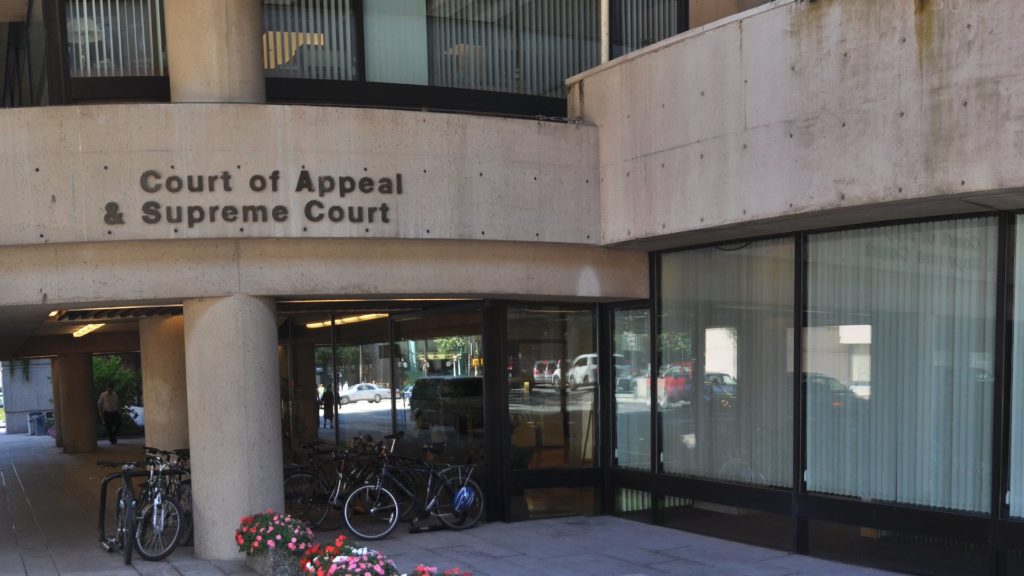
OTTAWA, ON – The British Columbia Court of Appeal released its judgment today in A.B. v. C.D., in which it overturned numerous orders made by the court below, concluding that the father (“C.D.”) had not committed “family violence” under the Family Law Act by opposing his biological daughter’s (“A.B.”) proposed gender transition by the administration of testosterone.

The Court of Appeal struck the lower court’s protection order, which threatened the father with immediate arrest if he tried to persuade AB to abandon testosterone treatment, if he addressed AB by her birth name, or if he referred to AB as a girl or with female pronouns to her or to anyone, publicly or privately.

The Court of Appeal’s reason for these reversals reflect ARPA Canada’s submissions outlining how Justice Bowden’s declaration regarding “family violence” and Justice Marzari’s protection order were simply not authorized by the Family Law Act.

Rather, the Court of Appeal stated, “CD is entitled to his views and he is entitled to communicate those views to AB. […] [Their] difference of opinion alone cannot justify a finding of family violence. As set out above, the evidence shows that AB is a mature minor with the capacity to make his own decision about the medical treatment recommended at this stage, and such capacity includes the ability to listen to opposing views.” (para 174)

The Court stated further that “caution should be exercised in identifying ‘psychological or emotional abuse’ as constituting ‘family violence’. This is especially important in cases […] which involve a complex family relationship stemming from a profound disagreement about important issues of parental roles and medical treatment. Moreover, a finding of family violence in such circumstances is inconsistent with the continuation of CD’s parenting responsibilities.” (para 175)

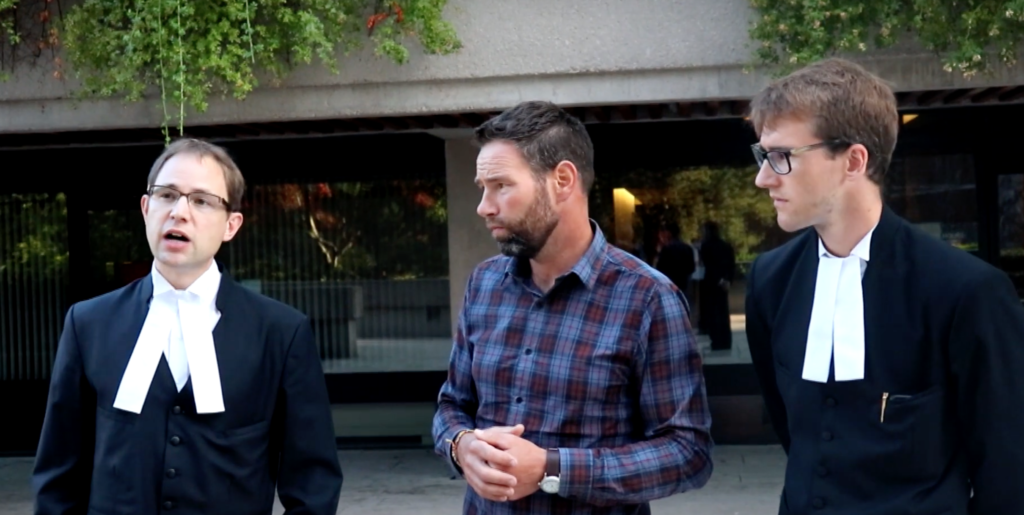
Geoffrey Trotter, who served as counsel to ARPA Canada in its intervention, commented on the decision: “The Court of Appeal has rejected the attempted criminalization of the father’s speech on anything related to AB’s gender identity and medical treatment, and has affirmed that disagreement is not violence. This judgment affirms the importance of enabling a father to remain involved in his child’s life even in the face of such disagreements, and that it is not the role of the criminal law to obliterate such disagreement in the name of peace.”

Although finding that CD’s conduct did not amount to “family violence”, the Court did find that CD’s “refusal to accept AB’s chosen gender and address him by the name he has chosen is disrespectful of AB’s decisions and hurtful to him.” (para 176) The father’s conduct, in the Court of Appeal’s judgement, damaged their relationship and exacerbated the tension between them.

On this basis, the Court of Appeal decided to continue some restrictions on CD’s freedom of expression by way of a conduct order.  Unlike protection orders, conduct orders are not criminally enforced. They are intended to reduce conflict between family members already involved in a family law dispute, in order to help legal disputes get resolved and prevent new legal disputes from arising.

The Court of Appeal’s conduct order directs CD to “acknowledge and refer to AB as male and employ male pronouns, both generally and with respect to any matters arising in these proceedings” (para 220) and to address AB by AB’s chosen name (which has since become AB’s legal name). It is narrower than the lower court’s protection order. It makes an express exception for CD’s private communications with “family, close friends and close advisors”. It also does not prohibit CD from discussing AB’s medical decisions with AB, as the protection order had done. The conduct order will expire in three months.

“The context and purpose of this conduct order is important. It cannot be interpreted as stating a general rule that a parent is guilty of legal misconduct by opposing his or her child’s desire to adopt a transgender identity or to obtain certain treatments for gender dysphoria,” said ARPA’s legal counsel, John Sikkema. “The conduct order was issued in the context of a lengthy and emotionally taxing disagreement between father and daughter, in which the father made what seemed to the Court in these circumstances to be poor judgment calls, including releasing his correspondence with one of AB’s doctors to a media outlet.”

Nevertheless, the Court seems to overlook, or at least does not discuss, how significant an infringement of freedom of thought, belief, and expression it remains to order a father to refer to AB as male and to use male pronouns when speaking to AB and to all but a few close family members and friends. The Court could have achieved its goal of promoting civility between the parties in a way that was less infringing of CD’s freedom of expression. Surely, if CD disagrees with AB that AB is a boy, AB will know this, and it achieves little or nothing good to force CD to use words he believes to be false. Rather, it is a profound violation of his freedom, damaging to his integrity, and arguably damaging to his relationship with AB as well, even if it is what AB wants to hear.

ARPA Canada will release additional and more detailed analysis in the coming days.

 The B.C. Gender Clinic’s “Informed Consent Form” for “hormone therapy” is both inadequate and misleading, in my view. Yet the province’s highest court ruled last week, in AB v CD, that a 14-year-old girl who had signed the form could continue to receive testosterone therapy despite her father’s objections.

In this article, I explain that decision and what it may mean for B.C. children and families.

What is the AB v CD case about?

ARPA was in court last week as an intervenor in AB v CD (anonymized short forms for a girl and her father) at the Court of Appeal. The appeal raised two major issues:

  1. Can a minor (14 years old), who identifies as transgender, be given puberty blockers and “hormone therapy” (testosterone) without a parent’s consent?
  2. May a court – as the lower court did – tell a father that he may not (a) try to persuade his daughter to stop hormone treatment, or (b) call his daughter by her birth name or refer to her with female pronouns (when speaking to her or anyone else), or (c) give out any information “relating to [his child’s] sex, gender identity, sexual orientation, mental or physical health, medical status or therapies” whether directly or through his lawyers?

ARPA’s written and oral submissions focused on the second issue– censoring the parent. We believe the Court of Appeal was receptive to our arguments and hope that it will lift the lower court’s censorship. You can read more about the case and ARPA’s written arguments here.

This article, however, is about the first issue – informed consent to hormone therapy. At the end of the hearing last week, the Court of Appeal ruled “from the bench”, that is, orally in the courtroom, that AB could continue receiving treatment from the Gender Clinic.

When can a minor decide for herself?

The father’s lawyers argued that AB’s doctors had no right to proceed with the treatment without his consent, according to the Infants Act, section 17. The Infants Act says that a minor may consent to treatment only where the doctor: “(a) has explained to the infant and has been satisfied that the infant understands the nature and consequences and the reasonably foreseeable benefits and risks of the health care, and (b) has made reasonable efforts to determine and has concluded that the health care is in the infant’s best interest.”

In other words, the “infant” (person under 18) needs to understand the treatment and its risks and the doctor must have good reasons to believe the treatment will actually help the child. If the doctor is not satisfied that the minor understands the treatment’s consequences and risks, then he must obtain a parent or guardian’s consent.

The Court of Appeal Justices were obviously hesitant to interfere with the determination by the Gender Clinic doctors that AB understood the nature, consequences, and risks of “hormone therapy” and that it was in her best interest. In one way, such a deferential approach is understandable – what business do judges have overruling doctors?

. . . this is not merely a question of medical expertise. It is properly a question of ethics and law, too.

Yet even doctors require legal oversight. Doctors are just as prone as anyone to make decisions according to their ideological biases (these are doctors who have self-selected to work at a place that gives hormone treatment to minors) and self-interest (they make more money the more patients they can bill the government for). Not only that, but this is not merely a question of medical expertise. It is properly a question of ethics and law, too.

Even if, as a society, we wish to allow teenagers to make “health care” decisions that may render them permanently infertile, among other harmful side effects, most would agree that all relevant information about the treatment in question – and its alternatives – should first be disclosed to the person making the decision. The question is: was that done in AB’s case?

The Gender Clinic’s “Informed Consent Form: Testosterone Therapy”

The consent form does not provide full and frank disclosure regarding what is known and unknown about gender dysphoria or the use of puberty blockers and hormone injections to “treat” gender dysphoria.

The consent form does not provide full and frank disclosure regarding what is known and unknown about gender dysphoria or the use of puberty blockers and hormone injections to “treat” gender dysphoria.

The form begins by asserting: “The cause of gender dysphoria is not known, but is thought to be partly due to genetic or environmental causes affecting the early development of my brain pathways.” “Thought to be” by whom? It doesn’t say. What “environmental causes”? None given. “Genetic” causes? Nada. Meanwhile, although there is evidence that gender dysphoria is (at least partly) a social phenomenon (or a social contagion), that fact isn’t mentioned.

The consent form continues: “It has been explained to me [the patient] that doctors are prescribing testosterone because they believe that I will continue towards full or partial physical transition to a male body […]. There is another kind of surgery to create male genitalia…”

But a female person cannot obtain a male body, or male genitalia – only surgically formed imitations that cannot perform the same function. “Sex reassignment” doesn’t work. The form does not explain this.

The form says that decisions about surgery can be made only after “I have been living in the gender role that is congruent with my gender identity for a period of time.” What does “living in the gender role” mean? Taking testosterone? Wearing masculine clothing? Using masculine pronouns? How long is “a period of time”? All this goes unanswered.

Regarding infertility, the form says, “Even if you stop taking testosterone, you may or may not be able to get pregnant in the future.” That statement is true for every girl and woman who does not take puberty suppressants or testosterone, so this can hardly be considered risk disclosure. Rather, if a girl starts puberty suppressants and testosterone, beginning at age 14 and continuing for a few years, it will likely make her sterile. And if she continues down this road to receive the surgeries the form mentions (removing uterus and ovaries), pregnancy is out of the question. Does a 14-year-old girl understand the decision she is making here?

The form also says that “it is not known with certainty” whether testosterone injections for females “increases the risk of ovarian, breast, cervical or uterine cancer.” Of course, such things are rarely known with certainty, but if there is evidence of a causal link, it should be disclosed.

Even more significantly, the form does not disclose any of the following facts:

The Court of Appeal ruling on Issue #1

How, then, did the Court of Appeal decide not to interfere with the decisions of the doctors and the lower court that first heard this case? Well, we do not really know yet. The Chief Justice said that the Court’s reasons would follow, in writing, at a later date.

What I suspect, based on observing the whole hearing, is that the judges separated the issue of AB’s capacity to consent from the question of whether the consent was adequately informed. That is, the judges may believe that even if all the relevant information was not disclosed, the decision about whether to get treatment or not still lies with AB, not CD. Any deficiency in disclosure, then, would be a problem that AB may choose to address – say, in a future lawsuit against the Clinic – but it is not CD’s place to complain on AB’s behalf.

The problems with this reasoning, from my perspective, are twofold:

  1. How can AB be deemed mature enough to understand consequences and risks that were not disclosed?
  2. Decisions about a minor’s health care belong to a parent unless and until the doctor determines that the minor fully understands the treatment’s implications. If a parent cannot challenge the doctor’s determination, the parent would have no way to defend their decision-making right or to defend their child, who may be deceived or misguided.

It is also possible that the judges thought that any deficiencies in the consent form were compensated for by conversations AB had with her doctors. However, the father’s lawyers argued at the hearing that if that were the case, it should be incumbent on the other side to prove it, that they had failed to do so, and that they had rebuffed his efforts to discover what they had discussed with his daughter. ARPA did not have access to the record (the affidavits and other documentary evidence) in this hearing.

What next?

For now, ARPA’s legal team awaits the Court of Appeal’s written ruling, which will explain why the Court decided Issue #1 as it did, and will also contain the Court’s decision on Issue #2.

Our concern, of course, is that the Court’s decision may seem to signal that the Consent Form is just fine. We hope that the Court, in its written reasons, will at least indicate that there is room for improvement.

Meanwhile, ARPA is considering next steps in terms of public and political advocacy. Are there ways – besides raising awareness – to protect other families from falling into the same situation as AB and CD? Maybe the Clinic could be persuaded to seriously beef up its consent form, which may deter some parents (who ordinarily are asked to sign the form) and young people from going ahead with “hormone therapy”?

Let me know what you think – [email protected].

Citations / further reading

Here is the Gender Clinic’s Informed Consent Form.

For more about gender dysphoria (specifically late / rapid onset dysphoria), see The Economist.

For more on why “sex reassignment” is not truly possible, see The Heritage Foundation.

For more about the side effects of Lupron (used off-label as puberty blocker), see StatNews.

For more about transgenderism as a medical and public policy issue, see ARPA’s Policy Report.

B.C.’s law regarding minors consenting to treatment is found in section 17 of the Infants Act.

This week ARPA Canada was one of just two intervenors that was permitted to give oral arguments in a crucial and sad case in the BC Court of Appeal. We have produced a special Vlog about the case. However, due to a publication ban, we can’t share many details of what transpired in the court room.

The case centres around a BC father who has been told he may not express his concerns about his 14-year-old daughter’s decision to take hormone treatments to appear as a boy.

The case centres around a BC father who has been told he may not express his concerns about his 14-year-old daughter’s decision to take hormone treatments to appear as a boy.

The lower court judge warned the father against “attempting to persuade A.B. [anonymized initials for his daughter] to abandon treatment for gender dysphoria; addressing A.B. by his birth name; referring to A.B. as a girl or with female pronouns whether to him directly or to third parties.” A subsequent court order authorized police to arrest the father without warrant and charge him with contempt of court if he does any of the above.

ARPA’s Legal Counsel John Sikkema has worked alongside lawyer Geoffrey Trotter in speaking up for the right of a parent to counsel their child. We were very thankful to get close to half an hour of oral arguments in front of the three judges, who were listening attentively. This is in addition to our written arguments that you can find here. We encourage readers to check out the written arguments to get an indication of just how much work goes into a case like this.

Please Pray!

Now that the judges have heard the case, we plead for you to pray that they would be receptive to the truth and would judge wisely. Please also pray for the family at the centre of this case, and the girl who has been confused and hurt by those who want to encourage her in her gender dysphoria.

To get a bit more background on this case, read the blog post from August here.


This week ARPA Canada was one of just two intervenors that was permitted to give oral arguments in a crucial and sad case in the BC Court of Appeal. We have produced a special Vlog about the case. To learn more, and find our written arguments to the court, go here:
https://staging.arpacanada.ca/news/2019/08/22/arpa-approved-to-intervene-in-b-c-transgender-child-court-case/

Please watch, share, and pray!

We have encouraging news for you:
– You took action, and it made a difference! Mike joins us from Chilliwack to talk about the city’s rejection of a rainbow crosswalk
– John is in court in BC this week for a very important case about a transgender child
– The Federal Election is coming, and now is the time to get prepared! We begin the first installment of our series about the Federal Election

This week we are in beautiful British Columbia for 3 days of staff meetings
New Brunswick is making changes to parental involvement in vaccinations,
John has an exciting update about a court intervention here in BC.
Andre is here to talk about the Sex-ed Update changes in Ontario that were released last week.

Earlier this year, a British Columbia judge decided that a 14-year-old girl could receive “hormone treatments” for gender dysphoria despite her father’s strong disapproval. That judge also warned the father against “attempting to persuade A.B. [anonymized initials for his daughter] to abandon treatment for gender dysphoria; addressing A.B. by his birth name; referring to A.B. as a girl or with female pronouns whether to him directly or to third parties.”

A subsequent court order authorized police to arrest the father without warrant and charge him with contempt of court if he does any of the above. The court also censored the father’s lawyers, preventing them from speaking publicly about the case. The names of doctors, psychologists, and others involved in getting this girl started on hormone injections have been redacted and may not be made public.

These rulings are being appealed to the B.C. Court of Appeal. ARPA has been permitted to intervene in the case, meaning we may make arguments in court on key constitutional issues. This case raises fundamental issues about family integrity, children’s and parents’ rights, freedom of conscience, and freedom of expression, which the appellant (the father) will not have time to adequately address. The father’s lawyer already has his hands full and has limited time to explain to the Court of Appeal the convoluted details of how the daughter came to be prescribed hormone treatments and how the lower court wrongly deferred to the opinions of her doctors while disregarding opposing medical opinions.

These rulings are being appealed to the B.C. Court of Appeal. ARPA has been permitted to intervene in the case, meaning we may make arguments in court on key constitutional issues. This case raises fundamental issues about family integrity, children’s and parents’ rights, freedom of conscience, and freedom of expression, which the appellant (the father) will not have time to adequately address.

The lower court adopts and enforces a particular worldview or philosophy (one might say ideology) about sex and gender. Simply by calling A.B. a “boy” and using masculine pronouns, the court is adopting a particular set of beliefs. Of course, the law of B.C. and Canada has changed such that people now have the legal right to call themselves male or female, regardless of their biology. This case, however, shows a court’s readiness to expand the coercive reach of this ideology. Here, a father is ordered to act and speak as though his daughter is a boy and to say nothing but supportive things about her treatment decision, which will change her body and potentially destroy her fertility forever.

The law of B.C. does explicitly demand that service providers and employers relate to people in a service or employment context according to their chosen gender identity (subject to some exceptions). However, there is no such explicit requirement for a father to refrain from expressing his views to his child if those views do not align with currently in-vogue ideology. The court below takes existing legal provisions designed to protect children from “family violence” (meaning physical, sexual, or emotional abuse – the latter including “intimidation” and “harassment”) and uses them to censor views about gender different from its own.

ARPA believes that the court went beyond its legal authority in censoring the father in this way. We intend to argue that the Family Law Act cannot be reasonably interpreted as authorizing the court’s orders. Moreover, we intend to argue that the statute must be interpreted in a manner that respects Charter freedom of thought, belief, and expression, meaning it should not be interpreted in a manner that authorizes a court to censor particular points of view on scientific, philosophical, or moral issues – gender identity involves all three.

Please pray that the truth will be heard and that the court will be receptive to it.

Call for Prayer: We believe that our intervention in this case is badly needed. Please pray that the truth will be heard and that the court will be receptive to it. Please also pray for this family in particular, and the many youth who are being confused and hurt by the harmful teachings about gender and sexuality. The hearing is scheduled for September 4-6, 2019.

Factum: Our Factum has been submitted for this case and is available in full. You can read it below, or click here.


Morgane Oger, Vice-President of B.C. NDP and 2017 provincial candidate in Vancouver


There’s a recent Human Rights Tribunal decision in B.C. you should know about. It’s about gender, religion, politics, and censorship. It’s noteworthy for how the Tribunal’s religious worldview is displayed and enforced.

The decision is Whatcott v. Oger. You may have heard of Bill Whatcott and his style of public engagement, which, to put it lightly, needs improvement. But for now, let’s focus on the substance of the case – what Whatcott wrote and what the Tribunal decided.

The election flyer

 During B.C.’s 2017 provincial election, Whatcott distributed a flyer in Vancouver about an NDP candidate, Morgane Oger. The flyer says Oger is “a biological male” who has “embraced a transvestite lifestyle.” It calls him “Ronan Oger” (his former first name). It claims the media and NDP “are promoting a false narrative that Ronan is a woman born into a male body.” The “promotion and growth of homosexuality and transvestitism,” the flyer says, obscure “the immutable truth about our God-given gender,” namely that God created us male and female, citing Genesis 2. Oger will always be male, the flyer asserts, and no surgery, hormones, or “media propaganda” can change that – a male cannot transition into a female or vice versa.

Next, the flyer claims that those who “embrace the transvestite and homosexual lifestyles” are at greater risk of sexually transmitted disease, substance abuse, suicide, and domestic violence. Then it warns that there are also “spiritual consequences” for “adopting a false sexual and gender identity” and for advocating that doing so is okay. “Liars and the sexually immoral will not inherit the Kingdom of Heaven, nor will cowards,” it says, citing Revelation 2:8.

Whatcott’s flyer ends by saying, “You can turn to the merciful Christ and ask for forgiveness and when the NDP come knocking at your door you can tell them you won’t vote for them because you believe in God’s definition of gender and marriage. Truth matters and God wants you standing for what is true.” Now, if you think placing “turn to Christ for forgiveness” in the same sentence as “and tell the NDP you won’t vote for them” may trivialize the former, I’m with you. But again, let’s focus for now on the legal issues: what kind of speech the B.C. Human Rights Tribunal prohibits in its ruling, and why.

The case against Whatcott

 After losing the election, Morgane Oger brought a human rights complaint against Whatcott. Oger claimed that Whatcott had violated section 7(1) of BC’s Human Rights Code, which prohibits publishing or displaying any statement, sign, or symbol that (a) “indicates discrimination or an intention to discriminate” or (b) “is likely to expose a person or a group of persons to hatred or contempt.” The Tribunal decided that Whatcott violated both (a) and (b).

So, how does Whatcott’s flyer unlawfully discriminate? By “denying that [transgender people] exist,” the Tribunal writes. This is absurd. Whatcott didn’t make a pamphlet about nothing and nobody, but about a person – specifically, a man who claims to be a woman. That’s the whole point. The only thing Whatcott denies is the truth of Oger’s belief that he is a woman, a belief professed by many others, including the Tribunal.

Ironically, the Tribunal – which is supposed to be a neutral adjudicative body – engages in a similar denial of the truth Whatcott’s beliefs (without denying his existence!). It describes his pamphlet: ‘Ms. Oger is […] described as a “biological male”. The flyer says that the “truth” is that Ms. Oger is male, and suggests that anyone who says otherwise […] are [sic] promoting “falsehoods”.’ (para 116) Then, the Tribunal condemns these truth claims and enforces its own.

The Tribunal’s “truth”

Not only does the Tribunal dictate the “truth” regarding Morgane Oger’s “womanhood”, it condemns in general the belief that gender is binary and tied to sex. It declares that moving away from society’s “traditionally static and binary understanding of gender” is “progress”, progress embodied in amendments that add “gender identity and expression” to the law (para 60). It asserts that having a transgender identity is “not a ‘moral’ issue” and “says nothing about a candidate’s morality or values.”

Thus, the Tribunal declares, “as this hearing itself makes clear,” the fight for equality is far from over, because trans people still “find their very existence the subject of public debate and condemnation.” (para 61) That is: Whatcott is not just on the wrong side of the debate; the fact that we’re even having this debate is the problem. This is the state speaking. How is it that an statutory tribunal sees fit to issue authoritative proclamations on the “truth” about sex, gender, morality, and progress?

 Whatcott is not just on the wrong side of the debate; the fact that we’re even having this debate is the problem. This is the state speaking.

Then, the Tribunal notes that Whatcott and the Justice Centre for Constitutional Freedoms, an intervenor, “sought to rely on statistics about poor health and social outcomes of transgender people as evidence that the merits of being transgender was – at best – a matter for ongoing study and debate and – at worst – a bad lifestyle choice.” In response, the Tribunal declares, “I agree with Ms. Oger that this is an ill-conceived attempt to ‘take data about the consequences of being a victim of oppression, or the consequences of being marginalized, and turn that into the root cause of the issue.’” (para 64)

Doubtless, there are several causes contributing to poor health and social outcomes for transgender people, but the Tribunal reduces them all to one: oppression. It cites no evidence here. It is an article of progressive doctrine. It matters not that the same poor outcomes occur even in the most “progressive” and “trans-affirming” places. Rather, any problems that transgender people face simply “illustrate how much work remains to be done to make the Code’s objective of an equal society into a reality.” (para 65)

Closing the doors of politics

Whatcott argued that his freedom to distribute this flyer was protected by the Charter guarantees of freedom of religion and freedom of expression. That didn’t go over well. Yes, the Tribunal recognizes that Whatcott’s belief that transgender people “do not exist” is rooted in “his interpretation of the Christian Bible.” (para 75) So, the Tribunal acknowledges that it is restricting his freedom of religion and expression, but decides that this is justified.

Interpreting the Charter as a list of values to guide Tribunal members in their discretionary exercise of the power of censorship, the Tribunal notes that section 15 (equality) and section 3 (rights to vote and run for office) of the Charter – neither of which are directly implicated in the case –express “values” that weigh in Oger’s favour. Whatcott, by criticizing Oger and the NDP, tried to “push the doors of government closed against transgender people, at a time when Canada’s human rights laws […] demand they be flung open.” (para 70) The irony – that it is Oger, vice-president of the NDP (current ruling party) and NDP candidate, who is using the state to close the doors of the public square on Whatcott – is apparently lost on the Tribunal.

The Tribunal emphasizes that Whatcott opposed Oger’s political campaign “on the sole basis” of Oger’s gender identity, even though Whatcott’s “call to action” urged people not to vote for the NDP because of that party’s beliefs about gender identity. The Tribunal agrees with Whatcott that his goal “was to persuade other voters not to vote for the NDP, a political party advocating the […] agenda of Oger.” Then, it declares that this goal “is sufficient to demonstrate an intention to discriminate against Ms. Oger in a critical area of public life.”

In other words, Whatcott’s political goal is illegal, even though the “critical area of public life” in which Whatcott “intends to discriminate” is an election, which by definition requires discriminating between parties and candidates.

If “substantive equality” (equality of outcome) and political participation are “values” weighing in Oger’s favour (though Oger was and is NDP vice-president and obviously not starved for political participation), then the only hope for free speech advocates was that the “value” of freedom might outweigh the “value” of equality. At the human rights tribunal? Not likely.

The Tribunal members thought Whatcott’s pamphlet . . . didn’t promote the search for truth about gender, despite making a plainly worded claim about gender – that a male person cannot become female – and quoting the Bible.

What freedom is for

In the Tribunal’s view, Whatcott’s speech had a value of approximately zero – or less. Free speech, the Tribunal said, citing the Supreme Court, serves the purposes of enabling the search for truth, fostering democracy, and nourishing self-fulfilment for both speakers and listeners.

The Tribunal members thought Whatcott’s pamphlet served none of these purposes. It didn’t promote the search for truth about gender, despite making a plainly worded claim about gender – that a male person cannot become female – and quoting the Bible. The Tribunal justifies this by quoting a line from the Supreme Court: “some of the most damaging hate rhetoric can be characterized as ‘moral’, ‘political’ or ‘public policy’ discourse.”

But how does the Tribunal decide that the flyer contributes nothing to moral or political discourse and is mere “hate rhetoric”? As follows:

But here was the main problem: the flyer “communicated rejection of diversity in the individual self-fulfillment of living in accordance with one’s own gender identity.” This case is not so much about whether Whatcott was genuinely trying to contribute to a moral and political debate as it was about what he was contributing – heresy, according to the worldview of the Tribunal.

What about the fact that the flyer is a genuine expression of Whatcott’s religious views? Wasn’t freedom of religion at issue too? The Tribunal states: “I reject Mr. Whatcott’s argument that he did not intend to discriminate, but only to ‘bring attention to what he views as immoral behaviour, based on his religious belief as a Christian’. Respectfully, there is no difference.” (para 140, emphasis added).

The apathy of most Christians is a far greater problem than the antagonism of Whatcott.

Antagonism and apathy

We might be tempted to shrug this off and say, “Whatcott is a piece of work, let’s not blow this out of proportion.” Yes, Whatcott has sought out controversy for years. Yes, he was needlessly disrespectful during this hearing. No, his method of public engagement is not one that I, or ARPA Canada, would endorse. But this case was not about his behaviour in other cases and places. And the Tribunal in this case does not (only) condemn Whatcott for being difficult and rude, but for the substantive claims of his pamphlet. (It ordered him to pay $35,000 for “injury to dignity” from the pamphlet itself, and $20,000 for his conduct during this hearing.)

This case labels Christian beliefs about gender as discrimination and hate speech. It demonstrates a remarkably flexible and subjective approach to interpreting and applying both human rights legislation and the Charter of Rights and Freedoms. Most importantly, though, it provides a clear indication of where our society is headed and the religious ground motives driving it there.

Let me close with this thought, for your consideration and discussion: The apathy of most Christians is a far greater problem than the antagonism of Whatcott.

Court orders father to support daughter’s gender transition

[NOTE (June 15): I learned that the B.C. Court, after this article was posted, ordered that the names of the doctors (one is a psychologist) in this case be anonymized in the judgment and not published by third parties. Therefore, I have redacted their names while the order remains in effect.]

Last week, as you may have heard, a B.C. judge ruled that physicians could begin injecting a 14-year-old girl with testosterone without parental consent. The ruling demonstrates how changes in family law, education law, and health law, driven by transgenderist activism, are combining to set children and families up for tragedy.

The case is A.B. v C.D. and E.F. – anonymized initials for the child, father, and mother, respectively. I’ll call the daughter Jamie and the father Clark for the sake of this article.

Justice Bowden declared that “attempting to persuade A.B. to abandon treatment [hormone injections / surgery] for gender dysphoria; addressing A.B. by his birth name; referring to A.B. as a girl or with female pronouns whether to him directly or to third parties; shall be considered to be family violence under s. 38 of the Family Law Act.” If a court finds that “family violence” has occurred, the parent responsible could lose custody or access.

So, not only did Clark fail to persuade the judge that either parental consent or a fuller hearing into the implications of cross-hormone therapy for Jamie was needed, he has also been ordered to pretend his daughter is a boy and to not counsel her against injecting testosterone or surgically destroying healthy body parts.

Judge rules: “referring to A.B. as a girl or with female pronouns… shall be considered to be family violence”

Jamie’s doctors at the Gender Clinic decided, and Justice Bowden agreed, that she (they say “he”) is mature enough to understand the nature, consequences, risks, and benefits of this “treatment” and does not need her parents’ consent. Jamie reportedly began to identify as male at age 11, and first told a school counsellor at age 12.

A recent story in The Economist called “Why are so many teenage girls appearing in gender clinics?” notes that, while gender dysphoria typically begins in childhood, “in the past decade clinics in Western countries have reported that a growing number of teenagers have started experiencing gender dysphoria during or after puberty.” It also notes that, in 2007, 41% of adolescents referred to Britain’s Gender Identity Development service were female, but in 2017, 69% were female. The shift has social causes.

The article cites a study by Dr. Lisa Littman of Brown University, which surveyed 256 parents of children whose dysphoria appeared in adolescence and found:

Dr. Littman believes that embracing a trans identity may be a way for some of these children to cope with emotional pains and difficulties. The Economist shares the story of Rachel Miller who at age 16 wished to “transition” to being a boy, but her mother resisted and found her psychiatric treatment. Now 21, Rachel understands that she once latched on to a transgender identity to cope with depression and being sexually abused as a child.

Back to the B.C. court case. Jamie’s doctors demand deference to their “expertise”, but this is not a mere matter of science. Science tells us that Jamie is female. And we know that with certain chemicals and procedures, doctors can make her look more like a male, but science doesn’t tell us whether they should.

It’s telling that the judge, who got his evidence from Jamie’s doctors, says at the outset of the judgement that Jamie is a “transgender boy who was assigned female at birth” and describes gender dysphoria as distress someone experiences “as a result of the gender they were assigned at birth.” This assumes that the problem is with Jamie’s healthy, female body, or with our recognizing it as such.

Jamie is not female because she was “assigned female at birth” – she was recognized as female at birth because that is an objective, biological fact about her.

She feels she is a boy trapped in a girl’s body. But she has never been and can never become a boy or a man. She can only, with modern medical technology, be made to appear more masculine. This is something that many transgender people have come to realize, with great pain, after a “transition” – that you cannot truly become the opposite sex. You can only mar your natural, sexed body in the attempt to appear different.

Yet the language of this judgment assumes otherwise. The judge says Jamie has already “transitioned socially to being a boy” and wants to begin “a physical transition to a boy”.

We are all “trapped” in our bodies. We are bodily beings. Jamie believes she is trapped in the wrong body. Her doctors agree that the problem is with her body, rather than with her belief. The Gender Clinic where she is to receive treatment is housed within the Children’s Hospital’s Department of Endocrinology, not Psychiatry, which should tell us something. The clinic of the renowned Dr. Zucker, who lost his post in the wake of Ontario’s Affirming Gender Identity Act, was housed within the Centre for Addiction and Mental Health. Dr. Zucker’s approach focused on helping children feel comfortable in their natural bodies.

Jamie did see a psychologist – Dr. 1[name redacted], the contact person for the organization “[redacted].” Dr. 1 told the court that Jamie has been persistently “identifying as male” and that there is “incongruence between his affirmed gender and his assigned sex”. There’s that loaded phrase again. For this doctor, a child’s “affirmed gender” trumps her “assigned sex” in determining the course of treatment. Further, Dr. 1 told the court that Jamie has a “strong desire” to “get rid of his female sex characteristics” and to “get more male sex characteristics”. For these reasons, Jamie qualified for hormone treatments.

There is no indication that Dr. 1 made any effort to help Jamie feel comfortable with her own healthy, maturing, female body. Activists demand that nobody question why a young girl would think she is a boy. And this movement is succeeding in enforcing its views in the medical profession and in the law.

Jamie and her mother also met with Dr. 2[name redacted], an endocrinologist. Jamie’s mother supports her quest for hormone therapy. Jamie told Dr. 2 that she once attempted suicide. Dr. H. and Jamie’s mother told the court that they believed the reported suicide attempt was linked to Jamie’s gender dysphoria. The judge noted that, according to Dr. 2, when youth are provided “affirming hormone therapy,” they “may have an improvement” in mental health and will be less likely to suffer harassment from others.

That seems like a thin justification. She may see improvement. Or she may not. Indeed, studies (like this 2011 Swedish study, this 2011 Dutch study, this 2016 Danish study, and this 2017 American meta-study) suggest the long-term physical and mental health outcomes after a chemical-surgical transition, even for people in the most trans-affirming societies, are very bad.

The threat of suicide is often raised in such cases. It’s important to consider, however, that a person’s beliefs can contribute to their depression or suicidality. If a girl believes she is a boy, and that she can only be happy if she looks like a boy, and that denying her a “transition” is bigoted and unjust, those beliefs may make her suicidal. And this is what children are being taught. What if, instead of giving her the hormones she is convinced she needs, we addressed those beliefs? Of course, other mental health issues are likely at play here, and testosterone injections won’t solve those either.

The argument that cross-hormone “treatment” will help Jamie suffer less bullying at school, besides being speculative, is a terrible justification. Such reasoning could justify giving steroids to a teenage boy, breast implants to a teenage girl, and so on, so they don’t get picked on.

The Gender Clinic has a conflict of interest. It’s in the business of giving people opposite-sex hormones. If we stopped teaching kids the gender unicorn, inviting them to question their identities and teaching them mind-body dualism, and if children who experienced dysphoria received psychiatric treatment or counselling, this Gender Clinic would see its business dry up.

Clark, Jamie’s father, introduced evidence from a pediatric endocrinologist and a child and adolescent psychiatrist, both American, who explained the harmful physical and psychological effects of transitioning. The judge gave little weight to their evidence because they were not Jamie’s personal physicians. That puts Clark in a bind. Jamie’s mother brought her to physicians who support her desire to transition. Clark cannot now bring her to physicians who oppose it.

As a society, we teach kids that gender varies independently of sex. We tell them stories of kids who thought they were a boy or girl but discovered they were something else.

Physicians who are skeptical about or opposed to cross-hormone treatments may fear losing their jobs, as we saw happen to Dr. Zucker. In fact, some provinces have outlawed so-called “conversion therapy”, which by an awful abuse of language is a term used for counselling a person to be comfortable in his or her own body. Thus, only doctors who are ideologically on board with the transgender movement may still offer “treatment” for gender dysphoria.

As a society, we teach kids that gender varies independently of sex. We tell them stories of kids who thought they were a boy or girl but discovered they were something else. Then, when a child or adolescent sees himself this way, we steer him into a health care system that is set up to affirm his transgender identity. We threaten counsellors and doctors who question it. We threaten parents who oppose it with losing custody of their child or worse.

It’s a recipe for tragedy. Christians cannot be silent. Please speak out. Please share this with your MLA, MPP, MP, political candidates and more. Ask them for their thoughts. Urge them to speak out too.  You can bcc us at [email protected]. You can also share the link to our policy report on gender identity. Our kids, teens, and society need to hear the truth, no matter which way the political winds are blowing.